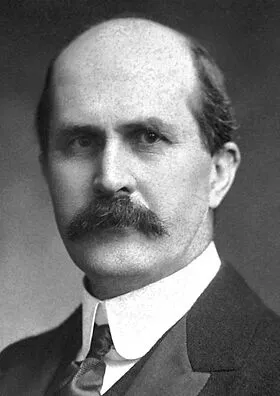
William Henry Bragg
Human Design Chart
Biography
William Henry Bragg — Manifestor with Profile 1/4
Manifestor 1/4 — Design at a Glance
William Henry Bragg revealed himself as a pioneer and visionary whose design aimed to lead the world into a new future. His Human Design type was that of a Manifestor, comparable to an emperor in ancient Rome: He had the grand vision of an empire but did not wage the necessary wars himself; instead, he sent others to conquer foreign lands for him. This role came with a specific pain body: William Henry Bragg was often misunderstood and polarized his environment. Because he thought further ahead than many others, some loved and followed him because of his enormous visions while others disliked or even hated him precisely for that reason. For the right followership to find him, it was crucial that he informed other people in a timely and precise manner about his plans. This formed the ideal strategy for his design. If William Henry Bragg followed this strategy and respected his authority, he was rewarded with a sense of inner peace. Living against this design, however, likely resulted in a persistent, deep-seated anger within him. His path was thus marked by the tension between visionary leadership and the necessity of clear communication to minimize resistance and gain support.
Emotional Authority
William Henry Bragg exhibited a decision-making stance characterized by emotional wave movements. His design carried Emotional Authority, as the Emotional Center was defined. In Human Design mechanics, this authority is always prioritized; it takes precedence over all other defined centers in the chart, regardless of their number or type. This configuration marked him with an ongoing up-and-down of his feelings. The world appeared to him colored by his current mood state. What seemed inspiring at one moment could appear negative in the next. His immediate feeling was merely a snapshot, not a final truth claim. Quick, spontaneous decisions from such an emotional state often proved problematic for him. Instead, his system required patience and time. He had to let decisions mature, sleep on them several times over. Only when intense feelings subsided and he gained emotional distance did clarity set in. This process of calmness was crucial for long-term life decisions. William Henry Bragg learned to take his time and repeatedly ask questions until the inner truth became visible through the emotional fog.
The 1/4 Profile — Investigator / Opportunist
William Henry Bragg's design laid the foundation for a researcher and networker. His Profile 1/4 combined the drive for deep, thorough knowledge with the need to share this within a familiar circle. This configuration created a specific dynamic: While he intensively studied to overcome obstacles, he simultaneously sought out a community that would embrace his insights.
This process was shaped by Gate 39, which promoted analysis and freeing oneself from mental blocks. It was about gaining security through study and sorting out negative influences. Simultaneously, Gate 21 with its fourth line included transpersonal control and the ability to lead. This energy supported him in serving the greater good and strategically responding to resistance.
The combination of these elements meant that William Henry Bragg did not only research in isolation but used his knowledge to influence others. However, Profile 1/4 also brought with it the fear of standing as inadequate before his familiar group. Therefore, a loving environment with deep trust was crucial. Only in such a protected space could he fully unfold his authority and work through his network without being hindered by the fear of exposure.
Split Definition — Defined & Open Centers
William Henry Bragg revealed himself as someone whose mind was constantly under the pressure to ask questions and find answers. His design connected Head Center and Ajna Center with Throat Center, creating a direct line of inspiration to communication. He had the ability to express complex concepts so clearly that they prompted others to think deeply. However, this mental energy was not directly translatable into physical action; he needed to wait until others were ready to take up his ideas.
His defined Heart Center gave him strong willpower and a need to maintain control over his resources. He preferred working independently to keep his own rhythm between effort and rest. At the same time, his Solar Plexus was defined, meaning that he did not make decisions immediately but waited for an emotional wave to clear before making choices. This process added depth and careful consideration to his work.
In contrast, his G Center, Sacral Center, and Spleen Center were open. The open G Center meant that he carried no fixed identity or direction within himself but received it from the environment and relationships. He tended to question whether the current place or relationship was truly right for him rather than having an inner certainty. His open Sacral Center made him vulnerable to taking energy from others, which could lead to overexertion if he did not pause. Additionally, his Spleen Center being undefined brought a fundamental uncertainty about health and well-being with it. He learned to avoid spontaneous decisions as they were often driven by conditioned fears rather than true intuition. Instead, he trusted that the right environment would provide him with security and orientation.
Channels for finances, emotional transformation and mental clarity.
William Henry Bragg revealed himself as someone who combined material responsibility with an insatiable search for new experiences. His design tended towards claiming control over his own rhythm while being simultaneously driven by emotional waves.
The Money Line 21-45 linked his will (Gate 21) with the authoritative voice of the tribe (Gate 45). This created an internal pressure to manage material resources and maintain independence to protect his heart from overload. He worked best when he determined for himself when and how to act, as delegating responsibility strained his system.
Parallel to this, the Transience Channel 36-35 propelled him forward. Here, the need for change (Gate 35) connected with emotional uncertainty (Gate 36). This configuration constantly sought new impressions, often through generating crises or adventures to gather experiential values and gain emotional depth.
The Emotions Release Channel 39-55 linked his Root energy with Solar Plexus. Through provocation (Gate 39), he triggered mental states (Gate 55) in others depending on his own mood. This allowed him to feel the atmosphere of the environment and deliberately evoke reactions, where melancholy and joy oscillated in a pulsating wave.
Moreover, the Abstraction Channel 47-64 permeated him. The Head (Gate 64) filtered every experience through mental images all the way to Ajna Center (Gate 47), to understand patterns. This process often generated temporary confusion before crystallizing into a coherent story or perspective that he could then share.
Individual Gates like Gate 38 (Resistance/Bounds) and Gate 48 (Pattern Recognition/Depth) underscored his ability to maintain integrity and logically penetrate complex connections without needing to implement them immediately. Gate 20 promoted his awareness of the present moment as well as the integration of his authentic self.
Collective Circuitry — Circuit Signature
William Henry Bragg was marked by separate, parallel energetic streams. His 'Split Definition' meant that two independent power blocks operated within him: A first stream connected Heart Center, Throat Center, Solar Plexus Center and Root Center; a second, isolated block included Head Center and Ajna Center. These blocks did not flow into each other.
In the Knowledge Circuit, the Channel 55-39 ('Emotions Release') was active. It linked Solar Plexus Center with Root Center, translating emotional waves directly into physical torment or action. This created a pulsating, acoustic intensity.
The Meaning-Finding Circuit possessed two separate segments in him. The first connected Head Center and Ajna Center via Channels 64-47 ('Abstraction') and 35-36 ('Transience'). Here, a cyclical visual reflection on the past emerged. The second segment linked Throat with Solar Plexus Center, allowing emotional experiences to be put into words for sharing.
The Ego Circuit activated Channel 45-21 ('The Money Line'), linking Throat and Heart Centers. This promoted cooperation and resource exchange within a group based on reciprocity. Since there was no connection to the Sacral Center, rest phases were necessary for regenerating these social energies. William Henry Bragg thus lived with these specific, separate energetic patterns.
Right Angle Cross of Tension 2
William Henry Braggs Human-Design indicated a tendency towards internal tension and an ongoing drive for liberation. This configuration, the right cross of tension 2, described a life dynamic that was characterized by a deep need to free oneself from external constraints or unsuitable structures. It wasn't about arbitrary rebellion but rather a mechanical impulse to create one's own space and extricate oneself from situations that limited his essence.
This energy acted as an ongoing internal motor, urging William Henry Bragg to test boundaries and question existing ties whenever they were felt as restrictive. The tension of this cross configuration generated a kind of inner pressure that could only be relieved through actual distancing or change. It was evident in his attitude towards authority figures and established systems: a constant search for paths leading to self-determination, even if it caused conflicts.
The right cross of tension 2 thus conveyed a fundamental stance of autonomy. William Henry Bragg lived with this mechanical predisposition that led him to continuously re-position himself and not remain in static roles. The energy of this design promoted a clear distinction between what he was and what was expected of him, driving him always towards his own direction, free from external dictates.
Saturn Return · Uranus Opposition · Chiron Return · 2nd Saturn Return — Life Cycles
William Henry Braggs Human-Design indicated a tendency toward structured recognition that often condensed in later life phases. This became evident in 1920 when at the age of 58 he was knighted. For his Human Design this was a typical moment of the second Saturn return: A cycle marking not only age but years of groundwork and inner maturity condensing into a tangible, socially visible result. The elevation here wasn't coincidental but the logical consequence of a long-term development line anchored in his chart.
Previously, in 1909 at the age of 47, he returned to Britain and received a professorship at the University of Leeds. This event fell into the realm of the Chiron return (around 49-51 years), an achievement cycle where one's incarnation cross unfolds. If William Henry Bragg had lived according to his strategy and authority up until then, this was when he experienced purpose and meaning. The return and new position were not merely a career change but a bloom phase in which his life mission increasingly manifested in everyday life. Both events underscore how his design linked external affirmation with inner development: first through professional anchoring during the fulfillment cycle, later through official recognition during the maturation process of the Saturn return.
Manifestor · Emotional Authority — Synthesis
He was a Generator driven by the connection between Head and Ajna Center (defined mental pressure) to profound inspiration. This constant search for understanding shaped his approach, as he raised questions and developed new perspectives – a quality amplified by the Profile of Researcher/Networker. He aimed not only to accumulate knowledge but also to share it within a familiar community, thereby influencing others. This always occurred under the influence of his emotional authority, which required a mature engagement with his insights before sharing them externally.
A central paradox in his design lay in the tension between the drive for independent exploration (Knowledge Circuit) and the deeply rooted need to form and nourish a community (Channel 21-45). While he charted new paths through inspiration, he was simultaneously dependent on validation and exchange with others. The recurring career high points – such as the professorship or honor – demonstrated that recognition within a network mattered to him, even though his design primarily marked him as a pioneer.
4 Defined Channels
Incarnation Cross - Right Angle Cross of Tension 2
Solar Return
The Solar Return shows the moment when the sun returns to its exact birth position - your personal solar year.
Life Cycles
Discover the life cycles with a detailed triple view (birth chart, cycle chart, composite).
Human Design Profile
- Type
- Manifestor
- Strategy
- To inform others before acting
- Authority
- Emotional Authority
- Profile
- 1/4 - Investigator / Opportunist
- Definition
- Split Definition
- Incarnation Cross
- Right Angle Cross of Tension 2
- Date of Birth
- 02.07.1862 15:34
- Place of Birth
- Wigton, England, United Kingdom
Frequently Asked Questions
What was William Henry Bragg's Human Design type?
What Profile did William Henry Bragg have in his Human Design?
What Authority determined William Henry Bragg's decision-making?
Which incarnation cross characterized William Henry Bragg?
When was William Henry Bragg born?
Discover your own Human Design
Are you also a Manifestor? Find out in a personal reading how to use your initiation power peacefully and dissolve resistance.
More Personalities
Back to overviewChristian-Jaque
Kesha

Lucebert
Masaccio
Nadar
Papus