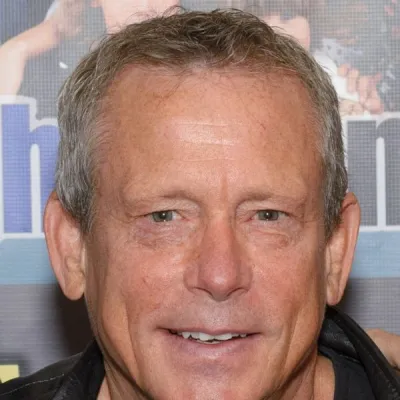
Willie Aames
Human Design Chart
Biography
He once played in a band called Willie Aames & Paradise, in which he was lead singer and guitarist. Aames hosted the game show The Krypton Factor from 1990 to 1991. Aames has been married three times and has two children.
The Human Design of Willie Aames: Generator 4/6
Generator 4/6 — Design at a Glance
Willie Aames demonstrated a foundational stance of endurance based on an inner, sacral resonance. His design indicated that as a Generator, he possessed considerable energy, comparable to a workhorse – strong and steady, provided he felt internal approval for his task. The key was not initiating actions independently but responding to signals from life. Only when his Sacral Center gave a clear “yes” could he effectively utilize this energy.
If Willie Aames acted against this inner signal or forced himself into activities without resonance, it threatened energy waste up to burnout. Conversely, holding back on his heart project despite the presence of strength for continued work led to frustration. His strategy was to wait for life impulses and then respond with action. Living by this principle of reaction rather than initiation resulted in deep satisfaction and fulfillment. Ignoring his inner authority or constantly trying to set things in motion actively met him with persistent frustration and a lack of energy. Thus, his success depended directly on whether he learned to answer from the gut what came his way instead of fighting against the current of his own nature.
Emotional Authority
Willie Aames showed a decision-making stance that relied on emotional clarity; spontaneous judgments appeared unreliable in his design. This tendency stems from his emotional authority: The Solar Plexus Center is defined and carries this inner guidance, independent of other defined areas in the chart.
Those with this configuration are subject to a natural emotional wave with permanent ups and downs in feelings. The world is always colored by the current mood – sometimes excited, sometimes negative. Immediate feeling is just a snapshot, not a guaranteed truth value. Quick decisions made impulsively from this emotion can often have adverse effects.
The mechanism requires time and patience. Willie Aames’ design indicated letting decisions ripen ideally through multiple “sleeping on it” sessions. This process serves to distinguish between temporary mood state and deeper insight. As time passes, intense feelings subside, emotional distance strengthens, and calmness sets in. Only then is the inner decision-making process complete. This strategy of waiting is particularly relevant for long-term decisions that shape life’s course. It protects against falling into the trap of impulsive actions and instead allows a clear orientation freed from transient wave movements.
The 4/6 Profile — Opportunist / Role Model
Willie Aames demonstrated a foundational stance marked by a fundamental tension between the need for belonging and the urge to distant reflection. His design indicated that in his first three decades, he primarily experimented: He actively sought connections, tried various relationship forms, and learned through these experiences how to cautiously open his heart without getting hurt. This phase served the collection of details and building a trustworthy network.
With the activation of the sixth line, his orientation fundamentally changed. The desire for harmonious simplicity and detailed preparation met the need to oversee processes from a distance and find meaning. Willie Aames now faced the task of integrating these two poles: the emotional intimacy of Line Four and the abstract wisdom of Line Six. His path required him to complete inner processes in an ascetic manner before carrying them outward. The danger lay in alienating himself through withdrawal or becoming aggressive if he did not pass on the wisdom gained from his experiences. Success showed itself when he learned to let others participate in his growth without giving up his necessary distance and reflective ability. He became a role model that led through cooperation but remained vigilant about whom he opened his big heart to.
Triple Split Definition — Defined & Open Centers
Willie Aames was characterized by a constant, mechanical presence in thinking and communication. His defined Ajna Center ensured consistent, specific conceptualization, while his defined Throat Center reliably articulated these thoughts. This connection allowed him to speak what he thought without being easily distracted by external influences. His energy source came from the defined Sacral Center, which generated immense vital force. This made him someone designed for reacting rather than initiating; his strategy was to wait until asked and then act with full sacral support.
The emotional depth and authority were determined by his defined Solar Plexus Center. Here lay the need to exercise patience and await the emotional wave before making decisions. Immediate clarity was not the goal; instead, the truth revealed itself over time. Additionally, his defined Spleen Center contributed spontaneous intuition in the present moment, while his defined Root Center helped manage physical pressure and stress. This combination created a robust foundation for well-being and endurance.
In contrast, Head, G, and Heart Centers were open. The open Head Center meant that Willie Aames did not constantly carry mental pressure but was situational for inspiration, without the burden of constant questioning. His open G Center promoted adaptability; he had no fixed identity or direction to impose but could adapt to his environment and be initiated by others. The open Heart Center freed him from the need to prove willpower or keep promises. This allowed him to be free from the pressure of constantly proving his worth and instead trust in his inner authority and strategy.
Channels for curiosity, meaning, intimacy, logic and transformation.
Willie Aames was marked by a tension between intellectual structure and emotional depth. His design tended towards logically precise communication while simultaneously relying on patient, intimate connection. This duality arose from two dominant channels.
The Accepting Channel 17-62 drove an ongoing internal process: the mind sorted details and patterns to integrate them into a coherent worldview. Once this inner logic was complete, there emerged a pressing need in the throat area to express opinions and explanations in detail. Willie Aames possessed the gift of effectively translating visual patterns into language – as theories or formulas – which gave him natural authority in teaching or presenting. Success required waiting until invited to communicate to avoid resistance and ensure clarity.
Parallelly, the Pairing Channel 59-6 rooted in sacral sexuality (Gate 59) and the emotional wave of pleasure and pain (Gate 6). This tribal channel conveyed an aura of intimacy and a deep need for merging. Willie Aames could quickly ease confidentiality, but the true potential of this connection required patience. The emotional wave determined the timing of each release; premature action out of intellectual pressure risked confusion and complications. Healthy relationships only emerged by waiting until emotional clarity arrived, often after building a friendship.
Additionally, the Life Struggle Channel 38-28 with its stubborn determination for individual integrity and the Transformation Channel 54-32, which drove ambition through constant effort and desire for recognition, promoted the search for life meaning in struggles and the pursuit of social positioning through talent.
The challenge lay in that quick, detail-oriented speaking (Accepting) did not occur prematurely out of intellectual pressure but waited until the slow, wave-like emotional clarity of intimacy (Pairing) was present. Only then would his logical explanations and ability to merge harmonize.
Collective Circuitry — Circuit Signature
Willie Aames was marked by a tension field: cool logic stood against emotional reflection and instinctive protection. His design featured a Triple Definition, consisting of three isolated groups without direct connection to each other.
The Understanding Circuit connected Ajna and Throat Centers (Channel 17-62). This promoted the sharing of rational strategies and future-oriented logic free from emotional influence. Parallel to this, the Meaning Finding Circuit also between Ajna and Throat Centers (Channel 11-56) focused on cyclical reflection of past experiences and emotional understanding of historical contexts. Both circuits used the same expression channel but generated different impulses: one focused analysis, the other felt insight.
A separate group formed with the Protector Circuit connecting Sacral to Solar Plexus Center (Channel 6-59). This connection generated primal energies for family and genetic protection driven by instinctive care and emotional intensity.
The third isolated group included Spleen and Root Centers. In the Knowledge Circuit (Channel 28-38), this steered the instinctual life struggle and search for one's own path. Parallel to this, in the Ego Circuit (Channel 32-54) the same center combination acted as a driver for traditional resource building and cooperative support within the tribe.
As these three systems were energetically separate, rational planning, emotional processing, and instinctive protection existed at Willie Aames as parallel, non-directly merging forces. The challenge lay in integrating these different energy islands in everyday life.
Right Angle Cross of Maya 2
Willie Aames' Human Design carries the signature of the Right Maya 2 Cross. This configuration is characterized by a specific structural anchoring in his chart that shapes his energetic alignment. Without delving into further mechanical details, this designation remains as Willie Aames' central identifier for his inner architecture. It defines a particular type within Human Design mechanics that fundamentally influences his way of being and acting. The Right Maya 2 Cross does not stand alone but functions as a core characteristic of his design. It sets the conditions under which Willie Aames interacts with his environment and responds to impulses. This classification forms the foundation for his personal profile, distinguishing it from other configurations. The mechanics behind this cross remain in the analysis as a named designation without additional functional descriptions or explicit workings being provided. Willie Aames carried this structure, marking his unique position within the Human Design system. The Right Maya 2 Cross was thus the determining factor for his chart-based essence, independent of external circumstances or biographical additions. It represents the specific energetic signature that distinguishes Willie Aames and locates his individual dynamics within the overall system.
Saturn Return · Uranus Opposition · Chiron Return · 2nd Saturn Return — Life Cycles
In 1990, at age 30, Willie Aames appeared in a clearly defined public role as host of the game show “The Krypton Factor.” This step marks for his design the transition into established adulthood. The first Saturn Return cycle is a critical turning point where provisional identities of youth condense and form a viable structure for future responsibility. It is the phase when the foundation is laid upon which further life work rests.
For Willie Aames, this moment not only marked a career event but also the concrete anchoring of his social identity. Taking on a moderating position requires presence and reliability – qualities strengthened by Saturn’s influence. The cycle demands clarity about which role one wants to play long-term. By accepting this task, his design responded to the internal pressure to establish himself and take a visible place in society.
This process is not a single event but sets a long-term framework for subsequent years. Decisions made during this Saturn phase often shape professional and social environments well into old age. Willie Aames used this energetic push to stabilize his public presence. Hosting the show means holding structure and guiding others through a process – precisely the kind of responsibility that the first Saturn Return demands: transitioning from uncertainty into a defined, viable position.
Generator · Emotional Authority — Synthesis
A central red thread through Willie Aames' design is the dynamic interplay between deep potential and the necessity to respond to external impulses. As a Generator with defined sacral authority, he possesses immense endurance and manifestation ability, but only when responding to the right opportunity (Sacral). This energetic foundation is reinforced by his defined Ajna Center – consistent conceptual thinking that processes and communicates information (Throat). The connection between sacral response and mental clarity points to someone who acts when they internally say ‘yes’ and can then articulate this energy precisely. His profile as a Networker/Role Model underscores this aspect: experiences are collected and passed on to inspire and support others (Line 4/6).
The central paradox in Willie Aames' chart lies in the tension between the need for community and the desire for individual withdrawal. The profile points to an internal conflict – the longing to be part of a group (Line 4) collides with the urge to distance oneself from above and contemplate the meaning of life (Line 6). This is reinforced by open centers: the Heart Center seeks validation and can become dependent, while the G Center without fixed identity constantly searches for direction. This tension field requires constant balancing between connection and autonomy to live authentically and effectively use one’s energy.
5 Defined Channels
Incarnation Cross - Right Angle Cross of Maya 2
Solar Return
The Solar Return shows the moment when the sun returns to its exact birth position - your personal solar year.
Life Cycles
Discover the life cycles with a detailed triple view (birth chart, cycle chart, composite).
Human Design Profile
- Type
- Generator
- Strategy
- To respond - wait for something to respond to
- Authority
- Emotional Authority
- Profile
- 4/6 - Opportunist / Role Model
- Definition
- Triple Split
- Incarnation Cross
- Right Angle Cross of Maya 2
- Date of Birth
- 15.07.1960 21:05
- Place of Birth
- Newport Beach, CA, United States
Frequently Asked Questions
What is Willie Aames' Human Design type?
What Profile does Willie Aames have in Human Design?
What Authority does Willie Aames have?
What incarnation cross is assigned to Willie Aames?
When was Willie Aames born?
Discover your own Human Design
Are you also a Generator? Find out in a personal reading how to use your sacral energy correctly and discover deep satisfaction.
More Personalities
Back to overviewSissy Spacek
Aaliyah

Alexia

Anémone
Angèle

Ann-Margret