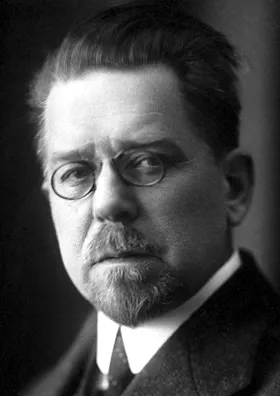
Wladyslaw Reymont
Human Design Chart
Biography
Reymont never completed his schooling but was at various times in his youth a shop apprentice, a lay brother in a monastery, a railway official, and an actor. His early writing includes Ziemia obiecana (1899; The Promised Land; filmed 1974), a story set in the rapidly expanding industrial town of Łódz and depicting the lives and psychology of the owners of the textile mills there. His two early novels Komediantka (1896; The Comedienne) and Fermenty (1897; “The Ferments”) were based on his own theatrical experience, while his short stories from peasant life show the strong influence of Naturalism. The novel Chłopi, 4 vol. (1904–09; The Peasants; filmed 1973), is a chronicle of peasant life during the four seasons of a year. Written almost entirely in peasant dialect, it has been translated into many languages.
Reymont’s later work was less expressive but reflected the variety of his interests, including his view of the spiritualist movement in Wampir (1911; “Vampire”) and his image of Poland at the beginning of the partition process at the end of the 18th century, Rok 1794, 3 vol. (1913–18; “The Year 1794”).
He died 5 December 1925.
What does Projector 4/6 mean for Wladyslaw Reymont?
Projector 4/6 — Design at a Glance
Wladyslaw Reymont's design tends towards a focused and penetrating perception. As a projector, he did not have the constant intrinsic source of life energy that generators in the Sacral Center possess. Instead, his aura worked similarly to an intense light beam: it directed itself precisely toward weaknesses or uncertainties in his environment and brought structure there. However, this ability to immediately recognize a 'system error' was only effective when he didn't address it directly and confrontationally. Such direct confrontation would often have triggered resistance from those around him; more elegant for him was to attract others through his own harmony so that they asked for his insights on their own.
His strategy involved waiting for a respectful invitation. Without this external confirmation, he risked squandering his limited energy and falling into bitterness – the classic non-self theme of projectors. Since his Sacral Center was undefined, he worked in phases of high intensity followed by necessary rest periods to regenerate. The conventional system with its demand for constant availability did not suit this rhythm. If Wladyslaw Reymont lived according to the logic of invitation and withdrawal, he was rewarded with success; ignoring it led sooner or later to exhaustion and a sense of injustice.
Emotional Authority
Wladyslaw Reymont's design tends towards emotional depth and wave-like decision-making. He showed himself as someone whose perception was strongly filtered through current mood colors; what excited him in one moment could appear negative the next. These fluctuations were not a lack but an expression of his inner authority: emotional authority. Since his emotional center was defined, this center always carried responsibility for his decisions – independent of other defined centers. His feelings formed a permanent wave of up and down, where each individual impulse only represented a snapshot, not the final truth. Quick, spontaneous reactions to these first impressions would often have proven misleading. Instead, his mechanics required patience and conscious hesitation. By letting decisions sleep and reviewing them multiple times, intense emotions subsided. Only with this emotional distance did the necessary clarity and calmness set in. This process of maturation was essential for him to make long-term course adjustments that significantly influenced his life path. Through waiting, he gained access to a more comprehensive understanding beyond immediate emotional coloring.
The 4/6 Profile — Opportunist / Role Model
Wladyslaw Reymont's design tends towards deep inner tension: between the urgent desire for belonging and the need to withdraw to grasp the greater meaning. In his first thirty years, he appeared rather experimental in relationships and friendships, driven by the early dynamics of his configuration. As soon as the mature phase set in, however, a character conflict became apparent: while his heart pulled him towards community, his head lured him onto a metaphorical mountain to contemplate life. This duality shaped his entire existence as an ongoing negotiation between emotional connection and spiritual distance.
His fourth line promoted secrecy and single-minded actions; he learned that the right timing for direction changes was crucial to avoid conflicts. Higher goals stood above the urge for recognition. At the same time, the sixth line carried unwavering hope within it. It taught him to accept every interaction as a necessary step towards greater unity – an optimistic view of life despite occasional pessimistic phases. Later expectations were that he would function as a wise role model through cooperation. His big heart remained cautious; it only opened to those who did not exploit his vulnerability but respected the deeper connection.
Split Definition — Defined & Open Centers
Wladyslaw Reymont revealed himself through a persistent, clear voice and a deeply rooted sense of self. His defined Throat Center gave him the ability to articulate messages from various inner sources—such as heart or mind—while always being truthful about where these impulses originated. Parallel to this, he had a fixed G Center, which provided him with a reliable internal direction and a feeling of his own lovability. He intuitively knew where his path led without imposing it on others if he trusted his inner authority.
This stability contrasted with his emotional depth: His defined Solar Plexus Center was his inner control center. Reymont had to wait out the waves of his emotions to gain clarity; spontaneous decisions made at emotional highs or lows often led to irritations. Only after a calm phase did he make an informed choice. Additionally, he possessed a defined Root Center, which gave him a constant, adrenalized pressure to move forward and master existential challenges.
At the same time, Reymont was open to external influences and conditioning in several areas. His open Head Center made him vulnerable to mental confusion; he tended to seek inspiration or take on questions from others rather than trust his own inner answers. Likewise, his open Ajna Center made his mind flexible but unsure in concept formation—he could adopt opinions without identifying them as absolute truth. His open Heart Center led him often to feel pressured to prove his worth through promises or performance, which could spiral into cycles of failure and self-doubt. Furthermore, his Sacral Center was also open: He lacked a constant energy flow and risked overexertion if he absorbed foreign work energy. Finally, his open Spleen Center made him sensitive to health signals and fears; he had to learn to avoid spontaneous decisions and not react impulsively to the well-being of others.
Channels for logical leadership and the release of emotions.
Wladyslaw Reymont's Design inclined towards logical, collective leadership. He appeared as someone who had to perfect and demonstrate his competence to the satisfaction of society in order to gain trust. This attitude resulted from Channel 7-31, which connected the G Center with the Throat Center. Gate 7 provided the logical role as "power behind the throne," while Gate 31 represented the collective leader whose voice held valuable influence. His authority did not rest on absolute rule but rather on being invited by the majority to understand existing patterns and trends.
At the same time, he was shaped by the pulsating emotional wave of Channel Release Emotions 39-55. This channel connected the Root Center with the Solar Plexus Center through Gate 39 of Provocation and Gate 55 of Spirit. He was prone to melancholy and uncertainty, which manifested in an endless continuum between joy and sadness. His moodiness was not a weakness but a profound, creative force. Reymont learned to elicit the right spirit from others by living authentically and embracing his emotional wave. He understood that true spirituality arises from correctness and that his glass should be perceived as both half full and half empty.
Further influences came from prioritized gates: Gate 2 brought receptivity for evolutionary directions, while Gate 1 emphasized unique, creative mutation in the here and now. Gate 13 promoted collective memory and continuity through reflection over time. In social settings, Gate 22 acted with openness and calm listening. The design-related gates 6, 36, 10, and 52 added further layers: Gate 6 regulated biological boundaries through friction, Gate 36 used crises as cyclical movement for new experiences, Gate 10 integrated complex behavior at the right time, and Gate 52 required concentrated pauses for pattern correction.
Individual Circuitry — Circuit Signature
Wladyslaw Reymont revealed himself as someone whose inner rhythm and expressive ability ran in two separate, non-directly connected streams. This separation characterized his experiential world: emotional waves and logical strategies operated parallel to each other without merging.
The Knowledge Circuit linked his Solar Plexus Center with the Root Center. This created a pulsating, acoustic energy that worked on the level of emotions and individual identity. Here it was about releasing feelings and walking one's own path, driven by inner wave movements rather than rational planning.
Completely independent of this was the Understanding Circuit, which connected the Throat Center with the Identity Center. This stream represented a focused, visual and logical power. It served to share rational insights and strategic structures free from emotional coloring. Wladyslaw Reymont used this channel to articulate clear, future-oriented thoughts and inspire societal improvements through reason.
Since these two circuits lay in different groups, there was no direct energetic flow between his emotional individuality and his logical expressiveness. Instead, they existed as separate forces: once the melancholic, creative search for one's own truth within, and the other a clear, rational communication of these insights outward. This divided definition shaped his way of deeply feeling while also being coolly strategic, without these poles directly mixing or supporting each other.
Right Angle Cross of the Sphinx 2
Wladyslaw Reymont's design carried the specific signature of the right cross of the Sphinx. This configuration was characterized by a deep, often unconscious connection with the collective layers of his time. He was not primarily programmed for individual self-presentation but rather acted as a channel for something greater that surrounded him.
The right cross of the Sphinx describes in Human Design an energy that charges itself during phases of withdrawal or internal gathering and then manifests outwardly at moments of high collective resonance. It was not about a strategy of constant action, but rather a rhythmic process: Wladyslaw Reymont withdrew to integrate impulses from his environment before releasing these condensed experiences through creative or intellectual contributions. This mechanism created a particular sensitivity to the zeitgeist. He intuitively sensed what the collective needed without actively seeking it out. The energy of this cross acted like a mirror, making visible suppressed or unspoken currents of his era. His work was thus less an expression of an isolated ego and more a response to the collective pulse. In times when this resonance was strong, his influence was most apparent; in phases of quietude he merely stored up the energy, ready for the next impulse from the field of his time.
Saturn Return · Uranus Opposition · Chiron Return · 2nd Saturn Return — Life Cycles
Wladyslaw Reymont's design tended towards long-term structural anchoring that only reached its full potential in advanced age. This configuration describes a life rhythm not based on quick impulses but on the accumulation of experience and gradual establishment of personal authority.
In 1909, at the age of 42, he published the novel 'The Peasants'. For his design, this marked a Uranus opposition: a moment breaking with earlier patterns, in which new, often unexpected perspectives emerged. It was not a sudden upheaval but rather the necessary release from old bonds to create space for independent creative power.
However, true confirmation of this inner structure came later. In 1924, at age 57, he received the Nobel Prize in Literature for 'The Peasants'. This fell during his second Saturn return. In Human Design mechanics, this cycle is not a time of crisis but final consolidation. Here, decades of groundwork solidified into a stable foundation. The Nobel Prize was no fluke but visible confirmation of a life task that had become increasingly clear through consistent alignment with his own authority and strategy. His design thus did not work through spontaneous explosions but through the quiet yet irreversible establishment of his essence in the world.
Projector · Emotional Authority — Synthesis
Wladyslaw Reymont's design showed a deep ability to recognize patterns and point towards underlying truths (Projector type with defined Throat Center). He was an observer who perceived subtle disharmonies and, connected through the Alpha channel, naturally exercised authority to suggest collective directions. This tendency toward leadership was always fed by an emotional wave (emotional authority), allowing decisions to mature and giving him deep understanding of human relationships' complexity.
A central paradox in his life lay in the interplay between heart and mind (4/6 Profile). He longed for belonging and connection (Line 4) while simultaneously an inner voice drove him towards independent thinking and a search for deeper meaning (Line 6). This led to an internal tension field reflected in recurring themes of his works – the conflict between individual freedom and societal expectations. The publication of a novel (1909) as well as success through an award (1924) underscored this expression of individuality within a larger context.
2 Defined Channels
Incarnation Cross - Right Angle Cross of the Sphinx 2
Solar Return
The Solar Return shows the moment when the sun returns to its exact birth position - your personal solar year.
Life Cycles
Discover the life cycles with a detailed triple view (birth chart, cycle chart, composite).
Human Design Profile
- Type
- Projector
- Strategy
- Wait for the respectful invitation
- Authority
- Emotional Authority
- Profile
- 4/6 - Opportunist / Role Model
- Definition
- Split Definition
- Incarnation Cross
- Right Angle Cross of the Sphinx 2
- Date of Birth
- 07.05.1867 19:00
- Place of Birth
- Kobiele Wielkie, POL
Frequently Asked Questions
What was Wladyslaw Reymont's Human Design type?
What Profile did Wladyslaw Reymont have in Human Design?
What Authority did Wladyslaw Reymont have?
What incarnation cross was active for Wladyslaw Reymont?
When was Wladyslaw Reymont born?
Discover your own Human Design
Are you also a Projector? Find out in a personal reading how to unfold your leadership qualities and recognize the right invitations.
More Personalities
Back to overviewSissy Spacek

Alain-Fournier

Anémone

Angeli

Ann-Margret

Bourvil