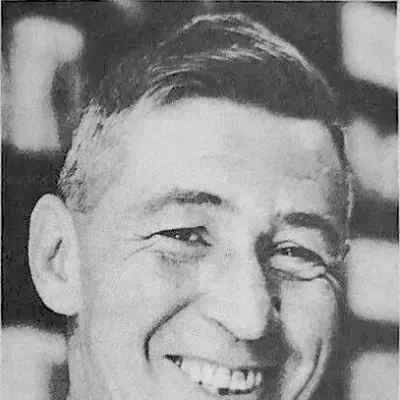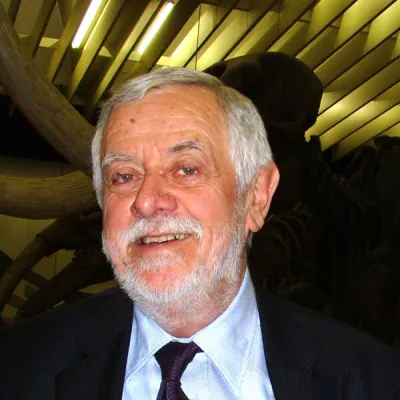
Yves Coppens
Human Design Chart
Biography
Coppens is one of the co-discoverers of 'Lucy,' the partial skeleton of a female 'Australopithecus afarensis' found in Ethiopia and estimated to have lived 3.2 million years ago, classified as a hominin.
He died on 22 June 2022 at age 87. The asteroid 172850 Coppens is named in his honour.
Human Design Analysis: Yves Coppens as Projector 4/6
Projector 4/6 — Design at a Glance
Yves Coppens lived as a Projector, whose design predisposed him to bring light to others' blind spots. His aura acted like a focused flashlight, systematically uncovering weaknesses and errors in structures. This ability to immediately recognize what was not functioning in someone else or in a system was his natural drive.
Since Projectors do not have a defined Sacral Center, Yves Coppens lacked a constant, intrinsic energy source. Instead, he went through phases of high intensity and rapid productivity, which inevitably had to be followed by necessary rest periods to prevent complete burnout. The conventional work life, which demands continuous performance, often stood in opposition to this rhythmic need.
His strategy was to wait for a respectful and honest invitation before bringing his knowledge or criticism. If he addressed his observations unsolicited and directly, he risked being perceived as unpleasant or aggressive. It was more elegant for him to attract others through his own harmony and competence, so that they would ask for his advice on their own.
Living according to this design and respecting his energy cycles as well as the need for invitation, Yves Coppens was rewarded with success. Ignoring these mechanisms led sooner or later to his Non-Self theme: bitterness. His life was thus a constant balancing act between clear insight into errors and the patient waiting period for the right invitation to lead.
Self-Projected Authority
Yves Coppens showed himself as a Projector with the rare Authority in Self. This configuration shaped his decision-making through a deep connection to his identity. He had two ways to inner truth: through self-talk or stimulated dialogues, where he learned to distinguish his spontaneous, unreflective voice from mere intellect. This authentic expression made his uniqueness recognizable to others. Alternatively, he followed a physical pull that guided him geographically or thematically in certain directions. By staying true to this inner orientation, he could become a direction-giver for others and thus unfold his specific success potential.
This mechanism, however, required great vigilance. Authority in Self came with increased openness, making Yves Coppens vulnerable to distraction by external influences, especially motoric energies. The greatest danger lay in losing himself in this openness and constantly chasing external energy. His inner truth always lay in the distinction between what his true essence spontaneously expressed and what was merely constructed mentally. Only through this listening within himself and following the physical pull could he effectively fulfill his role as a Projector without falling into the trap of energy-chasing.
The 4/6 Profile — Opportunist / Role Model
Yves Coppens showed himself as someone who in the first decades of his life maintained an experimental, inquisitive attitude before his focus shifted to a deeper, wiser level. His design laid a tendency to navigate the inner conflict between the heart's desire for belonging and the mind's need for detached, meaningful reflection.
This pattern arose from his Profile 4/6. In his youth, Line 6 still acted like Line 3, leading to much experimentation, especially in interpersonal bonds. With the activation of Line 6, a frequent contradiction emerged: the desire to be part of a community stood against the urge to withdraw to think about the big picture. Life revolved around this tension between heart and mind.
Later, he was expected to take on the role of a wise mentor that worked through cooperation and recognized authority. Line 4 conveyed that leadership is only influential if it is accepted by the majority; otherwise, stepping back was the logical consequence. Simultaneously, Line 6 sought the big picture and had to make decisions for change (mutation). Rationalization played a role while the need for security and the protection of individuality was preserved through a certain rigidity. Yves Coppens lived this dynamic by learning to support his authority on recognition and anchoring his wisdom through exchange with others, always cautious about opening up to the wrong people.
Single Definition — Defined & Open Centers
Yves Coppens had a reliable internal compass and a clear voice. His defined G Center gave him a firm sense of self-identity and a sense of direction; he knew who he was and where he stood, without needing others to confirm it. This inner security allowed him to comfort others or offer new perspectives without getting lost in their expectations. His defined throat served as a steady anchor for these messages. He did not speak from momentary whims, but from the depth of his identity. Yves Coppens could articulate his truth with ease and honesty, as his voice was directly fed from his G Center – an expression of the Higher Self, not just thinking or feeling.
This stable center contrasted with his high susceptibility to external influences. His open Head Center made him vulnerable to mental pressure and the temptation to answer questions that were not his own. He tended to get lost in mental monologues when trying to seek inspiration or answers from outside, rather than trusting his inner authority. The open Ajna Center amplified this mental flexibility; he could take in myriad concepts but was at risk of identifying with foreign opinions or pretending to be more certain than he was to be accepted.
His open Heart Center lacked consistent willpower. He was not designed to make promises or prove his worth through performance. Instead, he risked getting caught in a cycle of self-doubt when trying to compete with others. The open Sacral Center meant he did not have constant generative energy. He was sensitive to the energy of others and tended to overextend himself by using borrowed energy, which could lead to exhaustion. He had to learn to listen to his inner authority to set boundaries and rest, rather than acting impulsively.
The open Solar Plexus Center let him absorb and amplify the emotions of the environment. He could feel emotionally out of control, even though these waves often did not originate from him. The challenge was not to avoid every emotional confrontation but to recognize which feelings were truly his. Finally, the open Spleen Center caused a fundamental survival anxiety and the tendency to cling to things that gave a false sense of security, rather than trusting spontaneous intuition. The open Root Center also absorbed the stress of the environment, making him vulnerable to adrenalized pressure and burnout when trying to follow this external pace.
Channels for logical leadership and reflective memory.
Yves Coppens showed through his design as someone who sought leadership not through mere authority, but through logical classification and collective trust. This attitude was significantly shaped by the Alpha Animal Channel 7-31. This channel connects the G Center with the Throat Center and grants the ability to recognize logical patterns and articulate them clearly. Gate 7 provided the strategic role, while Gate 31 represented the voice of the collective leader. For Yves Coppens, this meant that he could only effectively lead when invited by the community. His authority was based on understanding existing trends and presenting a safe future perspective, rather than dominating.
Parallel to this, the Lost Son Channel 13-33 also connected the G Center with the Throat Center. Here it was about collecting experiences and their patient reflection. Gate 13, the Gate of Listeners, gathered information and secrets, while Gate 33, the Gate of Withdrawal, processed them before passing them on. This gave Yves Coppens the ability to learn from the past and convey wisdom that only revealed its full meaning in hindsight. He was not a predictor of the future, but a custodian of history, showing how events fit together in retrospect.
Additionally, individual Gates contributed to his orientation. Gate 2 emphasized receptivity and openness to new evolutionary directions, while Gate 1 promoted unique, creative mutations in the here and now. Gate 56 on the Personality level enabled him to translate mental processes into vivid narratives, stimulating his communication. In his design, Gate 25 with its mystical innocence and striving for centering, and Gate 62 with its patient, logical pattern recognition, combined to create a profile oriented towards listening, logical leadership, and integrating experience into a comprehensible whole. Yves Coppens lived this mechanism by understanding himself as a bridge between collective logic and individual wisdom.
Collective Circuitry — Circuit Signature
Yves Coppens stood out for his clear, rational approach to the future, paired with a deep, emotional reflection of the past. His design connected the Throat and Identity Centers directly, signaling a capacity for authentic communication of inner truths. This connection formed the basis for two separate but parallel operating energetic streams in his life.
The Understanding Circuit, activated by the Alpha Animal Channel (Gates 31 and 7), channeled his energy into logical structure and strategic improvement. This was about sharing rational insights, free from emotional conditioning, with the aim of guiding society towards a better future. This 'emotionless ratio' served clear analysis and the building of solid concepts.
Simultaneously, the Meaning Circuit, carried by the Lost Son Channel (Gates 33 and 13), focused on emotions and experiences from the past, in contrast to the cool logic of the first circuit. The energy flowed in wave-like patterns, with its own cycles of beginning, middle, and end. It was about finding the meaning behind past events and sharing these felt insights with the collective to learn together.
Although both circuits used the Throat and Identity Centers, their thematic areas – future-oriented logic on one hand, past-oriented emotion on the other – remained energetically distinct. Yves Coppens lived this duality: he rationally analyzed the future while emotionally processing the past, and carried both aspects into the world through his voice. His simple definition ensured a coherent expression of this specific blend of mind and feeling.
Right Angle Cross of the Sphinx 3
Yves Coppens' design carried the signature of the right Sphinx 3 Cross. This configuration shaped a specific inner dynamics that showed not through external control but through profound inner transformations. The right Sphinx 3 Cross is a rare energetic structure that puts the process of becoming in the center. It describes a life task to dissolve old identities and rigid patterns to make space for new, more authentic forms of being.
For Yves Coppens, this meant that his path was often marked by phases of letting go and restructuring. The mechanics of this cross require one to open to their own changes rather than fight against them. It is about the ability to reinvent oneself when the old structures no longer hold. Yves Coppens lived this energy by dedicating himself to the inner transformation processes necessary to express his true nature. This configuration fostered a deep resilience and the willingness to continuously develop, rather than staying in comfort zones. The Sphinx 3 energy supported him in growing through inner clarity and self-acceptance, even when this came with uncertainty or the loss of known security. His design set that his greatest potential lay in continuous transformation, not in the static preservation of the status quo.
Saturn Return · Uranus Opposition · Chiron Return · 2nd Saturn Return — Life Cycles
Yves Coppens showed himself as someone who in mid-life phases found a decisive orientation that confirmed his previous work and transitioned it into a new, more stable structure. This development was marked by two central astro-mechanical cycles.
First, the Uranus Opposition, a time when inner tensions push for external change and freedom. For Yves Coppens, this pressure culminated in 1974, at the age of 40, in a clear recognition: He received the Grand prix Jaffé of the Académie des Sciences. This success was no coincidence but the result of a necessary letting go of old bonds to establish his own voice and professional standpoint. The opposition challenged him to break free from conventional expectations and independently represent his specific expertise.
Later, the Chiron Return occurred, a cycle of fulfillment and blooming, in which the individual life purpose, if lived according to one's own strategy, is concretely realized in everyday life and social role. For Yves Coppens, this manifestation happened in 1983, at the age of 49, through his appointment as Professor of Paleoanthropology at the Collège de France. This was the moment when his life's work was not only recognized but institutionally anchored. The Chiron Return confirmed that he had walked his path and now held the authority to pass on his knowledge. Both events show how mechanical cycles set specific milestones for Yves Coppens, documenting his professional and personal maturity.
Projector · Self-Projected Authority — Synthesis
Yves Coppens lived a large part of his life in recognizing patterns and communicating them logically (Channel of the Alpha Animal). His design as a Projector, paired with authority in the self, points to a person who through observation and self-reflection reached insights that she could then convey to others. Line 6 in his profile strengthens this tendency towards thinking and searching for deeper meaning, while Line 4 emphasizes the desire for belonging and the ability to form stable connections. The defined Throat Center, connected with the Identity Center, indicates that his voice and messages stemmed from a clear inner core. He was able to filter complex information and organize it into understandable, forward-looking structures – an expression of the Understanding Circuit.
A central paradox in his design lay in the interplay of distance and connection. As a Projector, he needed an invitation to share his wisdom, but risked at the same time generating resistance through his direct approach (bright flashlight). The tension between the desire for independent thinking (Line 6) and the longing for community (Line 4) created an inner tension field that drove him both to reflect deeply and seek opportunities for collaboration. This was evident in documented successes tied to achieving recognition and building a career.
2 Defined Channels
Incarnation Cross - Right Angle Cross of the Sphinx 3
Solar Return
The Solar Return shows the moment when the sun returns to its exact birth position - your personal solar year.
Life Cycles
Discover the life cycles with a detailed triple view (birth chart, cycle chart, composite).
Human Design Profile
- Type
- Projector
- Strategy
- Wait for the respectful invitation
- Authority
- Self-Projected Authority
- Profile
- 4/6 - Opportunist / Role Model
- Definition
- Single Definition
- Incarnation Cross
- Right Angle Cross of the Sphinx 3
- Date of Birth
- 09.08.1934 11:45
- Place of Birth
- Vannes, France
Frequently Asked Questions
What was Yves Coppens' Human Design type?
What profile did Yves Coppens have in Human Design?
What authority did Yves Coppens have?
What incarnation cross did Yves Coppens have?
When was Yves Coppens born?
Discover your own Human Design
Are you also a Projector? Find out in a personal reading how to unfold your leadership qualities and recognize the right invitations.
More Personalities
Back to overviewSissy Spacek

Alain-Fournier

Anémone

Ann-Margret

Bourvil
Hergé