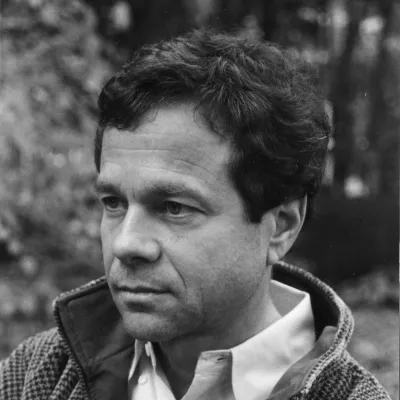
Alan Lightman
Human Design Chart
Biography
He is the author of the international bestseller Einstein's Dreams which has been translated into more than 30 languages and adapted into dozens of independent theatrical and musical productions worldwide, most recently (2019) at the off Broadway Prospect Theater in New York. It is one of the most widely used "common books" on college campuses. Lightman's novel The Diagnosis was a finalist for the National Book Award. He is also the founder of Harpswell, a nonprofit organization whose mission is to advance a new generation of women leaders in Southeast Asia.
Lightman has received six honorary doctoral degrees.
What does Manifesting Generator 1/3 mean for Alan Lightman?
Manifesting Generator 1/3 — Design at a Glance
Alan Lightman's design set a tendency towards hybrid creation: the constant energy of a Generator paired with the lightning-fast assertiveness of a Manifestor. As a Manifesting Generator, he had a defined sacral energy source, which gave him the ability to quickly pull things into his life and skip steps. This configuration described a life task that both responded to impulses and actively shaped them.
However, the mechanics of this type harbored specific pitfalls. The tendency to do multiple things at once and skip important steps could quickly lead to frustration when the sacral center no longer consented. Alan Lightman's design showed that his creative power depended on his ability to respond to life before acting. Only when the sacral center gave a clear "yes" could he use his energy efficiently.
Instead, he tended to fall into a "play mode" where variety and fun were central drivers. In this state, it was no problem for him to work on multiple projects simultaneously. He drew deep satisfaction from this rhythmic alternation, not from the linear completion of individual tasks. His design therefore required a regular check to ensure that current projects still aligned with his inner authority to avoid frustration and to leverage his unique speed as an advantage.
Emotional Authority
Alan Lightman's Human Design profile indicates a tendency towards emotional turbulence, making his perception of the world heavily dependent on his current mood. This results from his emotional authority, carried by the defined Solar Plexus Center. In Human Design mechanics, this authority is always prioritized, regardless of other defined centers in the chart.
This configuration means that Alan Lightman was constantly subjected to waves of emotional ups and downs. His perspective was always colored by the immediate emotional state: a topic could appear highly relevant at one moment and completely insignificant the next. However, this immediate feeling was only a snapshot, not the ultimate truth. Quick, spontaneous decisions made directly from this emotional heat often proved problematic or misleading.
Therefore, the mechanics of his inner authority required patience and time. To gain clarity, Alan Lightman had to let decisions rest, ideally overnight. Only when the intense feelings subsided and emotional distance was established did calmness set in. This process of "sleeping on it" was essential to recognize the true essence of a situation, especially for long-term steps with significant influence on life's trajectory. By delaying and waiting out the emotional wave, he could access his deeper, more comprehensive understanding rather than being guided by transient impulses.
The 1/3 Profile — Investigator / Martyr
Alan Lightman's Human Design profile inclines towards a deep, almost obsessive attention to detail, coupled with the necessity to validate these insights through direct, often painful experiential pathways. His Line 1 demands a continuous, precise investigation to secure attention and recognize patterns before a problem can be solved. This creates an internal pressure to act only when the theoretical foundation is deemed sufficiently secure.
At the same time, Line 3 of his Profile 1/3 drives him into the practice of trial and error. Here, learning is not just cognitive but a lifelong maturation process of humility, often requiring phases of solitude to protect against negative influences and sharpen his sensitivity. The tension between the desire for perfect preparation (Line 1) and the need to learn through mistakes (Line 3) shapes his approach to work. When Alan Lightman makes a judgment, it is the result of a double check: thoroughly examined theoretically and practically tested to the core. This combination of a research drive and experimental endurance allows him to overcome frustrations by creating new forms rather than getting stuck in them. His authority does not rest on mere theory but on the credibility of insights he has earned and tested himself.
Single Definition — Defined & Open Centers
Alan Lightman's design inclines towards a clear, strong-willed expression, fueled by deep inner confidence and physical vitality. His defined G Center provides a firm sense of self-identity and the feeling of being loved, allowing him to show others new directions without being dependent on them. This inner security is reinforced by his defined Heart Center, which gives him the strength of will and the ability to keep promises and determine his own life. He tends to control his ego and resources, which helps him to be successful and gain recognition for his contributions.
Additionally, Alan Lightman has a defined Sacral Center, providing him with a vast source of vital energy. However, this energy requires him to respond to questions rather than initiate to avoid frustration and exhaustion. His defined Solar Plexus Center acts as an emotional authority; he must learn to wait out the emotional wave before making decisions to gain clarity. His defined Spleen Center supports him with spontaneous intuition and a strong immune system, helping him to live in the moment and make healthy decisions.
In contrast, his Head Center is open, making him vulnerable to mental pressure and confusion when trying to find answers that do not belong to him. He tends to identify with other people's questions, which can distract him from the correct decision-making process. His open Ajna Center allows for a flexible mind that is open to new ideas but also tends to interpret concepts as personal truth if he is not careful. Finally, his open Root Center means he absorbs stress from the environment and tries to release this pressure by overworking rather than recognizing it as not belonging to him. This combination of defined expression and energy power, along with open mental and stress-prone structure, shapes his way of interacting with the world.
Channels for leadership, intuition, devotion, care and community.
Alan Lightman's Human Design profile is characterized by a dual nature: on one hand, the ability to logically organize complex patterns and lead collectively, and on the other, a deep, instinctive sense of what moves the tribe. This configuration shaped his way of moving through the world—not as an isolated thinker, but as someone who mediated between individual mastery and communal responsibility.
Central to this was the Alpha 7-31. This Channel connected the G Center with the Throat Center, giving him the ability to lead logically and collectively. Alan Lightman operated not through authoritarian power, but through trust and an understanding of existing social patterns. He sought his own sphere of influence, his "pack," and led from there by focusing attention on essential qualities that kept the community on the right path. His voice carried weight because it was based on tested patterns that one could follow with confidence.
Parallel to this, the Wave 48-16 connected the Spleen Center with the Throat Center. Here, his talent for combining intuitive depth with technical skill was evident. Alan Lightman was designed to achieve mastery through repeated experimentation and refinement, going beyond mere craftsmanship. He sought vital information (Gate 48) and perfected his skills (Gate 16) to find solutions or refine patterns. His success depended on being recognized and rewarded by others to continue this process of refinement.
The Caste 44-26 connected the Spleen Center with the Heart Center, giving him a sharp sense of the market and the needs of the tribe. Alan Lightman could instinctively recognize what people needed, often before they knew it themselves, and was able to communicate these insights persuasively. He was an entrepreneur in the broadest sense, knowing how to flatter egos and choose the right moment to present his ideas.
The Preservation 27-50 connected the Sacral Center with the Spleen Center and underscored his role as a provider and protector. Alan Lightman naturally drew the trust of others and felt responsible for what he had created. He understood that true care begins with correctly caring for oneself in order to help others.
Finally, the Community 37-40 bridged the Solar Plexus Center and the Heart Center. Here, his need to build bridges and find an honorable place within a community was evident. Alan Lightman waited for the right invitation to become part of an organization and understood the importance of fair agreements based on mutual benefit and emotional trust.
Additionally, Gates like 9 (Detail Work), 14 (Power and Direction), 10 (Integration), 6 (Friction), 62 (Logic), 29 (Persistence), 28 (Risks), and 15 (Collective Behavior) further deepened his ability to recognize patterns, his perseverance, and his understanding of natural rhythms.
Tribal Circuitry — Circuit Signature
Alan Lightman's design showed a clear, coherent structure, as he had a Simple Definition. All his defined centers – Throat, Identity, Spleen, Heart, Solar Plexus, and Sacral centers – formed a single, continuous energetic flow. This gives the personality a certain coherence and stability.
In the Understanding Circuit, Channels "The Wavelength" and "The Alpha Animal" were active in him, connecting the Throat, Identity, and Spleen centers. This manifests in the ability to articulate logical, rational insights clearly and to structure them visually or strategically, free from emotional coloring. It is about sharing clear understanding.
The Ego Circuit in Alan Lightman connected the Heart, Solar Plexus, and Spleen centers through the Channels "Devotion" and "Community." Here, cooperation was key: giving and taking in relationships, creating resources together, and mutual support. Since the Sacral center is not directly involved here, pauses for regeneration are important to maintain these social energies.
Finally, the Protector Circuit worked through the Channel "Conservation," which connected the Sacral with the Spleen center. This brought in an instinctive, primal energy of protection and preservation. It was about utilizing and nurturing the essential, to secure survival and continuity.
In summary, these three circuits shaped his essence: clear, rational communication, cooperative resource building in relationships, and instinctive care. These forces worked as a unified whole, as all centers were directly connected to each other.
Right Angle Cross of Planning 4
Alan Lightman's design indicates a tendency towards strategic, long-term thinking that does not rely on spontaneous impulses but on careful preparation. This orientation stems from the configuration of the right cross of planning 4. In Human Design mechanics, this pattern describes a specific type of decision-making: it is not about quick reactions but about weighing consequences over a longer period.
People with this structure tend to plan their steps in advance before taking action. They possess an inner discipline that allows them to penetrate complex situations and derive a clear, sustainable path from them. It is an energy of patience and deep analysis that creates stability by filtering out impulsive actions.
For Alan Lightman, this meant that his strength lay in recognizing patterns and translating them into a coherent strategy. He did not make an impact through loud presence but through the reliability of his planning. The mechanics show someone who draws strength from the clarity of their own path, who is willing to invest time to find the right direction. This characteristic shaped his actions as someone who valued precision and the long-term viability of his decisions rather than chasing short-term success.
Saturn Return · Uranus Opposition · Chiron Return · 2nd Saturn Return — Life Cycles
Alan Lightman's design shows a clear tendency to connect intellectual structures with temporal maturity. In 1974, he received his Ph.D. from Caltech – a typical moment for the first Saturn return, when years of groundwork condenses into a sustainable result. This phase often marks the transition from education to established expertise.
The tension between established order and new impulse shapes his further development. In 1989, at the age of 41, he became a professor at MIT for physics and creative writing. This falls during the Uranus opposition, a time when the design often seeks ways to unite traditional roles with individual, innovative expressions. Here, the ability to integrate seemingly contradictory fields like science and art is evident.
The Chiron return around 1995 brings his life purpose to bloom. In this year, he was appointed John E. Burchard Professor of Humanities at MIT. This cycle is not a healing process but an unfolding of the incarnation purpose: previous work finds its meaningful anchoring. The appointment reflects how the design increasingly unfolds in life during this phase and the personal contribution is recognized.
Finally, the second Saturn return in 2002 allows for a reorientation. When he became an adjunct professor to have more time for writing, he used this consolidation phase to reset priorities. The design shows how structural changes are utilized to focus on the true passion after laying the groundwork.
Manifesting Generator · Emotional Authority — Synthesis
A central red thread in this design is the dynamic connection between inner perception and external expressive power. Emotional authority (from the authority analysis) demands time for emotional clarity, while the defined sacral center (from the centers) provides a constant energy source that reacts to impulses. This combination, reinforced by the Manifesting Generator mechanics (from the design view), points to a process where inner waves are fully lived through and tested before being carried into the world through the defined throat center (from the channels/gates) – a pattern that shows in repeated career turns and the need for deep, self-earned insight (from the profile).
The central paradox lies in the tension between the urge for quick implementation and the necessity of emotional maturation. The design allows skipping steps and seizing opportunities quickly, yet emotional authority demands patience and thorough testing. This inner conflict is strengthened by the mind circuit (and especially the channel of the alpha animal), which emphasizes logical guidance and future-oriented planning, while the cycles (Saturn returns, Uranus oppositions, Chiron return) document professional changes and the pursuit of different paths.
5 Defined Channels
Incarnation Cross - Right Angle Cross of Planning 4
Solar Return
The Solar Return shows the moment when the sun returns to its exact birth position - your personal solar year.
Life Cycles
Discover the life cycles with a detailed triple view (birth chart, cycle chart, composite).
Human Design Profile
- Strategy
- To respond - wait for something to respond to
- Authority
- Emotional Authority
- Profile
- 1/3 - Investigator / Martyr
- Definition
- Single Definition
- Incarnation Cross
- Right Angle Cross of Planning 4
- Date of Birth
- 28.11.1948 14:46
- Place of Birth
- Memphis, TN, United States
Frequently Asked Questions
What is Alan Lightman's Human Design type?
What profile does Alan Lightman have in Human Design?
What authority does Alan Lightman have?
Which incarnation cross is Alan Lightman assigned to?
When was Alan Lightman born?
Discover your own Human Design
Are you also a Manifesting Generator? Find out in a personal reading how to unfold your multi-talents and direct your energy wisely.
More Personalities
Back to overviewAldair

Alizée

Angeli

Arletty
Artus

Balthus