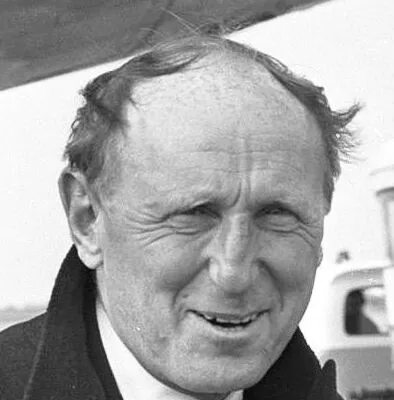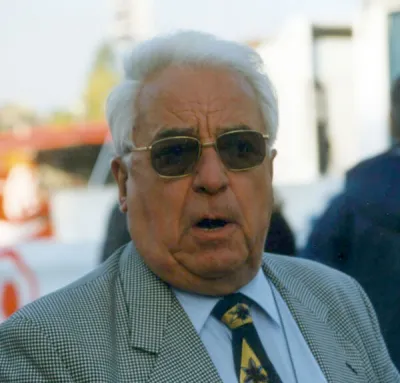
Albert Bouvet
Human Design Chart
Biography
Albert Bouvet as a Projector 4/6 in Human Design
Projector 4/6 — Design at a Glance
Albert Bouvet revealed himself as someone who could instantly recognize weaknesses in systems and relationships of others. His design as a Projector shaped this ability, like a bright flashlight illuminating dark corners where problems lay. This dense, focused aura often felt intense to his surroundings, sometimes even unpleasant when it directly pointed out errors.
Without a defined Sacral Center, Albert Bouvet lacked a constant, intrinsic source of life energy. Instead, he experienced phases of high activity followed by necessary rest phases to prevent burnout. Traditional school systems and most work structures barely accommodated this rhythmic need, presenting him with challenges.
The most effective strategy for him was to wait for a respectful and sincerely meant invitation from others. Rather than directly and confrontationally addressing his observations, which often triggered resistance in his counterpart, he acted more elegantly by radiating harmony himself. People then came to him naturally, drawn by his clarity, and asked for his insights. When Albert Bouvet lived by this design, he was rewarded with success. If he missed this strategy and acted without invitation, this led sooner or later to his non-self theme: bitterness. His path was to shine patiently until he was asked to lead.
Emotional Authority
Albert Bouvet demonstrated an inner authority based on his defined Solar Plexus Center. This meant that his emotional authority took precedence over all other defined centers, regardless of which additional aspects were active in his design. He was subject to an emotional wave that manifested in a constant up and down of his feelings. The world appeared to him colored by his current mood; one moment he was totally enthusiastic about something, the next he saw the same thing totally negatively.
However, his feeling in the moment was only a snapshot, a first impression that did not necessarily represent his truth. Therefore, quick, spontaneous decisions made directly from an emotion could have very negative consequences. The more time Albert Bouvet took to let a decision mature, the deeper and more comprehensive he could perceive the situation. This required patience and repeatedly sleeping on a decision. He should take his time and ask himself multiple times. Over time, the intense feelings subsided, he gained emotional distance, and clarity and calmness set in. This process was particularly important for long-term decisions that could have a significant impact on his life course. Through this waiting period, he ensured that his actions were based on a clear, emotional truth and not on fleeting moods.
The 4/6 Profile — Opportunist / Role Model
Albert Bouvet's design set a tendency towards experimental action in the first three decades of his life, before a deeper, reflective stance took over. As a 4/6er 'Networker/Role Model', he initially appeared like a Line 3: he sought contact, extensively tested relationships and friendships. This aligned with the influence of Line 4, aiming for connection and the big heart, yet always remaining cautious to avoid opening up to the wrong people and getting hurt.
With the return of Saturn, when Line 6 became active, his orientation fundamentally changed. An internal conflict between the desire for community (Heart) and the need to distance himself to contemplate the meaning of life (Head) emerged. This contradiction shaped his middle and later years. He was expected to fulfill the high standards of a wise role model and stand out through cooperation.
Line 4 in his profile emphasized leadership through exemplary behavior and the provision of resources for the family. It demanded the manifestation of the highest principles in everyday life and respect for traditional hierarchy. At the same time, Line 6 brought joy in small successes and trust in the process. For Albert Bouvet, the journey itself was the goal; details and persistence mattered only when the process was complete. He learned to develop gratitude for the steps that made him a role model, while the tension between traditional leadership and personal wisdom accompanied his life.
Split Definition — Defined & Open Centers
Albert Bouvet's design revealed a tendency towards self-determined willpower and emotional depth. His defined Heart Center provided him with a permanent access to willpower and ego; he preferred to determine his life himself, keep promises, and seek recognition for his contribution. At the same time, his defined Solar Plexus Center made him an emotional authority: He needed time to wait out the emotional wave before making decisions, as clarity only emerged at the end of the cycle. His defined Spleen Center fostered spontaneous intuition and existential awareness in the present, while the defined Root Center provided him with a steady internal pressure to move forward and process stress.
These inner supports contrasted with his open centers. His open Head Center made him vulnerable to mental confusion and the pressure to find answers to others' questions. His open Ajna Center made his mind flexible but unstable; he tended to adopt others' concepts rather than having firm opinions of his own. His open Throat Center led to inconsistent communication; he had to wait for invitations to receive the right attention. His open G Center meant he did not have a firm identity or direction, but discovered these through interaction with the environment and at the right place. Finally, his open Sacral Center made him vulnerable to exhaustion when he took on borrowed energy from others instead of listening to his inner authority and taking breaks.
Channels for life's meaning in struggle and liberating community.
Albert Bouvet was someone who stubbornly followed his own path, even when the odds were against him. His design inclined him to find meaning and purpose in the struggles he encountered on his unique journey. This attitude was shaped by the Life Struggle channel 38-28, connecting the Root Center with the Spleen Center. Gate 38 exerted pressure to maintain individual integrity and resist external forces that might divert him from his truth. Simultaneously, Gate 28 brought awareness of whether a struggle was appropriate and whether fighting was truly worthwhile. For Albert Bouvet, it was healthier to resist expectations and risk security than to fight for something that did not offer value to him. This channel drove him to force the expression of individualization and served as a mutative force challenging the status quo.
Alongside this internal struggle, Albert Bouvet sought his place in the community. The Community channel 37-40 connected his Solar Plexus Center with the Heart Center. Here, it was about balancing the need for recognition and belonging (Gate 37) and the will to provide for loved ones, while he needed his reward and breaks (Gate 40). He waited for someone to ask him to be part of an organization and sought the right invitation through personal contact, not impersonal means. In relationships, he built bridges so that everyone could find an honorable place.
Additionally, individual gates influenced him. Gate 9 promoted detailed work and perfection through repeated experiments, while Gate 16 encouraged identification with experiments and skills to achieve mastery. Gate 55 at the Solar Plexus led to emotional awareness and mood swings. Gate 21 gave him the ability to control material things and overcome obstacles, but required respect. Gate 44 brought awareness and the ability to transform through interaction. Gate 58 in the Root Center helped in recognizing and correcting patterns under pressure. Finally, Gate 53 allowed him to pioneer new paths and leave old ones behind, but this could lead to depression without completion.
Individual Circuitry — Circuit Signature
Albert Bouvet's design inclined him towards a pragmatic survival instinct and cyclical emotional waves. As someone with a split definition, his inner self was represented by two parallel, non-directly connected energy fields.
The first field formed the Knowledge Circuit. Here, the Life Struggle channel connected the Spleen Center with the Root Center. This connection created a pulsating, acoustic energy focused on the present. It propelled the search for the unique path and individual identity, often accompanied by melancholy. The Spleen Center provided intuitive perception of the essential, while the Root Center supplied the necessary endurance and life struggle to transform new knowledge.
The second, separate field came from the Ego Circuit. Here, the Community channel connected the Heart Center with the Solar Plexus Center. This created a timeless, conservative dynamic of giving and taking. The Heart Center steered willpower and commitments, filtered through the emotional wave of the Solar Plexus. As there was no connection to the Sacral Center, this configuration required necessary rest periods to generate resources for the tribe.
Both systems coexisted side by side: one impulse towards individual, innovative transformation through intuition and fighting spirit, the other towards cooperative, traditionally anchored resource creation through will and emotional balance. Albert Bouvet navigated between these two poles without them energetically overlapping.
Right Angle Cross of Planning 1
Albert Bouvet's design carried the signature of the right cross of the planning. This configuration established a specific inner dynamics: a strong drive to implement personal visions and plans into reality, coupled with the necessity to first direct these intentions inward and refine them before sharing them externally.
In Human Design, this cross describes a tension between the desire for immediate implementation and the wisdom-based requirement to first gather one's energy and intention. Albert Bouvet was shown through this structure as someone who did not waste his strength in impulsive, outward-directed actions, but rather in careful preparation and the inner clarification of his goals. The energy of this design often acts like a magnet that only becomes effective once the planning is mature and clear.
This mechanism protected Albert Bouvet from the dispersion of his energy through external expectations or hasty decisions. Instead, it promoted a deep, inward-focused work style, where the quality of planning stood before the speed of execution. His design challenged him to respect his own standards and visions and not try to shape the world outwardly before he had come to rest and clarity within himself. This inner orientation was the key to his effectiveness and alignment.
Saturn Return · Uranus Opposition · Chiron Return · 2nd Saturn Return — Life Cycles
Albert Bouvet's design indicated a tendency towards structural anchoring and later organizational leadership. He was shown as someone who initially sought recognition through disciplined performance before shaping the conditions for others.
This path was marked by the first Saturn return, a cycle in which years of groundwork often condenses into a sustainable result. In 1957, at the age of 27, Albert Bouvet finished 50th in the Tour de France. This career event illustrated the Saturn mechanics: the confrontation with limits and the necessity to find a sustainable position characterized this phase. It was not merely a sports success, but the moment when his place in the system solidified.
Later, the Uranus opposition, a period often associated with a shift from individual performance to collective structure, came into play. In 1968, at the age of 38, Albert Bouvet became the organizer of Paris–Roubaix. Here the shift was evident: instead of being in the race himself, he now created the conditions under which others competed. This development mirrored the dynamic opening that the Uranus phase brings – the transition from actor to the shaper of the framework. His design led him from personal validation in the Tour de France to institutional responsibility at Paris–Roubaix, where both steps were logical consequences of his astrological cycles.
Projector · Emotional Authority — Synthesis
Albert Bouvet lived a large part of his life in the tension field between the desire for connection and the need for distance. His profile as a networker/role model (4/6) points to an early phase of experimenting and searching for belonging, which later transformed into the development of an independent, wise instance. This development was reinforced by the emotional authority, which required a maturing, non-spontaneous decision-making process – a process that needed time and withdrawal for inner clarity. His defined Heart Center underscored the desire to live his own values and take responsibility for his life, while the Channel of Life Struggle (38/28) propelled him to stand up for his integrity and find meaning in challenges.
A central paradox in Albert Bouvet's design lay in the combination of Projector design and emotional authority. As a Projector, he was destined to guide others and uncover errors in the system, yet the emotional wave required time to assess the situation correctly. This led to a tension between the impulse to give immediate feedback and the necessity to let decisions mature. The documented career events – initially as an athlete, later as an organizer – reflect this process: a shift from direct participation and performance to strategic work in the background.
2 Defined Channels
Incarnation Cross - Right Angle Cross of Planning 1
Solar Return
The Solar Return shows the moment when the sun returns to its exact birth position - your personal solar year.
Life Cycles
Discover the life cycles with a detailed triple view (birth chart, cycle chart, composite).
Human Design Profile
- Type
- Projector
- Strategy
- Wait for the respectful invitation
- Authority
- Emotional Authority
- Profile
- 4/6 - Opportunist / Role Model
- Definition
- Split Definition
- Incarnation Cross
- Right Angle Cross of Planning 1
- Date of Birth
- 28.02.1930 02:00
- Place of Birth
- Mellé, France
Frequently Asked Questions
What was Albert Bouvet's Human Design type?
What Profile did Albert Bouvet have in Human Design?
What Authority determined Albert Bouvet's decision-making?
What incarnation cross was Albert Bouvet assigned to?
When was Albert Bouvet born?
Discover your own Human Design
Are you also a Projector? Find out in a personal reading how to unfold your leadership qualities and recognize the right invitations.
More Personalities
Back to overviewSissy Spacek

Alain-Fournier
Aldair

Anémone
Ann-Margret

Bourvil