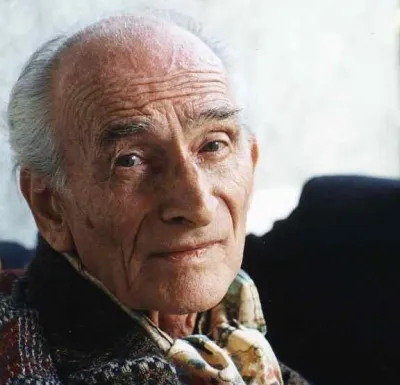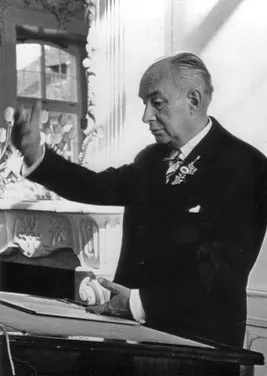
Alexander Rüstow
Human Design Chart
Biography
In the 1930s, the climate in Germany became too unfriendly for Rüstow, and he obtained a chair in economic geography and history at the University of Istanbul, Turkey, where he worked at his magnum opus, Ortsbestimmung der Gegenwart (in English published as Freedom and Domination), a critique of civilization.
In 1949, Rüstow would return to Germany, where he would obtain a chair at the University of Heidelberg, where he would stay until his retirement in 1956. He died on 30 June 1963 at age 78 in Heidelberg.
The Human Design of Alexander Rüstow: Manifesting Generator 4/6
Manifesting Generator 4/6 — Design at a Glance
Alexander Rüstow revealed himself as a person with a hybrid energy structure: As an Manifesting Generator, he possessed the constant, sacral power of a Generator combined with the direct action force of a Manifestor. This configuration allowed him to skip steps and draw things into his life quickly. However, this speed carried risks. Often, he was too quick and skipped important intermediate steps, leading to the need to return later to fill gaps – a process that could cause frustration as it aligned with his non-self theme. Additionally, he tended to pursue multiple projects simultaneously, driven by various impulses. When strategy and inner authority did not align, his creative enthusiasm quickly turned into exhaustion. To remain effective, his strategy was that of a Generator: Not initiating himself but reacting to external impulses. Only when his sacral center responded with a clear "yes" would he begin to act. Regular checks to see if a project still brought joy were essential. With the correct application of this dynamic, Alexander Rüstow derived deep satisfaction from his work. Parallelism and variety characterized his ideal play mode; the requirement to finish one thing before starting another often went against his natural energy.
Sacral Authority
Alexander Rüstow lived as a Generator, whose Strategy and inner Authority were identical: Sacral Authority. This configuration fundamentally simplified his decision-making process. Since his Emotional Center was open, he could not rely on fluctuating feelings but had to look at the moment of reaction instead. His truth manifested in an immediate physical response to external stimuli – as gut feeling, surge of energy or a loud "Hmm" when interested and a dismissive sound when there was no resonance.
When his sacral motor kicked in, he felt vital and alive. He then had seemingly inexhaustible energy and tackled his work with great enthusiasm. His design propelled him through life with joy and satisfaction, fully immersed in his activities without the need for external purpose.
Additionally, his activated Spleen Center acted as a supporting Authority. When this was directly connected to the Sacral Center, it allowed him particularly quick and spontaneous reactions. He had immediate access to his physical well-being and instinctive perception. These instincts could be reliably guided, further emphasizing his ability to make swift decisions and helping him act in the flow of the moment rather than getting stuck in planning.
The 4/6 Profile — Opportunist / Role Model
Alexander Rüstow's design inclined him to act experimentally and with enthusiasm during the first three decades of his life. As a 4/6, he behaved before his Saturn return similarly to a 3/4: He actively sought ways through relationships and friendships to test his position. This early phase was characterized by curiosity and trying out various social roles without yet bearing the full weight of later responsibilities.
With the activation of Line Six, an internal conflict emerged: The desire for belonging (Line Four) clashed with the need for distance and wise reflection (Line Six). Alexander Rüstow had to learn how to navigate this contradiction between heart and head. His energy was marked by selectivity; he learned through trial and error to recognize hidden dynamics. At the same time, a deeply rooted sense of responsibility led him to limit relationships that stood in the way of his ambitions.
Although his nature was generous, there was a risk of wasting energy. Therefore, he gathered information to make wise decisions and ensure he took on the right tasks. In his later years, it was expected of him to serve as a role model. His big heart remained cautious; it opened only to those who shared his high standards to prevent injuries from false connections. This combination of networking skills and wise restraint shaped his work profoundly.
Triple Split Definition — Defined & Open Centers
Alexander Rüstow revealed himself as someone with a clear, reliable identity and a deep sense of direction. His defined G Center gave him an inner security that allowed him to guide others onto new paths without being dependent on their approval. This stable self-perception contrasted with the constant mental activity in his design: Through the definition between Head and Ajna Centers, he was constantly under pressure to ask questions and understand connections. This mental process generated inspiration but also confusion or doubt since no direct energy was available to immediately implement these thoughts. Instead, his mind served to inspire others to think; he had to learn to accept the pressure without resorting to hasty actions.
His willpower and ability to execute came from the defined Heart Center. Alexander Rüstow possessed a firm structure for promises and commitments. He could control his resources and worked best on goals that he set himself, it was essential only to make commitments that he could keep in order not to undermine his self-esteem. At the same time, he had immense vitality through the defined Sacral Center. His energy was available only when responding to external stimuli and deeply agreeing with them. Initiated actions without this sacral confirmation often led to frustration or exhaustion as the generative power was lacking.
A striking aspect of his design was the open Solar Plexus Center. Here he tended to absorb emotions from the environment and amplify them rather than experiencing them as stable waves within himself. This could lead to uncertainty whether felt fears or moods were truly his own or projected by others. The challenge lay in not personalizing these emotional fluctuations and not retreating into a facade of harmony due to confrontation anxiety. His defined Throat Center, however, allowed him to express thoughts from Ajna as well as impulses from Heart and Sacral reliably when the timing was right. Thus, his communication became the channel through which mental concepts and vital energy were translated into concrete actions, provided he trusted in his inner authority rather than mental pressure or emotional uncertainties.
Channels for clarity, logic, intuition, will and determination.
Alexander Rüstow's design showed a tendency towards analytical refinement and intuitive clarity. He appeared as someone who questioned patterns to correct them while being grounded in the present moment. This attitude resulted from the interplay of several defined channels within his system.
The Judgement Channel 58-18 connected Root Center with Spleen Center. This channel nourished the art of mastery through an insatiable drive to examine and perfect any patterns. Gate 58 drove the impulse 'Better and more', while Gate 18 acted as a sentry assessing what was out of balance and needed correction. This gave him the ability to make life cheerier for the collective by identifying false patterns – yet only effectively when asked.
Parallel to this, the Aha! Channel 57-20 connected Spleen Center with Throat Center. Here intuitive insight from Gate 57 received a clear voice in the present moment through Gate 20. Alexander Rüstow possessed the ability for penetrating self-awareness and could encourage others to awaken their own inner survival intelligence. His spontaneous verbal outbursts reached the core of an issue faster than reflective analyses by others, provided he trusted his instinctive impulses at the moment.
Another defining element was the Awareness Channel 61-24 between Head and Ajna Centers. This created the individual thinker who transformed inspiration from Gate 61 into rational answers through rationalizing Gate 24. His mind did not seek discovery in the traditional sense but waited for mutations – sudden experiences of knowledge or Satori – that broke old cycles. He did not control his thinking; knowledge happened at its own pace when it fit.
Additionally, the Lifeline Channel 21-45 shaped his attitude towards the material plane and responsibility. As a connection between Heart and Throat Centers, it expressed the authority of the tribe. Gate 21, the Hunter, sought control for peace while Gate 45, the Gatherer, claimed the final word on resources. This channel challenged him to take responsibility through willpower and earn money accordingly, with his success depending on maintaining his own rhythm without being controlled.
Finally, the Discovery Channel 29-46 connected Sacral Center with G Center. Through Gate 29 he positively responded to questions leading deeper into his experience while Gate 46 kept him at the right place and time. He had to let go of expectations and fully commit to experiences to make discoveries that could change collective perception. His success depended on not wanting control but having patience with processes that could take years.
Individual Gates like Gate 51 (Willpower, Shocks), Gate 54 (Ambition, Spirituality) and Gate 53 (Freedom, Pioneer Spirit) further emphasized these dynamics. Gate 51 gave him strong willpower without social bonds and the ability to respond to shocks with insight. Gate 54 linked worldly success with mystical knowledge, where a partner supported his development. Gate 53 allowed him to pioneer new paths and leave old ones behind, which could lead to depression if left unfinished.
Gate 1 (Uniqueness) highlighted his creativity in the here and now without limitations while Gate 26 (Heart Center) enabled him to accept innovations to prevent genetic retardation. Gate 60 (Acceptance of Limitations) helped him overcome melancholy through creativity, and Gate 59 (Genetic Strategy) focused on pairing and binding without personal feelings.
Gate 17 (Succession, Human Rights) anchored him in organization for the future through logical teaching and service readiness. Gate 23 (Understanding, Amorality) allowed him to recognize diversity and bring multi-faceted mutations into the world by translating inner sound into language.
Alexander Rüstow's design thus showed a complex interaction between analytical correction, intuitive clarity, mutative thinking, material responsibility, and dedicated discovery. His strength lay in using these elements in harmony with his strategy and authority rather than fighting against them.
Individual Circuitry — Circuit Signature
Alexander Rüstow's design presented itself as a Triple Definition: three separate, parallel operating energy blocks without direct internal flow. This created a structure of independent fields that did not transition into one another. The Knowledge Circuit connected Head to Ajna as well as Throat with Spleen in him. This configuration promoted intuitive flashes and the need to express awareness through his own path, however, without emotional filtering from Solar Plexus. Parallel to this, the Understanding Circuit worked over the connection of Spleen and Root Centers. Here lay focused rational energy developing logical strategies for improving the future – emotionless and structured. A third block formed through the Meaning-Finding Circuit connecting Identity and Sacral Centers. This area drew its power from reflecting past experiences and emotional waves to generate collective learning value. Finally, the Ego Circuit created a connection between Throat and Heart Centers over the 'Lifeline'. This concerned cooperative resource accumulation and giving and taking in communities always with necessary rhythms of activity and rest pauses. Alexander Rüstow thus moved within these four isolated spheres: creative inspiration, rational planning, emotional meaning-making, and resource-oriented cooperation – each as independent, non-directly merging experience worlds.
Right Angle Cross of Penetration 1
Alexander Rüstows design indicated a tendency towards deep and often painful insight. His chart contained the right cross of penetration. This configuration did not describe an easy life path but rather one marked by intensive inner work and crises. The mechanics of this cycle suggested that superficial solutions would not suffice for Alexander Rüstow. Instead, there was a necessity to delve deeply into his shadow areas in order to allow true transformation. This occurred not through mere thinking but through the concrete experience of challenges breaking old structures. Here, penetration acted as a catalyst for radical change in self-perception. Alexander Rüstow often had to confront what he had previously repressed. This process was intense and required much endurance, leading to an authentic integrity that was not feigned. The energy of this cross drove him to abandon illusions and face the stark reality of his own nature. It was a path of purification through experience where every crisis served as an opportunity for deepening self-confidence. Alexander Rüstow learned that true strength did not lie in defending against pain but in the ability to penetrate it and gain new clarity from it.
Saturn Return · Uranus Opposition · Chiron Return · 2nd Saturn Return — Life Cycles
Alexander Rüstows design indicated a tendency towards a late yet profound unfolding of his life purpose. This was evident around 1933 when, at age 48, he went into exile and took up a professorship in Istanbul. This event coincided with the Chiron Return, a cycle between ages 49 and 51, which is considered the phase of 'blooming' in Human Design. During this period, one's incarnation cross increasingly unfolds in life if they have lived according to their strategy and authority up until then. Meaning and purpose become experiential not through healing old wounds but through the concrete realization of innate potential. For Alexander Rüstow, this professional rebirth in a foreign land marked the peak of an inner maturation where his essential design structures could fully unfold. This turning point was no mere coincidence but aligned with the rhythmic pattern of the Chiron Return: A fulfillment cycle where long-term preparation and alignment with one's nature condensed into tangible results. His calling to Istanbul exemplified this phase of blooming, in which his design found its full expressive power.
Manifesting Generator · Sacral Authority — Synthesis
Alexander Rüstow lived a life marked by a dynamic interplay between inner drive and the need for authenticity. As a Manifesting Generator (MG) with sacral authority, his design pointed to someone who could quickly set things in motion but whose true calling lay in responding to the right impulse. This combination of initiating energy and reactive wisdom was evident in the constant oscillation between the desire for action and the necessity to heed one's inner voice - a pattern amplified by the connection between Head Center and Sacral Center.
A central paradox in his design lay in the tension field between individual expression and community bonding. The profile as Networker/Role Model (4/6) revealed a person who both wanted to be part of a group and had a yearning for independent thought and reflection. This conflict between heart and head shaped his life, as he was always striving to align personal insights with the need for social interaction - a process further fueled by Judgment (Channel 58-18), which questioned and corrected patterns.
5 Defined Channels
Incarnation Cross - Right Angle Cross of Penetration 1
Solar Return
The Solar Return shows the moment when the sun returns to its exact birth position - your personal solar year.
Life Cycles
Discover the life cycles with a detailed triple view (birth chart, cycle chart, composite).
Human Design Profile
- Strategy
- To respond - wait for something to respond to
- Authority
- Sacral Authority
- Profile
- 4/6 - Opportunist / Role Model
- Definition
- Triple Split
- Incarnation Cross
- Right Angle Cross of Penetration 1
- Date of Birth
- 08.04.1885 04:00
- Place of Birth
- Wiesbaden, GER
Frequently Asked Questions
What was Alexander Rütstow's Human Design type?
What profile did Alexander Rütstow have in Human Design?
What authority did Alexander Rütstow have?
What incarnation cross did Alexander Rustow have?
When was Alexander Rustow born?
Discover your own Human Design
Are you also a Manifesting Generator? Find out in a personal reading how to unfold your multi-talents and direct your energy wisely.
More Personalities
Back to overviewAldair

Alizée

Angeli

Arletty

Artus
Balthus