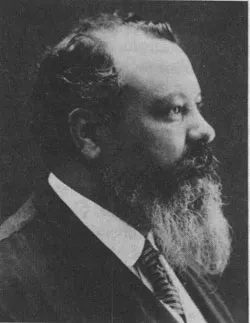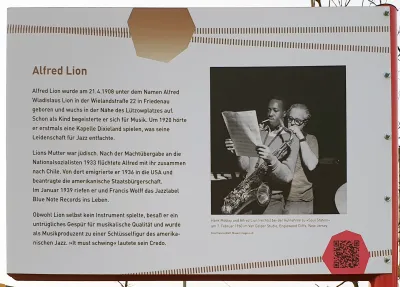
Alfred Lion
Human Design Chart
Biography
Alfred Lion died of heart failure on 2 February 1987 in Poway, California at the age of 78.
Human Design Analysis: Alfred Lion as Manifestor 6/2
Manifestor 6/2 — Design at a Glance
Alfred Lion's design marked him as a pioneer whose task was to lead the world into a new future. As a Manifestor, he acted similarly to an emperor in ancient Rome: He had the vision of a great empire but did not personally wage the necessary wars and battles himself. Instead, he sent his soldiers out to conquer foreign lands for him. This role brought with it a specific pain point: Since manifestors often think further ahead than others, they were misunderstood and polarized their environment. While some people loved Alfred Lion because of his big dreams and followed him, others did not like or even hated him precisely because of these huge visions. For the right followers to find him, it was crucial that he informed others about his plans in a timely and precise manner. This strategy of informing formed the core of his design. If Alfred Lion adhered to this requirement and lived by his authority, he was rewarded with a feeling of inner peace. Conversely, if he went against his design, he likely felt a persistent, deep-seated anger within him. His leadership trait was thus inseparable from the necessity to communicate his intentions clearly in order to reduce resistance and gain support.
Emotional Authority
Alfred Lion exhibited a fundamental disposition characterized by emotional wave movements. His design carried Emotional Authority, meaning that his defined Emotional Center formed his inner decision-making instance – independent of other defined centers in his chart. This configuration marked him as someone who always perceived the world through the filter of his current mood. In one moment, he could be totally enthusiastic about something, only to view it negatively in the next. His immediate feeling was merely a snapshot, not a final judgment. Quick, spontaneous decisions based on such emotions often had negative effects on him because they did not reflect his deeper truth.
The mechanics of his authority required patience: The more time Alfred Lion took to let a decision mature, the deeper and more comprehensive he could perceive the situation. This meant concretely that he needed to sleep on decisions, hesitate, and ask multiple times. Over time, intense feelings subsided, he gained emotional distance, and clarity as well as calmness set in. Only then had he gone through the process. This mechanism was particularly important for long-term decisions of great significance that profoundly influenced his life course. His inner truth did not reveal itself in the first impulse but only after the emotional wave had abated.
The 6/2 Profile — Role Model / Hermit
Alfred Lion's design laid out a tendency towards a two-phase life development: early experimentation followed by later wisdom. As a 6/2-line, he primarily acted as a Three-line before his thirtieth year, driven by the principle of trial and error. During this phase, it was about learning through personal experiences; mistakes were made to draw consequences from them and possibly withdraw. This corresponded to the nature of an 'example role' that initially tested the world actively.
After his thirtieth year, the Six-line activated metaphorically withdrawing into a 'cave' to gain distance and intensively reflect on past experiments. This phase served healing and deep self-knowledge. The mechanics of Gate 3 (Line 6) promoted recognizing when resistance is futile and surrendering oneself to the process. Mutations were accepted as a natural part of life, while self-care became the next step after initial confusion.
At the same time, aspects of Gate 41 (Line 2) shaped his character through caution and a conservative attitude towards personal security. The energy initially focused on processing one's own feelings and projections before acting outwardly. Contradictions were balanced by gradually realizing fantasies. Only when this inner maturity was reached did Alfred Lion emerge as a wise person. Others then sought his advice to partake in his life wisdom and learn the ability for deep introspection, which he had acquired through his long phase of self-reflection.
Single Definition — Defined & Open Centers
Alfred Lion's Human Design profile revealed a tendency towards an emotionally charged but clearly articulated expression. His defined Throat Center served as the focal point for communication and action, transmuting information from his body into reliable messages. This voice was not arbitrary but stemmed directly from his inner authority: the defined Solar Plexus Center.
The Solar Plexus determined his emotional wave as a basis for decision-making. Truth revealed itself to him over time by waiting out the ups and downs of his feelings before acting. This patience protected him from impulsive reactions to the highs or lows of the emotional curve. His clarity did not arise in the moment of first impression but after going through the entire cycle, giving his statements a certain depth and resonance as he incorporated the full spectrum of his emotions before fixing them linguistically.
Additionally, his defined Spleen Center acted as intuition for the 'now.' It provided spontaneous, non-verbal warning signals or confirmations for survival and well-being. This existential awareness worked in the background ensuring that his communication was not only emotionally clear but also intuitively healthy. The defined Root Center supplied the necessary physical pressure and endurance to sustain these processes materially.
In contrast, his open G Center revealed a lack of fixed identity or direction. He tended to blend with his environment and adopt directions from others rather than generating them himself. This made him vulnerable to the question 'Who am I?' when not in correct relationships. His open Heart Center also meant that he lacked consistent willpower; he was conditioned to prove his worth through promises or performance, often ending up in a cycle of self-doubt if he failed.
His open Head and Ajna Centers showed flexible but unstable mental activity. He absorbed inspirations and concepts from the environment without identifying them as his own truth. This could lead to confusion when trying to solve others' questions or intellectually committing himself. Instead, his mind served as a mirror for the thinking of his surroundings.
His open Sacral Center lacked consistent generative energy. He was prone to exhaustion as he absorbed and amplified the vital energy of his environment without producing it himself. This led him to often overextend himself driven by others' expectations rather than listening to his own energy level.
Channels for intuition, emotional power and feeling release.
Alfred Lion exhibited a blend of intuitive depth with technical perfectionism, stemming from Channel 48-16: Gate 48 sought vital information while Gate 16 perfected skills through repetition. His design required engagement to transform dexterity into talent; recognition and resources were necessary to maintain the process of refinement.
Simultaneously, an insatiable desire for new experiences propelled him forward. Channel 36-35 (Transience) connected his Solar Plexus emotional wave (Gate 36) with a need for change in his Throat Center (Gate 35). Alfred Lion sought adventures to gain wisdom and accepted the impermanence of feelings. He learned to make decisions only when his emotional clarity arrived, rather than being led by passing crises.
His internal mood landscape was characterized by volatility. Channel 39-55 (Emotional Release) linked the pressure from the Root Center (Gate 39) with the mind in Solar Plexus (Gate 55). This created a pulsating wave between joy and melancholy. Alfred Lion used this provocation to awaken the right spirit in others or withdraw when the mood did not fit. Authenticity was key here to minimize emotional tensions.
Additionally, other gates influenced him: Gate 3 promoted mutation and order from confusion; Gate 50 preserved traditional values as a protective reflex; Gate 41 advanced evolutionary development through specific experiences. Gate 31 transferred leadership qualities while Gate 52 paused to correct patterns. Gate 58 experimented with life processes for future security; Gate 54 connected worldly success with spiritual insight. Gate 38 set boundaries to defend integrity under pressure; Gate 19 sought resources and community; Gate 33 reflected on experiences to avoid repetition. Finally, Gate 12 expressed individual creativity and poetry influenced by emotional mood.
Collective Circuitry — Circuit Signature
Alfred Lion's design inclined towards an emotionally driven, impulsive expression style. As a Simple Defined type, he had a continuous energetic flow between Throat, Spleen, Solar Plexus, and Root Centers. This connection created no isolated islands but rather a cohesive system where intuition and emotion were directly translated into speech.
The Understanding Circuit worked through him via Channel 16-48 ("The Wave Length"), linking the Throat Center with the Spleen. This promoted focused visual perception of opportunities and their immediate verbal articulation – a kind of logical intuition, free from strong emotional coloring.
Parallel to this, the Knowledge and Meaning-Finding Circuits shaped his expression through emotional waves. Channel 55-39 ("Emotional Release") in the Knowledge Circuit connected Solar Plexus and Root Centers. This generated pulsating acoustic energy bursts carrying new identities or ideas with high urgency outward. Complementing this was Channel 35-36 ("Transience") in the Meaning-Finding Circuit between Throat and Solar Plexus Centers. It directed focus on sharing past experiences and their underlying meaning, often with an abating or reflective emotional wave.
Together, these channels formed a profile that united future-oriented intuition (Spleen) with past emotional processing (Solar Plexus) in one continuous expression strategy. Alfred Lion thus emerged as someone who projected immediate inner impulses and emotional cycles into the world driven by a deep need to share both new insights and processed experiences.
Left Angle Cross of Wishes 1
Alfred Lions Design indicated a tendency towards inner dissonance, manifesting in a constant oscillation between the desire for connection and the need to withdraw. This configuration, known as the left cross of desires 1, does not describe simple harmony but rather a dynamic process of self-discovery through polarity. Alfred Lion lived with a fundamental tension: on one hand, he felt compelled to open himself up to others and enter into relationships; on the other hand, it drew him back into isolation to organize his thoughts and gather strength. This oscillation was not a sign of indecision but rather a necessary rhythm of his energy. In Human-Design mechanics, this structure means that growth often arises through experiencing these opposites. Alfred Lion demonstrated someone who learned to trust these pendulum swings instead of suppressing them. The challenge lay in not getting stuck at either extreme but using the flow between closeness and distance as a source of development. This inner dynamism shaped his way of dealing with himself and his environment, helping him distinguish his true needs from fleeting impulses.
Saturn Return · Uranus Opposition · Chiron Return · 2nd Saturn Return — Life Cycles
Alfred Lions Design featured a structure that tended towards radical realignments during crises. This was evident in 1936, at the age of 28, during his first Saturn Return. During this phase of life crisis, he fled with his mother to Chile and reached the USA between 1936 and 1938. The first Saturn Return often marks the transition from youth into a more stable but also heavier responsibility; here, the necessity for survival condensed into an existential flight decision that fundamentally redirected his life path.
Later, in 1967 at the age of 59, his second Saturn Return occurred. This cycle represents consolidation and the reinforcement of long-term achievements. During this time, he led his last Blue Note session with Stanley Turrentine as bandleader. While the first return was marked by destruction and new beginnings, the second was characterized by the affirmation of his established role. Thus, the design connected the ability to act in acute crises with the later strength to maintain structural results over decades.
Manifestor · Emotional Authority — Synthesis
Alfred Lion was a pioneer whose life was shaped by a profound inner wave. His emotional authority required time for decisions to mature – a patience that showed itself in the ability to learn from experiences and accumulate wisdom (6/2 Profile). This process of experimenting followed by withdrawal for reflection (Saturn Return at age 28 with flight to Chile) formed a red thread guiding him through various phases of his career, giving him a unique perspective. The connection between Spleen and Throat Center (Channel of Wavelength) points to someone who instinctively recognized new possibilities and carried them into the world with skill – a talent fueled by deep inner intelligence.
Simultaneously, a tension revealed itself between the drive to create something new and transform it (Knowledge Circuit), and the necessity to do so from an emotional depth. The ability to develop innovative ideas was inseparable from the emotional wave that carried him through life. This led to a dance between the desire for expression and the time he needed to process his feelings – a paradox that shaped his path and gave him particular depth (left cross of desires 1).
3 Defined Channels
Incarnation Cross - Left Angle Cross of Wishes 1
Solar Return
The Solar Return shows the moment when the sun returns to its exact birth position - your personal solar year.
Life Cycles
Discover the life cycles with a detailed triple view (birth chart, cycle chart, composite).
Human Design Profile
- Type
- Manifestor
- Strategy
- To inform others before acting
- Authority
- Emotional Authority
- Profile
- 6/2 - Role Model / Hermit
- Definition
- Single Definition
- Incarnation Cross
- Left Angle Cross of Wishes 1
- Date of Birth
- 21.04.1908 22:00
- Place of Birth
- Berlin-Schöneberg, Germany
Frequently Asked Questions
What was Alfred Lion's Human Design type?
What Profile did Alfred Lion have in Human Design?
What Authority did Alfred Lion have?
What incarnation cross was assigned to Alfred Lion?
When was Alfred Lion born?
Discover your own Human Design
Are you also a Manifestor? Find out in a personal reading how to use your initiation power peacefully and dissolve resistance.
More Personalities
Back to overviewChristian-Jaque
Kesha

Lucebert
Marilyn

Masaccio

Papus