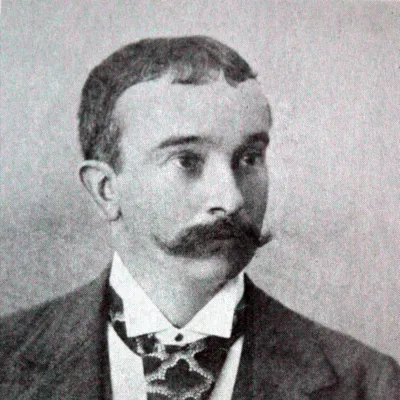
Andreas Schimper
Human Design Chart
Biography
Andreas studied at the University of Strassburg from 1874 to 1878, acquiring a Ph.D. Thereafter he worked in Lyon and travelled to the United States, staying in Baltimore and Massachusetts. In 1886 he was appointed Extraordinary Professor in Bonn, where he worked largely on cell histology, chromatophores and starch metabolism. He had become interested in phytogeography and ecology, undertaking expeditions to the West Indies and Venezuela in 1882-1883, and to Ceylon, Malaya and Java in 1889-1890, concentrating on mangroves, epiphytes and littoral vegetation. This resulted in his account of the Rhizophoraceae in Engler & Prantl's Naturl. Pflanzenfam. He is best known for Pflanzengeographie auf Physiologischer Grundlage (Jena, 1898), in which he coined the terms tropical rainforest and sclerophyll.
In 1898 he accepted an invitation to join the German deep-sea expedition aboard the SS Valdivia under the leadership of Prof. Carl Chun. The trip lasted nine months during which time they visited the Canary Islands, Cameroon, Cape Town, (where he joined Rudolf Marloth on collecting trips in the southern Cape), Kerguelen, New Amsterdam and Cocos Islands, Sumatra, the Maldives, Ceylon, the Seychelles and the Red Sea.
Returning in 1899, he took up the appointment of Professor of Botany at the University of Basel. His health had been seriously affected by malaria contracted in Cameroon and Dar-es-Salaam and he died on 9 September 1901, aged 45.
The Human Design of Andreas Schimper: Manifesting Generator 4/6
Manifesting Generator 4/6 — Design at a Glance
Andreas Schimper revealed himself as someone who possessed a hybrid energy structure: He had the constant power of a Generator but was also capable of acting swiftly and skipping steps due to his central configuration. This combination of Manifesting Generator shaped his life through high speed and the ability to push multiple projects forward simultaneously.
His strategy involved not initiating things himself, but responding to inner impulses. Only when his Sacral Center responded with a clear "yes" did he invest his energy. This resonance was crucial because otherwise, his quickness could easily become a source of frustration – his non-self theme. If he moved too quickly or skipped important steps, he often had to backtrack and make up for lost time, which cost him valuable time.
Despite these risks, Andreas Schimper could draw deep satisfaction from his work as long as he paid attention to his inner authority. He did not live by the principle of finishing one thing before starting another. Instead, his creativity flourished in "play mode" when he sought variety and pursued different interests simultaneously. His energy flowed best when he was free to move around without being constrained by rigid structures, allowing him to fully realize his potential in a dynamic, multifaceted lifestyle.
Emotional Authority
Andreas Schimper did not base his decisions on immediate intuition or rational calculation, but rather followed an inner emotional wave. His design featured Emotional Authority carried by a defined Emotional Center. This configuration marked him as someone whose perception of the world was always determined by the current mood color. What appeared inspiring in one moment could turn negative in the next. For Andreas Schimper, this meant that spontaneous judgments were often just snapshots and did not represent his deeper truth. Quick actions based on a passing emotion frequently proved detrimental. Instead, his system required patience: he let decisions mature, slept on them multiple times, and sought emotional distance. Only when the initial intensity of feelings subsided did clarity emerge. This process of delay was no obstacle but rather the essential mechanism of his inner guidance. Through waiting, he gained composure and made choices at a deeper, more comprehensive level. This strategy of deliberation and waiting protected him from misjudgments and ensured the quality of his long-term life decisions.
The 4/6 Profile — Opportunist / Role Model
Andreas Schimpers design inclines towards experimental behavior in the first three decades of life. As a 4/6 type, Line 6 initially acted like a Three: he actively sought contacts and tried out various roles in relationships. This aligned with the nature of the fourth line, which initiates transpersonal processes through interactions with others. Often, he searched for influence within networks, which could turn him into an "information junkie" – someone who collects information to position themselves.
With the onset of his Saturn return, this dynamic fundamentally changed. Line 6 became active and revealed an inner conflict: the contradiction between a deep desire for belonging (Line 4) and the need for distance to reflect on principles and meaning (Line 6). This tension between heart and head shaped his later years. He was expected to serve as a wise role model, but he approached this cautiously; his big heart only partially opened to avoid being hurt by false connections. Line Six evaluated situations from an aerial perspective and often hesitated before engaging, based on emotional clarity and ethical principles.
Split Definition — Defined & Open Centers
Andreas Schimper's Human Design profile indicated a tendency towards constant mental activity and vital endurance. His defined Ajna Center provided a trustworthy, specific form of conceptual thinking; he was always engaged in a mental process that created concepts and acted as an external authority figure. This mental energy flowed directly into his defined Throat Center, allowing him to express what he thought – his voice was the reliable expression of his mind.
At the same time, Andreas Schimper had a defined Sacral Center, the motor of a Generator. This gave him an enormous daily source of vitality and energy, but it could only be correctly accessed through reactions to external impulses. Initiating actions without prior questioning led to frustration and exhaustion as the sacral power was then lacking. His defined Solar Plexus Center served as his internal authority: truth revealed itself for him not in the present moment, but by waiting out the emotional wave until clarity emerged. Impulsive decisions at the peaks or troughs of this wave were typical pitfalls of his non-self.
Furthermore, his defined Spleen Center shaped a spontaneous, intuitive body awareness and a strong instinct for health and well-being in the moment. His also defined Root Center provided constant physical pressure and stress that propelled him forward and nourished existential awareness.
In contrast, his open Head Center did not show a consistent form of inspiration; he tended to be swayed by doubts or questions from others when he didn't trust his authority. His open G Center meant a lack of fixed identity and direction; he was dependent on the environment and relationships to initiate him into finding love and the right place. The open Heart Center led to a lack of consistent willpower and vulnerability to pressure to prove his worth through promises or competition – a cycle that could plunge him into self-doubt if he didn't listen to his strategy.
Channels for clarity, emotional depth, care and ambition.
Andreas Schimper's social interactions were strongly determined by the emotional wave. The Openness Channel 22-12 connected his Solar Plexus with the Throat Center; he spoke effectively only when his mood allowed it and he felt the right emotional resonance. Forcefulness led to harshness, while patience made him a catalytic listener.
His thinking followed the logic of the Structuring Channel 23-43. Here, Ajna Center linked with the Throat Center to spontaneously connect insights from Gate 43 with the assimilated processing of Gate 23. He developed innovative perspectives and explained them efficiently but had to wait for his timing to be right to avoid being perceived as an outsider.
A deep need for care was marked by the Preservation Channel 27-50, connecting Sacral Center with Spleen, driving him to preserve tribal values (Gate 50) through selfless service (Gate 27). He took responsibility for others but had to protect his own energy to avoid exhaustion.
Ambitious efforts were driven by the Transformation Channel 54-32. The connection between Root Center and Spleen utilized ambition (Gate 54) and awareness of continuity (Gate 32), improving social positions through talent and securing tribal welfare.
Additionally, Gate 49 with its focus on upheaval and principles as well as Gate 4 developing logical formulas for future security influenced him. Further influences came from Gate 42 (Experience), Gate 59 (genetic pairing strategy) and Gate 16 (collective experimentation). In his design, Gates 3 (Mutation), 20 (Here-and-Now Action), 55 (emotional awareness) and 37 (friendship structures) supported his unique expression.
Individual Circuitry — Circuit Signature
Andreas Schimper's Human Design profile indicated a tendency towards structured emotional communication. The Knowledge Circuit in him directly linked Ajna, Solar Plexus, and Throat Centers. This allowed intuitive ideas (Ajna) to be filtered through emotional confirmation (Solar Plexus) and then clearly expressed (Throat). Channels 'Structuring' and 'Openness' promoted a pulsating, creative way of knowledge transmission. Parallel to this, there was a separate energy focus on transformation and preservation. The Ego Circuit linked Spleen and Root Centers via the Transformation Channel, creating an instinctive ability to efficiently utilize resources and transform stress into action potential. Unrelated to this, the Archer Circuit connected Sacral and Spleen Centers through the Preservation Channel. Here, the energy was focused on protection and preservation of the existing, supported by the constant life force of the Sacral. As Andreas Schimper had a split definition, these two main blocks – one being the communicative-creative line (Head/Ajna/Throat/Solar Plexus), the other being the instinct-based line (Sacral/Spleen/Root) – existed as parallel, non-directly connected energy fields. He moved between the drive for individual expression and the deep need to secure safety and resources without these areas automatically overlapping.
Right Angle Cross of Explanation 2
Andreas Schimper's Human Design profile featured the right cross of the Manifestation. This configuration shaped a fundamental approach oriented towards clarity and uncovering connections. It was not mere intuition but rather a structural impulse to see things as they truly are and communicate these insights effectively.
The right cross of the Manifestation connects specific energies in the Human Design system, fostering precise analysis and communication skills. Those with this cross tend to penetrate complex issues and convey them in understandable forms. The quality of insight is crucial: it must be thorough but not confined within ivory towers. Instead, there's a drive to share this clarity with others to resolve misunderstandings or open new perspectives.
For Andreas Schimper, this meant a life task that manifested in how he processed and shared information. His design indicated that he sought not just for himself but formulated his insights so they could resonate with others. This mechanism acts as an inner compass urging him to seek truth and actively engage it in exchanges with the environment. It aims at transparency, replacing confusion with precise explanations.
Saturn Return · Uranus Opposition — Life Cycles
Andreas Schimper founded the 'Textbook of Botany for Higher Education' in 1894 when he was thirty-eight years old. This success occurred during his Uranus opposition phase. In this configuration, his inner development clashed with external resistance or structural limits. Instead of yielding, he used the pressure to reshape his work. The opposition acted as a catalyst for a new order, forcing clarity and separation from old patterns. Schimper not only reformulated his knowledge but created a foundation that generations later would still hold value. The Uranus cycle here promoted the ability to question established systems and replace them with personal visions. It was no coincidence that precisely during this life phase his scientific authority reached its peak. The mechanical tension between personal ambition and societal expectations dissolved in a powerful synthesis. His work became standard because it provided the necessary structure lacking at the time. Through this opposition, he found his distinct voice in academia. Resistance served not as an obstacle but as a tool to refine his thoughts. Thus, from friction emerged a lasting legacy based on clear structures that made no compromises with vagueness.
Manifesting Generator · Emotional Authority — Synthesis
Andreas Schimper lived a life path marked by an inner dynamic between creative energy and emotional depth. His design as a Manifesting Generator (with constant sacral energy) indicated the ability to quickly seize opportunities and set things in motion – yet always giving his impulses emotional space for maturation. The connection of Sacral Center and Throat Center endowed him with unique expressive power, enhanced by the Gate of Openness (Channel 22-12); he could touch and influence others through his voice and emotions. The defined Mental Center ensured consistent concepts and clear thinking processes, always colored by the ups and downs of emotional waves.
A central paradox in his design lay in the interplay between a desire for community (Line 4 in Profile) and the need for independent thought and reflection (Line 6). This led to an internal conflict driving him both to connect with others and repeatedly withdraw. The right cross of the Manifestation suggests he wanted to bring his knowledge and insights into the world, while the Uranus opposition at age thirty-eight marked a success – a documented event underscoring his path towards transformation and expression of individuality.
4 Defined Channels
Incarnation Cross - Right Angle Cross of Explanation 2
Solar Return
The Solar Return shows the moment when the sun returns to its exact birth position - your personal solar year.
Life Cycles
Discover the life cycles with a detailed triple view (birth chart, cycle chart, composite).
Human Design Profile
- Strategy
- To respond - wait for something to respond to
- Authority
- Emotional Authority
- Profile
- 4/6 - Opportunist / Role Model
- Definition
- Split Definition
- Incarnation Cross
- Right Angle Cross of Explanation 2
- Date of Birth
- 12.05.1856 21:00
- Place of Birth
- Strasbourg, France
Frequently Asked Questions
What was Andreas Schimper's Human Design type?
What Profile did Andreas Schimper have in Human Design?
What authority did Andreas Schimper possess?
What incarnation cross did Andreas Schimper have?
When was Andreas Schimper born?
Discover your own Human Design
Are you also a Manifesting Generator? Find out in a personal reading how to unfold your multi-talents and direct your energy wisely.
More Personalities
Back to overviewAldair

Alizée

Angeli

Arletty
Artus

Balthus