
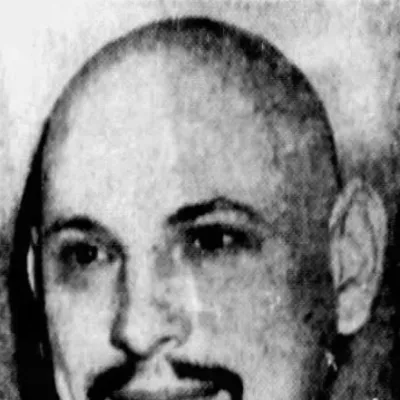
Anton LaVey
Human Design Chart
Biography
As a child of seven he studied the supernatural, moving into black magic by high school. He was a high school drop-out to hang around pool halls. Musically gifted, he become the second oboist in the San Francisco Ballet Orchestra at 16. Joining the circus in 1947 he became a lion trainer, calliope player, hypnotist, palmist, phrenologist, magician and a burlesque accompanist. He held many jobs throughout his life, including being an assistant criminologist in the San Francisco Police Dept. in 1951.
LaVey established the Church of Satan in San Francisco on 30 April 1966, holding Friday night seminars where he displayed his full drama with a flowing cape and macabre decorations. His mass included a nude woman draped over the alter and he reportedly served a baked cadaver at one time. Not averse to publicity, he displayed his pets that included a tarantula, a leopard and a lion His cult celebrated carnal indulgence, vengeance and the rule of Satan. With charismatic power and keen intelligence, he was typecast as the Devil in the movie Rosemary's Baby.
In 1950, LaVey met Carole Lansing. They married the following year, when Lansing was fifteen years old. Lansing gave birth to LaVey's first daughter, Karla LaVey, born in 1952. LaVey and Carole divorced in 1960, after LaVey became involved with Diane Hegarty.
Anton LaVey as a Generator 1/3 in Human Design
Generator 1/3 — Design at a Glance
Anton LaVey's design showed a tendency towards high endurance, which was not initiated by himself but only through responding to life impulses. He appeared as someone whose energy source lay in the sacral center – an area often associated with gut feeling or inner consent. This configuration described a specific dynamic: The energy became effective when he responded to signals from his environment and gave his inner self a clear 'yes'.
As a Generator, Anton LaVey possessed considerable power, comparable to a workhorse that remains strong and steady as long as it is motivated for its task. His central motto was not initiating but responding. When he waited for a signal and then acted upon it, this led to deep satisfaction and a feeling of fulfillment. Deviations from this pattern – whether through constant initiation without an inner signal or suppressing the impulse – resulted in frustration and energy loss.
His life's task consisted in using materialization forces by reacting instinctively to offers. This approach ensured him the necessary endurance to achieve things without falling into burnout. The mechanics of his design thus emphasized clearly: Success and satisfaction arose through waiting for the right moment and then acting in accordance with inner confirmation.
Emotional Authority
Anton LaVey showed an internal decision-making structure that required patience and temporal distance. His design carried emotional authority, meaning that his defined Emotional Center was the source of his inner guidance – regardless of which other centers were also defined. This configuration followed a permanent rhythm of emotional waves: Feelings swung between enthusiasm and rejection, with the current mood strongly coloring perception of the world.
An immediate impulse was only a snapshot, not necessarily his deeper truth. Quick reactions to these transient emotional states could lead to wrong decisions as they did not yet grasp the full context. The strength of his design lay in its ability to let these waves subside. By letting decisions 'sleep on' and taking time, he gained emotional distance. Only when intense feelings subsided did a clear, calm insight set in. This process of waiting was no sign of hesitation but rather the necessary mechanism to reach true inner clarity. Anton LaVey used this structure by not making long-term steps out of current affect but waited until the emotional flood receded and left behind a solid perspective.
The 1/3 Profile — Investigator / Martyr
Anton LaVey's design set a tendency towards synthesis from deep theoretical research and practical experimentation. His Profile 1/3, the Researcher and Experimenter, defined his life task as a cyclical process: The first line drove him to intensive knowledge gathering, while the third line required action through trial and error. This configuration meant that pure theory remained incomplete for him; insights only gained validity when physically tested.
The energy of Line 1 tended to delay due to thirst for knowledge, creating a feeling of not knowing enough to move into implementation. At the same time, however, Line 3 urged experimentation. The authenticity of his judgment emerged only through mistakes. His design signaled that experience without reflection remains blind and knowledge without practice is hollow. Therefore, people with this profile consciously venture into the uncertainty of action to develop true competence. When Anton LaVey assessed something as correct, he had previously understood it intellectually and practically tested it thoroughly. Thus, his judgment was based on double validation: logical plausibility and empirical confirmation through personal experience.
Split Definition — Defined & Open Centers
Anton LaVey's design indicated a tendency towards constant mental pressure and specific communication. His defined Head and Ajna centers created an enduring inner drive to ask questions and form concepts; this was not a choice but a mechanical reality that set him under continuous bombardment of inspiration. This mental activity flowed directly into his defined Throat center, through which he articulated what he thought – his voice was a reliable channel for his conceptual processes.
As a Generator with a defined Sacral center, he had an enormous source of vital energy, but it could only be accessed through reaction. His inner authority lay in the Solar Plexus: He had to wait out the emotional wave to gain clarity. Impulsive decisions at the peaks or troughs of this wave typically led to chaos; patience was key to emotional intelligence and making the right choices. Additionally, his defined Spleen center provided a spontaneous, intuitive warning in the present moment that he could use for his well-being, while the Root center supplied physical stress to advance in the material world.
In contrast to this strong inner mechanism stood two open centers: G and Heart. The open G center meant a lack of fixed identity; Anton LaVey tended to be shaped by his environment and sought directions through context rather than owning them himself. He was vulnerable to the question “Who am I?” when he wasn’t in the right place. His open Heart center lacked consistent willpower; he often wanted to prove his worth through promises, which usually ended in frustration due to the lack of constant energy for this purpose. The challenge lay in not filling these gaps with overcompensation but trusting his sacral response and emotional clarity.
Channels for meaning, growth and deep connection.
Anton LaVey's design indicated a tendency towards gaining abstract wisdom through complete cycle closures. This attitude was primarily shaped by the Maturity Channel 42-53, along with other mechanisms that structured his experiential world.
The Maturity Channel 42-53 connected the Root Center to the Sacral Center via Gate 42 (Growth) and Gate 53 (Beginnings). Since Gate 42 acted as a Sun, this energy dominated his essence: He did not seek quick goals but delved into experiences to complete them fully. Only through reflecting on completed cycles could he extract the wisdom contained within and make it useful for others. An untimely interruption led to frustration; the process was central to his identity.
Secondary channels also played a role. The Union Channel 59-6 connected Sacral Center and Solar Plexus via Gate 59 (Sexuality) and Gate 6 (Friction). It generated a drive towards merging and intimacy, which had to follow the emotional wave. Patience in building relationships was necessary to avoid confusion and enable true fertility.
The Acceptance Channel 17-62 connected Ajna Center to Throat Center via Gate 17 (Opinions) and Gate 62 (Details). His mind permanently organized visual patterns into logical language. He sought details to structure his worldview; what could not be integrated remained incomprehensible. This gave him the ability to clearly convey complex theories but required proper timing when speaking.
The Awareness Channel 61-24 connected Head Center and Ajna Center via Gate 61 (Secrets) and Gate 24 (Rationalizing). He experienced sudden insights (Satori), which he could not control. His mind sought silence to absorb these transformative truths and distinguish what was worth knowing.
The Life Struggle Channel 38-28 connected Root Center to Spleen Center via Gate 38 (Fighter) and Gate 28 (Player). It drove him to find personal meaning in struggles and stubbornly defend his integrity against external forces. Movement helped alleviate the associated inner stress.
The Transformation Channel 54-32 connected Root Center to Spleen Center via Gate 54 (Ambition) and Gate 32 (Continuity). It promoted ambition, driven by fear of tribal failure, to work up through talent. Recognition from others was his reward and motivation for further development.
Additionally, Gates like Gate 27 (Care), which filled activities with warmth, and Gate 3 (Mutation), which created new orders out of confusion, were active.
Individual Circuitry — Circuit Signature
Anton LaVey's design indicated a tendency towards pulsating, acoustic energy aimed at bringing change through the expression of unique individuality into the world. This mechanism originated from the Knowledge Circuit. However, in his case, this circuit ran separately: One group connected Head to Ajna Center (Awareness), another Spleen to Root Center (Life Struggle). This meant two parallel forces – mental inspiration on one hand, instinctive survival struggle on the other – that did not directly flow into each other.
Parallel to this, the Understanding Circuit linked Anton LaVey's Ajna with Throat Center (Acceptance), enabling him to articulate rational insights free from conditioning. The Meaning-Finding Circuit closed the gap between Sacral and Root Centers (Maturity), thereby transforming emotional waves from the past into tangible energy.
The Ego Circuit also connected Spleen and Root (Transformation), representing another independent line for creating resources through cooperation. Finally, in the Archer Circuit, the connection of Sacral with Solar Plexus Center (Union) was shown. This configuration linked life force with intense emotions to protect one's own genetics. Due to his split definition, these circuits existed as separate, parallel systems: The mental-communicative line (Head-Ajna-Throat) stood isolated beside the emotional-instinctive base (Solar Plexus-Sacral-Root-Spleen), without direct energy exchange between these two main blocks.
Right Angle Cross of Maya 1
Anton LaVey's Human Design profile bore the signature of the right Maya cross. This configuration was characterized by a profound, often unconscious search for meaning behind external circumstances. It wasn't superficial curiosity but an inner drive to understand the hidden structures and truths that shape life.
In Human Design, this cross connects specific energetic patterns that compel a person to question the essence of their experiences. Anton LaVey showed himself as someone who didn't merely act or react; his existence was marked by a need to unravel deeper connections. This aspect of his chart indicated a tendency to make the invisible visible and give chaos its own logic.
The mechanics of this cross described a life task centered on finding inner clarity in a complex world. For Anton LaVey, this meant that his actions and thoughts were always influenced by an underlying quest for truth. He didn't seek answers for others but had to find them for himself to remain effective. This internal orientation shaped his entire life path and determined how he dealt with challenges: by examining their fundamental significance.
Saturn Return · Uranus Opposition · Chiron Return · 2nd Saturn Return — Life Cycles
Anton LaVey's life was structured around two precise astrological cycles. His design indicated a tendency towards radical breaks and new beginnings, not arbitrary but cyclically conditioned. In 1960, at the age of 30, he divorced Carole Lansing. This marked his first Saturn return cycle, a time when old structures often lose their viability and must be definitively dissolved to make way for the next phase of life. The break in the relationship was no coincidence but the mechanical consequence of this cycle, signaling the end of one building phase.
Following that, in 1969 at age 39, he published The Satanic Bible. This fell exactly on his Uranus opposition, a cycle marking sudden liberation and revolutionary change. While Saturn ends the old, Uranus breaks remaining boundaries. For Anton LaVey, this meant breaking out into a new public career phase. The mechanics are clear here: first, the necessary separation from the familiar (Saturn), then the explosive step into the new and unexpected (Uranus). This sequence profoundly shaped his development by freeing him from private ties and pushing him into the role of a public provocateur. Events confirmed the cyclical logic of his design: structure breakdown followed by radical re-founding.
Generator · Emotional Authority — Synthesis
He was a Generator whose life was marked by an unstoppable urge for sacral activity. Energy flowed through him when he worked on themes that truly mattered to him – a tendency amplified by the defined Sacral Center and Channel of Union (59/6). This connection to the Solar Plexus Center pointed to deep emotional involvement, yet subject to waves; decisions matured over time, leading to an internal pressure to thoroughly examine things (defined Head and Ajna Centers). The line 1/3 in his Profile reinforced this cycle of research and experimentation, a drive towards self-discovered insights.
A central paradox lay in the tension between his need for deep emotional clarity and the constant urge to question and inspect (defined Head Center). Emotional authority required time for decision-making while the Generator's energy pushed him to act. This manifested in phases of intense engagement with new ideas, followed by periods of reflection – a pattern underscored by events at ages 30 and 39 when he experienced both personal and professional transformations.
6 Defined Channels
Incarnation Cross - Right Angle Cross of Maya 1
Solar Return
The Solar Return shows the moment when the sun returns to its exact birth position - your personal solar year.
Life Cycles
Discover the life cycles with a detailed triple view (birth chart, cycle chart, composite).
Human Design Profile
- Type
- Generator
- Strategy
- To respond - wait for something to respond to
- Authority
- Emotional Authority
- Profile
- 1/3 - Investigator / Martyr
- Definition
- Split Definition
- Incarnation Cross
- Right Angle Cross of Maya 1
- Date of Birth
- 11.04.1930 03:10
- Place of Birth
- Chicago, IL, United States
Frequently Asked Questions
What was Anton LaVey's Human Design type?
What Profile did Anton LaVey have?
What Authority did Anton LaVey have?
What incarnation cross did Anton LaVey have?
When was Anton LaVey born?
Discover your own Human Design
Are you also a Generator? Find out in a personal reading how to use your sacral energy correctly and discover deep satisfaction.
More Personalities
Back to overviewSissy Spacek

Aaliyah

Alexia

Anémone

Angèle

Ann-Margret
