
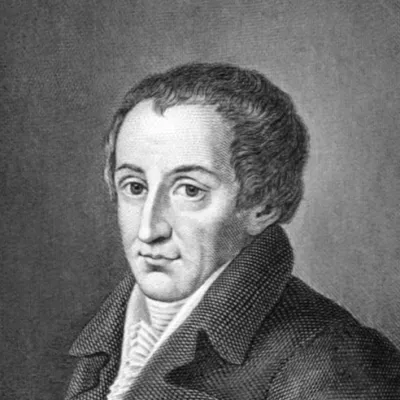
August Von Kotzebue
Human Design Chart
Biography
Kotzebue’s first comedy gave him entrée into court literary circles in Weimar, but in 1781 he was forced to go into exil. Entering government service in Russia (1783), he became president of the magistracy of the province of Estonia in 1785 and was ennobled. Kotzebue traveled abroad and spent some time writing for the municipal theatre of Vienna. Upon his return to Russia he was arrested, inexplicably, and exiled to Siberia. The emperor Paul I, just as capriciously as he had exiled Kotzebue, had him released a few months later. Kotzebue was given an estate in Livonia and made director of the German theatre in St. Petersburg.
In 1801 he returned to Weimar, but he was not on good terms with Johann Wolfgang von Goethe or with the Romantics; he went back to Russia in 1806. In 1817 he was again sent abroad by the emperor Alexander to report on current Western ideas in politics, finance, and education. Execrated by political radicals as a spy in the pay of a reactionary power, Kotzebue was assassinated in Mannheim on 23 March 1819 by Karl Sand, a member of a radical student association.
As a dramatist Kotzebue was prolific (he wrote more than 200 plays) and facile, but dramatically adroit. He also wrote some novels as well as historical and autobiographical works. Kotzebue was one of the most popular writers of his time.
Kotzebue was the father of 18 children.
August Von Kotzebue as a Manifesting Generator 1/3 in Human Design
Manifesting Generator 1/3 — Design at a Glance
August Von Kotzebue was revealed as a Hybrid being that combined the constant energy of a Generator with the lightning-fast execution speed of a Manifestor. His design called for him not to initiate himself but to respond to inner impulses. Through his defined connection between Motor Centers and Throat Center, he could skip steps and pull things into his life extremely quickly. This speed, however, carried risks: He tended to miss important stages or start multiple projects simultaneously. Acting against his internal rhythm led to frustration, aligning with his Non-Self theme.
The mechanics of his Manifesting Generator required a clear strategy: First, wait for life to give an impulse, then respond and check if his Sacral Center confirmed with a clear 'Yes'. Only upon this confirmation could he effectively utilize his creative power. When this condition was met, August Von Kotzebue found deep satisfaction in his actions. He thrived in the 'Play Mode', where variety and parallel work were not burdens but sources of energy. The demand to focus on only one thing would have harmed him; his nature required diversity to remain in a state of contentment and creative flow. His effectiveness thus depended less on linear planning than on following his inner authority and consciously steering the speed of his design, rather than blindly submitting to it.
Sacral Authority
August Von Kotzebue exhibited a decision-making structure based on direct physical resonance. As a Generator, his strategy was also his inner authority: Sacral Authority. This greatly simplified his process of orienting himself in life. He did not react through intellectual analysis or emotional deliberation but rather with an immediate physical response to external stimuli. This reaction manifested as gut feelings – audible in grunts or mhm-mhms – or as a palpable surge of energy.
When this sacral energy was engaged, he felt vital and alive. Then, seemingly inexhaustible energy became available to him, allowing him to pursue activities with great enthusiasm. His design promoted a life filled with joy and satisfaction, fully immersed in what drove him without the need for external purpose.
Additionally, his active Spleen Center served as an auxiliary instance to Sacral Authority. This gave him the ability to react particularly quickly and spontaneously. He had direct access to his physical well-being and instinctive perception. This combination allowed him to reliably be guided by these deep bodily signals, making his decisions both intuitive and physically grounded.
The 1/3 Profile — Investigator / Martyr
August Von Kotzebue's design inclined towards intensive research and experimental learning. As a person with Profile 1/3, the Researcher and Experimenter, he showed himself as someone who always had to test theoretical knowledge (Line 1) through practical application and trying out paths (Line 3). His life revolved around the process of learning from trial and error; self-earned insights were for him the only trustworthy foundations. When August Von Kotzebue made a decision or rendered judgment, he had previously scrutinized it both intellectually and through personal experience.
This profile combined the drive for foundational knowledge with the necessity to make mistakes in order to gain wisdom. Line 1 brought sensitivity towards harmony and direction, while Line 3 encouraged listening and seeking concrete evidence. Skepticism towards abstract promises was characteristic; only what he had experienced himself counted as true. This created an attitude where satire or humor often served as reactions to pessimism. August Von Kotzebue lived this dynamic of constant scrutiny: He did not seek perfect plans but functioning solutions that proved themselves in practical daily life. His judgments were thus well-founded and reliable, growing from his own, often painful experience.
Single Definition — Defined & Open Centers
August von Kotzebue was characterized by a consistent inner direction and willpower. His defined G Center gave him a reliable self-understanding as well as the ability to provide guidance to others without needing their approval. This was complemented by his defined Heart Center, which provided clear resource control and a drive to keep promises, strengthening his ego. This energy flowed into his defined Throat Center, serving as a pivot point for clearly and authentically conveying messages from will and identity to the world. His communication thus wasn't random but an expression of a deep inner structure.
At the same time, his design revealed specific vulnerabilities in mental and emotional areas. His open Head Center made him susceptible to external inspiration, which he often misinterpreted as personal pressure; he tended to seek answers that were actually found elsewhere. The open Ajna Center amplified this tendency: He absorbed concepts from his environment and occasionally confused them with personal truth, leading to uncertainty if he didn't rely on his inner authority.
Emotionally, August von Kotzebue was strongly dependent on the mood of others due to his open Solar Plexus Center. He absorbed foreign feelings and often projected these as his own moods, avoiding confrontation that could trigger an emotional wave. His open Spleen Center harbored a deep survival fear; he instinctively sought security from others, making him vulnerable to unhealthy attachments because spontaneous decisions were risky and often based on conditioned fear. The challenge was to use the stability of his defined centers to not personalize these open fields as reality.
Channels for inspiration, rhythm, change and pioneering spirit.
August von Kotzebue's design inclined towards exemplary leadership that didn't rely on instructions but rather lived through his own identity. Channel of Inspiration 1-8 connected his G Center with the Throat Center; he was designed to draw attention and inspire others through his unique presence without explanation. His impact stemmed from living as an individual, thereby changing others' perspectives.
This individual radiance received its driving force through Channel of the Beat 14-2, which linked the Sacral Center with the G Center. This tantric channel endowed him with the ability to initiate new directions by responding to his inner generative energy. He had the resources to translate innovations into material reality and encouraged others through his healthy aura to find their own direction without actively pursuing a destiny.
At the same time, August von Kotzebue was under pressure for evolutionary change through Channel of Mutation 60-3 between Root and Sacral Centers. This channel brought pulsating, sometimes melancholic energy that required innovation but also patience in waiting for the right moment to shift. He had to learn to accept the limitation that this transformation wasn't controllable but happened in sudden impulses.
Additionally, Channel of Initiation 51-25 in his Heart Center shaped his attitude. He possessed natural competitiveness and the ability to initiate others' individualization through 'shocks.' However, this only worked effectively when invited; forcing initiation led to frustration. His design challenged him to live from his inner authority so as not just to encounter but also survive these transcendent encounters, thereby strengthening the collective.
Individual Circuitry — Circuit Signature
August von Kotzebue's design inclined towards pulsating, acoustic creativity and strong individual affirmation. As a person with simple definition, all his defined centers – Throat, Identity, Sacral, Root Centers, and Heart Center – formed one continuous energetic flow. This created an integrated experience of action capability and self-expression.
The Knowledge Circuit directly connected these centers in him through the Channel of Inspiration (Gates 1-8), channeling spontaneous mental stimulation into the ability to express it vocally or through actions. The Beat Channel (2-14) gave this expression a rhythmic, lively pulse from the Sacral Center while the Mutation Channel (3-60) provided energy for radical departures from the known and new identity discovery from the Root Center. This combination promoted the urge to transform unique knowledge into effective action through emotional waves.
Parallel to this, the Focusing Circuit worked. It exclusively connected his Identity with Heart Center via the Initiation Channel (25-51), strengthening his inner self-worth and firm convictions. Since this circuit lacked a connection to Throat Center, these deep convictions often remained internal power sources that didn't primarily manifest through rhetorical argumentation but rather through the radiant presence of his identity. Both circuits colored his entire being with a melancholic yet affirming individuality.
Right Angle Cross of the Sphinx 2
August Von Kotzebue's Design carried the signature of the right cross of the Sphinx. This configuration established a specific energetic alignment characterized by a deep connection to the material aspect of life. In Human-Design, this cross describes a strategy that focuses on the physical world and the body as the primary locus of expression.
The energy of this configuration urged spiritual or higher insights not just to remain in the mind but to be concretely realized in material reality. It was a dynamic that linked abstraction with physical presence. August Von Kotzebue was structurally programmed to make ideas or visions tangible through direct bodily action and material design.
This pattern promoted an attitude of grounding. The challenge lay in maintaining the connection between inner compass and outer, visible world. His Design supported him in understanding his existence as a tool for manifesting ideas in the physical realm. It wasn't about mere dreaming but creating something tangible. Thus, the energy of the right cross of the Sphinx acted as a catalyst to bring inner truths outward and anchor them in material context. This shaped how he interacted with his environment and goals, always focusing on concrete results and physical presence.
Saturn Return · Uranus Opposition · Chiron Return · 2nd Saturn Return — Life Cycles
August Von Kotzebue's Human Design profile featured a vulnerable structure that utilized external crises as catalysts for profound internal transformations. This became evident in 1790 when he was 29 years old: Following the death of his first wife, he travelled to Paris and published the satirical work "Doctor Bahrdt". His first Saturn Return marked not just a temporal period but also a phase of condensation, where personal loss transformed into radical artistic statements.
At age 40 during the Uranus Opposition, Kotzebue returned to Germany and took over leadership of the German Theatre in St. Petersburg. This aspect promoted sudden directional changes and the need for autonomy within established structures; his career underwent fundamental transformation driven by an impulse towards realignment.
At 52 years old, he experienced a Chiron Return, a cycle marking the fulfillment of one's incarnation purpose. Kotzebue followed the Russian army to Berlin and was active in public discourse. This was not an act of healing past wounds but rather the concrete execution of his life mission: He positioned himself where his influence was most urgently needed and lived out his strategic destiny in the public sphere.
However, the structure broke under the pressure of the second Saturn Return. In 1819 at age 58, he met his end through Karl Ludwig Sand's actions. This cycle demands integration and stability; when this burden became too heavy or external circumstances overwhelmed inner cohesion, physical life ended abruptly, suggesting an overburdening of the supporting structure.
Manifesting Generator · Sacral Authority — Synthesis
He lived a life marked by a constant interplay between internal sacral reactions and the urge for external shaping (Manifesting Generator). This combination of reactive energy and the ability to quickly implement initiatives led to a dynamic lifestyle characterized by repeated phases of intense activity followed by a need for correction. The profile as an Investigator and Experimenter (1/3) amplified this process, always seeking new insights but also wanting to immediately put them into practice – often with the later need to review and adjust. His defined Throat (Communication and Manifestation) allowed him to express his inner processes and experiences, thereby influencing his surroundings.
Central to his life was a paradox between the desire for authentic expression of his own knowledge (Knowledge Circuit, Channel 1-8) and the necessity to constantly reorient and adapt himself. The cycles showed crises that came with profound changes (Saturn Return), but also career phases where he could unfold his abilities (Uranus Opposition). This tension field between the need for inner truth and adaptation to external circumstances shaped his path, ultimately leading to an abrupt end.
4 Defined Channels
Incarnation Cross - Right Angle Cross of the Sphinx 2
Solar Return
The Solar Return shows the moment when the sun returns to its exact birth position - your personal solar year.
Life Cycles
Discover the life cycles with a detailed triple view (birth chart, cycle chart, composite).
Human Design Profile
- Strategy
- To respond - wait for something to respond to
- Authority
- Sacral Authority
- Profile
- 1/3 - Investigator / Martyr
- Definition
- Single Definition
- Incarnation Cross
- Right Angle Cross of the Sphinx 2
- Date of Birth
- 03.05.1761 18:00
- Place of Birth
- Weimar/Thüringen, GER
Frequently Asked Questions
What was August Von Kotzebue's Human Design type?
What profile did August Von Kotzebue have?
What authority did August Von Kotzebue have?
Which incarnation cross was active for August von Kotzebue?
When was August Von Kotzebue born?
Discover your own Human Design
Are you also a Manifesting Generator? Find out in a personal reading how to unfold your multi-talents and direct your energy wisely.
More Personalities
Back to overviewAlain-Fournier

Aldair

Alizée

Angeli

Arletty

Artus
