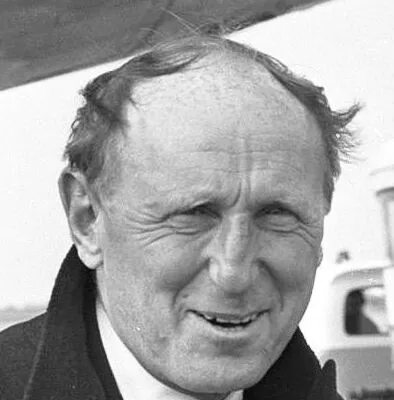
Carles Puyol
Human Design Chart
Biography
He was Barcelona's captain from August 2004 until his retirement in 2014, and appeared in 593 competitive matches for the club. He won 18 major club titles, including six La Liga trophies and three Champions Leagues.
Puyol won 100 caps for Spain, and was part of the squads that won Euro 2008 and the 2010 World Cup. In the 2010 World Cup semi-final, he scored the only goal of the game against Germany.
Puyol started a relationship with Vanesa Lorenzo in 2012. The couple had two daughters, Manuela (born 2014) and María (2016).
The Human Design of Carles Puyol: Projector 3/5
Projector 3/5 — Design at a Glance
Carles Puyol's design shows a tendency towards focused perception: He was someone who immediately recognized systemic weaknesses. This ability stems from his nature as a Projector type with a dense aura that acts like a flashlight, illuminating the darkness and identifying errors in the system.
However, this design warns against direct confrontation. If a projector addresses these deficiencies right away, it often feels unpleasant or aggressive – similar to shining bright light directly into someone's face and exposing their problems. Instead, Carles Puyol approached things with an elegant method: He shone through his own harmonious example. By embodying stability himself, he naturally drew others who then asked for his insights.
The central strategy was to wait for a respectful and sincerely meant invitation rather than immediately correcting things. This protected his radiant presence from misunderstandings. Additionally, Carles Puyol had no defined Sacral Center, meaning he did not have a constant source of life energy. Instead, he went through phases of high activity followed by necessary rest periods to avoid burnout. Living according to this rhythm and the strategy of waiting for an invitation rewarded him with success. Ignoring these mechanisms led his Non-Self theme of Bitterness into effect earlier or later.
Splenic Authority
Carles Puyol's design shows a tendency towards spontaneous decisions made in the moment, based on a fine inner impulse. This mechanism came from his authority in the Spleen, his health and alarm system. Since both his Emotional Center and Sacral Center were open – a prerequisite for this specific authority – his survival intelligence functioned as spontaneous inner knowledge about what was right. His instinct and physical well-being served as reliable indicators of the appropriate environment or company.
For Carles Puyol, the first, spontaneous impulse was the correct guide that immediately served his health. This allowed him to rigorously distance himself from harmful influences and ensured he could take good care of himself. However, this Spleen voice was a very fine impulse that only came once in the moment and could easily be drowned out by other influences. Therefore, his decision-making required high vigilance; retreating for clarification could be helpful.
Since he could only know what was right for him in the moment, plans could change short-term. Long-term commitments were thus difficult. His design needed a lot of space and flexibility to accommodate this nature rather than getting locked into long-term structures.
The 3/5 Profile — Martyr / Heretic
Carles Puyol's design shows a tendency towards gaining knowledge not through theory but through direct, often painful experimentation. As someone with Profile 3/5, the Experimenter and Hero, he initially believed nothing given and had to experience everything himself. This line of trial-and-error dynamics accepts failure as a natural part of the growth process; it transforms setbacks into practical benefit through assertiveness.
This inner learning curve stood in contrast to external perception. The fifth line projected an aura of wisdom and competence outward, regardless of whether Puyol already fully possessed this knowledge. Others saw him as an inspiring figure, a 'hero' who offered solutions. This projection created pressure: Since the profile acts for others, every experimentation was publicly visible. Failure here was not only private but occurred in the spotlight, shaping the dynamics between necessary inner learning and high external expectations.
The fifth line worked globally on strangers rather than in intimate contact. It sought solutions that provided an advantage and used its position to exert influence. For Puyol, this meant his attractiveness to others was directly linked to his willingness to take risks and learn from them. The tension lay in developing practical wisdom while the world already expected him to possess it.
Split Definition — Defined & Open Centers
Carles Puyol's Design sets a tendency for constant mental inspiration and reliable expression, paired with clear identity and intuitive protection. His defined Head and Ajna Centers generate a permanent pressure to ask questions and understand connections. This mental flow is not connected to energy for direct implementation; the Throat Center serves as a reliable channel to express these concepts once inner authority indicates the right moment. The defined Spleen supports spontaneous, moment-based decisions for health and well-being, while the G Center offers a firm direction and self-love.
At the same time, Carles Puyol is exposed to open centers of conditioning. His open Heart Center tends to want to prove worth through willpower or promises, often ending in frustration as there is no consistent energy available for this purpose. The open Sacral Center makes him vulnerable to overload from "borrowed" energy from others; he had to learn to set boundaries and respect downtime instead of pushing himself until burnout. Additionally, his open Solar Plexus absorbs foreign emotions, which can lead to identifying with moods that are not his own. His open Root Center amplifies external stress, making him risk trying to release pressure through hyperactivity that is never his own. The wisdom of his design lies in accepting the mental pressure as inspiration without having to act it out and relying on intuitive authority rather than external expectations or stress reactions.
Channels for intuitive elegance, logical order and inner clarity.
Carles Puyol's Design inclined towards spontaneous and intuitive adaptability. This quality stemmed from the Channel of Perfect Form 57-10, which connected the Spleen Center with the G Center. Through Gate 57, he was acoustically sensitive to the pitch of his environment and acted outside of thoughts or emotions. This gave him a rare clarity in the present moment as well as a deep, unwarranted self-confidence that did not require external recognition. His behavior primarily served his own physical wellbeing and survival, making him a natural role model without intending to do so.
This intuitive foundation was complemented by two complex mental layers. The Channel of Acceptance 17-62 connected the Ajna Center with the Throat Center. Here, Gate 17 visualized patterns while Gate 62 translated these into speech and details. Carles Puyol organized information logically within his inner system; he could only understand what he mentally categorized. This created a constant pressure to speak but required the right timing and invitation to ensure clarity rather than resistance.
Parallel to this, the Channel of Awareness 61-24 operated between the Head Center and Ajna Center. Gate 61 brought spontaneous inspiration from the "white noise," while Gate 24 transformed these into rational answers. This led to sudden, mutative insights (Satori) that could not be controlled. His mind sought silence and music as relief from constant mental pressure. The combination of these channels resulted in a personality that lived intuitively in the moment, while his mind constantly recognized patterns, structured details, and searched for deeper truths without actively bringing them about.
Individual Circuitry — Circuit Signature
Carles Puyol's Design featured a tendency towards analytical clarity filtered through emotional intuition. There was no direct connection between these two poles; they existed as separate, parallel forces. This results from his Split Definition: One Energy Group connected the Head and Ajna Centers (Knowledge Circuit), while another group included the Ajna and Throat Centers (Understanding Circuit).
The Knowledge Circuit operated through the Channel of Awareness. This channel connects the Head Center with the Ajna Center. It drove the urge to intuitively absorb new information and structure it mentally. It was about creating individual identity through mental transformation, not its external expression. The energy here was pulsing and focused on "now."
Parallel to this, the Understanding Circuit operated through the Channel of Acceptance. This channel directly connects the Ajna Center with the Throat Center. Here lay the ability to logically organize rational insights and clearly express them. This energy was focused, visually oriented, and aimed at improving society or the environment by strategically sharing knowledge. Since the Solar Plexus Center was not involved, it was a dispassionate ratio.
Additionally, the Integration Channel "Perfect Form," which connects the Identity and Spleen Centers, created an intuitive connection between the core of self and the instinct for self-preservation. Carles Puyol thus showed himself as someone who experienced inner transformation (knowledge) and outer communication (understanding) as two separate processes: first mental appropriation, then rational conveyance.
Right Angle Cross of Maya 1
Carles Puyol's Design points towards a deep, archetypal structure that is not defined by specific mechanical expressions in the raw content. Instead, his configuration focuses on the essence of the 'Right Maya Cross 1'. This term does not describe an individual life story or biographical fact but rather refers to a fundamental energetic template within the Human Design system.
The Right Maya Cross represents a specific pattern of energy flows and central focal points that serve as an archetypal framework. It is a static structure in the chart, outlining certain potentials and challenges without prescribing concrete actions or events. Since no further mechanical details such as defined channels or gates are specified in the raw content, interpretation remains on this general archetypal level.
For Carles Puyol, this means that his design was marked by this fundamental cross structure. It provides a background for his energetic alignment but does not offer detailed instructions for his daily actions or decisions. The emphasis lies on the existence of this archetypal form as part of his inner architecture, independent of external circumstances or specific life events. This structure acts as a constant element in his design, influencing his fundamental nature without leading to concrete behavioral patterns.
Saturn Return · Uranus Opposition — Life Cycles
Carles Puyol's Design points towards structural stability and clear identity formation in the later stages of life. This configuration is typically evident during the first Saturn Return cycle, which begins around age 28. In this phase, years of internal development and external experiences coalesce into a solid foundation for future living. It marks a moment of maturation where one's positioning relative to others becomes sharper and provides stability.
Carles Puyol participated in the World Cup at the age of 28 in 2006. This event precisely marks the beginning of this first major Saturn phase. Participation in such a global peak reflects the mechanics: what previously existed as potential or preparation now enters a phase of concrete anchoring and public visibility. The Saturn Return here does not act as a limitation but as a stabilizer, transforming already developed competence into a firm structure. For his design, this period was crucial for connecting inner clarity with external recognition to establish a basis for future actions grounded in security and proven reliability.
Projector · Splenic Authority — Synthesis
A central red thread in this Design is the dynamic interaction between recognizing patterns and the need to make them useful for others. The Projector (as type) and the defined mental pressure (Head-Ajna Center) create a natural ability to perceive inconsistencies and raise questions. This is reinforced by Channel 57-10 – an intuitive understanding of one's well-being that translates into concrete, life-enhancing behavior. Line 3/5 in Profile emphasizes this process: first gather personal experience through experimentation, then share knowledge and lead others. A continuity emerges from observation, self-examination, and the drive to anchor this knowledge in the world – a cycle guided by the defined Spleen Center as an instinctive compass.
The central paradox lies in the tension between the need for recognition (Line 5) and the inherent independence of the Knowledge Circuit. While the hero role is tempting, the knowledge from this circuit requires an authentic expression that does not rely on validation. The Projector 'projects' their perspective, yet a wrong timing or inappropriate manner can provoke resistance. There arises a tension between wanting to be seen and the necessity to align with one's internal timing (Spleen Authority) to direct energy correctly and truly make an impact.
3 Defined Channels
Incarnation Cross - Right Angle Cross of Maya 1
Solar Return
The Solar Return shows the moment when the sun returns to its exact birth position - your personal solar year.
Life Cycles
Discover the life cycles with a detailed triple view (birth chart, cycle chart, composite).
Human Design Profile
- Type
- Projector
- Strategy
- Wait for the respectful invitation
- Authority
- Splenic Authority
- Profile
- 3/5 - Martyr / Heretic
- Definition
- Split Definition
- Incarnation Cross
- Right Angle Cross of Maya 1
- Date of Birth
- 13.04.1978 10:00
- Place of Birth
- Viella, Spain
Frequently Asked Questions
What is Carles Puyol's Human Design type?
What Profile does Carles Puyol have in Human Design?
Which authority guides Carles Puyol?
What is Carles Puyol's incarnation cross?
Discover your own Human Design
Are you also a Projector? Find out in a personal reading how to unfold your leadership qualities and recognize the right invitations.
More Personalities
Back to overviewSissy Spacek

Alain-Fournier

Aldair

Anémone

Ann-Margret

Bourvil