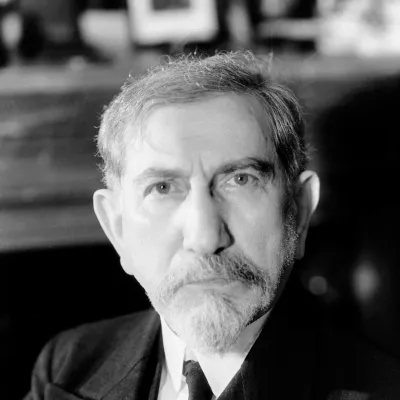
Charles Maurras
Human Design Chart
Biography
At age 14 Maurras contracted an illness that left him permanently deaf, and he took refuge in books.
In 1891, soon after his arrival in Paris, Maurras founded, with Jean Moréas, a group of young poets opposed to the Symbolists and later known as the école romane. The group favoured classical restraint and clarity over what they considered to be the vague, emotional character of Symbolist work. After the “Dreyfus affair,” which polarized French opinion of the right and left, Maurras became an ardent monarchist. In June 1899 he was one of the founders of L’Action française, a review devoted to integral nationalism, which emphasized the supremacy of the state and the national interests of France; promoted the notion of a national community based on “blood and soil”; and opposed the French Revolutionary ideals of liberté, égalité, and fraternité(“liberty,” “equality,” and “fraternity”). In 1908, with the help of Léon Daudet, the review became a daily newspaper, the organ of the Royalist Party. Over a period of 40 years, its causes were often reinforced by public demonstrations and riots, spectacular lawsuits and trials.
Maurras also acquired a reputation as the author of Le Chemin de paradis (1895), philosophical short stories. He was a prolific writer. He lost some of his political influence when on 29 December 1926, the Roman Catholic Church placed some of his books and L’Action française on the Index, thus depriving him of many sympathizers among the French clergy. The reason given for the ban was the movement’s subordination of religion to politics.
Maurras was received into the Académie Française on 9 June 1938. During the German occupation in World War II, he became a strong supporter of the Pétain government.
The Human Design of Charles Maurras: Manifesting Generator 5/1
Manifesting Generator 5/1 — Design at a Glance
Charles Maurras was revealed as a Hybrid combining Manifestor Speed and Generator Power. His design endowed him with the ability to skip steps and achieve results quickly, paired with a constant sacral life force flow. As a manifesting generator, he possessed this dual nature: the powerful endurance of the generator coupled with the direct impact power of the manifestor.
This configuration, however, carried specific risks. Maurras tended to move too fast and skip important intermediate steps, often requiring him to backtrack and fill in gaps. Additionally, his speed led him to tackle multiple things at once. Without inner consent, this multitasking frequently resulted in frustration, a central non-self theme of his type.
The strategy 'reacting instead of initiating' was crucial for him to resolve these tensions. Satisfaction arose only in the so-called 'play mode', when variety and fun went hand in hand with clear sacral confirmation - the inner 'yes'. As long as he waited on impulses and acted accordingly, his center consenting, he could effectively utilize his creative power. Parallel work then became no obstacle but a source of deep satisfaction. His design thus did not demand linear task completion but playful responding to life to avoid frustration and use energy efficiently.
Emotional Authority
Charles Maurras exhibited a decision-making structure deeply influenced by emotional waves. His inner authority lay in the defined Solar Plexus Center, meaning he was subject to the rhythmic up-and-down movement of his feelings. The world appeared colored by his current mood; a topic could seem inspiring one moment and completely negative the next. This subjective perception often made spontaneous impulses deceptive, as immediate feeling was merely a snapshot and not necessarily the truth.
For Charles Maurras, it was essential to practice time delay. Quick decisions from an emotional state risked negative consequences. Instead, his design required patience and the process of 'sleeping on it'. By letting a decision rest, intense feelings gradually subsided. This distance allowed him to find clarity and calmness. Only after this emotional frenzy had abated did true validation set in. This mechanism applied regardless of other defined centers in his chart: The Solar Plexus Center always carried the authority, so he was always dependent on this cyclical maturation process to make long-term life decisions.
The 5/1 Profile — Heretic / Investigator
Charles Maurras revealed himself as someone whose presence magnetically drew others. His design as a Hero/Researcher (Profile 5/1) established a fundamental dynamic: Line 5 projected solutions and attracted people seeking answers, while Line 1 demanded a deep, individual learning process. This constellation created tension between the outer need for service and the inner need for undisturbed research.
The mechanics described this as typical dynamics: Others instinctively sought out Maurras' 'treasure trove of knowledge', akin to an expert at conferences. This could lead to overload if clear boundaries were not set - comparable to an email inbox stuffed to bursting point. Line 5 demanded practical solutions from confusion; Line 1 required inner reflection and the endurance of fantasies for limitation.
It was about protecting one's research time from others' projections. When Maurras learned to say no, a balance emerged between personal growth (Line 1) and problem-solving for others (Line 5). The challenge lay in not valuing one's confusion as a victim status but managing clear boundaries to avoid burnout. Without this demarcation, exhaustion loomed; with it, he could optimally utilize his gifts and maintain the beneficial balance between research for oneself and service for others.
Split Definition — Defined & Open Centers
Charles Maurras revealed himself as someone with a fixed, reliable self-identity and a clear sense of direction. His design indicated a tendency towards constant communication that spoke to this identity, along with willpower and vital energy. He had permanent access to his willpower, which allowed him to keep promises and determine the course of his life. At the same time, he possessed an enormous source of vital energy in the Sacral Center, driving him to be active and use his energy for satisfying activities. His emotional wave in the Solar Plexus Center acted as inner authority; he was designed to wait out the ups and downs of these feelings before making decisions to achieve emotional clarity. Additionally, a fixed pressure from the Root Center constantly urged him forward in the material world.
In contrast, Head, Ajna, and Spleen were open. The open Head Center made him vulnerable to mental stress and confusion; he tended to get entangled in questions that weren't his own or sought external inspiration to silence his inner monologue. His open Ajna Center meant that his conceptual thinking was flexible but also susceptible to external opinions; he could easily try to secure ideas to be accepted, though his mind was actually a playground for various concepts. The open Spleen Center carried a fundamental fear of survival. He was sensitive to the well-being or lack thereof in his environment and tended to cling to people with defined Spleens to gain a sense of security, making him vulnerable to unhealthy dependencies if he didn't trust his own authority. This constellation created a person who, despite inner stability in identity and energy, was strongly influenced by external mental and existential factors.
Channels & Gates
Charles Maurras exhibited a pulsating, melancholic energy that propelled evolutionary change through individual moodiness and provocation. This configuration marked him as someone who had to wait for the right pulse while accepting limitation. The Channel of Mutation 60-3 connected the Root Center with the Sacral Center. Gate 60, the pivot point of evolutionary possibilities, demanded acceptance of limitation, while Gate 3 attempted to realize new orders. This combination generated a powerful on/off energy that was felt as mechanical moodiness and deeply in his chemistry.
Parallel to this, the Channel of Emotional Release 39-55 between Root and Solar Plexus Centers acted. Through Gate 39 of Provocation and Gate 55 of Spirit, he set an emotional wave in motion that oscillated between joy and sadness. This mechanism used provocation to test others' minds and explore his own emotional depths, with authenticity being crucial for balance.
Furthermore, the Channel of Initiation 51-25 drove him forward, connecting the Heart Center. Gate 51 of Shock brought competitive ego energy that always wanted to be first, while Gate 25 represented the spirit of self and promoted individualization through mystical initiation. This channel required patience as initiation could not be controlled but had to be experienced as a shock to expand consciousness.
Finally, he sought new emotional experiences through the Channel of Transience 36-35 between Solar Plexus and Throat Centers. Gate 36 of Crisis perceived inexperience as inadequacy, leading to adventures to set things in motion. Gate 35 of Change urged for something new since the old was felt as exhausted. This restless longing served to gain emotional wisdom through direct experience and enrich the collective through shared adventures.
Circuit Signature
Charles Maurras showed himself to be marked by a split definition, meaning two parallel existing, not directly connected energetic systems. On one hand, Sacral, Root, and Solar Plexus Centers worked together; on the other hand, Identity and Heart Centers formed a separate center.
In the Knowledge Circuit, he linked Sacral, Root, and Solar Plexus Centers. The Channel of Mutation (3-60) promoted deviations from the known, while the Channel Emotions Freeing (55-39) directed emotional waves into the Throat region. This created a pulsating, acoustic energy that initiated new change through individual expressions.
Simultaneously, in the Centering Circuit, there was a direct connection between Identity and Heart Centers via the Channel of Initiation (25-51). This configuration created inner strength and strong convictions but remained unconnected to the Throat Center. The energy was also pulsating and acoustic but led to a more introverted, individual stance as external expression was lacking.
The third active circuit was the Meaning Circuit, connecting Throat and Solar Plexus Centers. The Channel Transience (35-36) focused on reflecting past experiences. This cyclical, visual energy served to process emotional insights from the past and share them with the collective to learn from.
Left Angle Cross of Wishes 1
Charles Maurras was marked by the left cross of desires. This configuration established a specific inner orientation that influenced his life path and decisions. In Human Design, this cross describes a particular energetic structure deeply rooted in the psyche. It acts as an unspoken compass determining how needs were perceived and pursued.
For Charles Maurras, this meant that his actions were not arbitrary but guided by this underlying architecture. The left cross of desires endows the design with a certain weight and constancy in its goal-setting. It is not a superficial impulse but a deep-seated drive that remained effective over long periods of time.
Without further specific mechanical details in the raw content, the description remains limited to this fundamental imprinting. Charles Maurras lived in harmony with this structure, even if it was not explicitly named. It shaped his way of being and acting. The mechanics of this cross formed the backdrop against which his character unfolded. It was a constant companion that carried out the direction of his desires and longings. This inner logic determined what seemed desirable to him and how he sought fulfillment. Thus, the design showed a clear but unspoken orientation in his wishes and intentions.
Saturn Return · Uranus Opposition · Chiron Return · 2nd Saturn Return — Life Cycles
Charles Maurras' development followed a clear cyclical structure. In 1896, at age 28, he traveled as a reporter to the first Olympic Games in Athens. This marked his first Saturn return: a phase of professional foundation where years of groundwork often condenses into a solid result and strengthens one's positioning.
Ten years later, in 1908 (age 40), he reached a peak of public success through the Uranus opposition. He transformed his magazine into a daily newspaper. This cycle often brings sudden changes and a desire for freedom or breaking old structures, which here led to an expansion of his audience.
The most profound turning point occurred in 1925, at age 57, during his second Saturn return. In this phase of ideological radicalization, Charles Maurras called for the assassination of Interior Minister Abraham Schrameck. The second Saturn return forces confrontation with one's own limits and responsibilities; it can lead to a radical hardening or redefinition of personal stance when earlier structures are felt as insufficient. These three turning points decisively shaped his life path.
Manifesting Generator · Emotional Authority — Synthesis
Charles Maurras lived a process of continuous knowledge acquisition and transformation. His profile as Hero/Researcher (5/1) pointed to a deep knowledge base that he wanted to make available to others – a trait evident in the active use of the communication and manifestation centers. The defined sacral energy, combined with his manifesting aspects, gave him the ability to quickly grasp and express ideas (Channel Mutation 3-60), which was evident in professional successes such as transforming a magazine into a daily newspaper. The recurring cycles – especially the Uranus opposition – confirm a life marked by changes and a drive for newness.
Maurras' design, however, contained a central paradox: emotional authority stood in tension with his quick, impulsive energy. While he needed time through the defined Emotional Center to let decisions mature, the manifesting aspect pointed to a tendency to skip steps and act impulsively. This apparently led to crises (Saturn return 2) when impulsive actions did not align with inner clarity – an indication that he moved between the need for emotional maturity and the speed of his energy.
4 Defined Channels
Incarnation Cross - Left Angle Cross of Wishes 1
Solar Return
The Solar Return shows the moment when the sun returns to its exact birth position - your personal solar year.
Life Cycles
Discover the life cycles with a detailed triple view (birth chart, cycle chart, composite).
Human Design Profile
- Strategy
- To respond - wait for something to respond to
- Authority
- Emotional Authority
- Profile
- 5/1 - Heretic / Investigator
- Definition
- Split Definition
- Incarnation Cross
- Left Angle Cross of Wishes 1
- Date of Birth
- 20.04.1868 02:00
- Place of Birth
- Martigues, France
Frequently Asked Questions
What is the Human Design type of Charles Maurras?
What Profile did Charles Maurras have in Human Design?
What Authority did Charles Maurras have?
What incarnation cross did Charles Maurras have?
When was Charles Maurras born?
Discover your own Human Design
Are you also a Manifesting Generator? Find out in a personal reading how to unfold your multi-talents and direct your energy wisely.
More Personalities
Back to overviewAlain-Fournier

Aldair

Alizée

Angeli

Arletty
Artus