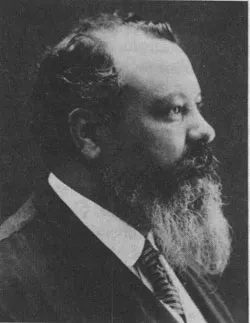
Desi Bouterse
Human Design Chart
Biography
What does Manifestor 5/2 mean for Desi Bouterse?
Manifestor 5/2 — Design at a Glance
Desi Bouterse revealed himself as someone who wanted to actively set the world in motion through his own visions. His Human-Design identified him as a Manifestor, a type that does not wait for others to invite or ask but initiates and moves forward naturally; like an emperor in ancient Rome, he had the ability to design grand plans and implement them through the efforts of others; he did not fight the battles himself but set the tone and let his followers do the work.
However, this way of moving forward polarized him strongly. Because his thinking was often faster than that of his surroundings, he was frequently misunderstood. While some people were drawn to his big dreams and followed him, he encountered fierce resistance or even hatred from others. This split into love and rejection is a characteristic pain point for this type, who cannot adapt to be universally liked.
The ideal strategy for him would have been to inform people about his intentions in advance before taking action. Had he provided this information, he could have found the right followers and experienced inner peace. If, however, he acted against this principle and moved without announcement, it resulted in a persistent deep anger in his design instead of the promised peace. His energy was geared towards forging new paths, regardless of whether everyone welcomed them or not.
Splenic Authority
Desi Bouterse demonstrated decision-making based on a fine, immediate inner impulse. His design featured Authority in the Spleen Center, indicating that he possessed an acute survival intelligence. This intuition served as a reliable alarm system: his physical well-being and spontaneous feelings immediately signaled whether a situation or environment was healthy or harmful.
For this Spleen Authority to function effectively, both the Emotional Center and the Sacral Center were open. This configuration is typical for Projectors or Manifestors. The key mechanism involved following the first impulse in the moment. This spontaneous reflex protected his health and allowed him to rigorously distance himself from harmful influences.
At the same time, this Spleen impulse was very subtle and occurred only once. It could easily be drowned out by external noise or other influences. Therefore, his strategy required high vigilance; sometimes a brief retreat helped to hear the fine inner voice again. Since his knowledge of what was "right" was always available only in the moment, his priorities often changed frequently in the short term. Long-term commitments were difficult for him; instead, he preferred flexibility and space to respond spontaneously to new circumstances without prematurely limiting himself.
The 5/2 Profile — Heretic / Hermit
Desi Bouterse revealed himself as someone carrying an inner tension between the desire for recognition and the need to withdraw. His design as a 5/2 Profile ("Hero/Natural Talent") created a contradiction: On one hand, he sought to be admired and help others (Line 5), on the other hand, he wanted to be left alone and spend time by himself (Line 2). Unlike obvious hero archetypes, Bouterse initially hid his gifts in his "cave". As long as the world had not discovered him, he worked hard on himself and used the alone-time to strengthen for a public role.
This behaviour rooted in the mechanics of the profile: Line 2 requires limitation and discipline through detailed work, while there is a fear of being a "paper tiger" if one ventures out too early. At the same time, Gate 57 (Line 5) in him addressed the further development of intuition during crises. Individual mutations should be made available to the collective to defend against new threats and increase survival by establishing new forms. Bouterse lived this dynamic by first maturing internally before showing his presence. Once he appeared, others were drawn to his clearly formulated insights, confirming the typical 5/2 dynamics: Preparation in isolation served to act effectively later without neglecting the necessary boundaries and pauses for himself.
Single Definition — Defined & Open Centers
Desi Bouterse revealed himself through a clear inner orientation and a consistent way of communication. His defined G Center gave him a firm self-image and a sense of direction, allowing him to guide others without needing their approval. This identity flowed into his defined Throat Center, which served as a pivot point to reliably carry messages from the inside out; he spoke not impulsively but from a reliable source.
At the same time, Desi Bouterse had a defined Spleen Center, allowing him spontaneous and intuitive perception in the present moment. This bodily intelligence provided immediate judgments about health and safety that he did not need to rationalize but could trust. This was complemented by his defined Root Center, which provided constant pressure to materialize or make corrections; this stress served as a motor for existential awareness and survival instincts.
In contrast, Desi Bouterse was open in several areas and thus susceptible to conditioning. His open Heart Center meant he did not have consistent willpower; he tended to prove himself through promises or seek control to demonstrate his worth rather than trust inner guidance. The open Sacral Center left him without a steady, even energy flow, so he easily experienced exhaustion when taking over the generative power of others and not pausing.
Furthermore, his Solar Plexus was open, making him receptive to foreign emotions; he could absorb moods from the environment and misinterpret them as his own instability instead of letting them go. The open Head and Ajna Centers showed a flexibility in thinking that also led him to identify with the questions or concepts of others rather than listen to his intuitive authority. This constellation shaped a life driven strongly by inner direction and intuition but requiring constant vigilance against emotional and mental influences from outside.
Channels for intuitive elegance, deep knowledge and scrutinizing logic.
Desi Bouterse revealed himself as someone who guided his actions from deep, intuitive impulses. This basic attitude came from the Channel of Perfect Form 57-10, connecting Spleen and G Center. Through Gate 57, he was acoustically sensitive to the mood of his environment; he reacted less to words than to tones. This gave him spontaneous clarity to act appropriately in the present moment and secure his survival through self-generated behavior.
Parallel to this, the Channel of Wavelength 48-16 worked. It connected the intuitive depth of Spleen (Gate 48) with the dexterity of Throat Center (Gate 16). This drove him to perfect skills through repetition and experimentation. His design sought vital information and transformed it into talent through technical mastery, which he communicated.
Another defining aspect was the Channel of Judgment 58-18 between Root and Spleen Centers. Gate 58 provided an insatiable drive for vitality, while Gate 18, the Correction Gate, constantly checked what did not work. This created a logic that questioned and corrected patterns to strive for perfection.
Additionally, isolated gates contributed to dynamics: Gate 51 brought strong willpower and adaptability to shocks. Gate 61 sought inner truth through thought mutations, while Gate 62 emphasized logical details and pattern recognition. On the personality side, Gate 15 promoted collective behavior and social organization, Gate 50 preserved traditional values as a protective reflex, and Gate 45 expressed tribal hierarchy. In his design, Gate 7 supported leadership perspective, Gate 23 enabled amoral assimilation of new ideas, Gate 35 sought change through interaction, Gate 52 required concentrated pauses for pattern correction, and Gate 53 initiated new developmental cycles.
Collective Circuitry — Circuit Signature
Desi Bouterse revealed himself through a design that combined logical clarity with intuitive self-preservation. As a simply defined type, he had a connected energetic flow between Throat, Spleen, and Root Centers as well as a separate connection between Identity and Spleen Center. This structure shaped his way of making decisions: He used Judgment (Gate 18/58) to think strategically and Wavelength (Gate 16/48) to clearly communicate these insights. This allowed him to share rational insights free from emotional distortion – a skill based on 'emotional-free ratio'. Parallel to this, the Channel of Perfect Form (Gate 10/57) secured his individual existence. Here intuitive knowledge from Spleen connected with the will of Identity Center. This connection enabled him to draw strength from reacting to life and channel it through proper behavior in the present moment. The Spleen served as a central node: It provided both the intuitive basis for strategic thinking in the Mind Circuit as well as inner wisdom for personal self-preservation in the Integration Circuit. Although both circuits used the Spleen, their functions remained separate – on one hand sharing future visions through logic, on the other navigating life circumstances safely through intuition and willpower. These dual streams shaped his ability to act: strategically focused outwardly, intuitively secured inwardly.
Left Angle Cross of the Clarion 2
Desi Bouterse showed a fundamental disposition marked by a deep inner calling: the drive to find higher meaning through personal experience and work. His design featured the "left cross of Fanfare 2," a configuration that did not presuppose an external mission or public proclamation as its primary motivation. Instead, personal transformation was at the center. It was about testing oneself, overcoming obstacles, and gaining inner clarity in the process. This energy did not manifest as a loud cry to the world but rather as a quiet, persistent force urging him to shape his own life so that it could serve as an example for others—not through words, but through lived integrity and perseverance. The focus was on the individual journey toward a deeper spiritual or existential truth, accessible only in stillness and reflection. It was a dynamic of inner growth seeking not recognition but authenticity. Thus, Desi Bouterse moved within a field where action itself became prayer, each triumph a step towards self-actualization. This structure fostered an attitude of humility and trust in one's own process, distant from external validations or societal expectations.
Saturn Return · Uranus Opposition · Chiron Return · 2nd Saturn Return — Life Cycles
Desi Bouterse revealed himself as someone who sought structure and authority, with his design showing a tendency towards establishing order frameworks. This attitude crystallized in 1975 at the age of 30: Suriname became independent and he was involved in building up the new army. This first Saturn return marked a point where years of groundwork condensed into a viable result; for his design, it was a typical moment of consolidation when inner values had come to the fore.
Later, in 1987 at the age of 42, he founded the National Democratic Party (NDP). This coincided with the Uranus opposition, a cycle often bringing deep changes and a desire for new orientation. Here his drive was not just to maintain existing structures but actively to reform them. The mechanics of this transit support breaking old patterns in favour of an independent platform. Both events underscore how astrological cycles in his life acted as catalysts for concrete political and military actions that solidified his role in the social fabric.
Manifestor · Splenic Authority — Synthesis
He was a Manifestor who throughout his life exhibited a strong tendency to act as a pioneer and drive visions forward. This manifested in a natural authority based on inner knowledge and instinctive assessment (Spleen Center), paired with a need to express these impulses through communication (defined Throat Center). The Profile of Hero/Natural Talent indicates that he found himself in the role of trailblazer – a pursuit for recognition, yet accompanied by a desire for autonomy and solitude. The connection between intuitive insight and self-determined action (Channel 57-10) underscored his ability to initiate evolutionary changes through his own behavior.
A central tension lay in the discrepancy between the desire for influence and recognition as a hero and the necessity of relying on inner authority and independent action. Events surrounding independence (Saturn Return) and party founding (Uranus Opposition) reveal a pattern: he initiated changes but simultaneously relied on intuitive decisions in the moment – a combination of strategic foresight and spontaneous action, which propelled him forward yet could also lead to conflicts.
3 Defined Channels
Incarnation Cross - Left Angle Cross of the Clarion 2
Solar Return
The Solar Return shows the moment when the sun returns to its exact birth position - your personal solar year.
Life Cycles
Discover the life cycles with a detailed triple view (birth chart, cycle chart, composite).
Human Design Profile
- Type
- Manifestor
- Strategy
- To inform others before acting
- Authority
- Splenic Authority
- Profile
- 5/2 - Heretic / Hermit
- Definition
- Single Definition
- Incarnation Cross
- Left Angle Cross of the Clarion 2
- Date of Birth
- 13.10.1945 07:05
- Place of Birth
- Domburg, Suriname
Frequently Asked Questions
What was Desi Bouterse's Human Design type?
What profile did Desi Bouterse have?
What authority did Desi Bouterse have?
What incarnation cross did Desi Bouterse have?
When was Desi Bouterse born?
Discover your own Human Design
Are you also a Manifestor? Find out in a personal reading how to use your initiation power peacefully and dissolve resistance.
More Personalities
Back to overviewChristian-Jaque
Kesha

Lucebert
Marilyn

Masaccio
Papus