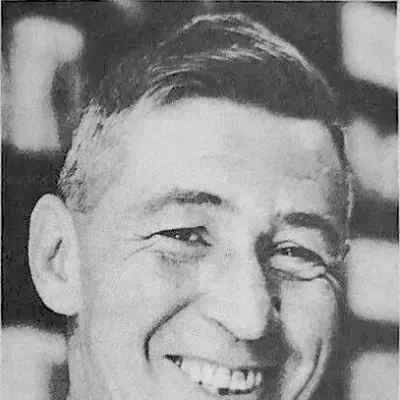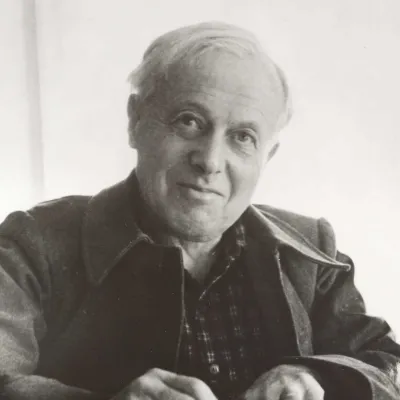
Eugen Rosenstock-Huessy
Human Design Chart
Biography
Rosenstock-Huessy served as an officer in the German army during World War I. His experience caused him to reexamine the foundations of liberal Western culture. He then pursued an academic career in Germany as a specialist in medieval law, which was disrupted by the rise of Nazism. In 1933, after Adolf Hitler became Chancellor of Germany, he emigrated to the United States where he began a new academic career, initially at Harvard University and then at Dartmouth College, where he taught from 1935 to 1957.
Although never part of the mainstream of intellectual discussion during his lifetime, his work drew the attention of W. H. Auden, Harold Berman, Martin Marty, Lewis Mumford, Page Smith, and others. Rosenstock-Huessy may be best known as the close friend of and correspondent with Franz Rosenzweig. Their exchange of letters is considered by scholars of religion and theology to be indispensable in the study of the modern encounter of Jews with Christianity. In his work, Rosenstock-Huessy discussed speech and language as the dominant shaper of human character and abilities in every social context. He is viewed as belonging to a group of thinkers who revived post-Nietzschean religious thought.
Rosenstock-Huessy's wife, Margrit, died in 1959. In 1960, Freya von Moltke became Rosenstock-Huessy's companion. She was the widow of Helmuth James von Moltke, who had opposed National Socialism and was executed by the Nazis.
Eugen Rosenstock-Huessy as a Projector 6/2 in Human Design
Projector 6/2 — Design at a Glance
Eugen Rosenstock-Huessy appeared as someone who radiated with a dense, focused aura and immediately recognized the weaknesses in other people's systems. His design inclined him to bring 'light into darkness', similar to a bright flashlight that targets hidden problems directly. However, this ability to see errors in the system right away could be misunderstood if addressed directly and abruptly; his surroundings often reacted defensively, as if being painfully illuminated.
The most effective expression of this mechanism was not to intrude actively but to attract through his own harmony. Eugen Rosenstock-Huessy did not have a constant, intrinsic energy source like the defined Sacral Center in other types. Instead, he lived through phases of high activity and rapid work speed followed by necessary rest periods for regeneration. Without these pauses, there was a risk of burnout. His strategy involved waiting for valuable and honest invitations from his environment. When he followed such an invitation, he was rewarded with success. Pursuing another path or ignoring the need for an invitation led to feelings of bitterness as an expression of his non-self later on. Thus, his influence rested less on constant action than on targeted, invited guidance.
Splenic Authority
Eugen Rosenstock-Huessy demonstrated decision-making based on a fine, immediate internal signal. His inner authority lay in the defined Spleen Center, which required that his Emotional and Sacral Centers be open – a configuration unique to Projectors or Manifestors. The Spleen served as his health and alarm system, equipped with pronounced survival intelligence. This manifested as spontaneous knowledge about whether a situation, environment, or society was right for him. His instinct and physical well-being acted as reliable indicators; the first impulse in the moment made the correct choice and immediately benefited his health. Thus, he could rigorously shield himself against harmful influences.
This Spleen voice, however, was a very fine impulse that only came once and could easily be overshadowed or ignored by other influences. This required high vigilance; occasionally, a retreat helped to hear the decision clearly. Since the right course of action became known only in the moment, plans often changed at short notice. Long-term commitments were difficult; instead, Eugen Rosenstock-Huessy preferred spontaneity and maintained much freedom and flexibility in his life to avoid unnecessary constraints.
The 6/2 Profile — Role Model / Hermit
Eugen Rosenstock-Huessy showed himself as an experimental spirit in his youth who learned through trial and error. This early stage corresponded to the 3-line of his profile, which dominated before Saturn's return. He accumulated numerous personal experiences, with withdrawal after mistakes being the driving principle.
After his thirtieth birthday, however, the sixth line was activated. Eugen Rosenstock-Huessy metaphorically retreated into a 'cave' to look back at his past experiments from great distance. This phase of intense reflection served for healing and deep self-knowledge. From this isolation emerged wisdom that he later made accessible to others.
This development was marked by specific energies. The sixth line imparted him the natural ability for problem-solving and mutation. This gift was altruistically intended to enable the right spirit in others but often appeared provocative or was initially not accepted, as its effectiveness required time. Simultaneously, the second line of his profile introduced the theme of withdrawal. It conveyed a specific aura of willpower and ego strength. Eugen Rosenstock-Huessy used retreat for recovery when his ego was threatened or showed courageous reactions to challenges. This combination of problem-solving mutation and strategic withdrawal shaped his path from an experimental youth to a wise counselor.
Single Definition — Defined & Open Centers
Eugen Rosenstock-Huessy's Human Design profile leaned towards clear, reliable communication that drew from a deep bodily intelligence. His defined Throat Center served as a focal point for messages, while his also defined Spleen Center provided spontaneous judgments and intuitive knowledge in the moment. This configuration shaped an expression style that spoke not from abstract theory but from existential perception.
At the same time, his profile was marked by several open centers, making him susceptible to external influences. His open Head Center lacked consistent mental inspiration; he tended to engage with questions that were not his own or sought answers for others' problems, which could lead to internal pressure. His open Ajna Center allowed flexible thought processes and the absorption of many concepts but did not offer a firm personal opinion or theoretical structure that he could claim as absolutely true.
His open G Center meant that Eugen Rosenstock-Huessy lacked a fixed identity or direction. He relied on initiation by others and being in the right place to discover who he was and where he was going. His open Heart Center lacked consistent willpower; he tended to want to prove his worth or make promises he could not keep, rather than trusting his inner authority. Additionally, his Sacral Center was open, making him vulnerable to exhaustion from borrowed energy and difficult to set boundaries. The open Solar Plexus Center absorbed the emotions of the environment, causing him to feel emotionally uncomfortable or avoid confrontation to maintain stability. Finally, his open Root Center took on external stress, leading to a feeling of pressure that he did not generate himself and often had to escape to find peace.
Channels for intuitive perception, experimentation and clear presence.
Eugen Rosenstock-Huessy exhibited a connection between intuitive depth and the need to lead skills towards mastery. This attitude stemmed from Channel Wave 48-16, linking his Spleen Center with his Throat Center. Gate 48 sought life-critical information while Gate 16 considered new experiments and perfected skillfulness. Through repeated practice, this technical mastery transformed into a talent that required recognition and resources to flourish.
Parallel to this, the Channel Lightning Flash 57-20 acted as a Juxta-configuration. It connected Gate 57 (intuitive insight) with Gate 20 (the Now). This enabled him to articulate spontaneous truths in the moment and awaken others' inner survival intelligence. His verbal outbursts often reached the core of an issue faster than other people's reflective analyses.
In addition, his personality featured Gates for provocation and adaptation. Gate 39 provided fuel for mutation through analysis and adrenaline, while Gate 38 resisted to preserve individual integrity. Gate 51 responded with willpower to shocks and offered both competitive and mystical potentials. In the design, Gate 8 contributed a desire to individually advocate for group goals and make new contributions through reinforcement. Additional influences came from Gate 56 (mental abstraction), Gate 32 (continuity), and Gate 31 (leadership through energetic transmission). Together, these elements shaped a personality that combined deep knowledge with clear, present-focused communication.
Collective Circuitry — Circuit Signature
Eugen Rosenstock-Huessy was characterized by a simple, coherent energetic structure. His defined centers – Throat and Spleen Centers – formed a single continuous flow, leading to a clear, focused expression style.
This connection manifested concretely in the Knowledge Circuit through Channel Lightning Flash (Gates 20–57). Here he linked his Throat Center with his Spleen. This configuration promoted intuitive, creative insights that were immediately articulated into words. These were spontaneous ideas stemming from the subconscious and directly expressed without prolonged deliberation.
Parallel to this, the Understanding Circuit operated through Channel Wave (Gates 16–48). This channel also connected Throat and Spleen Centers but with a different quality: it was about sharing logical, rational insights. The energy was focused on making complex connections understandable and strategically disseminating knowledge.
Since both circuits utilized the same centers, intuitive creativity and rational analysis merged in his expression. He could convey inspiring impulses as well as structured logic through the same channel – the voice. This resulted in a unique communication style that united emotions (from the Knowledge Circuit) with pure ratio (from the Understanding Circuit) to drive change and open new perspectives.
Left Angle Cross of Individualism 1
Eugen Rosenstock-Huessy carried the design of the left cross of individualism. This configuration set a specific internal tension: the drive for personal autonomy and the expression of one's identity, coupled with a deep connection to community and the desire to serve or lead it.
In Human Design, this cross often marks a turning point in collective consciousness where the rigid structures of the Middle Ages broke down and the individual came to the forefront. For Eugen Rosenstock-Huessy, this did not simply mean freedom in a modern sense but rather a complex task: he had to learn to find his own voice without disconnecting from the group or conversely shape the community so that it would not suffocate the individual.
This pattern showed itself as an ongoing balance between 'I' and 'We'. It was not about a conflict that needed resolution, but rather a dynamic source of power. The challenge lay in integrating these two poles – neither falling into isolated self-seeking nor selfless accommodation. His design challenged him to set an example through his own authenticity and thus change the structure of community from within by criticizing it externally or blindly following it. This duality shaped his way of moving through social structures and taking responsibility.
Saturn Return · Uranus Opposition · Chiron Return · 2nd Saturn Return — Life Cycles
Eugen Rosenstock-Huessy's design showed a tendency towards structural anchoring, which was evident in clear milestones of his professional development. This configuration acted as an inner compass for building authority and recognition within established systems. The first Saturn return often marked the transition from a learning phase to a stable position. In 1914, at age 26, Eugen Rosenstock-Huessy expanded his teaching privileges in state law – a step that made this mechanical necessity of institutional confirmation and professional legitimacy concrete. This was not mere coincidence but rather the typical condensation of years of groundwork into a viable result as foreseen by this cycle for his design.
Later, another dynamic came into play: the pressure to expand and break old boundaries, characteristic of the Uranus opposition. This life stage often demanded a redefinition of one's work in relation to the outside world. In 1931, at age 43, Eugen Rosenstock-Huessy published his most famous work 'The European Revolutions and the Character of Nations'. This publication corresponded with the mechanical impulse to carry personal insights into a broader public field and thus expand one's influence sustainably. Both events illustrate how the specific architecture of his design shaped certain life phases – once through anchoring in the system, later through breaking new paths for publication and impact.
Projector · Splenic Authority — Synthesis
He was a projector whose life was marked by a profound recognition of patterns and an ability to shed light on darkness (Throat Center connected with Spleen Center via Channel of Wavelength). This tendency to recognize dysfunction combined with an inner authority based on spontaneous instinct – a fine impulse that guided him towards what was healthy and right for him. Through Line 6 in the Profile, he developed an intensive capacity for reflection and wisdom that attracted others in later life stages (role as an exemplar). This process of recognition, intuitive evaluation, and deep insight seems to draw a red thread through his work.
At the same time, a paradox emerged between the desire to share his observations – the natural function of a projector – and the need to heed the fine impulses of his Spleen Center's authority. The tendency to address system errors immediately (Gate 16/48) stood in tension with the need for inner demarcation and protection of one's well-being. This may have led to an interplay between the desire for influence and the necessity to withdraw and process the gained insights before sharing them – a cycle that was reinforced by Saturn return and Uranus opposition.
2 Defined Channels
Incarnation Cross - Left Angle Cross of Individualism 1
Solar Return
The Solar Return shows the moment when the sun returns to its exact birth position - your personal solar year.
Life Cycles
Discover the life cycles with a detailed triple view (birth chart, cycle chart, composite).
Human Design Profile
- Type
- Projector
- Strategy
- Wait for the respectful invitation
- Authority
- Splenic Authority
- Profile
- 6/2 - Role Model / Hermit
- Definition
- Single Definition
- Incarnation Cross
- Left Angle Cross of Individualism 1
- Date of Birth
- 06.07.1888 00:45
- Place of Birth
- Berlin, GER
Frequently Asked Questions
What was Eugen Rosenstock-Huessy's Human Design type?
What Profile did Eugen Rosenstock-Huessy have in Human Design?
What Authority did Eugen Rosenstock-Huessy possess?
What incarnation cross did Eugen Rosenstock-Huessy carry?
When was Eugen Rosenstock-Huessy born?
Discover your own Human Design
Are you also a Projector? Find out in a personal reading how to unfold your leadership qualities and recognize the right invitations.
More Personalities
Back to overviewSissy Spacek

Alain-Fournier

Anémone

Ann-Margret

Bourvil
Hergé