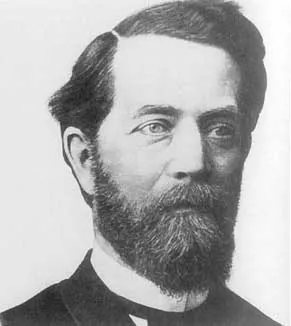
Felix Klein
Human Design Chart
Biography
Felix Klein — Projector with Profile 4/6
Projector 4/6 — Design at a Glance
Felix Klein revealed himself as someone who possessed the ability to immediately recognize flaws in a system. His design inclined him to point out blind spots in others with a dense, focused aura like a bright flashlight. This Projector energy shed light precisely where darkness still reigned or processes were bumpy.
However, this direct confrontation with truth could quickly be perceived as unpleasant when Felix Klein addressed these flaws immediately. Shining the bright light directly into someone's face often provoked resistance rather than insight. The more elegant expression of his design was to glow harmoniously himself. By bringing his own processes in order, he became attractive; others then sought out his advice and asked for his secret tips.
His strategy was therefore to wait for a respectful and sincerely meant invitation from his environment before sharing his insights. Since his sacral center was undefined, Felix Klein did not have constant intrinsic life energy. He experienced phases of high activity followed by necessary rest periods to avoid burnout. Living according to this rhythm of invitation and recovery rewarded him with success. Ignoring this structure led sooner or later to his non-self theme: Bitterness.
Emotional Authority
Felix Klein exhibited a fundamental disposition of the emotional wave: His perception was always colored by his current mood. In one moment, he could be totally enthusiastic about something, in the next, the same thing would come out negatively. This up and down was not a weakness but rather the signal of his defined Emotional Center carrying his inner authority.
This emotional authority took precedence over all other defined centers in his design. His feeling at any given moment was merely a snapshot, a first impression that did not necessarily represent his truth yet. Quick, spontaneous decisions based on such an emotion often had negative consequences, as they were based on fleeting impulses.
The mechanics of his design required patience and time. Felix Klein needed to let decisions mature in order to gain deeper and more comprehensive insight. This meant he had to take the time to properly consider things and ask himself multiple times. Only when intense feelings subsided over time did he gain emotional distance. Then clarity and calmness set in – a sign that he had gone through the process. This strategy was especially important for long-term decisions that could have a significant impact on his life course. Through this waiting, he avoided mistakes resulting from premature action during emotional highs or lows.
The 4/6 Profile — Opportunist / Role Model
Felix Klein's design inclined him to distinguish himself in the first three decades of his life through intense experimentation in relationships and friendships. This phase initially appeared like the spontaneous energy of Line 3, driven by Profile 4/6. Only with the return of Saturn, that is after the age of 28, did a fundamental change occur: The inner conflict between heart and head became effective. Felix Klein then often found himself torn between the deep desire to belong to a community (Line 4) and the simultaneous urge to withdraw to ponder the meaning of life (Line 6).
This tension shaped his later years. He was expected to take on the role of a wise role model through cooperation with others. Here, the fourth line of Gate 27 played a central role: It conveyed transpersonal care and generosity. However, Felix Klein had to learn to curate his network carefully so as not to lose strength through blind sharing or get hurt by false people. At the same time, the sixth line of Gate 41 acted as a trendsetter force. It conferred new superiority on other generations but often kept this hidden to avoid endangering special advantages. Thus emerged a person who shared and led but always remained vigilant about whom he really let into his innermost circle.
Split Definition — Defined & Open Centers
Felix Klein's design revealed a tendency towards persistent mental pressure and a clear, independent identity. His defined Head and Ajna centers created a constant internal drive to question and form concepts – independent of external validation. However, this process was purely cognitive; without direct energy for implementation, fighting against his nature often led to frustration. Instead, he learned through patience to wait for the right moment to inspire others with his ideas.
Parallel to this, his defined G Center provided a reliable self-love and sense of life direction. He could show others new paths without becoming dependent on them, as long as he did not try to force them into his direction. His defined Heart Center also offered stable willpower: He kept promises and worked independently, setting his own rhythm between effort and rest.
As an inner authority, his defined Solar Plexus guided him. Felix Klein learned to wait out the waves of his emotions before acting. This emotional clarity emerged only after navigating through fluctuations; impulsive action at the peaks or troughs of this wave led to chaos and later regret.
His open centers strongly shaped his vulnerabilities. His open Throat Center tended to feel pressured, forcing attention through speaking rather than waiting for invitations to speak. His open Sacral Center made him vulnerable to borrowed energy from the environment; he risked overexertion if he did not pause and set boundaries, as he lacked a constant generative force. Additionally, his open Root Center absorbed external stress, leading to a feeling of chaos that he did not generate himself. Finally, his open Spleen Center was vulnerable to survival fears and the temptation to cling to uncertain situations for false security.
Channels for logic, pioneering spirit and true connection.
Felix Klein's mind was marked by constant filtering of patterns, stemming from Channel Logic 63-4 connecting Head Center with Ajna Center. Here Gate 63 of Doubt worked together with Gate 4 of Formulating: A mind that used skepticism as an essential part of truth-seeking and only accepted answers confirmed in consistent, verifiable patterns. Unstable patterns triggered mental pressure in him, demanding logical resolution.
Alongside this analytical sharpness, Felix Klein possessed a deeper competitive energy aimed at individualization. Channel Initiation 51-25 linked Heart Center (Gate 51 of Shock) with Gate 25 of Holy Spirit. This configuration drove him to test limits and develop awareness of his uniqueness through personal triumphs. He was designed to endure initiations as mystical processes of self-realization, reinforcing others' authenticity rather than forcing them into submission.
In interpersonal domains, Felix Klein sought clear mutual agreements. Channel Community 37-40 linked Solar Plexus Center (Gate 37 of Friendship) with Heart Center (Gate 40 of Solitude). This created a dynamic where emotional clarity and willpower were necessary to build trust. He waited for proper invitations to find his place in a group, understanding that true connection required time and respectful exchange processes.
Additionally, individual gates acted as supportive nuances: Gate 27 brought genetic care for the tribe, while Gate 28 fostered the ability to assess risks in the present moment. Gate 41 propelled him through emotional crises towards evolutionary development, and Gate 31 enabled him to understand leadership as an energetic transmission. Gate 64 helped translate past experiences into clear mental concepts, while Gate 49 promoted loyalty to principles within a family or tribal context. Gate 22 gave him a calm openness for social mutations, and Gate 55 brought extreme emotional fluctuations requiring conscious reactions to internal states.
Individual Circuitry — Circuit Signature
Felix Klein's design showed someone who combined inner strength with clear thinking structure. His chart presented a Split Definition, creating two independent energetic blocks: cognitive and emotion-will based areas. This separation meant his logical thinking did not directly flow into his emotional impulses or will; both worked parallel to each other.
In the Centering Circuit, Channel Initiation connected Identity with Heart Center. This gave Felix Klein deep individual conviction and strong self-esteem. His personality appeared solid and brave, clearly expressing his own uniqueness. Since this circuit lacked a connection to Throat Center, these deep convictions often remained internal and were not necessarily verbally articulated.
Parallel to this, the Understanding Circuit through Channel Logic formed a direct bridge between Head and Ajna Centers. Here Felix Klein developed the ability to logically structure information and strategically think for the future. This energy was focused and rational, free from emotional coloring, helping him grasp and share complex connections clearly.
The Ego Circuit closed with Channel Community linking Heart to Solar Plexus Center. This fostered in Felix Klein a sense of mutual support and resource exchange within a group. However, lacking connection to Sacral Center, he needed pauses for regenerating his emotional energy. Overall, these three circuits shaped his essence through a mix of inner constancy, rational clarity, and social responsibility.
Right Angle Cross of the Unexpected 1
Felix Klein's design carried the signature of the right cross of the Unexpected. This configuration established a fundamental disposition characterized by spontaneous turns and unpredictable developments throughout life. In Human-Design, this cross marks a specific energetic alignment where life does not follow a linear path but is instead shaped by sudden insights or external circumstances that can abruptly change one's course.
For Felix Klein, this meant his experience was governed by a dynamic in which the unexpected was not an interruption but a central component of his existence. The mechanics of this cross describe a tendency to not bind oneself to rigid plans but rather to respond flexibly to surprising impulses. It was a life energy that operated through discontinuity: moments of clarity or change often occurred without much warning and required an inner readiness to embrace the new, rather than resist it.
This structure influenced Felix Klein's approach to challenges. Instead of striving for continuous progression, his design showed a preference for being suddenly struck by new, often surprising perspectives during phases of silence or waiting. The right cross of the Unexpected bestows a certain unpredictability on one's character that is not arbitrary but based on a deep resonance with the constantly changing conditions of one's environment. Felix Klein thus lived in a rhythm that integrated the element of surprise as a driving force and enabled him to remain capable of action even when circumstances changed rapidly and unexpectedly.
Saturn Return · Uranus Opposition · Chiron Return · 2nd Saturn Return — Life Cycles
Felix Klein's design established a tendency towards structural anchoring, which was condensed through cyclical tests. His first Saturn return marked 1875 with his marriage to Anna Hegel, the beginning of a stable life phase where personal commitments served as a foundation. This phase laid the groundwork for later professional shifts.
The Uranus opposition cycle manifested in 1886 with a move to Göttingen. This step aligned with the mechanical drive towards expansion and reorientation, leaving behind old structures to make room for new impulses. It was a moment of breaking free from previous paths in favor of a broader perspective.
At age 51, his Chiron return occurred, a fulfillment cycle where the incarnation cross unfolded. In 1900, mathematically and scientifically oriented subjects were formally equalized with humanities at German schools. This reflected the inner logic of his design: His life mission found external recognition and purpose without needing to be understood as healing but rather as flourishing.
His second Saturn return in 1905 crowned this development. The official acceptance of Klein's reforms into the Meran proposals confirmed the long-term effectiveness of his work. Here, years of groundwork condensed into a sustainable, institutionally anchored result that underscored his strategic orientation.
Projector · Emotional Authority — Synthesis
Felix Klein was a projector who, through his defined emotional center and the logic channel (Gate 63/4), possessed a deep ability to recognize patterns and formulate questions that prompted others to think. This combination led to an internal pressure to understand and question things, driving him always to uncover the potential and weaknesses in existing systems. His profile as a networker/role model (Line 4/6) suggests he sought connection while also feeling compelled to think beyond conventional boundaries and develop new perspectives – a trait evident in his professional shifts.
Felix Klein's life was marked by the paradox between the need to form connections (Sakral Center in the Centering Circuit) and a detached, analytical stance (defined Head Center). He sought validation through relationships (evident event: marriage) and professional success (reforms were accepted), yet his inner compass continually steered him back towards introspective engagement and the pursuit of clarity. This tension between social involvement and intellectual independence shaped his path as he acted both within a community and always ventured new paths (move to Göttingen).
3 Defined Channels
Incarnation Cross - Right Angle Cross of the Unexpected 1
Solar Return
The Solar Return shows the moment when the sun returns to its exact birth position - your personal solar year.
Life Cycles
Discover the life cycles with a detailed triple view (birth chart, cycle chart, composite).
Human Design Profile
- Type
- Projector
- Strategy
- Wait for the respectful invitation
- Authority
- Emotional Authority
- Profile
- 4/6 - Opportunist / Role Model
- Definition
- Split Definition
- Incarnation Cross
- Right Angle Cross of the Unexpected 1
- Date of Birth
- 25.04.1849 07:30
- Place of Birth
- Düsseldorf, Germany
Frequently Asked Questions
What was Felix Klein's Human Design type?
Which Profile did Felix Klein have?
What Authority guided Felix Klein?
What incarnation cross was assigned to Felix Klein?
When was Felix Klein born?
Discover your own Human Design
Are you also a Projector? Find out in a personal reading how to unfold your leadership qualities and recognize the right invitations.
More Personalities
Back to overviewSissy Spacek

Alain-Fournier

Anémone

Ann-Margret

Bourvil
Hergé