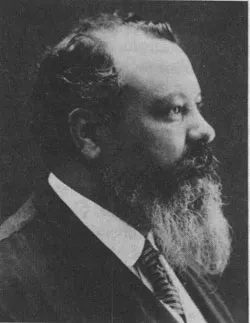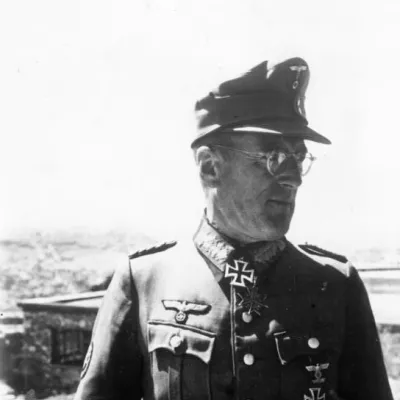
Ferdinand Schoerner
Human Design Chart
Biography
In his military career he ascended rapidly through the ranks, becoming Supreme Commander on 16 January 1945. He used harsh measures to maintain morale under disintegrating conditions of the end of the war. It is said that he shot privates and colonels with equal zeal for the smallest infractions. As the Third Reich crumbled, he flew his own light plane to Austria . He ended up being turned over to the Russians who sentenced him to ten years in prison. After his release in April 1955, he returned to Germany where he was charged with manslaughter and served four years in prison there.
Died on 6 July 1973 in Munich.
The Human Design of Ferdinand Schoerner: Manifestor 5/2
Manifestor 5/2 — Design at a Glance
Ferdinand Schoerner revealed himself as a pioneer and visionary whose design predisposed him to lead the world in new directions. His nature resembled that of an emperor in ancient Rome: He possessed the great vision but did not wage the necessary wars himself; instead, he sent others out to expand his realm. This role brought with it a specific dynamic. Since his plans and dreams often exceeded what others understood, he polarized strongly. Some people loved him for these grand visions and followed him, while others rejected or even hated him because of them. The central pain point lay in being misunderstood because his thinking was frequently faster than that of his surroundings. To find the right followers, it was crucial to inform others timely and precisely about his intentions. This strategy of informing was key to his success. If he followed this strategy, his design rewarded him with a feeling of inner peace. Living against this nature, however, led to persistent, deep-seated anger within him. His life was thus shaped by the tension field between visionary leadership and the necessity for clear communication.
Emotional Authority
Ferdinand Schoerner revealed himself as someone who never made decisions in the heat of the moment but always let them ripen. His design was marked by Emotional Authority, meaning that his defined emotional center held inner guidance – regardless of which other centers were also defined. This configuration subjected him to a constant wave of emotional ups and downs. The world appeared colored by his current mood; excitement present in one moment could turn into deep rejection the next. Since this immediate feeling was merely a fleeting first reaction, not the final truth, spontaneous decisions often would have had negative consequences. Instead, his nature required patience and conscious hesitation. He used the time between emotional troughs and peaks to gain clarity. Only when intense feelings subsided and an emotional distance emerged did calmness set in. This process of repeatedly thinking through and 'sleeping on' options was essential for him, especially regarding long-term life decisions that would significantly influence his further path. Through this strategy of delay, he avoided mistakes from impulsive surrender or rejection and made decisions from a deeper, more comprehensive understanding.
The 5/2 Profile — Heretic / Hermit
Ferdinand Schoerner revealed himself as someone who oscillated between the urge for public recognition and the need to withdraw. His design carried an inner contradiction: He wanted to help others and be admired, yet simultaneously sought refuge in his 'cave' to be alone. Unlike open heroes, Ferdinand Schoerner initially hid his gifts from the world. As long as the world did not discover him, he worked hard on himself and used this time for preparation towards a leadership role.
This conflict stemmed from his Profile 5/2. Line 5 brought potential for leadership and crisis resolution; it demanded respect as a genetic leader who brings intuitive innovations. At the same time, line 2 was selective: It helped others in distress often unnoticed and released emotional energies to guide people through difficulties. This support occurred only when specifically requested.
Ferdinand Schoerner risked frustration if he passively waited for 'discovery'. His design challenged him to set his own boundaries and maintain necessary alone time while daring to carry his clear insights outward. Only through this active presence could he find the appreciation that his leadership instinct sought without sacrificing his inner peace.
Triple Split Definition — Defined & Open Centers
Ferdinand Schoerner was characterized by a consistent inner structure that arose from the interplay of his defined centers. His defined G Center gave him a reliable sense of self-identity and a clear direction for his personal path; he knew who he was and where his journey led, without being dependent on others. This inner security was reinforced by his defined Heart Center, which granted access to willpower and ego strength. Schoerner could keep promises and actively work towards his goals while being mindful of acknowledging his own worth and gaining recognition for his achievements.
His communication occurred through a defined Throat Center, serving as the pivot point to translate energies from his design into words and actions. Since his throat was connected to his heart, he often spoke from a place of wanting and doing – “I want to do this” – making his statements direct and action-oriented. At the same time, he possessed a defined Solar Plexus Center that acted as his inner authority. Schoerner learned to wait out the waves of his emotions before making decisions; this patience allowed him emotional clarity and deep insights since he did not react impulsively but used time to fully grasp situations. His defined Spleen Center supported this through spontaneous intuition in the present moment, while the defined Root Center provided the necessary pressure to move forward in the world and master existential challenges.
In contrast, his Head, Ajna, and Sacral Centers were open. The open Head and Ajna Centers made him susceptible to mental confusion or adopting foreign concepts that he could not accept as his own truth to maintain clarity. Especially the open Sacral Center meant that he did not have a constant energy flow; he tended to be influenced by the energy of his environment and had to learn to set boundaries to prevent exhaustion, as he could not rely on permanent generative power.
Channels for pioneering spirit, life purpose and emotional authenticity.
Ferdinand Schoerner was someone who not only lived competition himself but also skillfully awakened it in others. This attitude resulted from the Initiation Channel 51-25, which connected his Heart Center through the shock of Gate 51 with universal love at Gate 25. He had the ability to recognize the potential for individualization in others and – if invited – set the necessary impulse to move them forward. His design also carried a stubborn determination to follow a personal path even against resistance. The Life Struggle Channel 38-28 linked the adrenaline-charged energy of his Root Center (Gate 38) with the intuitive value assessment of his Spleen (Gate 28). This gave him the strength to use struggles as meaning-makers and defend his integrity against external distractions. Simultaneously, he sought new experiences to gain emotional depth. The Impermanence Channel 36-35 drove him through the Crisis Gate (36) and Change Gate (35), pushing beyond familiar boundaries while learning to navigate the emotional waves of these adventures.
Additionally, specific Gates shaped his expression: Gate 45 in his Throat Center combined tribal energy and expressed willpower, while Gate 26 in his Heart brought innovative impulses into the conservative tribe. Gate 6 regulated biological limits through friction, and Gate 62 ensured logical detail work and pattern recognition. Gate 13 collected experiences for continuity, Gate 10 integrated complex behavior, Gate 2 enabled evolutionary direction changes, Gate 1 emphasized unique creativity in the here and now, and Gate 16 promoted mastery through experimentation. These configurations worked together to form Ferdinand Schoerner into an individual who presented himself through authentic struggle, initiated change, and experiential wisdom.
Individual Circuitry — Circuit Signature
Ferdinand Schoerner was marked by three separate, parallel functioning energy blocks that did not flow into each other. In the Centering Circuit, Channel 25-51 connected his Identity with his Heart Center. This gave him inner strength and strong personal convictions, but due to a lack of connection to his Throat Center, these were often difficult to express in words. His nature was thus more individualistic and inward-looking than communicatively open.
Parallel to this, the Knowledge Circuit worked through Channel 28-38 between Spleen and Root Centers. Here intuition for what is necessary combined with survival struggle energy drove a pragmatic adaptation to life circumstances forward. This connection ensured a direct, instinctive reaction to challenges without new mental concepts or creative innovation being involved – these channels were missing in him.
A third isolated block consisted of the Meaning Circuit: Channel 35-36 connected his Throat Center with his Solar Plexus. This allowed Ferdinand Schoerner to directly translate emotional waves and past experiences into expression. He shared felt insights with his environment, learning from the past. Since these three circuits were energetically separate, he experienced these forces as distinct life domains: inner conviction, instinctive action, and emotional expression stood side by side without a continuous flow between mind, heart, and intuition forming.
Left Angle Cross of Confrontation 1
Ferdinand Schörner's design indicated a tendency towards direct and often confrontational interactions. He was someone who did not avoid conflicts but saw them as necessary steps toward clarity and truth. This attitude stemmed from his left cross of Confrontation 1, a configuration aimed at uncovering illusions.
For Ferdinand Schörner, this meant that he propelled himself forward through honest, though painful, dialogues. He did not seek harmonious solutions at any cost but rather what was truly right. His path led him through overcoming resistance and misunderstandings to deeper insights. Confrontation was no obstacle for him but the tool to make hidden structures visible and provide clarity to himself as well as others. Through this direct approach, he learned to define his own truth independent of external expectations or social demands. His life was marked by repeatedly addressing questions that were uncomfortable yet necessary for his personal growth and understanding of his environment.
Saturn Return · Uranus Opposition · Chiron Return · 2nd Saturn Return — Life Cycles
Ferdinand Schörner's design showed a tendency towards structural rigidity under pressure, with outer crises often forcing inner clarity. This dynamic became active in 1934: at the age of 42 during the Uranus opposition, which traditionally signals breaks and new roles, he was promoted to Major and head of Group 4 in Department 3. The career development here marked less a sudden rise than a necessary realignment of his authority within a changing system.
At the age of 49, the Chiron return cycle began, marking a period of blooming and fulfillment of incarnation purpose. In 1941, Schörner received the Knight's Cross of the Iron Cross. This success was no coincidence but rather the visible unfolding of his design: His specific energy found its highest form of expression and recognition in this phase, representing the peak of his operational effectiveness.
However, around the age of 60 during the second Saturn return period, there came a consequential reckoning with earlier structures. In 1952, he was sentenced to 25 years of forced labor for war crimes. For his design, this crisis meant not only punishment but also an unavoidable confrontation with the long-term consequences of his actions. The Saturn cycle demanded here the complete integration of responsibility for the lived life, thereby breaking external existence while defining inner structure through this harsh reality.
Manifestor · Emotional Authority — Synthesis
Ferdinand Schörner lived as a Manifestor whose essence was marked by an internal vision and the drive to shape (Manifestor type). This energy found expression in a strong desire for individuality and the ability to create new things – fueled by the knowledge circuit and Channel 51/25, which promoted initiation and transformation. His profile as Hero/Natural Talent (Line 5/2) suggests that while he strove to use his abilities and find recognition, he also valued autonomy and withdrawal. Emotional authority required a process of inner maturation before decisions could be made – a slower rhythm contrasting with the direct energy of the Manifestor.
A central paradox in Schörner's design lay in the tension between his desire for influence and need for isolation. He was destined to give impulses and initiate changes (Channel 51/25), yet the lines of his profile showed ambivalence: the drive for recognition clashed with withdrawal into his own world. This may have led to internal conflict manifesting in the highs and lows of his life cycles – from career successes (1934, 1941) to confrontation with the consequences of his actions (1952).
3 Defined Channels
Incarnation Cross - Left Angle Cross of Confrontation 1
Solar Return
The Solar Return shows the moment when the sun returns to its exact birth position - your personal solar year.
Life Cycles
Discover the life cycles with a detailed triple view (birth chart, cycle chart, composite).
Human Design Profile
- Type
- Manifestor
- Strategy
- To inform others before acting
- Authority
- Emotional Authority
- Profile
- 5/2 - Heretic / Hermit
- Definition
- Triple Split
- Incarnation Cross
- Left Angle Cross of Confrontation 1
- Date of Birth
- 12.06.1892 07:00
- Place of Birth
- Munich, GER
Frequently Asked Questions
What was Ferdinand Schoerner's Human Design type?
What Profile did Ferdinand Schoerner have in Human Design?
What Authority did Ferdinand Schoerner have?
Which incarnation cross was assigned to Ferdinand Schoerner?
When was Ferdinand Schoerner born?
Discover your own Human Design
Are you also a Manifestor? Find out in a personal reading how to use your initiation power peacefully and dissolve resistance.
More Personalities
Back to overviewChristian-Jaque
Kesha

Laurent-Eynac
Lucebert
Masaccio
Papus