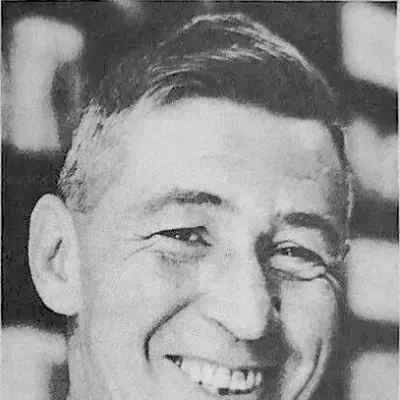
Ferdinand von Spee
Human Design Chart
Biography
He the son of Rudolf Graf von Spee and Fernanda, nee Tutein. He studied medicine and humanities in Bonn and Kiel from 1879 to 1882. He died on 14 March 1937 in Kiel, aged 81.
Ferdinand von Spee as a Projector 1/3 in Human Design
Projector 1/3 — Design at a Glance
Ferdinand von Spee was someone who could instantly recognize weaknesses in systems and people with clear vision. His Projector design gave him a dense, focused aura, like a bright flashlight that pointed directly to blind spots around him. This ability to identify errors in the system immediately was his primary power.
However, this sharpness required a specific approach to avoid being perceived as aggressive or unpleasant. Instead of addressing problems head-on – which often provoked resistance – Ferdinand von Spee was most effective through his own example. By embodying harmonious states, he attracted others who then sought his leadership voluntarily. His strategy involved waiting for a respectful and honest invitation before offering advice.
Since Projectors lack a defined Sacral Center, Ferdinand von Spee lacked a constant internal energy source. Instead, he experienced phases of high productivity followed by necessary rest periods for regeneration. Ignoring this rhythm quickly led to exhaustion. Living according to the principle of maintenance and responding to invitations brought him success. Failing to follow this strategy resulted in feelings of not being himself, manifesting as bitterness – a clear signal that he was going against his natural mechanics.
Emotional Authority
Ferdinand von Spee exhibited a decision-making structure based on overcoming emotional waves rather than immediate clarity. His design was characterized by emotional authority, meaning his defined Emotional Center served as the internal guiding force – regardless of other defined centers. This configuration subjected him to constant ups and downs of emotions; his perception of the world was always colored by his current mood. What appeared inspiring in one moment could turn negative in another. For Ferdinand von Spee, immediate feelings were only a snapshot, not yet the deeper truth. Quick, spontaneous decisions based on emotional states carried the risk of negative consequences.
The mechanics of his inner authority required patience and time. To reach true clarity and calmness, he needed to let decisions mature, often over several nights. Only when intense emotions subsided and an emotional distance was gained did the right insight emerge. This process of “polishing” and rethinking was not a sign of weakness but the necessary path to penetrate temporary emotional coloring and recognize the stable truth beneath it. This strategy was particularly important for long-term decisions that significantly influenced his life course. By waiting for the emotional wave to subside, he secured a solid foundation for his actions.
The 1/3 Profile — Investigator / Martyr
Ferdinand von Spee was a person whose essence was shaped by the Investigator/Innovator Profile (1/3). His life followed the logic of learning, experimentation, and error. The first line of his design demanded thorough theoretical preparation and time for development; it ensured that he gathered knowledge before acting. Often this led to an inner hesitation: the feeling of not knowing enough could delay practical implementation. Yet this caution served the quality of his later judgments.
The third line simultaneously drove him to actively try things out and learn from mistakes. Here, his ability to cope with shocks through experience was evident. When obstacles appeared or official channels seemed blocked, his design relied on secret interactions and hidden means – a mechanism that strengthened his ambition. Through this combination of deep theoretical examination (Line 1) and practical experimentation (Line 3), he developed insights that were both intellectually grounded and life-tested. If he deemed something good, he had previously put it to the test thoroughly. His judgment was thus based not on mere theory or blind faith in established structures but on a personal, rigorous testing of reality. This dynamic sharpened his trust in self-earned conclusions through the process of hiding, charming, and overcoming obstacles.
Split Definition — Defined & Open Centers
Ferdinand von Spee was characterized by a persistent mental pressure that drove him to ask questions and understand connections. This definition between the Head Center and Ajna Center created a specific type of thinking; he was constantly involved in the process of conceptualization, where inspiration often appeared as an unresolved question. His thoughts flowed directly into his communication through the defined Throat Center, allowing him to reliably convey his mental processes and answers outward.
At the same time, Ferdinand von Spee possessed a deep emotional authority through his defined Solar Plexus Center. This meant that truth for him did not lie in the moment but revealed itself over time. He relied on waiting out the waves of his feelings to gain clarity rather than reacting impulsively to emotional highs or lows. His defined Root Center provided a constant physical pressure and stress, propelling him forward in the material world and helping him cope with existential challenges.
In contrast, his design revealed several areas of receptivity. His open G Center lacked a fixed identity; he tended to blend into his environment and often sought direction or love from others rather than generating it himself. The open Heart Center made him vulnerable to the pressure of proving his worth, which could lead him into spirals of promises and disappointment. Additionally, his open Sacral Center was sensitive to the energy of others, causing him to feel overwhelmed when he did not trust his inner authority and set boundaries. Finally, the open Spleen Center revealed a fundamental fear of survival, leading him to cling to uncertain people or situations to simulate a sense of well-being. This constellation required patience and faith in the right moment rather than constant action from uncertainty.
Channels for synthesis, structuring and awareness.
Ferdinand von Spee was characterized by a deep emotional bond with his tribe, where Channel 19-49 (Synthesis) combined the pressure for belonging with strict principles. This configuration demanded loyalty and clear boundaries for his own group, strongly shaping his interpersonal relationships. Parallel to this, Channel 61-24 (Awareness) transformed spontaneous inspiration from the Head Center into rational insights. Ferdinand von Spee received knowledge not through logical deduction but as sudden breakthroughs that he then had to structure. Channel 43-23 (Structuring) further conveyed these insights: The Ajna Center synthesized inspired knowledge and expressed it clearly through the Throat Center. This allowed him to communicate innovative perspectives, even if they were initially perceived as foreign. His challenge lay in trusting his own pace of understanding rather than planning prematurely. Additional facets emerged through Gate 51 with its strong willpower and adaptability, Gate 57 fostering intuitive clarity, Gate 54 linking worldly ambition with spiritual striving, and Gate 53 driving a desire for new experiences and pioneering spirit. On the personality level, Gate 22 with its calm openness and Gate 35 seeking change through interaction were influential. In his design, Gate 38 contributed to preserving individual integrity through resistance, while Gate 41 propelled evolutionary development through emotional crises. Gate 16 promoted experimental mastery, and Gate 63 drove the mental process through doubt and a search for security. This combination created a profile that oscillated between tribal loyalty and individual, inspired innovation.
Individual Circuitry — Circuit Signature
Ferdinand von Spee exhibited a divided energetic structure containing two independent power fields. One field connected the Root Center with the Solar Plexus Center, while Head, Ajna, and Throat Centers formed a second, separate network. This separation meant that emotional waves from the Solar Plexus did not flow directly into the mental expression structure; instead, there existed two parallel adjacent energies fulfilling different functions.
In the realm of communication, the Knowledge Circuit was at work. Here Ferdinand von Spee connected his Ajna Center with his Throat Center through Channel 24-61 (Awareness) and his Head Center with his Ajna Center through Channel 43-23 (Structuring). This configuration promoted the ability to structure new insights and express them clearly in speech. It was about expressing a unique identity and providing new knowledge content, focusing on awareness and logical order.
Parallel to this, the Ego Circuit operated in the emotional realm. Through Channel 49-19 (Synthesis), Ferdinand von Spee connected his Solar Plexus Center with his Root Center. This created a rhythmic, pulsing energy aimed at synthesis and finding connections. Although this circuit is traditionally associated with resource building, he lacked the connection to the Sacral Center; instead, the emotional rhythm between instinct (Root) and feeling (Solar Plexus) dominated here. Both circuits operated as independent systems: one for mental clarity and expression, the other for inner emotional synthesis.
Right Angle Cross of Penetration 1
Ferdinand von Spees design carried the signature of the right cross of penetration. This configuration conveyed an inner urgency to not only understand existing structures but actively break through and reform them. It was an energy aimed at transformation: old things often had to be broken in order for new ones to emerge. Ferdinand von Spee integrated this dynamic force into his life rather than passively succumbing to it.
In Human Design mechanics, this cross describes a specific life task: the ability to bring about profound changes and transform both one's own identity and environment. It is not a static stance but an ongoing process of letting go and starting anew. For Ferdinand von Spee, this meant that his path was marked by phases of intense inner work in which he had to leave behind old patterns to be true to himself. This penetrating power helped him see obstacles not as dead ends but as necessary steps for further development. His life energy thus flowed towards continuous renewal, touching and changing both personal and external realities.
Saturn Return · Uranus Opposition · Chiron Return · 2nd Saturn Return — Life Cycles
Ferdinand von Spees design showed a tendency toward structural anchoring and step-by-step authority development. His career path followed this pattern: in 1882 at the age of 27, he began as an assistant for embryology in Kiel. This marked his first Saturn return, a cycle that often brings years of groundwork into solid professional structures. The inner order sought its external expression here.
Twenty years later, in 1897 at the age of 42, he married Anna Schaaffhausen. This time fell on the Uranus opposition, a phase in Human Design that triggers sudden changes and the need for new freedom or binding. The marriage was no coincidence but an expression of this dynamic life turn, breaking old patterns and creating new connections.
His Chiron return around 1902 (age 47) brought his appointment as ordinary professor by Kaiser Wilhelm II. This cycle is not a healing phase in the psychological sense but a fulfillment cycle: one's incarnation cross unfolds increasingly when living according to strategy and authority. Meaning and purpose were experienced here, as his academic role reached its full significance.
The second Saturn return in 1910 (age 55) crowned this development with the award of the title Geheimer Medizinalrat. This was not just an honor but institutional confirmation of a long-structured position. Ferdinand von Spee did not live passively through these cycles; he used their energies to create stable, recognized positions that mirrored his inner architecture.
Projector · Emotional Authority — Synthesis
Ferdinand von Spee was a projector whose life seemed marked by a deep longing for understanding and recognition. The defined Head Center (with the Channel of Synthesis) points to a constant mental pressure to explore connections and formulate principles – a drive shown in cycles through scientific work and the formulation of ideals. The ability to recognize errors in the system (projector design), corresponding with an emotional authority that avoids quick conclusions and instead requires a maturing confrontation with one's inner truth, led to self-earned and tested insights others could trust (Profile 1/3).
Central for Ferdinand von Spee was the tension field between the need for recognition of his principles (Gate 49) and sensitivity towards the needs of others (Channel of Synthesis). He sought connection with the 'tribe,' yet simultaneously, knowledge from the Head Center challenged him to question existing norms and create new ones – a process amplified by emotional waves. The cycles show that success and recognition often came with confirmation of these principles, while relationships might require balancing the expression of one's individuality and adaptation to others.
3 Defined Channels
Incarnation Cross - Right Angle Cross of Penetration 1
Solar Return
The Solar Return shows the moment when the sun returns to its exact birth position - your personal solar year.
Life Cycles
Discover the life cycles with a detailed triple view (birth chart, cycle chart, composite).
Human Design Profile
- Type
- Projector
- Strategy
- Wait for the respectful invitation
- Authority
- Emotional Authority
- Profile
- 1/3 - Investigator / Martyr
- Definition
- Split Definition
- Incarnation Cross
- Right Angle Cross of Penetration 1
- Date of Birth
- 05.04.1855 16:30
- Place of Birth
- Medebach, GER
Frequently Asked Questions
What was Ferdinand von Spee's Human Design type?
Which Profile did Ferdinand von Spee have?
What Authority did Ferdinand von Spee have?
What incarnation cross was assigned to Ferdinand von Spee?
When was Ferdinand von Spee born?
Discover your own Human Design
Are you also a Projector? Find out in a personal reading how to unfold your leadership qualities and recognize the right invitations.
More Personalities
Back to overviewSissy Spacek

Alain-Fournier

Anémone

Ann-Margret

Bourvil
Hergé