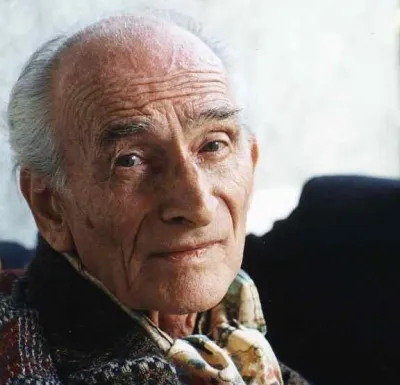
Fernand Braudel
Human Design Chart
Biography
Braudel has been considered one of the greatest of the modern historians who have emphasized the role of large-scale socioeconomic factors in the making and writing of history. He can also be considered as one of the precursors of world-systems theory.
He died 27 November 1985.
Fernand Braudel — Manifesting Generator with Profile 1/3
Manifesting Generator 1/3 — Design at a Glance
Fernand Braudel proved to be someone who could quickly draw things into his life without losing the constant energy source of a Generator. His manifesting Generator design combined the endurance of the Sacral Center with the ability to skip steps. This hybrid nature allowed him to push projects forward at a speed that pure Generators often couldn't achieve. However, this speed carries risks: if he moved too quickly, he would skip necessary steps and have to backtrack later, causing frustration – a classic non-self experience for this type. Additionally, he tended to pursue multiple tasks simultaneously, driven by various impulses. The strategy was not to initiate himself but to react to life. Only when the Sacral Center gave a clear 'yes' after an 'antest', should he act. Regular checks to ensure the inner approval continued were crucial to prevent the creative drive from turning into overexertion. With the correct application of this strategy, he found deep satisfaction. The advice to focus on one thing at a time went against his nature; instead, he thrived in the 'play mode', where variety and parallel work fueled his energy as long as his inner authority was 'on board'.
Sacral Authority
Fernand Braudel showed himself to be someone whose decision-making was characterized by a direct physical resonance. As a Generator, he possessed the sacral authority that also served as his strategy and simplified his process. This inner guidance did not come through intellectual analysis but as an immediate reaction to external stimuli. His system responded with a palpable gut feeling or a surge of energy, often manifesting in bodily sounds like grunts or affirmations.
The prerequisite for this clear guidance was his open Emotional Center, ensuring that decisions stemmed from stable sacral energy rather than fleeting moods. When his sacral motor engaged with a topic, he felt vital and alive. He then had inexhaustible energy and tackled his work with great enthusiasm. This configuration allowed him to immerse himself in his activities without the need for external purposefulness. He lived with joy and satisfaction, driven by the inner confirmation that only occurred with appropriate resonance. This mechanism allowed him to reliably guide himself by his physical well-being rather than being determined by external expectations or planned deliberation.
The 1/3 Profile — Investigator / Martyr
Fernand Braudel showed himself to be someone who combined theoretical knowledge and practical experience inseparably. His design as Profile 1/3, the Researcher and Experimentalist, inclined him to not only study things but to test them through his own actions. This profile thrives on trial and error; it wants to learn (Line 1) and experiment (Line 3). Often, the risk was that fear of insufficient knowledge would block implementation, yet Line 3 always urged action to learn from mistakes.
His judgments were therefore particularly trustworthy, as they were tested both theoretically and practically on heart and gut. Braudel possessed the ability to remove obstacles and bring unions (Gate 59), which helped him cross boundaries. At the same time, he was marked by constant self-analysis (Gate 20), leading to high self-confidence. However, this self-reflection could also lead to the immediate 'here and now' sometimes not being fully perceived. The combination of the need to clarify uncertainties through observation and the urge for experimental verification shaped his way of gaining insights. He sought self-earned truths validated by his own experience rather than relying on mere assumptions.
Single Definition — Defined & Open Centers
Fernand Braudel revealed himself as someone who shaped his communication and actions from a deep, bodily intuition. His design linked his defined Throat Center directly to his defined Spleen Center. This meant that he did not speak from abstract theories or emotional waves but articulated spontaneous, existential truths. His voice was a direct expression of what his body recognized as healthy and correct in each moment. This connection created a precise, instinctive way of expression that was free from excessive intellectual filtering.
As a Generator with a defined Sacral Center, he had a constant source of vital energy. However, this power was only available to him when he responded to external stimuli and did not initiate on his own. His defined Root Center, also connected to the Spleen, generated a specific pressure that promoted survival and material order. This stress served not for emotional drama but for existential correction and progress in the physical world.
At the same time, Fernand Braudel was marked by several open centers, making him susceptible to conditioning. His open Head Center led to occasional mental confusion or being overwhelmed by the pressure to find answers to foreign questions. He tended to engage with intellectual puzzles that were not his own concern. His open Ajna Center amplified this: he absorbed concepts and opinions from his environment without identifying them as his own truth. His open G Center meant that he did not have a fixed, unchanging identity but was defined by the right places and people. If he was in the wrong place, he felt lost; in the right place, his direction crystallized. His open Heart Center prevented him from proving his value through promises or competition, while his open Solar Plexus Center made him absorb and amplify the emotions of others without recognizing them as his own. This openness required patience to separate his reactions from absorbed moods.
Channels for change, powerful manifestation and caring preservation.
Fernand Braudel revealed himself as someone deeply rooted in the rhythms of change and material preservation. His design was marked by the tension between sudden innovation and the need to maintain structures.
Central was the Channel of Mutation 60-3, linking the Root to the Sacral Center. This connection between the Gate of Limitation (60) and the Gate of Order (3) generated a pulsating, often melancholic energy. Braudel had to learn to accept limitation and move beyond the confusion of a new beginning. This channel brought evolutionary change, which was unpredictable and required phases of silence for new impulses to develop underground.
Simultaneously, the Channel of Charisma 34-20, linking the Sacral to the Throat Center, was at work. Through the Gate of Power (34) and the Gate of Now (20), a strong urge for manifestation arose, but it had to be based on sacral reaction. This energy allowed him to act with impressive speed and express his vitality, provided he remained connected to his inner guidance to avoid obsession.
The Channel of Preservation 27-50 rounded off this profile. It linked the Sacral to the Spleen Center through the Gate of Care (27) and the Gate of Values (50). This gave him the ability to take responsibility for the community and protect traditional values. His aura attracted trust as he instinctively knew how to obtain resources and communities.
Additionally, prioritized Gates like Gate 59 contributed to the genetic strategy of bonding, while Gate 55 promoted emotional awareness and mood shifts. Gate 62 in the Personality emphasized logic, patience, and pattern recognition, supporting his analytical depth. Gate 19 connected him to resources and territory, and Gate 28 in the design called for decisions in the here and now. Overall, Braudel showed a complex interplay of mutative change, charismatic presence, and preserving care.
Individual Circuitry — Circuit Signature
Fernand Braudel was marked by a simple definition, suggesting a coherent, continuous energetic structure. His defined centers – Sacral, Root, Throat, and Spleen – formed a cohesive unit, making his actions and perceptions appear as an integrated whole.
The Knowledge Circuit in him linked the Sacral to the Root Center through the Channel of Mutation. This promoted the ability to follow one's own path and to discover new knowledge through deviation from the known. The pulsating energy of this channel supported transformation and the expression of individual identity.
In the Protector Circuit, the Channel of Preservation between the Sacral and Spleen Centers was active. This connection linked life force with the instinctive knowledge of the Spleen. It dealt with primal themes like protection, defense, and the preservation of family or genetic line. The energy focused on what was necessary to secure survival and care for the self.
The Integration Circuit linked the Throat to the Sacral Center via the Channel of Charisma. Here, power was gained from reacting to life and expressed acoustically in the present moment. This connection allowed intuitive impulses to be directly translated into words, making his individuality effective in the present moment.
Together, these circuits formed a design based on the expression of his unique identity. Fernand Braudel used his life force to initiate change through mutation and charisma, while the protective instinct formed the basis for these expressions. The simple definition ensured that these energies did not operate in isolation but as a flowing process.
Right Angle Cross of the Sleeping Phoenix 3
Fernand Braudel revealed himself through a profound connection between his inner compass and the ability to organize complex structures. His design was characterized by the configuration 'The right cross of the sleeping phoenix 3'. This specific orientation combined the energy of self-recognition with the power to systematically structure and preserve knowledge.
In Human Design, this cross describes a synthesis of the Identity Center and the Intellectual Structure Center. It points to a person who not only acts intuitively but also translates their experiences into a coherent, long-term understanding. The 'sleeping' nature of this phoenix cross implies that this ability did not always remain active in the foreground but worked as a quiet, underlying structure that came to the fore in moments of clarity.
For Fernand Braudel, this meant a tendency to penetrate superficial events and recognize the timeless patterns behind them. He used his inner authority to not only gather information but to bring it into a logical, sustainable order. This mechanism fostered a work style that prioritized patience and depth rather than quick, superficial reactions. His strength lay in forming a clear, structural truth from the chaos of data that held beyond the immediate context.
Saturn Return · Uranus Opposition · Chiron Return · 2nd Saturn Return — Life Cycles
Fernand Braudel showed himself as someone whose professional path was marked by clear cycles of condensation and confirmation. His design tended to gather in phases of intensive work, anchoring results at specific life stations. This became visible in 1932, at the age of 30, with his return to Europe and subsequent teaching positions at three Lycées in Paris, marking his first Saturn Return. In this cycle, years of groundwork often condensed into stable structures; Braudel used this phase to solidify his position in the academic world and establish a stable basis for his further career.
Later, in 1950, at the age of 48, the Chiron Return occurred. This cycle corresponds to the phase of bloom, in which the individual's incarnation cross unfolds if one has lived according to their own strategy and authority. For Braudel, this inner development culminated in his appointment to the chair of the history of modern civilization at the Collège de France. This event was not just a career step but a visible confirmation of his life purpose. The mechanism here shows how inner maturity and external recognition synchronize in the Chiron Return: the long-term alignment with his essence led to a position that reflected his deepest calling and made his sense of purpose tangible.
Manifesting Generator · Sacral Authority — Synthesis
Fernand Braudel was a Generator whose life was marked by a profound drive for exploration and the grasping of the underlying structures of the world. The sacral authority, fueled by the steady energy of the defined sacral center, led him to an immediate engagement with the environment – a 'Yes' or 'No' based on the physical reaction to external stimuli. This impulse, combined with the Profile of the Researcher and the Experimenter, led to an unceasing cycle of theoretical confrontation and practical verification, where he strengthened insights through repeated testing and application. The Channel of Mutation (3-60) points to a capacity to accept limitations and move through changes, which was evident in his professional turns.
A central paradox lay in the combination of the speed of the Manifesting Generator and the necessity not to skip steps. Braudel ventured into new fields of knowledge and experimented, yet the melancholy of the mutation channel and the pulsating energy of the knowledge circuit pointed to an inner tension between the desire for rapid progress and the necessity to fully grasp the complexity of the matter under investigation. This dynamic was evident in phases of intensive research, followed by periods of consolidation and writing, in which he transformed and communicated the accumulated knowledge.
3 Defined Channels
Incarnation Cross - Right Angle Cross of the Sleeping Phoenix 3
Solar Return
The Solar Return shows the moment when the sun returns to its exact birth position - your personal solar year.
Life Cycles
Discover the life cycles with a detailed triple view (birth chart, cycle chart, composite).
Human Design Profile
- Strategy
- To respond - wait for something to respond to
- Authority
- Sacral Authority
- Profile
- 1/3 - Investigator / Martyr
- Definition
- Single Definition
- Incarnation Cross
- Right Angle Cross of the Sleeping Phoenix 3
- Date of Birth
- 24.08.1902 10:00
- Place of Birth
- Meuse, France
Frequently Asked Questions
What was Fernand Braudel's Human Design type?
What profile did Fernand Braudel have?
What authority did Fernand Braudel have?
What incarnation cross did Fernand Braudel have?
When was Fernand Braudel born?
Discover your own Human Design
Are you also a Manifesting Generator? Find out in a personal reading how to unfold your multi-talents and direct your energy wisely.
More Personalities
Back to overviewAldair

Alizée

Angeli
Arletty
Artus
Balthus