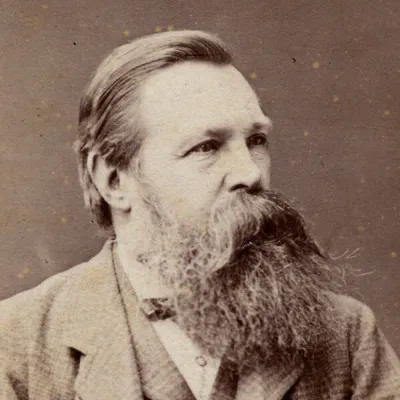
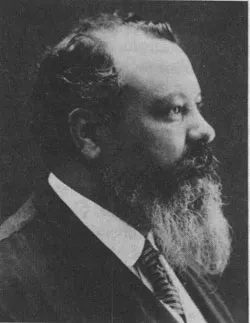
Friedrich Engels
Human Design Chart
Biography
Born in Barmen, Prussia, to a prosperous mercantile family, Engels rejected his family's devoutly pietistic values from a young age. He became involved with the Young Hegelians while performing military service in Berlin and embraced a materialist philosophy. In 1842, his father sent him to Manchester, England, to work in a cotton mill in which the family had an investment. His experiences of the industrial working class there led him to write his first major work, The Condition of the Working Class in England (1845).
In 1844, Engels began a permanent partnership with Marx in Paris. Together they worked to critique the prevailing idealist philosophies and develop their materialist conception of history, notably in The Holy Family (1845) and The German Ideology (unpublished in their lifetimes). They became active in the Communist League, which commissioned them to write the Manifesto.
Friedrich Engels — Manifestor with Profile 1/4
Manifestor 1/4 — Design at a Glance
Friedrich Engels revealed himself as a pioneer and visionary whose design predisposed him to lead the world into a new future. His humanity resembled that of a Roman emperor: He possessed the grand vision of an encompassing empire or system, but did not personally wage the necessary wars and battles. Instead, he sent others to conquer foreign lands for him and realize his plans.
This style of leadership inevitably created polarization. Since Friedrich Engels often thought ahead of his environment, he was frequently misunderstood. While some people loved his great dreams and followed him, others hated him precisely because of these huge visions. This conflict between supporters and opponents was a central point of pain in his design.
To find the right circle of followers and reduce resistance, it was crucial for him to inform his environment timely and accurately about his intentions. This strategy of informing served to attract the right following. When Friedrich Engels followed this strategy, he was rewarded with an inner sense of peace. However, if he lived against his design and failed to inform others, he instead felt a persistent, deep-seated anger within himself. His path thus was marked by the tension between polarizing vision and the necessary communication for establishing peace.
Emotional Authority
Friedrich Engels showed a decision-making structure that required time as a central element of clarity. His inner authority was emotional, carried by his defined Solar Plexus Center. This configuration meant that his perception was always influenced by an emotional wave movement: Moods swung between enthusiasm and rejection, with the first impression often only a fleeting snapshot, not the deeper truth.
Immediate reactions to these emotional impulses were therefore misleading. The mechanics of his authority dictated that he needed to take time for decisions to mature. This happened through patience and consciously sleeping on important questions. Only when the initial emotional wave had subsided and some distance had been established did calmness arise. In this state of peace, he could grasp the situation more clearly and make a well-founded decision. This process of emotional maturation was essential for him, especially in long-term life decisions, as it ensured that his choice was not determined by a passing mood but based on stable inner insight.
The 1/4 Profile — Investigator / Opportunist
Friedrich Engels revealed himself as someone who not only gathered profound knowledge but also deliberately applied it within a familiar social fabric. His design, with Profile 1/4 (Researcher/Networker), created a fundamental tension: The drive for thorough detail work conflicted with the fear of exposure within his closest community. Line 1 demanded intensive individual work and problem-solving, where precise research and creation of new forms helped avoid frustration. This always served the goal of Line 4: Influence in the network.
Engels sought correct opportunities to share his knowledge as Line 4 brings a high sensitivity for ego and the risk of burnout through overloading. A loving environment with deep trust was essential; only there could he unfold his natural authority within his heart themes without risking the pain of standing before loved ones as inadequate. The mechanics described a process where isolated research served positioning in the social space. By balancing willpower and necessary rest phases, he avoided the overload typical for fixed Line 4 types. Thus, individual knowledge work became shared truth that resonated within his trusted circle and strengthened his role as an authority, so long as he prioritized the quality of his contributions over quantity and waited for the right moment in the network.
Split Definition — Defined & Open Centers
Friedrich Engels lived under a constant, insatiable mental pressure. His design connected defined Head and Ajna Centers, creating a continuous ability to conceive and articulate ideas. This mental flow directly fed into his defined Throat Center, allowing him to continuously express his thoughts and theories. However, this was not impulsive speaking but rather a structured process of conceptual thinking.
This intense intellectual output was supported by a firm internal structure. His defined G Center gave him clear identity and direction, while the defined Heart Center provided willpower and ego strength. He knew what he wanted and possessed the energy to keep promises. Additionally, his defined Solar Plexus Center allowed for deep emotional processing; he did not use these waves for spontaneous decisions but let feelings mature until emotional clarity emerged. His defined Spleen Center ensured intuitive safety in the present moment, an instinctive protective mechanism.
The major challenge lay in his open Centers. His open Sacral Center meant that he did not have a constant life energy available to him. He was vulnerable to identifying with the energy of his environment and overextending himself until exhaustion because he naturally did not know when "enough" was enough. Simultaneously, his open Root Center absorbed external stress. This adrenalized pressure from outside could drive him into a kind of hyperactivity that had nothing to do with his own motivation but was an attempt to rid himself of the foreign pressure.
The mechanics show a person with immense mental and willful capacity who, however, had to trust in his inner authority not to be burnt out by external energy and stress factors. His strength lay in patiently waiting for mental inspiration and emotional clarity to coincide rather than succumbing to the pressure to act immediately.
Channels for logic, intuition, curiosity, emotions and community.
Friedrich Engels showed a basic attitude that combined logical skepticism with intuitive adaptability. His design marked him as someone who did not accept patterns blindly but tested their consistency while also feeling how to survive in social contexts. This tension between the doubting mind and spontaneous intuition formed the foundation of his way of structuring the world.
Channel 63-4 connected his Head Center to his Ajna Center. This was not a smooth thinking process, but rather a filter for doubt. Engels constantly searched for patterns to see if they held up. Only when an idea was practically testable and consistent did it count as true; unfounded belief found no place here. This channel served the collective by asking questions and demanding answers that could stand up.
At the same time, Channel 57-10 worked. It connected his Spleen Center to his G Center and gave him intuitive clarity in dealing with others. It was not about intellectual analysis but spontaneous behavior that secured his own survival. Engels often acted from a deep auditory sensitivity that enabled him to respond appropriately without falling into future anxieties.
In the social realm, Channel 37-40 took center stage. It connected his Solar Plexus Center to his Heart Center and emphasized that good agreements take time. Engels sought recognition for his contributions but also needed pauses. His ability to build bridges was based on emotional clarity and the willingness to close fair deals that were beneficial for all involved – not spontaneously, but carefully reviewed.
In contrast, Channel 22-12 showed another side: his emotional articulation depended on his mood. When he felt like it, he could communicate with passion and warmth; in emotional lows, he was reserved or abrupt. This individual openness stood in contrast to the collective structure of the Community Channel.
Additionally, Gates such as 9 (Detail Work), 16 (Experimenting), and 47 (Finding Meaning from Past) were active. Engels combined the ability to tame details with a drive to improve new things in the collective while drawing meaning from past experiences. His design was a synthesis of logical scrutiny, intuitive survival, and the search for meaningful community structures.
Individual Circuitry — Circuit Signature
Friedrich Engels revealed himself through a divided energetic structure that formed two parallel, non-directly connected energy fields. On one side, there was an interconnected system comprising the Head, Ajna, Throat, and Solar Plexus Centers along with the Heart Center; on the other side stood the open G Center and Spleen Center isolated from each other. This separation shaped his experiential world as a shift between defined inner logic and situational uncertainty in direction and instinct.
The Knowledge Circuit connected his Throat and Solar Plexus Centers (Channel 12-22). This enabled the expression of new, individual identity through emotional wave movements – a pulsating process of transformation. Parallel to this, the Understanding Circuit structured Head and Ajna Centers (Channel 63-4) in focused logic and strategy aimed at future improvements. The Meaning Circuit linked Ajna and Throat Centers (Channel 11-56), allowing reflection and sharing of past experiences; here rational insight merged with the cyclical, wave-like nature of Solar Plexus.
In contrast stood the Ego Circuit, which connected Heart and Solar Plexus Centers (Channel 37-40). This channel emphasized mutual support and cooperation in resource exchange ("Giving and Receiving") without the constant life force of Sacral Center, requiring periods of rest for regeneration. Finally, the Integration Circuit integrated Identity and Spleen Centers (Channel 10-57), anchoring intuitive knowledge in the present moment and drawing strength from reacting to life. The tension lay in the coexistence of individual knowledge generation and emotional transformation alongside the necessity of collective resource cooperation without energetic direct overlap.
Right Angle Cross of Planning 4
Friedrich Engels showed a pronounced ability for strategic long-term planning and organization. His design indicated a tendency to structure complex systems and pave the way for future-oriented paths. This attitude stemmed from the configuration of the right cross of Planning 4.
This specific Human-Design mechanism describes an internal architecture that does not rely on spontaneous impulses or short-term reactions, but rather on recognizing patterns and driving processes with foresight. People with this characteristic often had the ability to maintain an overview of large interconnections and guide steps in a clear direction. It was an energetic alignment that fostered patience and strategic thinking to achieve long-term goals.
For Friedrich Engels, this meant that he did not consider situations in isolation but understood them as part of a larger whole. His strength lay in creating structures that were sustainable and enabled development. This trait shaped his approach to dealing with challenges: through analysis, planning, and setting clear milestones. It was not just theory, but a living competence that helped him create orientation in complex environments and guide others along the way. The mechanism of the right cross of Planning 4 thus provided him with a tool for consistent, goal-directed action.
Saturn Return · Uranus Opposition · Chiron Return · 2nd Saturn Return — Life Cycles
Friedrich Engels’ design is characterized by a clear progression from political orientation through familial rupture to private stabilization and theoretical systematization. In 1848, at the age of 28, The Communist Manifesto was published – a typical moment during his first Saturn return when years of groundwork often condenses into a solid, structural result. This cycle marked the consolidation of his intellectual authority.
The Uranus opposition cycle brought about the necessary break with his origins. In 1860, Engels’ father died; this phase of detachment and redefinition of boundaries is characteristic of this planetary influence, which often uses external circumstances to sever old ties.
With his Chiron return, a period of fulfillment began. In 1870, Engels moved to London with Lizzie Burns. This cycle accelerated the unfolding of his incarnation purpose in private space and created the necessary stability for further work, not as part of healing narratives but as confirmation of his life direction.
Finally, in 1876, at age 56, he began writing "Anti-Dühring." This corresponded to his second Saturn return, a phase of deeper systematization and teaching authority, during which the previously built foundation was now synthesized into an overarching theoretical whole. The cycles thus shaped the path from the first major publication through detachment to final theoretical consolidation.
Manifestor · Emotional Authority — Synthesis
Friedrich Engels lived a deep thread of profound exploration and dissemination of knowledge. The defined connection between Head Center and Ajna Center (Channel of Logic) drove him to constantly question and filter patterns in search of stability – a process fueled by doubt. This need for understanding combined with the Profile of Investigator/Networker, making him not only accumulate knowledge but also feel compelled to share this within a familiar environment and influence others. The recurring Saturn Returns, which coincided with career-defining events (1848, 1876), showed a life strongly marked by the elaboration and dissemination of his ideas.
However, Engels’ design contained a central paradox: emotional authority stood in tension with his Manifestor strategy of informing. While he acted as an Initiator and pushed forward visions, he needed time for his decisions to emotionally mature – a wave of feelings that initially plunged him into enthusiasm and later into skepticism. This inner dynamic likely led to internal conflict between the quick action of a Manifestor and the necessity to achieve emotional clarity before communicating his plans.
5 Defined Channels
Incarnation Cross - Right Angle Cross of Planning 4
Solar Return
The Solar Return shows the moment when the sun returns to its exact birth position - your personal solar year.
Life Cycles
Discover the life cycles with a detailed triple view (birth chart, cycle chart, composite).
Human Design Profile
- Type
- Manifestor
- Strategy
- To inform others before acting
- Authority
- Emotional Authority
- Profile
- 1/4 - Investigator / Opportunist
- Definition
- Split Definition
- Incarnation Cross
- Right Angle Cross of Planning 4
- Date of Birth
- 28.11.1820 21:00
- Place of Birth
- Wuppertal, Germany
Frequently Asked Questions
What was Friedrich Engels' Human Design type?
What Profile did Friedrich Engels have in Human Design?
What Authority did Friedrich Engels have?
Which incarnation cross was active for Frederick Engels?
When was Friedrich Engels born?
Discover your own Human Design
Are you also a Manifestor? Find out in a personal reading how to use your initiation power peacefully and dissolve resistance.
More Personalities
Back to overviewChristian-Jaque
Kesha

Lucebert
Masaccio

Papus
Petrarch