
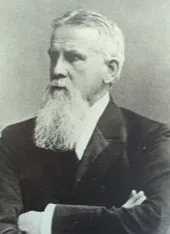
Friedrich Ratzel
Human Design Chart
Biography
Ratzel originated the concept of Lebensraum, or “living space,” which relates human groups to the spatial units where they develop.
Ratzel studied zoology and in 1869 published a commentary on the work of Darwin. He subsequently became familiar with theories relating to the migration of species. His extended tour of North and Central America (1874–75) as a correspondent for the Kölnische Zeitung (“Cologne Journal”) made a profound impression on him and provided a basis for many of his ideas. For the rest of his life he taught at the technical university of Munich (1875–86) and at the University of Leipzig (1886–1904).
Ratzel’s chief interests lay in human migration, cultural borrowing, and the relation between man and the many factors of his physical environment. Though influenced by the evolutionary theories of Darwin and of the German zoologist Ernst Heinrich Haeckel, Ratzel became critical of the mechanistic quality of their views. Philosophy, rather than biology, came to dominate his later thought.
One marriage, two daughters.
He died 9 August 1904, Ammerland.
Human Design Analysis: Friedrich Ratzel as Generator 2/4
Generator 2/4 — Design at a Glance
Friedrich Ratzel distinguished himself through immense endurance and the ability to generate long-term energy. His design as a Generator conveyed the Profile of a workhorse: strong and steady, provided he had energy for his tasks. This strength was, however, subject to a specific condition. The successful use of his resources depended on not initiating himself but responding to signals from the environment.
His strategy involved acting only when his Sacral Center – the center of life energy – sent a clear "yes". When in alignment with this inner gut feeling, he responded concretely to external impulses through action. This led him to a deep sense of satisfaction and fulfillment.
If this reaction did not occur or if he ignored the internal signal, his system was at risk. Two main pitfalls characterized his dynamic structure: first, wasting his energy on tasks for which he felt no intrinsic enthusiasm, leading to exhaustion. Second, holding back from his true heart project despite a lingering urge to continue working. If he initiated himself independently without waiting for an external impulse, sooner or later he encountered persistent frustration and a noticeable lack of energy. His effectiveness therefore always depended on reacting from the gut rather than anticipating actions.
Emotional Authority
Friedrich Ratzel showed himself to be someone who did not seek his answers in the immediate feeling but rather in the calm after the emotional storm. His design featured Emotional Authority, meaning that his defined Emotional Center always served as the inner guide for decisions – regardless of which other centers were also defined. This priority was a central mechanism of his character: The emotional wave set the rhythm of his perception.
He experienced his feelings as an ongoing up and down; the world appeared to him at times inspired by his current mood, at others colored negatively. Yet for Friedrich Ratzel, this first impression was not the final truth. Quick, spontaneous judgments made in the heat of emotion often proved misleading or harmful. Instead, he used time as a crucial tool for clarification. He let decisions mature, slept on them multiple times, and consciously sought distance from the initial intense reactions. Only when these waves subsided did calmness set in for him, allowing clear sight. This process of patience was indispensable to him, especially with long-term decisions that significantly influenced his life course. Through waiting, he gained emotional distance and could thus discern what lay behind the current emotional state.
The 2/4 Profile — Hermit / Opportunist
Friedrich Ratzel emerged as someone who oscillated between a deep need for withdrawal and the urge towards community. His design indicated a tendency to reflect knowledge from his network in solitude and develop clear ideas from it. This aligned with his configuration as 2/4 Profile: Line 2 demanded isolated quiet phases to gather willpower and organize inner processes; line 4 sought exchange with familiar people. It was crucial for him to communicate these needs clearly – when he needed company and when he wanted to be undisturbed. In his "cave," he could evaluate what he had learned. The presence of Line 2 at Gate 40 emphasized the necessity of decisiveness and preparation; without this quiet phase, his willpower risked drying up, making him appear as a "paper tiger." At the same time, Line 4 at Gate 16 carried within it a leadership personality that transcended the personal into the transpersonal. This position awaited the right moment to make talents visible in the collective and acknowledge others. Friedrich Ratzel used his alone time to clearly recognize this leadership energy before he brought it outwards. The tension between the hermit and the networker shaped his life: Only when both needs were met could he formulate brilliant concepts based on accumulated experiences, but sharpened by inner distance.
Triple Split Definition — Defined & Open Centers
Friedrich Ratzel was characterized by a design that combined mental structure with vital action capability. His defined Ajna Center provided a consistent, trustworthy form of conceptual thinking; he was constantly in the mental process and could create concepts that appeared as external authority. These thoughts flowed directly into his defined Throat Center, allowing him to manifest linguistically what his mind conceptualized - a reliable yet limited expression.
His defined G Center gave him a firm sense of self-identity and clarity about his direction in life. He knew where he belonged without relying on others and could show new perspectives to others. Simultaneously, through the defined Heart Center, he had a permanent source of willpower. He preferred to control his own resources and keep promises, which strengthened his self-esteem as long as he only gave what he could hold.
The driving force came from his defined Sacral Center. As a Generator, he possessed a constant supply of vital energy that was activated through reaction. His strategy was to wait and answer questions rather than initiate in order to avoid frustration and exhaustion. Additionally, his Solar Plexus Center was defined; his inner authority lay in the emotional wave. He had to exercise patience and await emotional clarity before making decisions, as spontaneous reactions based on the highs or lows of his feelings often led to confusion.
In contrast, Head, Spleen, and Root Centers were open. The open Head Center made him vulnerable to mental pressure and doubt that was not his own; he tended to identify with others' questions or seek inspiration to resolve this confusion. His open Spleen Center led to a fundamental survival anxiety and the tendency to cling to things that did not benefit him, simply because they suggested a sense of security. Furthermore, his open Root Center absorbed external stress from the environment, making him vulnerable to burnout if he tried to resist this foreign pressure rather than trusting his inner authority.
Channels for community, rhythm and accepting logic.
Friedrich Ratzel's design tended towards a deep, almost magical connection with the natural flow of life. This fundamental attitude was shaped by the Channel of Rhythm 5-15 connecting the Sacral Center with the G Center. Gate 5 held onto firm habits and rituals while Gate 15 integrated the diversity of society into this life flow. This mechanism generated a personal sense of timing determined from within; when Ratzel aligned himself with this inner rhythm, he acted effortlessly and drew others in through an impersonal collective attraction.
Parallel to this was a pronounced ability for logical organization and communication of knowledge. The Channel of Acceptance 17-62 connected the Ajna Center with the Throat Center. Here, Gate 17 visualized patterns that were then translated into language by Gate 62 and detailed named. This allowed Ratzel to mentally structure complex information and communicate it clearly so others could understand - a gift particularly effective in teaching or presenting theories, provided he waited for the right invitation to speak.
Additionally, further energies were at work: Gate 9 promoted meticulous work and perfection through repetition, while Gate 16 encouraged experimentation with new skills. On the personality level, Gate 56 contributed to abstract storytelling, and Gate 29 emphasized persistence in dealing with challenges. Gate 35 sought change through interaction, and Gate 43 enabled breakthroughs of individual insights that then had to be clearly communicated. This combination of rhythmic vitality, logical structuring, and detail-oriented endurance shaped Ratzel's way of moving in the world and sharing knowledge.
Collective Circuitry — Circuit Signature
Friedrich Ratzel's design leaned towards structured, emotionless rationality. The Understanding Circuit defined him through two separate segments: On one hand, it connected Ajna with Throat Center (Channel 17-62 'Acceptance'), translating logical strategies into clear communication. On the other hand, Channel 15-5 'Rhythm' between Identity and Sacral Centers tuned inner values to a timeless rhythmic life energy. This connection to the future was free from emotional conditioning. Parallel to this, in the Ego Circuit, the power of Channel 37-40 'Community' showed itself by directly connecting Heart and Solar Plexus. This created a clear understanding of the relationship between giving and taking as well as mutual support within a group. Since this circuit did not connect to the Sacral Center, this social dynamic required necessary pauses for resource regeneration. Friedrich Ratzel lived with triple definition: Three independent groups - Ajna/Throat, Identity/Sacral, and Heart/Solar Plexus - existed alongside each other without direct energetic flow between them. Each group acted as an autonomous power source. The logical clarity of one side thus did not exchange with the social give-and-take dynamics of another or the rhythmic core. This separation meant he lived these different energies - rational future shaping, inner rhythm, and social cooperation - as parallel experiences that did not merge.
Right Angle Cross of Planning 3
Friedrich Ratzel's design indicated a tendency towards strategic and long-term orientation. He was someone who did not act impulsively but rather guided actions through careful preparation and inner clarity. This attitude resulted from the configuration of the right cross in planning 3. In Human Design, this structure describes a specific kind of leadership and decision-making: it combines the ability for detailed organization with a deep, often intuitive sense of direction. Those who carry this pattern tend to penetrate complex connections and derive concrete, actionable plans from them. It is not about spontaneous action but rather a reflective strategy where 'how' is closely linked to 'why'. Friedrich Ratzel lived this mechanism by directing his energy towards creating structures that were both practically functional and visionary in their foundation. Planning served not only for control but was an expression of an inner principle of order. Through this configuration, his way of acting was characterized: methodically, goal-oriented, and always conscious of larger connections. He relied on internal logic that allowed him to reduce uncertainties through clear steps. This shaped his entire work – less driven by external pressure than guided by an internal necessity for structured design.
Saturn Return · Uranus Opposition · Chiron Return · 2nd Saturn Return — Life Cycles
Friedrich Ratzel's design featured a cyclical structure that clearly delineated phases of his life and produced specific tasks in each phase. These rhythmic transitions significantly influenced his career path. In 1871, at the age of 27, he went to the Technical University of Munich to continue his natural science studies. This step fell during his first Saturn Return, a period when long-term groundwork often solidifies into a stable foundation and new responsibilities are taken on. Later, in 1883 at the age of 39, he was elected as a member of the German Academy of Natural Scientists Leopoldina. This occurred during the Uranus Opposition, a time of increased visibility and recognition where previous work is publicly affirmed. The second Saturn Return marked the end of this cycle. In 1904 at the age of 60, Friedrich Ratzel died on August 9th during his summer vacation in Ammerland by Starnberg Lake. This point signaled the end of a major life phase and the return to the roots of his own design after fulfilling central tasks of incarnation. The sequence of these events shows how the mechanical cycles of his chart were reflected in concrete biographical milestones.
Generator · Emotional Authority — Synthesis
Friedrich Ratzel lived a life marked by a deep inner tension between the need for withdrawal and connection with community (Profile 2/4). This interplay was reflected in his ability to immerse himself deeply into internal processes – gaining clarity and developing concepts (defined Ajna Center) – as well as sharing universal life force through the rhythm channel (Gate 5/15). He was a Generator whose sacral energy propelled him to persistently hold onto his visions and bring them into the world, so long as he could inspire others for his work. Emotional authority required time for decision maturation while the mind circuit focused on logical insights and sharing these with others.
A central paradox in his design lay in the interplay of defined mental clarity and emotional ups and downs. While he was consistent in forming concepts and advocating his perspectives, he also succumbed to emotional waves that made quick decisions difficult. This tension manifested in cycles of his life: professional successes (1883) followed phases of intensive study (1871), culminating in death during a period of withdrawal (1904). He was thus a person who carried both the need for inner certainty and external validation and connection within him.
3 Defined Channels
Incarnation Cross - Right Angle Cross of Planning 3
Solar Return
The Solar Return shows the moment when the sun returns to its exact birth position - your personal solar year.
Life Cycles
Discover the life cycles with a detailed triple view (birth chart, cycle chart, composite).
Human Design Profile
- Type
- Generator
- Strategy
- To respond - wait for something to respond to
- Authority
- Emotional Authority
- Profile
- 2/4 - Hermit / Opportunist
- Definition
- Triple Split
- Incarnation Cross
- Right Angle Cross of Planning 3
- Date of Birth
- 30.08.1844 15:30
- Place of Birth
- Karlsruhe, GER
Frequently Asked Questions
What was Friedrich Ratzel's Human Design type?
Which Profile did Friedrich Ratzel have in Human Design?
What authority guided Friedrich Ratzel's decisions?
What incarnation cross characterized Friedrich Ratzel?
When was Friedrich Ratzel born?
Discover your own Human Design
Are you also a Generator? Find out in a personal reading how to use your sacral energy correctly and discover deep satisfaction.
More Personalities
Back to overviewAaliyah

Alexia

Angèle

Anne-Marie

Arcángel

Arno
