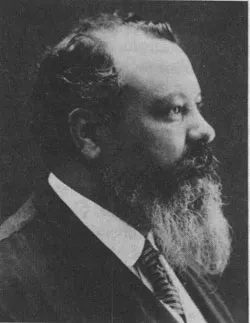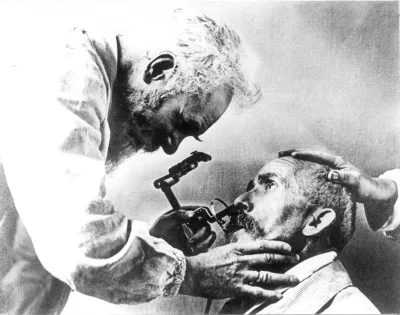
Gustav Killian
Human Design Chart
Biography
He died on 24 February 1921 in Berlin, aged 60.
Human Design Analysis: Gustav Killian as Manifestor 1/3
Manifestor 1/3 — Design at a Glance
Gustav Killian revealed himself as someone with a clear pioneer role and the ability to develop visions that others could execute. His design corresponds to the Manifestor type, comparable to an emperor in ancient Rome: He had the big picture but left the concrete implementation to others. This position often led to misunderstandings or polarizations because his far-reaching thoughts were not shared by everyone. Some followed him enthusiastically, while others rejected him. To minimize this resistance and find the right following, it was crucial for Gustav Killian to clearly communicate his intentions and visions. Informing served as a central tool to reduce misunderstandings and clear the path. When he adhered to this strategy, he experienced inner peace as a reward. If he lived against his design and neglected informing others, it resulted in persistent deep anger. His character was thus marked by the necessity of creating space for his leadership through clear communication rather than rubbing up against environmental resistance.
Emotional Authority
Gustav Killian showed a decision-making stance that required time and emotional distance; spontaneous reactions were unreliable to him. This arose from his inner authority: Emotional Authority, carried by the defined Emotional Center. In Human-Design, this center is always the leading instance when it is defined – regardless of other configurations in the chart.
This mechanism means that Gustav Killian was subject to a wave dynamics of feelings. His perception was always colored by his current mood: At one moment he could be enthusiastic about something, and at another time view the same situation negatively. Such momentary feeling was only a snapshot, not necessarily the truth. Quick, impulsive decisions from this emotional heat risked negative consequences.
The strategy consisted in taking time. Gustav Killian had to let decisions ripen, which required patience and repeatedly “sleeping on” questions. By hesitating and not acting immediately, intense feelings subsided. Only with this emotional distance did true clarity and calm set in. This process was especially crucial for long-term, life-defining decisions to ensure that the choice rested on a stable inner truth rather than transient excitement or depression.
The 1/3 Profile — Investigator / Martyr
Gustav Killian revealed himself as someone who combined theoretical depth with practical boldness. His design was marked by the tensions of Profile 1/3, the Researcher-Experimentor. This configuration described a person who only found true mastery through collecting knowledge and its subsequent, often flawed application.
The first line of his design emphasized development through humility and rejection. Gustav Killian had to learn to accept changes as part of a creative process rather than viewing them as defeats. This created a fundamental basis of experience that often clashed with the impulse of the third line. This line drove him to experiment, to “blow into” new situations in order to find answers through trial and error.
The result was a living process: His knowledge was not static but emerged at the friction point between the fear of inadequate preparation (line 1) and the urge for immediate action (line 3). When Gustav Killian made a decision or rendered judgment, it was based on this double test. He had thoroughly understood the matter intellectually as well as practically tested it. His expertise was thus authentic because it emerged from personal failures and successful integrations. Only through this process of rejection and error could he reach that quality of insight others could rely on. His life was a continuous cycle of learning, testing, and refining his own principles.
Triple Split Definition — Defined & Open Centers
Gustav Killian appeared as a person with a massive, constant presence in the areas of thinking, communication, and emotional depth. His design was marked by six defined centers: Head, Ajna, Throat, G Center, Heart, and Solar Plexus. This created a firm identity and willpower. Gustav Killian lived under a persistent mental pressure to question and understand things due to his defined Head and Ajna Centers. He thought constantly and was in a permanent mental process but could not directly implement his thoughts as no energy comes from these centers. Instead, he inspired others or put them under pressure to think. His communication occurred through a defined Throat Center that transmuted messages from various sources. Gustav Killian had a clear self-identity and direction through his defined G Center, as well as strong willpower and ego strength through the Heart Center. He preferred to control his resources himself and kept promises. Crucial was his defined Solar Plexus as an inner authority. Gustav Killian had to wait for the emotional wave before acting or speaking to avoid impulsiveness. Truth revealed itself to him only over time; he tended to react impulsively on the highs or lows of his emotions if he did not wait patiently. At the same time, his Sacral Center was open. Gustav Killian lacked a personal generative energy source and instead absorbed the energy from his environment. He had a tendency to overexert himself when he did not listen to his inner authority and take breaks. His open Spleen Center made him vulnerable to fears regarding health and well-being, while an open Root Center led him to absorb stress from the environment and try to release this pressure through action, which could lead to burnout if he did not learn to recognize external adrenaline surges.
Channels for doubt, pioneering spirit and emotional transformation.
Gustav Killian was characterized by a restless search for new experiences. His design drove him to resist the caution of logical restrictions and actively set things in motion, often to balance feelings of inadequacy or emotional emptiness. This impulse came from the Impermanence Channel 35-36, an emotional manifesting channel. Here, the energy of Gate 35 (Change) connected with Gate 36 (Crisis). The Sun in Gate 35 intensified this drive for change massively; Gustav Killian suffered from the 'Been There' impulse and sought new experiences to gain emotional depth. He learned through experience but was vulnerable to disappointment when new situations did not meet expectations. His wisdom grew over time as he accepted the impermanence of his feelings.
Parallel to this, Gustav Killian possessed a sharp, skeptical mind. The Logic Channel 63-4 connected Gate 63 (Doubt) in the Head Center with Gate 4 (Formulation) in the Ajna Center. This created an inner filter that constantly checked patterns for consistency. For Gustav Killian, unfounded belief was barely acceptable; he needed practical evidence and logical coherence. If this mental pressure could not be resolved, it led to anxiety states. His skepticism served the collective by raising questions demanding answers.
Additionally, the Initiation Channel 51-25 worked through him. It connected Gate 51 (Shock) in the Heart Center with Gate 25 (Self Spirit). This gave Gustav Killian a natural competitive edge and a drive to be first or break boundaries. He could inspire others towards individuation through this 'shock', provided he acted authentically. This combination of emotional experimentation, logical scrutiny, and competitively driven assertiveness shaped his way of engaging with the world. Individual Gates like Gate 5 (Rhythm) or Gate 64 (Past Experiences) supported this dynamic by requiring the perfection of personal patterns and mental processing of past events to gain clarity.
Collective Circuitry — Circuit Signature
Gustav Killian showed a fortified, brave personality with strong self-worth. This inner constancy came from the Centering Circuit: The Channel 25-51 connected his Identity directly with his Heart Center. This created a pulsating energy of individuality – the stance 'I am who I am'. Since the Throat Center was not included in this group, these firm convictions often remained unspoken; his presence reinforced others through being present, not rhetoric.
Parallel to this, two additional separate energetic streams existed that were not connected with the central identity. The Understanding Circuit linked his Head with the Ajna Center (Channel 63-4). Here a focused, rational energy worked, preferring logical structures and future-oriented strategies – free from emotional coloring.
A third independent stream formed in the Meaning-Making Circuit. The Channel 35-36 connected his Throat with the Solar Plexus Center. This generated a cyclical, emotional wave that reflected experiences from the past and shared these felt insights with others.
Gustav Killian's design thus consisted of three parallel power fields: a central, unspoken inner firmness; a separate area of cool logic and future vision; as well as an independent flow of emotional reflection and communication. This triple definition meant that these areas existed alongside each other without directly flowing into one another.
Right Angle Cross of Consciousness 2
Gustav Killian's design emphasized inner perception and consciousness. His chart featured the configuration "The Consciousness Cross 2." This structure highlighted that his mental attitude and self-perception were central to him. It was not an outward search for validation but rather a process of internal clarification.
In Human Design, this cross describes a specific orientation of the mind. The focus was on how Gustav Killian interpreted and understood his own reality. The mechanics suggest that his approach to the world was strongly influenced by this internal perspective. He used his consciousness as his primary tool for situating himself in situations. This meant that decisions and reactions often emerged from a deep inner reflection before manifesting outwardly.
The emphasis on inner experience laid the groundwork for authenticity. Gustav Killian had to learn to trust his own voice rather than aligning with external standards. The Consciousness Cross 2 fostered the ability to penetrate complex mental connections. It was about the quality of attention and how clearly he could distinguish his own thoughts from those of others. This inner work formed the foundation for his actions and interactions with the environment.
Saturn Return · Uranus Opposition · Chiron Return · 2nd Saturn Return — Life Cycles
Gustav Killian's professional career followed a clear rhythm of consolidation, innovation, and institutional anchoring. In 1887, at the age of 27, he settled in Mannheim as an ENT specialist and married Helene Hein. This first Saturn return marked the transition into a phase of structural stabilization, where years of preparation condensed into a solid foundation for his later work.
The subsequent Uranus opposition in 1902 (age 42) brought an impulsive change: Killian developed the radical operation of the frontal sinus. This cycle promoted technical breakthroughs and the breaking of old conventions, which was evident here in a groundbreaking surgical method.
With the Chiron return around 1908 (age 48), a phase of fulfillment began. Killian integrated the Gutzmann Ambulatory Clinic for Speech Disorders into his outpatient clinic at the Charité. This was not just an expansion but the realization of his specific purpose: to unite various medical approaches into a coherent practice, thereby making his life's work meaningful and comprehensible.
The second Saturn return in 1918 (age 58) crowned this development with international recognition. The invitation from Swedish laryngologists for lectures in Uppsala and Stockholm confirmed the previously established structure. This cycle solidified his reputation as an authority by carrying his established expertise beyond national borders, thereby validating the long-term value of his previous innovations.
Manifestor · Emotional Authority — Synthesis
Gustav Killian lived a life deeply marked by an inner drive for understanding and a readiness to experiment. His design as a Manifestor (with emotional authority) points towards a natural leadership role, yet he always had the need to underpin his visions with thorough scrutiny – a pattern reflected in his Profile as Researcher/Experimentator (Line 1/3). The defined Head and Ajna Channel (Logic) continuously reinforced this process by driving him to question existing patterns and seek evidence for his ideas. This led to professional successes (marked by the development of the radical operation and integration of the ambulatorium), which were always based on careful preparation and practical verification.
A central paradox in Killian's design lay in the interplay between initiating power and emotional maturity. As a Manifestor, he possessed the energy to initiate things and shape them, yet his emotional authority required a process of waiting and feeling to ensure that these impulses aligned with his inner core. This tension between the need for action and the necessity of emotional clarity led to a life where innovation and thorough analysis went hand in hand – a constant navigation between impulsive vision and careful implementation.
3 Defined Channels
Incarnation Cross - Right Angle Cross of Consciousness 2
Solar Return
The Solar Return shows the moment when the sun returns to its exact birth position - your personal solar year.
Life Cycles
Discover the life cycles with a detailed triple view (birth chart, cycle chart, composite).
Human Design Profile
- Type
- Manifestor
- Strategy
- To inform others before acting
- Authority
- Emotional Authority
- Profile
- 1/3 - Investigator / Martyr
- Definition
- Triple Split
- Incarnation Cross
- Right Angle Cross of Consciousness 2
- Date of Birth
- 02.06.1860 04:00
- Place of Birth
- Mainz, Germany
Frequently Asked Questions
What was Gustav Killian's Human Design type?
What Profile did Gustav Killian have in Human Design?
Which Authority guided Gustav Killian?
Which incarnation cross was active for Gustav Killian?
When was Gustav Killian born?
Discover your own Human Design
Are you also a Manifestor? Find out in a personal reading how to use your initiation power peacefully and dissolve resistance.
More Personalities
Back to overviewChristian-Jaque

Kesha

Lucebert

Masaccio

Nadar
Papus