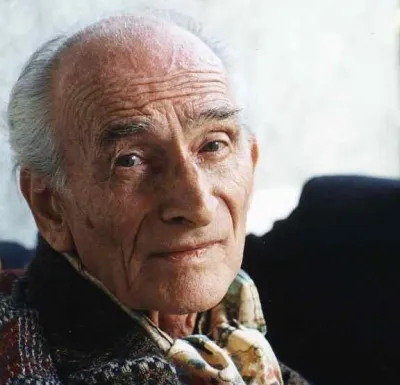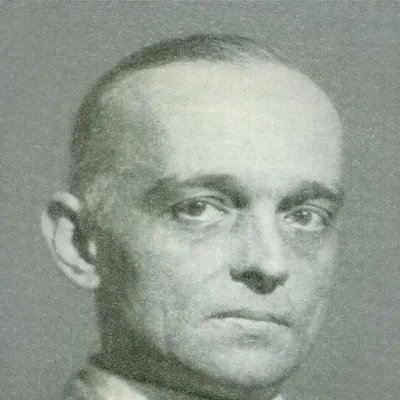
Herbert von Bose
Human Design Chart
Biography
Human Design Analysis: Herbert von Bose as Manifesting Generator 5/1
Manifesting Generator 5/1 — Design at a Glance
Herbert von Bose proved to be someone who could achieve quick results by skipping steps. His design as a Manifesting Generator combined the constant energy of a Generator with the direct action of a Manifestor. This hybrid nature allowed him to quickly draw things into his life. However, this speed carried risks: Often, his actions were too hasty, causing him to skip important stages and return later to fill in gaps. This led easily to frustration, his specific Shadow theme. Additionally, he tended to pursue multiple projects simultaneously, driven by various impulses. Without inner consent, there was a risk that his creative enthusiasm would lead to exhaustion. Therefore, it was crucial for him not to initiate himself but to react to life and wait until his sacral center gave a clear "yes." Only this response to internal impulses ensured his satisfaction. When he followed this strategy, he enjoyed working on various tasks simultaneously. He then fell into a "play mode," where variety strengthened rather than drained his energy. For him, the compulsion to finish one thing before starting another was more of an obstacle than a help. His true fulfillment arose only when he linked this parallel activity with the necessary inner confirmation and thus avoided frustration from hasty action.
Sacral Authority
Herbert von Bose followed a clear inner logic: His decisions did not arise from intellectual deliberation but as a direct physical resonance to external stimuli. As a Generator, his strategy was identical to his authority; the sacral authority functioned as the sole instance for his actions. This mechanism required an open emotional center to ensure that feelings did not distort the process.
His responses manifested physically: through a gut feeling, a grunt or sudden surge of energy. Recognizing these signals – whether as an affirmative "Mhm" or a dismissive sound – activated his inner motor. This gave him vitality and inexhaustible energy; he accomplished his tasks with great enthusiasm, driven by joy in the act itself, not from being goal-oriented.
Furthermore, his Spleen Center acted as a supportive instance. It enabled quick, spontaneous reactions and immediate access to instinctual perception. Herbert von Bose could reliably orient himself towards this physical well-being. The combination of sacral confirmation and spleen-supported intuition shaped his way of living: reactive, alive, and in harmony with his biological nature, without the pressure to pursue self-initiated goals.
The 5/1 Profile — Heretic / Investigator
Herbert von Bose revealed himself through his 5/1 Profile as someone who instinctively offered practical solutions from a deep base of experience in crisis situations. Others sought him out specifically, drawn to his magnetic presence and trust in his knowledge. This design combined the authority of the Hero (Line 5) with the humble research work of the Individual (Line 1).
Line 5 gave him the ability to survive under pressure and find concrete answers, while Line 1 inclined him towards adaptability and accepting his place in the hierarchy. This configuration created a dynamic where he functioned as a problem solver but risked becoming exhausted from lacking boundaries. Without clear limits, there was a danger of breaking down like an overworked expert, as the environment had unlimited access to his capacity.
The challenge lay in balancing the environmental need for solutions with his own need for withdrawal for research and recovery. If he learned to say "No", he could maintain this beneficial equilibrium. Otherwise, constant availability led to burnout, as his energy was often depleted without regard for his own resources in providing practical help. His design suggested that true effectiveness could only be achieved by protecting his inner research work from external demands.
Single Definition — Defined & Open Centers
Herbert von Bose was characterized by a design based on inner stability and reactive power. As a Generator, he had a reliable identity and direction (defined G Center), which gave him a deep sense of self-love. This internal alignment guided him through spontaneous intuition (defined Spleen) and a constant, vital energy source (defined Sacral Center). His defined Throat allowed him to clearly and authentically translate these inner truths into the world. The mechanics of his design required waiting for an inner impulse: Only by reacting to external stimuli could he mobilize his full sacral power and find satisfaction, rather than exhausting himself through initiatives.
At the same time, Herbert von Bose was vulnerable to the pitfalls of his open centers. His open Head Center made him susceptible to mental confusion and the pressure to provide answers to others' questions, even though these were not his own concerns. The open Ajna reflected situational concepts without possessing consistent theoretical structures; he tended to identify with foreign ideas rather than use them merely as information. His open Heart often led to attempts to prove his worth through acts of will or promises, ending in a cycle of overextension and self-doubt. Additionally, his open Solar Plexus absorbed the emotions of those around him, causing him to experience others' moods as his own and avoid confrontation. Finally, he took on external stress via his open Root Center, manifesting as inexplicable adrenal rushes that were not generated internally but rather taken in from outside. These open areas were not deficits but mirrors teaching him to distinguish between his true nature and conditioned reactions.
Channels for rhythm, intuitive mastery and caring preservation.
Herbert von Bose was characterized by a biological presence based on a firm internal rhythm and instinctive service capability. His design was marked by the Rhythm Channel 5-15, connecting the Sacral Center with the G Center. This channel endowed him with a natural sense of timing; he followed fixed habits (Gate 5) while simultaneously integrating the diversity of society into his life flow (Gate 15). This created a magnetic aura drawing others unconsciously into his energy flow and determining the course of shared groups.
Additionally, the Wavelength Channel 48-16 worked, linking intuitive depth from the Spleen Center with technical skill in the Throat Center. Through Gate 48, he sought life-critical information, while Gate 16 promoted constant experimentation and refinement of skills. This configuration described the path to mastery through repeated practice; talent here did not arise as a mere gift but through the transformation of skill into excellent competence over years of dedication.
The third pillar was formed by the Conservation Channel 27-50, linking care (Gate 27) with tribal values and laws (Gate 50). This marked him as a natural caregiver whose aura attracted trust. His task was to maintain order and take responsibility for the community, always guided by the understanding that authentic service is only possible when one properly cares for oneself.
The Personality Gates 3 (Mutation), 23 (Assimilation), 28 (Risks), 14 (Power) and 44 (Transformation) complemented this foundation strategically. They set a framework for adapting to global changes, integrating differences, and navigating crises with awareness of risks. These gates demanded vigilance and the ability to handle power gracefully to create new orders in chaotic times and enable transformations here and now.
Collective Circuitry — Circuit Signature
Herbert von Bose was marked by two dominant, timeless circuits. The Understanding Circuit connected his Throat Center with his Spleen Center as well as his Identity Center with his Sacral Center. This created an emotional ratio that worked strategically and logically to improve structures and look into the future. The energy of these channels – Wavelength and Rhythm – promoted visual thinking and sharing rational insights, free from disruptive emotions of the Solar Plexus.
Parallelly, the Protector Circuit operated through the Conservation Channel between Sacral and Spleen Centers. This connection activates instinctive energies for protecting one's genetic heritage and family. It was about primordial care, preservation, and covering basic needs like nutrition and nurturing.
Although both circuits involve the Spleen and Sacral Centers, they formed separate energetic streams due to their simple definition. One force aimed at clear, strategic future planning; the other reacted instinctively to the urge for protection and conservation of what exists. This constellation marked Herbert von Bose by the tension field between cool, visual logic and deep, tactile need for security and familial connection. Both energies worked as constant background forces in his design.
Left Angle Cross of the Plane 1
Herbert von Bose was marked by the Left Cross of Level 1, a configuration that structured his entire life energy and identity. This archetypal pattern served as a fundamental framework for his existence. It did not determine isolated aspects of his character but connected all other components of his Human Design – Gates, Channels, and Centers – into a coherent whole. For Herbert von Bose, this meant that his actions and reactions always took place within this overarching context. The Cross represented the deepest level of his self-expression and defined the specific energetic signature he emitted throughout his life. It was a fundamental 'mission' or central theme permeating his existence. This structuring ensured that his individual traits did not appear as disparate elements but rather as parts of an interconnected system. Level 1 of this Cross underscored the elemental nature of this imprint; it was no superficial feature, but the core from which his essence emerged. Herbert von Bose thus lived within this energetic architecture, which significantly influenced how he acted and responded to the world. This deeply rooted configuration formed the foundation upon which his personal development and contribution to his environment unfolded.
Saturn Return · Uranus Opposition — Life Cycles
Herbert von Bose experienced his life through two sharply defined planetary turning points that marked structure and sudden rupture. The first Saturn Return, a cycle of stabilization and binding, led in 1919 at age 26 to his marriage with Therese Kühne. This mechanism condensed years of development into a stable foundation for living; the energy of Saturn here promoted structure, responsibility, and enduring connection, which was concretized in this firm relationship.
Decades later, he encountered the second decisive cycle: the Uranus Opposition. This aspect represents sudden, often violent upheavals and the tearing apart of existing structures. In 1934 at age 41, this tension culminated in a abrupt end to his life path. On June 30th, Herbert von Bose was murdered by SS men. The Uranus energy here does not act as gentle change but as disruptive shock that violently dissolved the previously stabilized framework of the Saturn Return. While the first phase offered integration and stability, the second signaled an irreversible tear in the fabric of his life. This sequence shows how planetary cycles in his design did not only describe internal processes but manifested as concrete historical events: first construction through binding, then violent end through external coercion.
Manifesting Generator · Sacral Authority — Synthesis
Herbert von Bose lived a life profoundly marked by the connection between action and reaction. His design as an Manifesting Generator with sacral authority pointed to someone who could potentially set things in motion quickly (Gate 16 & 48), but primarily relied on responding to external impulses filtered through his Sacral Center. This dynamic manifested in him only truly engaging when there was internal agreement – a process amplified by the connection between G-Center and Sacral (Channel 5-15). The ability to connect deep insights (Gate 48) with practical skillfulness (Gate 16) allowed him to recognize patterns and translate them into concrete actions.
A central tension in his design lay between the need for rapid progress – a characteristic of Manifesting Generators – and the necessity to listen to inner authority and respect the natural rhythm of his Sacral Center. This tension was further amplified by an open Solar Plexus Center, making him susceptible to taking on others' emotions and possibly basing decisions on them rather than relying on his own internal guidance. The combination of defined Throat and open Head suggests that while he could clearly express his thoughts, he was also constantly exposed to new information and perspectives, requiring constant adaptation.
3 Defined Channels
Incarnation Cross - Left Angle Cross of the Plane 1
Solar Return
The Solar Return shows the moment when the sun returns to its exact birth position - your personal solar year.
Life Cycles
Discover the life cycles with a detailed triple view (birth chart, cycle chart, composite).
Human Design Profile
- Strategy
- To respond - wait for something to respond to
- Authority
- Sacral Authority
- Profile
- 5/1 - Heretic / Investigator
- Definition
- Single Definition
- Incarnation Cross
- Left Angle Cross of the Plane 1
- Date of Birth
- 16.03.1893 21:00
- Place of Birth
- Strasbourg, France
Frequently Asked Questions
What is the Human Design type of Herbert von Bose?
Which Profile did Herbert von Bose have in Human Design?
What Authority did Herbert von Bose have?
What incarnation cross did Herbert von Bose have?
When was Herbert von Bose born?
Discover your own Human Design
Are you also a Manifesting Generator? Find out in a personal reading how to unfold your multi-talents and direct your energy wisely.
More Personalities
Back to overviewAldair

Alizée

Angeli
Arletty
Artus

Balthus