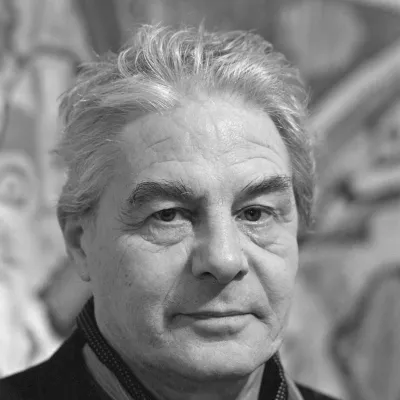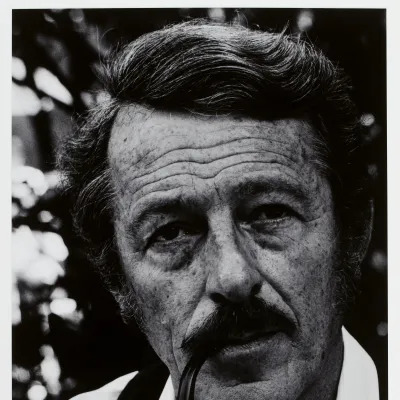
Hubert Nyssen
Human Design Chart
Biography
The Human Design of Hubert Nyssen: Manifestor 1/3
Manifestor 1/3 — Design at a Glance
Hubert Nyssen was a Manifestor, a design that marked him as a pioneer and visionary. His life energy was dedicated to guiding the world into a new future, much like an emperor in ancient Rome, who had the vision of a great empire but did not fight the battles himself, instead inspiring others to conquer lands for him. This role, however, came with a specific pain point: Hubert Nyssen was often misunderstood because he thought ahead of many of his contemporaries. His big dreams polarized; some loved and followed him, while others rejected or even hated him precisely because of these visions. To find the right followers, it was essential for him to inform others timely and accurately about his intentions. This was his strategy. When he followed this strategy and his inner authority, his design rewarded him with a sense of inner peace. If he lived against his design, he felt persistent, deep anger. His chart therefore showed a dynamic where information was the key to exercising his natural leadership and maintaining his inner balance.
Emotional Authority
Hubert Nyssen revealed himself as someone who did not make decisions based on the first impulse but rather consciously allowed them to rest until emotional waves had subsided. His design featured Emotional Authority, meaning his defined Solar Plexus Center was the central instance for his inner "yes" or "no". Regardless of other defined centers, this authority always took precedence.
His perception of the world was marked by a constant emotional wave, manifesting in a perpetual up and down of feelings. Hubert Nyssen often saw situations colored by his current mood: A topic could excite him one moment and seem negative the next. However, this immediate feeling was only a snapshot, not his final truth. Quick, spontaneous decisions based on this first emotion would often have negative consequences for him.
Instead, his mechanism required patience. He took the time to let decisions mature, often by sleeping on them multiple times. This process of pondering and letting questions rest was essential. Over time, intense feelings subsided, he gained emotional distance, and clarity and calmness set in. Only then, after going through this emotional cycle, was he ready for a well-founded choice, especially for long-term decisions that significantly influenced his life course.
The 1/3 Profile — Investigator / Martyr
Hubert Nyssen revealed himself as someone who inseparably linked theoretical knowledge with practical experience. His design as Profile 1/3, the Researcher and Experimenter, established a foundational approach based on learning through trial and error. The first line of his profile began with uncertainty and the drive to lay foundations, while the third line compelled him to test these theories in reality.
For Hubert Nyssen, it was characteristic that he did not merely accept insights but worked to earn and verify them himself. When he made a judgment, it was the result of double validation: theoretically through Line 1 and practically through Line 3. This process of testing was essential for him to find inner truth. The third line taught him which relationships and circumstances were helpful and which were not, often through direct confrontation with resistance.
He learned that he needed other people to rationally explain and stabilize his individual truths. The energy of Line 1 could tend to remain stuck in planning, out of fear of ignorance, yet Line 3 pushed him to act despite this and to learn from mistakes. Thus, his self-earned insights coalesced into reliable truths that one could trust, as they had withstood both theory and hard practice. His path was marked by the necessity of seeing things through to the end while always maintaining the balance between knowledge and action.
Single Definition — Defined & Open Centers
Hubert Nyssen revealed himself through a reliable, magnetic identity and profound emotional intelligence. His defined G Center gave him a clear sense of direction and the feeling of being lovable without being dependent on others. This inner security allowed him to show others new perspectives without having to direct them. At the same time, his defined Solar Plexus acted as an emotional authority: He needed time to go through his emotional wave before gaining clarity. This patience allowed him to make decisions not impulsively, but from a deep, unfolding truth. His communication, guided by the defined Throat Center, was steady and honest, as it flowed directly from these inner sources.
In contrast, Hubert Nyssen was vulnerable to external influences through several open centers. His open Head Center made him receptive to mental inspirations, which he should not interpret as his own truth to avoid confusion. The open Ajna Center allowed him a flexible mind that took in ideas from the environment without having to hold onto them. Particularly defining was his open Heart Center: It did not drive him towards willpower or competition, but into the trap of wanting to prove his worth through promises – a cycle that exhausted him if he did not trust his inner authority. His open Sacral Center meant that he did not have constant generative energy, but amplified the energy of his environment, which could lead to overloading if he did not pause. Additionally, his open Root Center absorbed external stress, which he must not misinterpret as his own pressure. His open Spleen Center made him sensitive to well-being, but warned against spontaneous decisions out of fear. Hubert Nyssen's path involved using his defined centers as a compass while viewing the open fields as a mirror of the world without losing himself.
Channels for emotional storms and quiet reflection.
Hubert Nyssen was someone who collected life experiences to share later with deeper insight. His design connected the patience of listening with the desire for emotional depth.
The Lost Son Channel 13-33 connected his G Center with the Throat Center. Through the Listener Gate (13), he took in information and secrets, stored memories, and learned from them. The Retreat Gate (33) in the Throat Center made him wait until the truth of an experience fully revealed itself before he articulated it. This created a process of maturation, where he observed the magic of completion rather than feeling frustration over unfulfilled expectations. He functioned as a guardian of stories, bringing continuity to development.
At the same time, the Transience Channel 35-36 drove him. This channel connected the Solar Plexus Center with the Throat Center and linked the Crisis Gate (36) with the Change Gate (35). Hubert Nyssen actively sought new, emotionally charged experiences to explore the depth of his feelings. He resisted restrictive patterns and occasionally used crises to set things in motion. His wisdom emerged from this restless search and the acceptance that feelings are transient. He learned to use his emotional wave to make clear decisions and inspired others through his lived adventures to seize the moment.
Additionally, gates like 42 (Experience and Conclusion), 32 (Continuity and Material Success), and 62 (Logic and Pattern Recognition) influenced him. Gate 61 sought inner truth and silence, while Gate 7 projected leadership perspectives. Gate 10 integrated complex behavioral rules, and Gate 22 allowed a calm openness for mutations. This configuration shaped a person who grew equally through logical structure and emotional experience.
Collective Circuitry — Circuit Signature
Hubert Nyssen revealed himself as someone who drew meaning from past experiences. His design connected the Throat Center, the Solar Plexus Center, and the Identity Center directly with each other. This connection formed the core of the Meaning-Finding Circuit. While other energies often looked towards the future, his mechanics focused on emotions and feelings from the past. These energies flowed in wave-like patterns: Each emotional cycle had a clear beginning, a middle, and an end. They often appeared inexplicable or illogical, but followed a natural rhythm.
Two channels shaped this flow. The Lost Son Channel (Gates 33 and 13) connected identity and voice with emotional depth. The Transience Channel (Gates 35 and 36) linked the Solar Plexus with the Throat Center. Through these channels, Hubert Nyssen could share felt insights and emotional waves with others. The goal was not isolated reflection, but learning together from the past. His identity was inseparable from this process: He found his meaning in reflecting on past events and passing on the resulting emotional truths to the collective. This structure created a cyclical energy that constantly swung between inner emotional processing and outer communication.
Right Angle Cross of Maya 1
Hubert Nyssen carried the design of the right Maya Cross 1, a configuration that described a deep, often unconscious connection to the collective destiny and spiritual transformation of humanity. This pattern established a foundational approach that was less about individual self-promotion and more about supporting a larger, often invisible process. People with this design often lived with the feeling of being part of a higher mission that transcended personal life.
The mechanics of this cross linked specific energies that created a particular sensitivity to the moods and needs of the community. Hubert Nyssen was someone who absorbed impulses from the collective and translated them into concrete actions or ideas, without necessarily seeking recognition for it. His energy often worked in the background, supportive and stabilizing, while others were in the foreground.
This configuration did not mean that he was passive, but that his effectiveness lay in bridging the individual and the whole. He lived in a constant interaction with the forces shaping society and responded to them with an inner dedication that was often hard for outsiders to understand. His design marked him as a silent companion in the changing times, seeing his role in fostering the spiritual development of humanity by putting his own experiences and insights at the service of the whole.
Saturn Return · Uranus Opposition · Chiron Return · 2nd Saturn Return — Life Cycles
Hubert Nyssen's design inclined towards structural anchoring and the search for a firm foundation. This orientation was evident in the tendency to carry inner values outward and stabilize through clear affiliations. In Human Design, the Chiron Return, which occurs between the ages of 49 and 51, marks a fulfillment cycle. During this phase, the individual's incarnation cross unfolds increasingly in life, provided the person has lived according to their strategy and authority. Meaning and purpose become experiential, not as a healing of old wounds, but as the flowering of one's life task. For Hubert Nyssen, this process became concrete in 1976, at the age of 51, when he acquired French citizenship. This step was not merely an administrative act, but an expression of inner maturity and the realization of his deepest identity structures. The adoption of the new citizenship symbolized the final rooting and integration of his personal values into a larger, stable community. It was a moment when his inner design was completed outwardly and a new, secure basis for his further life steps was created. Through this action, he affirmed his own existence and created a lasting connection to his environment, typical of the Chiron Return as a phase of affirmation and growth.
Manifestor · Emotional Authority — Synthesis
Hubert Nyssen lived a life path marked by a deep inner exploration and a drive towards transformation. His design as a Manifestor, combined with emotional authority and the Profile of the Researcher/Experimenter, points to a person destined to pioneer new paths and gather personal experiences before sharing them with others. The connection of the G Center to the Throat Center (Channel of the Lost Son) intensified this tendency towards reflection and cyclical maturation, always striving to uncover deeper truths behind the scenes. This led to a kind of inner reliability that reflected in his judgment once he had tested something both theoretically and practically.
Central to his essence was a paradox between the drive to act as a trailblazer and change the world and the necessity to let emotional waves mature before making decisions. As a Manifestor, he possessed the vision and impulse to initiate things, but his emotional authority required time and the passage through emotional waves to gain certainty. This tension between initiative and reflection shaped his approach, always striving to learn from the past and let these insights flow into the shaping of the future.
2 Defined Channels
Incarnation Cross - Right Angle Cross of Maya 1
Solar Return
The Solar Return shows the moment when the sun returns to its exact birth position - your personal solar year.
Life Cycles
Discover the life cycles with a detailed triple view (birth chart, cycle chart, composite).
Human Design Profile
- Type
- Manifestor
- Strategy
- To inform others before acting
- Authority
- Emotional Authority
- Profile
- 1/3 - Investigator / Martyr
- Definition
- Single Definition
- Incarnation Cross
- Right Angle Cross of Maya 1
- Date of Birth
- 11.04.1925 17:30
- Place of Birth
- Ixelles, BEL
Frequently Asked Questions
What was Hubert Nyssen's Human Design type?
What profile did Hubert Nyssen have in his Human Design?
What authority did Hubert Nyssen have?
Which incarnation cross was Hubert Nyssen assigned to?
When was Hubert Nyssen born?
Discover your own Human Design
Are you also a Manifestor? Find out in a personal reading how to use your initiation power peacefully and dissolve resistance.
More Personalities
Back to overviewAlain-Fournier

Angeli

Christian-Jaque
Juninho

Kesha

Lucebert