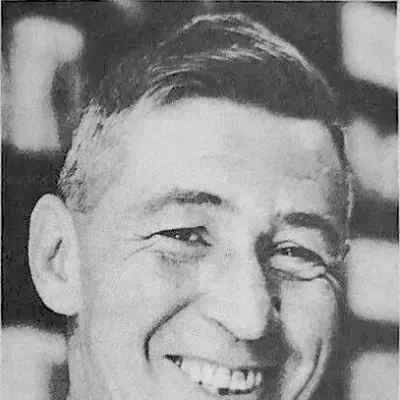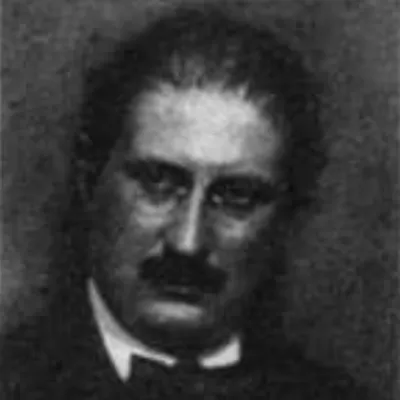
Hugo Sinzheimer
Human Design Chart
Biography
As a lawyer, he frequently represented political and union-related groups. He joined the Social Democratic Party of Germany in 1914. From 1920 onward, he was professor of labour law and sociology of law at Frankfurt University.
In 1933, Sinzheimer, who was Jewish, was forced to emigrate to the Netherlands. In 1940 he was captured and taken to the Theresienstadt concentration camp for four months. He managed to secure release, and had to return to hiding in the attic of friends in the Netherlands. After the liberation of the Netherlands in May 1945 he was exhausted and severely malnourished. He did not recover from his poor health and died several months later, on 16 September 1945, aged 70, in Bloemendaal.
The Human Design of Hugo Sinzheimer: Projector 2/4
Projector 2/4 — Design at a Glance
Hugo Sinzheimer appeared as a Projector with a dense, focusing aura that immediately influenced his surroundings. His design inclined him to quickly identify systemic weaknesses and error structures in others – comparable to a bright flashlight shining directly into the dark. However, this ability to instantly penetrate problems could be perceived as unpleasant or intrusive when he articulated these insights directly.
Since Projectors do not have a defined Sacral Center, they lack a constant intrinsic energy source. Instead, Hugo Sinzheimer experienced phases of high activity and rapid workability that had to be followed by necessary rest periods to prevent energetic burnout. Social structures such as the school system or conventional employment often did not accommodate this rhythmic need for recovery.
His optimal strategy was to wait for a respectful and sincerely meant invitation from others before bringing his leadership skills into play. By living harmoniously himself, he attracted people who actively sought out his advice. Living in alignment with this design rewarded him with success; ignoring this invitation strategy led to the earlier or later emergence of the bitterness theme.
Self-Projected Authority
Hugo Sinzheimer appeared as a Projector with rare Self Authority. This configuration marked an extreme openness that made him vulnerable to distraction by external motoric energies. The greatest danger lay in getting lost in his irritability and constantly chasing after energy. His inner truth resided in his identity. He made decisions through two paths: first, self-conversations or dialogical exchange processes if invited. Crucial was listening to his own expression and distinguishing spontaneous utterances of essence from thought constructs. This immediate self-expression made his uniqueness recognizable to others. Second, he followed physical pulling feelings. These were sensed as attraction or repulsion in geographical or thematic directions. By staying true to this inner compass needle, he became a directional guide for his environment. There, his specific success potential was revealed. The mechanics of Self Authority require that intuitive and identity-based decision-making takes precedence over all other defined centers. Hugo Sinzheimer's design stipulated that only by listening deeply to this self-feeling and expressing authentically could true clarity arise. He did not live according to external compulsion but oriented himself towards this inner truth, which protected him as well as guided him.
The 2/4 Profile — Hermit / Opportunist
Hugo Sinzheimers' design inclined him towards a constant alternation between withdrawal and social engagement. He carried the tension between the need for solitude (Line 2) and the desire for community (Line 4). This configuration required him to set clear boundaries: he had to learn to communicate precisely when he sought company and when he wanted to be undisturbed.
During his 'Me-Time', Sinzheimer immersed himself in internal processes to find calm and clarity. This phase of independence and selectivity was essential, as the second line often projected possession of means for completion despite uncertainty. Only after this need for depth was satisfied did he return from his 'cave' to spend time with his favorite people.
The fourth line promoted a research drive and concentration on universal principles. Through collaboration, his knowledge could expand, even if it was painful when others took it in different directions. Sinzheimers' strength lay in reflecting, evaluating the networked knowledge gathered during social interactions, and developing brilliant ideas from this solitude. His design thus marked a rhythm of ascetic withdrawal at trend change and integrative influence through social connections.
Single Definition — Defined & Open Centers
Hugo Sinzheimer's design inclined towards clear, reliable communication stemming from a deep sense of personal identity and direction. His defined Throat Center acted as a pivot point, translating inner messages into language and action. Since this center was connected to his also defined G Center, he spoke not just from the mind or fleeting emotions but from a stable self-love and a clear life purpose. This gave his expression a consistent honesty; he knew who he was and where it led him without needing others to follow the same path.
This inner stability contrasted with his high sensitivity to external influences in open centers. His open Head Center made him vulnerable to mental pressure and the temptation to experience other people's questions as urgent personal matters. He tended to be swayed by the confusion of his environment rather than trusting his internal authority. The open Ajna Center amplified this: he absorbed concepts and opinions like a mirror, risking holding foreign ideas as truths or pretending to be more certain than he was.
Especially defining was his undefined Heart Center. Lacking consistent willpower energy, it led him into cycles of promises and disappointments. He often felt the pressure to prove his worth through performance, though his design did not build him for competitive struggle. Each promise given from this non-self usually ended in overextension as he lacked the energy to maintain it long-term.
His open Sacral Center also meant he didn't have constant generative energy. He absorbed others' vitality and amplified it, often leading to exhaustion because he didn't know when breaks were necessary. The open Solar Plexus Center made him absorb emotional waves of his environment; he sometimes understood foreign moods as his own instability and avoided conflicts out of fear of rejection. His undefined Spleen Center carried a fundamental survival fear that led him to cling to uncertain situations just to simulate a sense of security. Finally, his open Root Center absorbed environmental stress, potentially leading into cycles of chaos and burnout as he tried to rid himself of external pressure through excessive activity.
Channels for reflection, memory and inner retreat.
Hugo Sinzheimer was someone who gathered experiences to pass them on later with deeper insight. His design inclined towards reflective learning: he listened, stored secrets, and withdrew before speaking. This attitude was shaped by the Lost Son Channel 13-33. It connects the G Center with the Throat Center; Gate 13 collected information and memories while Gate 33 brought forth the patience to uncover truths beneath the surface. Sinzheimer wasn't a predictor of the future but a keeper of the past, sorting life stories to establish continuity. His challenge lay in timing: he had to wait until the lesson was complete before revealing it.
Additionally, Circuit Switch 61 of Knowledge influenced him. It urged him to find inner truth through the struggle for silence and self-knowledge – an intellectual mutation carried from individual to collective. Simultaneously, Gate 62 demanded logical precision: he sought details, patterns, and facts to convincingly present truths. This analytical patience contrasted with the creative immediacy of Gate 1, emphasizing uniqueness and spontaneous mutation in the here and now. Sinzheimer thus combined the depth of reflection with a drive for clear structure.
Gate 42 reminded him that experience is key to growth; only by completing processes could he take on new commitments. Gate 32 focused on material continuity and tribal connection, testing failures to maintain stability. Finally, Gate 7 contributed to his leadership ability by projecting patterns into the future and organizing them hierarchically. Gate 23 rounded out the picture: it translated inner sound into language to explain otherness morally and freely. Thus emerged a configuration geared towards patient listening, logical order, and sharing collective wisdom.
Collective Circuitry — Circuit Signature
Hugo Sinzheimer reflected on emotional experiences from the past to grasp their meaning and share these insights with others. His Human Design was marked by a simple definition that directly connected his Throat Center with the Identity Center. This connection formed the core of the Perceiver Circuit. Unlike cold logic, this energy focused on feelings and past events that flowed in wave-like cycles: each emotional cycle had a clear beginning, middle, and end.
The specifically active Channel 33-13, 'The Lost Son,' linked Hugo Sinzheimer's Throat Center with his Identity Center. This allowed him not only to internally process felt insights but also to articulate them verbally and pass them on to the collective. The goal was to learn collectively from the past. Since both centers lay in a single group, this energy flowed as a cohesive force. There were no separate segments; instead, the ability to understand and communicate emotional wave movements worked as an integral feature of his design. This configuration emphasized the importance of communication and finding meaning in past events through visual and emotional perception.
Right Angle Cross of Maya 1
Hugo Sinzheimer's design carried the imprint of the right cross of the Maya. This configuration combined a deep, often unspoken intuition with a strong drive for concrete material realization. It was an internal mechanism that did not leave spiritual or intuitive insights as abstract philosophy but insisted on translating them into physical reality.
For Hugo Sinzheimer, this meant that his perception was always goal-oriented: creating something tangible. The energy of this cross acts like a bridge between the invisible and the visible. It demanded more than understanding an idea; it required its implementation in form, structure, or work. This often created internal pressure as intuitive insight seemed incomplete without physical manifestation.
His character showed itself through this connection of vision and craftsmanship. He sought ways for abstract truths to become tangible. This impulse shaped his approach to tasks: knowing was not enough; something had to come into being. The right cross of the Maya thus bestows a special quality of synthesis – the ability to bring disparate elements together into a new, functional unity. Hugo Sinzheimer lived this dynamic as an ongoing movement from the inside out, driven by the desire to inscribe his insights into reality.
Saturn Return · Uranus Opposition · Chiron Return · 2nd Saturn Return — Life Cycles
Hugo Sinzheimers design showed a clear structure where internal maturation processes synchronized with external career steps. In 1903, at age 28, he submitted his admission as a lawyer in Frankfurt am Main. This coincided with his first Saturn return, a cycle often marking the condensation of years of groundwork into solid professional foundations.
The dynamics of his design required continuous adaptation and expansion of the sphere of influence. In 1914, during his Uranus opposition at age 39, he became co-editor of the magazine 'Arbeitsrecht'. This cycle typically brings unexpected changes or new responsibilities that broaden personal horizons and challenge established structures.
A peak in this development was his Chiron return around the age of 50. In 1925, he took over the editorship of the magazine 'Die Justiz'. During this fulfillment cycle, one's incarnation cross increasingly unfolds; meaning and purpose become experiential when living according to strategy and authority. For Sinzheimer, this marked a flourishing period of professional influence.
However, his second Saturn return around age 58 brought severe trials. In 1933, he was taken into protective custody and fled after release to the Netherlands. This cycle tests previously established structures under extreme pressure, which for Sinzheimer represented an existential crisis that completely dissolved his previous life order.
Projector · Self-Projected Authority — Synthesis
Hugo Sinzheimer was a projector whose life was marked by a constant oscillation between the need for inner focus and connection with the environment (Profile 2/4). This internal pendulum swing reflected in his ability to gain deep insights – listening to and storing information (Gate 13), then reflecting from a distanced perspective (Gate 33) before passing it on. He lived the recognition of patterns and uncovering hidden truths, which was amplified by the channel of the lost son, fostering cyclical maturation of experiences until the end.
A central paradox in his design lay in the combination of his projector authority within himself and openness to external influences. He needed conversations and self-reflection to find his inner truth, yet at the same time there was a risk of losing oneself in this openness (authority within). The recurring crises and turning points – such as forced flight (Saturn return 2) – showed a tension between the need for autonomy and the reality of external circumstances. This oscillation between withdrawal and engagement shaped his path, just as much as his ability to act as an intermediary and shed light on darkness.
1 Defined Channel
Incarnation Cross - Right Angle Cross of Maya 1
Solar Return
The Solar Return shows the moment when the sun returns to its exact birth position - your personal solar year.
Life Cycles
Discover the life cycles with a detailed triple view (birth chart, cycle chart, composite).
Human Design Profile
- Type
- Projector
- Strategy
- Wait for the respectful invitation
- Authority
- Self-Projected Authority
- Profile
- 2/4 - Hermit / Opportunist
- Definition
- Single Definition
- Incarnation Cross
- Right Angle Cross of Maya 1
- Date of Birth
- 12.04.1875 03:00
- Place of Birth
- Worms, GER
Frequently Asked Questions
What is Hugo Sinzheimer's Human Design type?
Which Profile did Hugo Sinzheimer have in Human Design?
What authority guided Hugo Sinzheimers' decisions?
What incarnation cross did Hugo Sinzheimer have?
When was Hugo Sinzheimer born?
Discover your own Human Design
Are you also a Projector? Find out in a personal reading how to unfold your leadership qualities and recognize the right invitations.
More Personalities
Back to overviewSissy Spacek

Alain-Fournier

Anémone

Ann-Margret

Bourvil
Hergé