Huston Smith
Human Design Chart
Biography
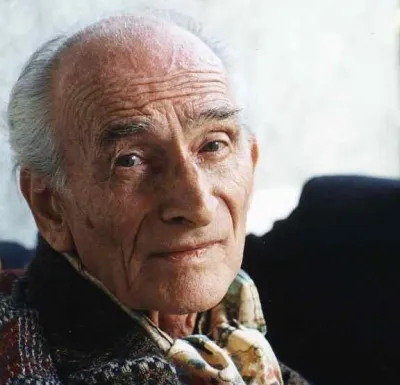
Born and raised in Suzhou, China in a Methodist missionary family, Huston Smith moved to the United States at the age of 17 and graduated from the University of Chicago in 1945 with a PhD in philosophy.
He spent the majority of his academic career as a professor at Washington University in St. Louis (1947-1958), Massachusetts Institute of Technology (1958–1973) and Syracuse University (1973–1983). In 1983, he retired from Syracuse and moved to Berkeley, California, where he was a visiting professor of religious studies at the University of California, Berkeley until his death.
While at Washington University, Smith was the host of two National Educational Television series (NET – the forerunner of PBS): The Religions of Man and Search for America.
While at Chicago, Smith married Eleanor Wieman, the daughter of Henry Nelson Wieman, a professor at the University of Chicago Divinity School. She later changed her first name to Kendra. They had three daughters, Karen, Gael, and Kimberly Smith. Huston Smith died on 30 December 2016 at age 97 in Berkeley, California.
The Human Design of Huston Smith: Manifesting Generator 3/6
Manifesting Generator 3/6 — Design at a Glance
Huston Smith's Design features a hybrid energy structure: as an Manifesting Generator, he had the constant power of the sacral center combined with the ability to skip steps and achieve results quickly. This configuration described someone who not only reacted to impulses—as generators do—but also connected this reaction with direct, manifesting speed.
However, this type presented specific challenges. The tendency towards quickness could lead to overlooking important intermediate steps, resulting in backtracking and frustration. Additionally, there was a tendency to pursue multiple projects simultaneously rather than focusing linearly on one thing at a time. For Huston Smith, it was therefore essential to first react to life and wait for his sacral center to signal a clear "yes." Only through this strategy of reacting instead of initiating could he sustainably utilize his creative power.
Once these conditions were met, he found deep satisfaction in his work. The parallel handling of various tasks was not an obstacle but a source of variety and playful engagement. His design challenged him to find the "play mode" where his hybrid energy—both generative and manifesting—worked harmoniously without falling into the trap of haste or fragmentation.
Emotional Authority
Huston Smith exhibited a decision-making stance that did not stem from an immediate reaction to external stimuli but rather from an internal process of emotional clarification. His inner authority lay in the defined Solar Plexus Center. In Human Design mechanics, this means: As long as the Emotional Center is defined, it functions as the primary decision-making instance – independent of all other defined centers or strategies. This configuration was subject to a natural wave movement of feelings; moods swung between enthusiasm and rejection, with each moment only representing a provisional coloring, not the ultimate truth.
Immediate decisions made from intense emotion often proved misleading or disadvantageous for his design. The mechanics required patience here: By allowing time to pass and letting decisions rest overnight, the emotional wave could subside. Only when initial intensity faded and emotional distance emerged did true clarity set in. This process of "sleeping on it" was not a sign of hesitation but a necessary filtering function to ensure that long-term life decisions were based on calmness rather than transient excitement. Huston Smith lived this necessity of temporal distancing to recognize the deeper truth of his emotional nature and not just follow superficial momentary impulses.
The 3/6 Profile — Martyr / Role Model
Huston Smith's Design laid a tendency towards an experimental search that later transformed into wise leadership. As a 3/6 Profile, he primarily acted as an experimenter until around age 29. During this phase, Line 3 dominated, characterized by Gate 16. This gave him independence through self-generated talent and enthusiasm. However, timing was crucial: He had to wait for the energy to come before bringing in skills. The need for validation from others could lead to doubts, especially when the talent was present but the motor drive was lacking.
After Saturn's return, around age 30, Line 6 activated. Huston Smith now withdrew to reflect on past experiences. Playful Line 3 thus received the wise guidance of Line 6, which sought an overview of everything. He carried both the childlike need for experimentation and adult wisdom within himself. This configuration often led to inner uncertainty; although he projected control, he felt torn between the space for reflection and the urge to play.
Gate 37 on Line 6 directed his purposefulness towards the meaning of life and the collective. It was about transitioning from family into society. His projects aimed at helping people recognize their purpose. Appreciation of family values remained relevant. Around age 50, Huston Smith became a great role model for others through his charm and wisdom. He learned from both perspectives of the lines and functioned as a teacher who shared insights.
Triple Split Definition — Defined & Open Centers
Huston Smith lived under a constant mental pressure to ask questions and find answers. His design connected the Head Center and Ajna Center, creating a continuous inspiration that could not be directly put into action. This state often created inner concern or confusion as his thoughts had yet to take form. Instead of reducing this pressure through hasty decisions, he learned to use it as an inspirational source for others. His communication was clear and consistently marked by his defined Throat Center, which translated his conceptual thoughts into words.
His actions were driven by a tremendous vital force: The defined Sacral Center provided the energy for work and engagement, given that he responded to external requests rather than initiating himself. Simultaneously, he possessed a strong willpower through his defined Heart Center, helping him keep promises and maintain his own authority in the material world. Nevertheless, he had to learn not to direct this power against others who had less ego strength.
The emotional depth of his design came from his defined Solar Plexus Center. Here lay his inner authority: He could only make decisions after the emotional wave subsided and clarity emerged. Impulsive reactions to highs or lows in his feelings led otherwise to chaos.
In contrast, he lacked a firm identity through his open G Center. He tended to blend with his environment and sought direction from those around him. The question “Who am I?” was for him not a biological fact but a conditioned pattern that he had to let go of to flourish in correct relationships. Additionally, his Spleen Center was open, bringing fundamental survival anxiety and sensitivity towards health. Spontaneous decisions were risky here; he learned to observe fears without impulsively giving in to them, distinguishing his own intuition from absorbed energy from others.
Channels for powerful action, clear logic, focus and community.
Huston Smith showed himself through a mind that used skepticism as a tool rather than seeing it as an obstacle. This attitude stemmed from the Logic Channel 63-4, connecting the Head Center with the Ajna Center. Here his mind constantly filtered for patterns; only what was consistent and verifiable counted as true to him. Unfounded belief found no space – an answer had to logically function to be accepted. This process served not personal security but the collective: He asked questions and sought answers that could benefit others.
At the same time, he possessed the ability to intensely focus on details. The Concentration Channel 52-9 connected his Root Center with his Sacral Center. Through the Gate of Non-action (52) and the Gate of Focusing (9), he maintained a steady pressure that kept him still until all relevant aspects of something were grasped. This formative energy allowed him to correct and perfect patterns by precisely applying his energy without being distracted.
His life force was driven by the Charisma Channel 34-20, connecting his Sacral Center with his Throat Center. Here generative power met the ability for immediate expression form. To use this energy effectively, he had to react to external stimuli; only then could his charismatic presence be correctly directed and inspire others rather than chaotically break out.
In interpersonal relationships, he sought reliable connections. The Community Channel 37-40 connected his Solar Plexus Center with his Heart Center. He waited for personal invitations to become part of a group and built bridges between individuals by closing fair agreements. His emotional clarity developed over time, helping him find his place in larger structures and make loyal contributions.
Collective Circuitry — Circuit Signature
Huston Smith's design unfolded as a Triple Definition, meaning three separate, parallel operating energetic systems. These were not merged into each other but existed as independent energy fields alongside one another.
The Understanding Circuit formed two isolated strands: One connected Head and Ajna (Channel 63-4 “Logic”), promoting focused rational thinking. The other flowed between Sacral and Root (Channel 9-52 “Concentration”), making endurance and physical persistence work independently of the intellectual process. This was “emotionless ratio,” as the Solar Plexus was not involved here.
A second, completely separate system formed the Ego Circuit through Channel 40-37 (“Community”) between Heart and Solar Plexus. This linked emotional waves with the will for cooperation and mutual support. As no connection to the Sacral Center existed, this dynamic required necessary rest periods for resource regeneration for the “tribe.”
The third system lay in the Integration Circuit. Here Channel 20-34 (“Charisma”) connected Throat Center with Sacral Center. This enabled translating power from reacting to life (Gate 34) directly into current projection and action in the present (Gate 20).
These three groups – rational-focused/physically-persistent, emotional-cooperative, and reactive-charismatic – functioned for Huston Smith not as a continuous flow but as distinct, complementary yet energetically separate life domains.
Right Angle Cross of Planning 2
Huston Smith's Design showed a tendency towards structured, long-term orientation. He did not set his steps impulsively but rather based them on an inner map that provided clarity and direction. This attitude stems from what is known as the right cross of Profile 2.
In Human-Design mechanics, this configuration describes a deep need for meaning through orderly processes. It's not about rigid control in everyday life, but rather the ability to bring complex connections into a manageable framework. Huston Smith used this energy to reduce uncertainties and align actions with clear goals. His nature was to smooth paths by acting predictably, thereby creating trust—both within himself and his surroundings.
This configuration acted like an inner compass: it helped him choose among many possibilities those that were sustainable. Rather than being carried away by external currents, he remained oriented by his own standards. The right cross of Profile 2 thus shaped a way of life where preparation and reflection preceded action. It was not passive waiting but active design through thoughtful planning. Huston Smith lived this dynamic by deliberately applying his energy to create stable structures that endured beyond the moment. His approach to things was marked by calm determination, coming from the certainty of having chosen the right path.
Saturn Return · Uranus Opposition · Chiron Return · 2nd Saturn Return — Life Cycles
Huston Smith's Human Design profile shaped a life path that showed clear phases of condensation and transition. His first Saturn return around the age of 26 often marked the point where years of groundwork matured into a solid result. This was reflected when he earned his PhD in religious studies at the University of Chicago in 1945, at the age of 26 – a moment of structural confirmation of his intellectual direction.
Decades later, his Chiron return occurred between the ages of 49 and 51, a cycle during which one's incarnation cross unfolds and meaning becomes experiential if strategy and authority have been lived. For Huston Smith, this blooming phase was around 1971: At age 52, "The Purposes of Higher Education" was reprinted, and "Great Religions of the World" was published. These works were not mere repetitions but concrete manifestations of his lifelong purpose in the public sphere.
His second Saturn return around the age of 54 often brings a profound restructuring or the end of an old structure. Huston Smith experienced this in 1973: At 54, he ended his teaching career at the Massachusetts Institute of Technology (MIT). This step was not a sudden crisis in a negative sense but rather the necessary dissolution of a previous life phase to make way for the next development. The mechanics of his design were evident here in the clear delineation between building up, fulfilling, and letting go of outdated structures.
Manifesting Generator · Emotional Authority — Synthesis
Huston Smith was a Manifesting Generator whose life was marked by a dynamic interplay between sacral energy and mental pressure. His defined sacral center provided constant life force, which was channeled into an unending cycle of questions, inspirations, and the need for understanding through his activated Head Center (Channel of Logic). This combination led to a deep engagement with complex topics – continuous experimentation (Profile 3 Line) and the ability to make insights accessible to others, followed by phases of reflection and integration (Profile 6 Line). Recurring turning points in his career, such as receiving his doctorate or ending teaching duties, were results of this internal tension between quickly seizing new opportunities and the need for thorough development.
A central paradox lay in how Smith approached decisions. His emotional authority required time to mature feelings, while his manifesting component inclined him to skip steps and push things forward rapidly. This led to an inner field of tension between the desire for profound emotional clarity and the ability to act swiftly. This dynamic shaped his approach – he could immerse himself intensely in topics to then convey them in accessible forms, but also experience phases of internal crisis when the speed of action did not align with emotional maturity.
4 Defined Channels
Incarnation Cross - Right Angle Cross of Planning 2
Solar Return
The Solar Return shows the moment when the sun returns to its exact birth position - your personal solar year.
Life Cycles
Discover the life cycles with a detailed triple view (birth chart, cycle chart, composite).
Human Design Profile
- Strategy
- To respond - wait for something to respond to
- Authority
- Emotional Authority
- Profile
- 3/6 - Martyr / Role Model
- Definition
- Triple Split
- Incarnation Cross
- Right Angle Cross of Planning 2
- Date of Birth
- 31.05.1919 10:00
- Place of Birth
- Suzhou (Jiangsu), China
Frequently Asked Questions
What was Huston Smith's Human Design type?
Which Profile did Huston Smith have in Human Design?
What Authority guided Huston Smith?
What incarnation cross did Huston Smith have?
When was Huston Smith born?
Discover your own Human Design
Are you also a Manifesting Generator? Find out in a personal reading how to unfold your multi-talents and direct your energy wisely.
More Personalities
Back to overviewAldair
Alizée

Angeli
Arletty
Artus
Balthus