
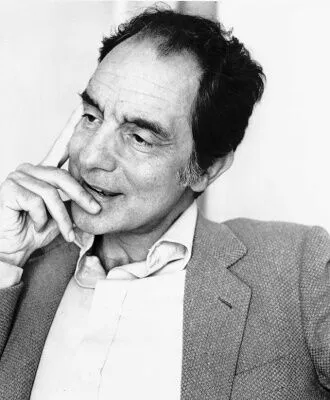
Italo Calvino
Human Design Chart
Biography
He had a hemorrhage 6 Septmeber 1985 and was taken into surgery; two weeks later he died 19 September 1985, 3:00 AM, Siena, Italy,
A collection of his stories published posthumously, "Numbers in the Dark," translated from the Italian by Tim Parks contains pieces never before published.
Italo Calvino — Generator with Profile 1/3
Generator 1/3 — Design at a Glance
Italo Calvino possessed remarkable endurance and a high degree of inner strength, which he used to translate his ideas into reality. As a Generator, he had a lot of sacral energy, making him extremely strong and resilient—provided this energy was put to use on tasks that truly mattered to him. His design indicated that his full potential only became effective when he did not initiate things himself but instead responded to signals from his environment. The strategy involved waiting for an inner signal to give a clear "yes" before responding with concrete action.
If he lived in harmony with this mechanism by acting from the gut, he was rewarded with a deep sense of fulfillment. If, however, he tried to force things or focus on tasks that did not resonate internally, frustration and a lack of energy were likely. Even interrupting his work on passionate projects while still full of power posed a stumbling block. His success therefore depended on whether he used this large reservoir of energy for his heart projects rather than wasting it on inappropriate activities, which would otherwise quickly lead to exhaustion.
Emotional Authority
Italo Calvino showed a decision-making stance that did not arise from the first emotional wave but became clear only after a phase of inner suspension. His design featured emotional authority in the defined Emotional Center—a mechanism that always took precedence over other defined centers when making decisions. This configuration caused feelings to rise and fall like waves; what seemed absolutely right at one moment could prove misleading in the next. Therefore, his immediate emotional reaction did not form a reliable basis for actions. Instead, his system required time: decisions had to mature, often spanning several nights, until the initial emotional intensity subsided and deeper clarity emerged. Only when this inner calm was reached did the true nature of the situation become apparent. Quick, spontaneous judgments based on fleeting moods would have destabilized his system; patience and conscious hesitation were instead necessary to find composure. This process served to distinguish between momentary disposition and lasting insight, which was especially crucial for long-term life decisions.
The 1/3 Profile — Investigator / Martyr
Italo Calvino revealed himself as someone who inseparably combined theoretical foundation and practical experimentation. His design shows a tendency towards a dual approach: first the careful accumulation of knowledge, followed by bold experiments in real life. This configuration corresponds to the Profile of the Researcher and Experimenter (1/3). The first line emphasized maintaining continuity and an instinctive attention to details; it required paying attention to life-sustaining processes to prevent errors through meticulous planning. At the same time, the third line urged him to seek out the unusual and actively "push buttons." For this energy, trial and error was not failure but the essential learning process. It allowed diving into situations, making mistakes, and deriving new connections or insights from them. When Italo Calvino made a decision or rendered judgment, it was based on this double check: theoretically thought through by Line 1 and practically validated by the experiences of Line 3. His life thus revolved around constant learning from doing itself. Self-earned insights were central; they did not arise in an abstract vacuum but through direct contact with reality. This mechanism created a person whose judgments were trustworthy because they knew both the depth of knowledge and the harshness of practical consequences.
Triple Split Definition — Defined & Open Centers
Italo Calvino was someone who constantly felt mental pressure to ask questions and understand connections. This trait resulted from his definition between Head Center and Ajna Center: He had a firm way of conceptual thinking but lacked the energy to directly implement these ideas in the world. Instead, he acted as an inspiration for others by giving thought impulses without having to implement them himself.
At the same time, Italo Calvino possessed a reliable self-identity and a clear sense of direction, shaped by his defined G Center. He knew who he was and could show new perspectives to others without being dependent on their approval. His defined Heart Center also gave him willpower; he liked to control his resources and keep promises, which strengthened his self-esteem as long as he followed his inner guidance.
As a Generator with a defined Sacral Center, Italo Calvino had an enormous source of vital energy. His strategy was not to initiate but to wait for environmental stimuli and then react from the gut with a yes or no answer. Only this way could he use his energy efficiently and avoid frustration. His defined Solar Plexus Center functioned as emotional authority: He had to wait out waves of feelings until clarity set in before making decisions, protecting him from impulsive actions during emotional highs or lows.
In contrast, Italo Calvino possessed open centers that made him vulnerable to certain conditioning. His open Throat Center tended to feel pressured to force attention through speaking rather than waiting for natural invitations to express himself. Additionally, his Spleen Center was open, bringing a fundamental fear of survival and a need for external security. He could easily be tempted to act impulsively or cling to unhealthy structures to simulate this sense of security instead of trusting his intuitive wisdom that only developed with patience.
Channels for community, logic, discovery and maturation.
Italo Calvino combined logical rigor with a deep, experience-based explorer's curiosity. His design showed a tendency towards skeptical analysis that never remained purely theoretical but always relied on practical verification. This attitude resulted from the Logic Channel 63-4 connecting Head and Ajna Centers. This channel constantly filtered patterns; doubt was not an obstacle but an essential part of a mind accepting answers only if they were consistent and verifiable. There was little room for unfounded belief – a statement had to work to be logical.
At the same time, his life was shaped by the Discovery Channel 29-46. Connecting Sacral and G Centers through the Yes-Saying Gate (29) and the Self-Determination Gate (46), he immersed himself in experiences without preconceived expectations. Only through this full commitment could he go all the way to gain insights that helped others see the world anew. Control was irrelevant here; important was trusting to be at the right place at the right time.
Social dynamics were influenced by the Community Channel 37-40, connecting Solar Plexus and Heart Centers via the Friendship Gate (37) and the Solitude Gate (40). This created a need for fair, reciprocal agreements within a group. It was not about hierarchy but building bridges to find an honorable place for everyone, with emotional clarity bringing depth into these connections over time.
The process concluded with the Maturity Channel 53-42 connecting Root and Sacral Centers through the Beginnings Gate (53) and the Growth Gate (42). He went through experiences fully before reflecting on them. This cyclical process – from intention to completion – served to gather wisdom and pass it as collective history. Each experience had to end satisfyingly to serve as a foundation for the next step.
Collective Circuitry — Circuit Signature
Italo Calvino was marked by three separate, unconnected energetic blocks. The Understanding Circuit connected his Head with Ajna Center through the Logic Channel. This promoted a cool, rational way of thinking free from emotional conditioning aimed at future structures and logical insights. Parallel to this, the Meaning-Finding Circuit linked Identity, Sacral, and Root Centers. Here, past emotional waves were in focus; experiences were cyclically reflected to discover their deeper meaning and share these emotional insights with the collective. The third block formed the Ego Circuit connecting Heart and Solar Plexus Centers through the Community Channel. This area concerned cooperation and mutual give-and-take within a group. As no connection existed to Sacral Center, this social dynamic required necessary pauses for resource regeneration. As a Triple Definition, these three systems – rational future structuring, emotional past reflection, and cooperative resource sharing – coexisted side by side without direct energetic flow between them. Each of these forces worked independently: the logical clarity of the mind, the wave-like emotionality of meaning-finding, and the ratchet-like interaction in social dynamics.
Right Angle Cross of Maya 3
Italo Calvino exhibited a fundamental disposition that was shaped by the right cross of Maya 3. This configuration in Human Design described a specific way of thinking and acting that reflected in his lifestyle. The right cross of Maya 3 connected certain energetic patterns leading to a unique perspective on the world. It involved a deep connection between inner truth and outer expression, with Calvino often seeking ways to make complex ideas accessible. His ability to translate abstract concepts into tangible images resulted from this specific energy constellation. The mechanics of this cross promoted a kind of clarity and precision in thinking that allowed him to engage with topics that were difficult for many others to grasp. Calvino used this inner structure to organize his thoughts and convey them clearly to others. His approach was always focused on distilling the essence of things and presenting them in a form that was intellectually engaging as well as emotionally touching. Through the right cross of Maya 3, he found a way to realize his visions and share them with others without losing depth or complexity.
Saturn Return · Uranus Opposition · Chiron Return · 2nd Saturn Return — Life Cycles
Italo Calvino appeared as someone whose life path was marked by clear cyclical condensations. His design indicated a tendency to carry internal structures outward in certain age phases, resulting in measurable achievements. This became evident during the first Saturn return: In 1951 at the age of 28, he undertook a multi-month journey to the Soviet Union and won his first literary prize. This success marked the moment when years of groundwork condensed into a solid result – a typical expression of Saturn energy, which stands for structure and confirmation.
Later, during the Uranus opposition at the age of 39 in 1962, a phase of sudden change began. Here he met Esther Judith Singer. The Uranus energy often brings unexpected encounters or breaks with old patterns, which was concretely realized through this new relationship.
The Chiron return around his 49th year is not a healing process but an achievement cycle in Human Design where the inner purpose unfolds. In 1972, Calvino published “Le città invisibili”. This publication was an expression of this blooming phase when his creative essence reached full maturity and meaning became experiential.
Finally, the second Saturn return at age 57 in 1980 showed another consolidation. With “Cybernetics and Ghosts”, he reaffirmed his intellectual stance by bringing complex themes into tangible form. His design followed a pattern: internal development was confirmed and structured through external milestones.
Generator · Emotional Authority — Synthesis
Italo Calvino lived a process of continuous refinement through experience. As a Generator with defined sacral energy (Design View), he possessed immense endurance that drove him to repeatedly review and develop topics and ideas – a pattern evident in his life (Centers: Defined Head and Ajna Centers). His profile as an Investigator/Experimentor (Profile Role) reinforced this drive for verification through practical application; insights were only considered valid if they were both theoretically grounded and experimentally proven. The recurring successes in his career (Cycles), such as winning a literary prize and publishing significant works, confirmed this approach of continuous learning and testing.
A central paradox lay in Calvino’s emotional authority (Authority) and the channel of logic (Channels/Gates). Although he experienced deep emotional waves that ripened decisions, his mind was constantly in a state of questioning (Understanding Circuit). This combination of emotional depth and constant doubt created a tension between the need for emotional clarity and the continuous search for logical consistency. He needed time to process emotions while his mind simultaneously analyzed patterns and tested their validity – a dynamic that shaped his work.
4 Defined Channels
Incarnation Cross - Right Angle Cross of Maya 3
Solar Return
The Solar Return shows the moment when the sun returns to its exact birth position - your personal solar year.
Life Cycles
Discover the life cycles with a detailed triple view (birth chart, cycle chart, composite).
Human Design Profile
- Type
- Generator
- Strategy
- To respond - wait for something to respond to
- Authority
- Emotional Authority
- Profile
- 1/3 - Investigator / Martyr
- Definition
- Triple Split
- Incarnation Cross
- Right Angle Cross of Maya 3
- Date of Birth
- 15.10.1923 08:50
- Place of Birth
- Santiago de las Vegas, Cuba
Frequently Asked Questions
What was Italo Calvino's Human Design type?
What Profile did Italo Calvino have in Human Design?
What Authority did Italo Calvino have?
What incarnation cross was assigned to Italo Calvino?
When was Italo Calvino born?
Discover your own Human Design
Are you also a Generator? Find out in a personal reading how to use your sacral energy correctly and discover deep satisfaction.
More Personalities
Back to overviewAaliyah

Alain-Fournier

Alexia

Angèle

Angeli

Anne-Marie
