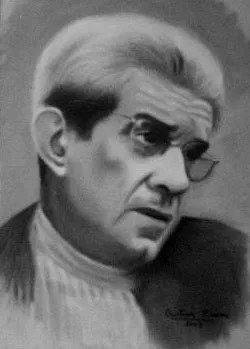
Jacques Lacan
Human Design Chart
Biography
Lacan founded and headed an organization called the Freudian School of Paris from 1964 until he disbanded it in 1980 for what he claimed was its failure to adhere with sufficient strictness to Freudian principles. His major achievement was his reinterpretation of Freud's work in terms of the structural linguistics developed by French writers in the second half of the 20th century. The influence he gained extended well beyond the field of psychoanalysis to make him one of the dominant figures in French cultural life during the 1970s. In his own psychoanalytic practice, Lacan was known for his unorthodox, and even eccentric, therapeutic methods that were considered widely controversial.
Lacan 's works include, "Speech and Language in Psychoanalysis," 1981, "Feminine Sexuality," 1982 and "The Psychoses," 1993.
He married Marie-Louise Blondin on 29 January 1934 and divorced on 15 December 1941. He made a second marriage 30 years later with Sylvia Maklès on 17 July 1971.
Died 9 September 1981 in Paris.
Human Design Analysis: Jacques Lacan as Manifesting Generator 3/5
Manifesting Generator 3/5 — Design at a Glance
Jacques Lacan's design indicated a tendency towards hybrid energy: He possessed the constant power of a generator but also had the ability to skip steps and quickly pull things into his life. As an Manifesting Generator, he was someone who not only reacted to impulses but transformed these reactions with such speed that it could shorten typical processes. This configuration meant that Jacques Lacan could pursue multiple projects simultaneously and often found himself in a 'play mode' when seeking variety.
However, the mechanics of his type presented specific challenges: His speed sometimes led him to skip important intermediate steps, necessitating catch-up later on which could cause frustration – a classic non-self theme for this type. Additionally, he tended to start several undertakings at once in response to many different impulses. Without strict adherence to his strategy of waiting and then clearly responding, he risked turning his creative enthusiasm into overburdening himself. If Jacques Lacan ensured that his sacral center approved each step, however, he could draw deep satisfaction from his multifaceted work. His life task was to use this inner confirmation as a filter to productively harness his immense dynamism without frustration.
Emotional Authority
Jacques Lacan's design indicated a tendency towards emotional wave and waiting. His inner authority was Emotional Authority, carried by the defined Emotional Center. This configuration meant: Every decision went through a process of ups and downs. Feelings swung between enthusiasm and rejection, with initial impressions often only momentary snapshots, not final truth. Quick, spontaneous judgments based on temporary moods usually had negative consequences.
The mechanics required patience. Jacques Lacan needed to give himself time for decisions to mature. This happened through multiple sleepovers and active postponement. Over time, intense emotions subsided, emotional distance gained strength and clarity, and calmness set in. Only then was the process complete. This strategy was especially important for long-term decisions that significantly influenced his life course. Emotional authority always took precedence over other defined centers regardless of further configurations in his chart. It dictated the rhythm of his inner compass: not acting immediately but waiting until emotional waters had cleared and a deeper, more comprehensive insight became possible.
The 3/5 Profile — Martyr / Heretic
Jacques Lacan's design indicated a tendency towards experimental action paired with the role of problem-solving helper. As someone with Profile 3/5, the Explorer and Hero, he initially believed nothing given knowledge and had to validate everything through personal experimentation and learning from mistakes. This Line Three accepted setbacks as natural growth processes; his assertiveness allowed him to turn these reversals into advantages.
This self-learned practical wisdom strongly shaped how others perceived him. The fifth line acted here as the Hero aspect: Others projected more wisdom and competence onto Jacques Lacan than he perhaps consciously possessed. This influence was particularly evident in a global context with strangers or a broad public, less so in close private circles. His power position tended to make others compliant for lasting influence. However, this configuration also brought specific vulnerability: The hero role flattered his ego but became painful when he had to try things out and fail before many eyes. Each solution he offered was conditional on bringing him personal benefit or advantage. Thus, his life path condensed into a pattern of trial and error that made him attractive for learners but required constant caution not to undermine the full potential of this line through excessive prudence.
Split Definition — Defined & Open Centers
Jacques Lacan's Human Design profile revealed a tendency towards consequent, conceptual precision. His defined Ajna Center ensured constant mental function; he thought continuously and processed data and creativity in a trustworthy manner. This inner authority flowed into his defined Throat Center, allowing him to articulate what his mind conceptualized. His voice served as a pivot point to transmute messages from the mental field into the world.
Simultaneously, Jacques Lacan had a deeply rooted identity through his defined G Center. He possessed a sense of direction and could show others new perspectives without being dependent on them. His vital energy came from his defined Sacral Center; as a generator, he reacted to life rather than initiating it. This sacral power allowed him persistence in tasks that fulfilled him, while his defined Solar Plexus enabled emotional clarity through waiting out the waves. His defined Spleen Center protected him through spontaneous intuition in the present moment, and his defined Root Center provided the necessary pressure for material existence.
In contrast, his open Head Center revealed a vulnerability to mental stress and confusion. He tended to be overshadowed by doubts or questions from others rather than seeking his own inspiration. His open Heart Center lacked consistent willpower; he did not seek competition or proof of his worth through promises. Instead, he accepted the fact that his value did not need to be proven, and used his open centers as a mirror for the energy of his environment.
Channels for powerful action, transformation and emotional expressiveness.
Jacques Lacan's Human Design profile revealed a tendency towards radical self-confirmation. He was shown through Channel 34/10, which linked sacral reactive power with self behavior. This gave him the inner strength to follow his convictions and love himself independently of external conditioning. His energy was channeled through Channel 34/20, where generative force directly translated into expression. This mechanism generated a charismatic presence that relied on correct reaction from the Sacral Center to avoid appearing chaotic.
Parallel to this, Channel 10/20 shaped his way of being present in the moment. Through Gate 5 and Gate 64, he spoke for himself and inspired others through sheer authenticity to live their unique selves. On a personality level, Channel 43/23 was at work: insights from the Ajna Center were processed and clearly communicated through assimilation in the Throat Center. This enabled him to formulate innovative perspectives so they could be understood and accepted rather than rejected as foreign.
Channel 54/32 drove him forward with ambition and a desire for continuity, aiming to improve his position within the social structure motivated by fear of tribal failure. Additionally, Channel 36/35 promoted seeking new experiences; emotional crises served here as catalysts for change and exploration of uncharted territory. This configuration described someone who through authentic reaction, clear communication, and a drive for experience mutated their environment.
Individual Circuitry — Circuit Signature
Jacques Lacan's Human Design profile revealed a tendency towards structured individual identity formation. His chart featured a Split Definition, meaning his energetic connections ran in two separate groups that did not directly communicate with each other. The first group included the Ajna, Throat, Sacral, Solar Plexus and G Centers; the second comprised the Spleen and Root Centers.
In the Knowledge Circuit, Jacques Lacan connected Ajna with Throat Center (Channel 43/23). This promoted the expression of one's thoughts through structuring but did not facilitate spontaneous inspiration or deep emotional transformation as these channels were missing. Parallel to this, the Focusing Circuit worked over Identity and Sacral Centers (Channel 10/34). This connection strengthened his inner self-worth and firm convictions through constant life energy, though direct expression of these beliefs was limited.
The Meaning Circuit linked Throat with Solar Plexus Center (Channel 35/36). Here it was about sharing emotional experiences from the past driven by cyclical waves of feelings. In the Ego Circuit, Jacques Lacan connected Spleen and Root Centers (Channel 32/54), which enabled an intuitive transformation of fears into clarity but without mobilizing resources for long-term tribal tasks. Finally, the Integration Circuit integrated Throat, Sacral and Identity Centers (Channels 20/10, 20/34). This gave him high individuality and the ability to draw power from life and be effective in the present moment, with this energy directly flowing into his identity.
Right Angle Cross of Maya 1
Jacques Lacan's Human Design configuration indicated a tendency towards a deep, often unconscious search for meaning behind things. This setup, known as the right cross of Maya, described an inner compass that did not rely on external validation or logical proof but rather on an intuitive connection to the unseen. It was less an intellectual pursuit and more a soulful need to grasp the hidden structure of reality and articulate this experience in words.
This mechanism worked through an internal resonance space rather than rational analysis. Jacques Lacan often found himself standing between two worlds: the visible, material order and a deeper symbolic plane that could only be recognized by those willing to penetrate beyond the surface. The right cross of Maya connected his chart's ability to link abstract concepts with concrete human experiences. It was not mystical speculation but rather a precise perception of what lies between the lines – that space where meaning arises before it is linguistically fixed. This attitude shaped how he viewed complex psychological phenomena: always with an eye on what was not directly said, yet felt.
Saturn Return · Uranus Opposition · Chiron Return · 2nd Saturn Return — Life Cycles
Jacques Lacan's Human Design configuration indicated a tendency towards profound structural shifts that condensed into clear life phases. In 1932, at the age of 31, he earned his doctorate in psychiatry. This marked his first Saturn Return, a cycle where long-term effort and discipline often mature into a solid public achievement. The structure of his design promoted the consolidation of earlier efforts into a firm professional foundation.
Later, another dynamic emerged: In 1941, at age 40, he separated from Marie-Louise Blondin. This fell on his Uranus Opposition, a time when old binding structures are often felt as unsustainable and abrupt changes seem necessary to relieve internal pressure. His design signaled the need to break through outdated patterns, even if this came with personal crisis.
The peak of this development occurred in 1949 when he presented his paper on the mirror stage at age 48. This coincided with his Chiron Return, a fulfillment cycle where one's life mission – assuming one lives according to their strategy and authority – increasingly unfolds and becomes experientially meaningful. For Jacques Lacan, this was not a moment of healing old wounds but rather a flowering period when his specific intellectual mission fully unfolded and confirmed his path.
Manifesting Generator · Emotional Authority — Synthesis
He was an Emotional Authority Manifesting Generator with the Profile of the Explorer/Hero. This background shaped a character who learned through constant experimentation and experience (Line 3) to make this knowledge accessible to others (Line 5). The defined Sacral energy provided the constant driving force for these explorations, while his connection to the Throat Center enabled him to quickly bring insights into the world – often with an urge to skip steps. The defined Mental Center (Ajna) strengthened this process through a continuous development of concepts and theories that he presented as external authority.
A central paradox lay in the tension between his Sacral reaction to the moment and the need for emotional maturity. He could act swiftly (Manifestor aspect), yet his emotional authority required time to digest decisions and grasp true consequences. This may have led to a pattern of quick initiatives followed by the necessity to backtrack and correct – a cycle of experimenting, crises (such as divorce) and ultimately success, as shown in presenting new ideas.
6 Defined Channels
Incarnation Cross - Right Angle Cross of Maya 1
Solar Return
The Solar Return shows the moment when the sun returns to its exact birth position - your personal solar year.
Life Cycles
Discover the life cycles with a detailed triple view (birth chart, cycle chart, composite).
Human Design Profile
- Strategy
- To respond - wait for something to respond to
- Authority
- Emotional Authority
- Profile
- 3/5 - Martyr / Heretic
- Definition
- Split Definition
- Incarnation Cross
- Right Angle Cross of Maya 1
- Date of Birth
- 13.04.1901 14:30
- Place of Birth
- Paris, France
Frequently Asked Questions
What was Jacques Lacan's Human Design type?
What Profile did Jacques Lacan have in Human Design?
Which Authority guided Jacques Lacan?
What incarnation cross did Jacques Lacan have?
When was Jacques Lacan born?
Discover your own Human Design
Are you also a Manifesting Generator? Find out in a personal reading how to unfold your multi-talents and direct your energy wisely.
More Personalities
Back to overviewAlain-Fournier

Aldair

Alizée

Angeli

Arletty

Artus