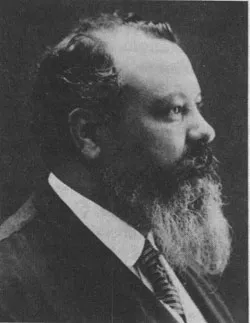
Photo: Wikimedia Commons
Jan Pronk
Human Design Chart
Biography
His parents were conscientious Dutch Calvinist teachers and also Jan Pronk would become a driven and strongly principal politician. The Dutch PM Wim Kok called him the "Minister for the national conscience".
He followed the Gymnasium in Den Haag (1951-57) and studied from September 1957 till December 1964 economics at the "Nederlandse Economische Hogeschool in Rotterdam", the predecessor of the Erasmus University. During his study he worked as travel guide. His first paid job as an economist was as a research assistant under Prof. J. Tinbergen (1 January 1965) in Rotterdam. Thereafter he worked for the Netherlands Economic Institution (NEI).
From 11 May 1971 till 11 May 1973 he was a member of the Dutch Parliament for the Dutch Labour Party PvdA. From 13 March 1973 till 11 May 1973 he was member of the European Parliament.
From 11 May 1973 till 19 December 1977 he was "minister zonder portefeuille", which later would become a Ministry for Development aid, in a time that the Dutch politicians realised that tackling "born with" poverty in the world and a more equal economic development needed a long term strategy. From 16 January 1978 till 18 Augustus 1980 he was Dutch MP again.
From 1980 till 1985 he was deputy Secretary-General of the United Nations Conference on Trade and Development (UNCTAD) in Geneva under Dr. Gamani Corea.
From 8 June 1986 till 8 November 1989 he was MP for the Labour Party, PvdA. From 1 September 1989 till 16 November 1989 he was also Professor Theory and Practice of Policy Making at the University of Amsterdam.
From 7 November 1989 till 3 Augustus 1998 he was Minister for Development Co-operation again in the Cabinet Lubbers III (till 22 Aug 1994) and Kok I. Under Cabinet Kok II he was from 3 Augustus 1998 till 22 July 2002 Minister of Environment, Spatial Planning and Housing.
The Human Design of Jan Pronk: Manifestor 4/6
Manifestor 4/6 — Design at a Glance
Jan Pronk's design was characterized by a clear pioneering role that positioned him as a leader and visionary. His energy was geared towards guiding the world into a new future, much like an emperor in ancient Rome who had the vision of a great empire but did not wage the necessary wars himself, instead delegating them to others. This structure often led to misunderstandings, as his thinking frequently exceeded that of his surroundings. This created polarization: while some people loved his big dreams and followed him, others rejected or even hated him because of these visions. To find the right followers, it was crucial for him to inform others about his plans in a timely and precise manner. This strategy of informing was the key to minimizing resistance and gaining support. When he followed this strategy, his design rewarded him with a sense of inner peace. If he lived against this guideline, he instead felt a persistent, deep anger. His path therefore lay in channeling his initiative-driven nature through clear communication to bridge the gap between his vision and the acceptance by others.
Emotional Authority
Jan Pronk showed himself to be someone who never made decisions in the heat of the moment. His design tended to be carried away by the immediate emotional wave without accepting it as the final truth. This stemmed from his emotional authority, carried by the defined Solar Plexus Center. A central mechanism of his system: this authority always took precedence over all other defined centers, regardless of their content.
Emotional authority is subject to constant ups and downs of feelings. The world appears colored by the current mood; a moment of enthusiasm can quickly turn into negative evaluation. The first impression, however, is only a snapshot, not the deeper truth. Quick, spontaneous decisions from this emotional heat often had negative consequences.
Instead, his system required patience. The more time he took to let a decision mature, the deeper and more comprehensive he could see. This meant reconsidering and sleeping on decisions multiple times. He should take his time, ask more questions, and seek clarity. Over time, the intense feelings subsided, he gained emotional distance. Only then did clarity and calmness set in. This process was particularly important for long-term decisions that could have a significant impact on his life course. Through waiting, he went through the necessary maturation process before acting.
The 4/6 Profile — Opportunist / Role Model
Jan Pronk showed himself to be someone who intensively used his early life to build a dense network through experiments in relationships and friendships. His design, a Profile 4/6, initially leaned towards a strong inclination towards social exploration, driven by Line 4, which connects through friendliness and the search for the right moment for experiences. In these first three decades, he acted less as a distant observer but as an active participant who collected information and integrated into groups.
Over time, especially after the return of Saturn, this dynamic changed fundamentally. Line 6 became active and brought an inner conflict to the surface: the tension between the deep need to belong to the community and the simultaneous urge to withdraw to think about the bigger picture. This shift from social integration to far-sighted analysis shaped his later attitude. He developed the ability to understand transitions and cyclical processes rather than clinging to transient ideas. From the early phase of information exchange and network building emerged a role that was not only based on cooperation but also took a certain distance to recognize the collective flow. The initial openness became more cautious, protected from false bonds, while the perspective expanded to see patterns in impermanence.
Split Definition — Defined & Open Centers
Jan Pronk's Human Design shows a tendency towards constant mental pressure and conceptual clarity, paired with a firm inner identity and willpower. The defined Head and Ajna Centers created a permanent impulse to question and form concepts, while the defined G Center provided a reliable self-identity and direction. The defined Heart Center supported this by providing clear willpower and the ability to keep promises. This combination allowed him to not only think ideas but also to defend them with authority and determination.
At the same time, the design revealed specific vulnerabilities. The open Sacral Center made him susceptible to absorbing foreign vital energy, which could lead to overloading if he did not pay attention to his own limits. The open Spleen Center brought a fundamental fear of poor well-being, leading him to cling to false security sources. The open Root Center absorbed external stress, leading to a feeling of pressure that did not originate from him.
The mechanics show that Jan Pronk was designed to use mental inspiration and emotional depth (through the defined Solar Plexus Center, which acted as an inner authority) to make decisions after waiting out the emotional wave. His challenge lay in accepting mental pressure without falling into hasty actions and not confusing his open energy with that of his environment. By trusting his emotional authority, he could gain clarity, while the open centers required him to learn to distinguish and not take on foreign energies and stress. This created a profile that was intellectually sharp and identity-strong but required careful handling of energy and stress to avoid depletion.
Channels for seeking, feeling, mind and pioneering spirit.
Jan Pronk's design established a basic disposition characterized by insatiable curiosity and the ability to convey through storytelling. He was someone who not only sought new perspectives but actively wove them into stories to inspire others. This tendency was rooted in the Channel of Curiosity 11-56, which connects the Ajna Center with the Throat Center. Through the Gate of Ideas (11) and the Gate of Inspiration (56), there was an impulse to share insights not as dry facts but as living parables. The mechanics describe this as a kind of 'magical' connection of ideas that engages the imagination of the listener rather than convincing them logically.
Parallel to this, the Channel of Openness 22-12, which connects the Solar Plexus Center with the Throat Center, was influenced by the emotional wave. Jan Pronk's social interactions and his way of expressing himself were strongly dependent on his current mood and inner timing. When emotional energy flowed, he could communicate with passion and warmth; in other phases, he withdrew. This dynamic created an authentic, though fluctuating presence aimed at creating a receptive environment for new states of consciousness.
Furthermore, the Channel of Awareness 61-24 shaped his thinking. Connecting Head and Ajna Centers through the Gate of Secrets (61) and the Gate of Rationalizing (24), he did not seek logical proof chains but rather sudden moments of inner truth. His mind was geared towards processing inspiration and recognizing what is truly meaningful in quiet moments.
The Channel of Initiation 51-25, which runs through the Heart Center via the Gate of Shock (51) and the Gate of the Spirit of Self (25), gave him competitive energy. He was designed to experience individualization through personal engagement and overcoming 'shocks' and to encourage others in doing so. This combination of narrative curiosity, mood-driven openness, intuitive awareness, and initiative courage formed his characteristic way of interacting with the world.
Individual Circuitry — Circuit Signature
Jan Pronk's design established a tendency towards individual emotional processing that worked in separate energetic blocks. Through the split definition, two parallel, unconnected power fields existed.
The first field united Head, Ajna, Throat, and Solar Plexus Centers. Here, the Knowledge Circuit operated: The Channel of Awareness (24-61) promoted innovative flashes of insight, while the Channel of Openness (12-22) directly translated emotional waves into expression. Parallel to this, the Meaning Circuit connected Ajna and Throat Centers through the Channel of Curiosity (11-56), which facilitated reflecting on past experiences and sharing these insights with the collective. This combination created a pulsating, acoustic energy that transformed new knowledge and communicated it emotionally.
The second, isolated field connected Identity and Heart Centers. The Centering Circuit operated here through the Channel of Initiation (25-51). This strengthened self-esteem and reinforced inner convictions. Since there was no connection to the Throat Center, these deep convictions often remained unspoken. Jan Pronk thus appeared as someone with strong, individual principles who simultaneously had a need to understand and convey complex emotional connections from the past – two separate but simultaneous life tasks.
Right Angle Cross of Eden 1
Jan Pronks Human Design shows a tendency towards a deep, often unspoken loyalty to certain ideals or communities. This attitude did not manifest as superficial adaptation but as an inner commitment that significantly influenced his decisions and actions.
This configuration is known in Human Design as the right cross of Eden. It describes a specific energetic structure that implies a strong connection to destiny or a higher order. People with this expression tend to direct their energy and attention towards things that go beyond the purely individual and touch upon a collective or spiritual dimension. It is less about conscious strategic planning and more about an intuitive alignment with values that are felt as fundamental and unchangeable.
This inner anchoring acted as a strong compass in Jan Pronks life. It created a foundation of constancy that allowed him to maintain a firm reference point even in uncertain or changing environments. The energy of this cross promoted a stance of dedication, where the self was often placed in the service of greater contexts. This resulted in a kind of integrity that was not imposed from the outside but lived out of this deep inner conviction. The result was a person characterized by their loyalty to their principles and the community close to them, which generated a consistent and reliable presence.
Saturn Return · Uranus Opposition · Chiron Return · 2nd Saturn Return — Life Cycles
Jan Pronks design is characterized by a clear, cyclical structure that organized his career into recurring phases of consolidation and change. This mechanism was evident in his political ascent. In 1971, at the age of 31, he entered the Dutch parliament as a member of the PvdA – a classic first Saturn return. During this period, years of preparation condensed into a solid, institutional foundation.
However, the dynamics shifted shortly after. In 1978, at 38 years old, he returned as a re-elected member of parliament. This fell during the Uranus opposition, a phase often bringing unexpected breaks or radical reorientations. Rather than sticking to the established structure, he used this pressure to renew his position and explore new paths.
The most profound development occurred in 1989. At 49 years old, he became a professor for theory and practice of political design at the University of Amsterdam. This marked the Chiron return, the cycle of bloom. Here, the individual incarnation cross unfolds; the meaning and purpose become experiential. Pronk transitioned from pure practice to teaching, where he systematically imparted his knowledge.
The second Saturn return in 1998, at 58 years old, crowned this arc. His appointment as Minister for Development Cooperation confirmed the expertise he had previously developed. He returned to political responsibility, now supported by academic authority and the mature structures he had built over the previous decades. His path thus followed the rhythmic guidelines of his design exactly.
Manifestor · Emotional Authority — Synthesis
A central red thread in this design is the dynamic interaction between inner inspiration and outer effect. The Manifestor authority, paired with the defined Head Center (Inspiration, Questions), points to an unceasing inner drive to develop and understand new ideas. This process is reinforced by the Channel of Curiosity (Gate 11/56), which describes the urge to seek, discover, and share insights. The profile as a Networker/Role Model (4/6) underscores the ability to inspire and connect others through one's own experiences and insights, yet with an inner tension between the desire for belonging and the need for independent reflection.
The central paradox lies in the tension between the impulsive, initiating character of the Manifestor and the emotional authority that requires time for decision maturation. While the design is geared towards quick, direct action, the emotional wave demands a patient engagement with one's feelings to make authentic and sustainable decisions. The recurring career events tied to defined cycles suggest that this inner conflict is renegotiated throughout life – between the desire to make an impact and the necessity to find one's own inner truth.
4 Defined Channels
Incarnation Cross - Right Angle Cross of Eden 1
Solar Return
The Solar Return shows the moment when the sun returns to its exact birth position - your personal solar year.
Life Cycles
Discover the life cycles with a detailed triple view (birth chart, cycle chart, composite).
Human Design Profile
- Type
- Manifestor
- Strategy
- To inform others before acting
- Authority
- Emotional Authority
- Profile
- 4/6 - Opportunist / Role Model
- Definition
- Split Definition
- Incarnation Cross
- Right Angle Cross of Eden 1
- Date of Birth
- 16.03.1940 11:55
- Place of Birth
- Scheveningen, NETH
Frequently Asked Questions
What is Jan Pronk's Human Design type?
What Profile does Jan Pronk have in Human Design?
Which Authority guides Jan Pronk?
Which incarnation cross is active for Jan Pronk?
When was Jan Pronk born?
Discover your own Human Design
Are you also a Manifestor? Find out in a personal reading how to use your initiation power peacefully and dissolve resistance.
More Personalities
Back to overviewChristian-Jaque
Kesha

Lucebert
Masaccio
Nadar
Papus