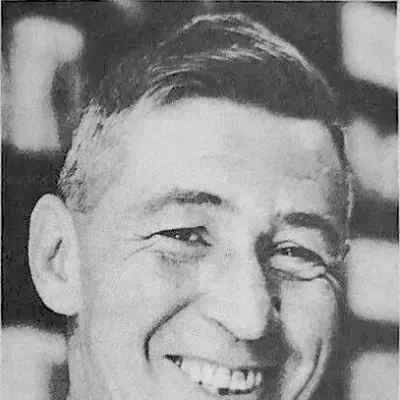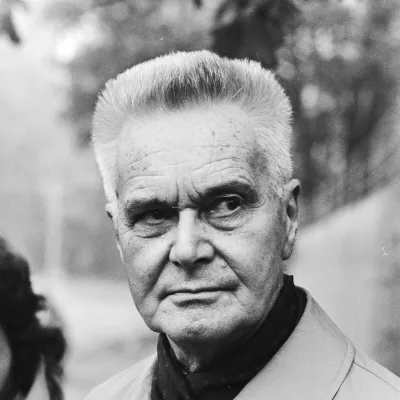
Jan Tinbergen
Human Design Chart
Biography
Tinbergen's father stimulated the learning of foreign languages and science of his children. His mother, who had been a teacher of fisherman children in Scheveningen, brought them into contact with the world of the poor and orphaned. During WWI the family hosted Austrian refugee children. Tinbergen was stimulated to work hard to improve his and the outside him existing world, but he also knew that this could not achieved by only for themselves working individuals. He early learned to have a social feeling and the need to co-operate.
Tinbergen followed the HBS in Den Haag, where he met his spouse Tine. In 1921 Tinbergen studied Mathematics and Physics at Leiden University. After his Candidate exam in December 1922 he became an assistant of the quantum mechanics professor Paul Ehrenfest (18 Jan 1880, Wien - 25 September 1933, Amsterdam).
The Human Design of Jan Tinbergen: Projector 2/4
Projector 2/4 — Design at a Glance
Jan Tinbergen's design inclined towards precise system analysis. As a projector, he did not have an intrinsic source of life energy like a generator but operated in phases of high intensity followed by necessary rest periods for regeneration. This structure allowed him to immediately identify weaknesses in complex processes – comparable to a flashlight illuminating the darkness with pinpoint accuracy.
His aura was focused and dense. Direct criticism of errors in his environment would often provoke resistance, as the bright light of the projector could be uncomfortable for others. Instead, his effectiveness was shown through an elegant attraction: by embodying harmonious patterns himself, he invited others to seek out his solutions. The strategy involved waiting for respectful invitations rather than pushing forward proactively.
If Jan Tinbergen lived according to this logic, he was rewarded with success. Ignoring these dynamics and trying to force his energy against environmental resistance or acting without invitation led sooner or later to his non-self theme: bitterness. His undefined Sacral Center required respect for his rhythms; the conventional system of constant productivity did not suit his nature. His strength lay in illuminating paths for others once they were ready to accept this light and ask for it.
Emotional Authority
Jan Tinbergen exhibited a fundamental disposition characterized by emotional wave movements. His design featured Emotional Authority in his defined Emotional Center. This configuration meant that his inner truth did not lie in any single moment but unfolded over time. He was subject to constant mood swings; what excited him one moment could appear negative the next. His feelings were always just snapshots, first impressions that did not necessarily reflect deeper reality. Quick, spontaneous decisions made from this emotional heat often proved false. Instead, his system required patience and conscious hesitation. He had to let decisions mature, sleep on them multiple times, and take time until intense emotions subsided. Only then could he gain emotional distance, clarity, and calmness. This process was especially crucial for long-term life decisions. Emotional Authority always took precedence over other defined centers in his chart; it determined the rhythm of his inner compass independently of further mechanical factors. Jan Tinbergen thus did not live in quick access to answers but in a cyclical movement from feeling to distancing, which only after some time pointed him towards true direction.
The 2/4 Profile — Hermit / Opportunist
Jan Tinbergen was someone who oscillated between a deep need for withdrawal and the urge to connect. His design inclined towards initially working alone to gain clarity in this 'cave' before returning to his trusted people. This dynamic stemmed from his 2/4 Profile: Line 2 promoted independence and selectivity, while Line 4 carried the need for community and network maintenance.
For Jan Tinbergen, it was crucial to clearly communicate these two poles – when he sought company and when he wanted solitude. During his alone time, he immersed in internal processes, reflected on, and evaluated information from his environment. Only once the need for rest was satisfied did he re-emerge to spend time with his favorite people.
Line 4 also brought a capacity for deep research and exploring universal principles. However, it could be painful when this personal knowledge was carried or interpreted in different directions by others. Nevertheless, this configuration allowed him to process collective network wisdom in silence and develop brilliant ideas from it. The tension between hermit and community member shaped his work style: a cyclical shift from withdrawal to integration and re-emergence for the dissemination of new insights.
Single Definition — Defined & Open Centers
Jan Tinbergens Human-Design profile suggests a tendency towards emotional depth and patient decision-making. His defined Solar Plexus Center acted as an internal authority that required waiting for emotional waves to subside before clarity emerged. This was complemented by his defined Root Center, which provided a steady pressure to move forward. This configuration created a dynamic where existential urgency was filtered through the lens of emotional reflection; impulsive action was deferred in favor of careful, time-dependent conscience checks.
At the same time, his design revealed several sensitive areas. His open Head Center made him vulnerable to mental confusion and the pressure to find answers to questions that weren't his own. He tended to be distracted by others' inspirations or get stuck in a mental monologue instead of trusting his emotional clarity. His open Ajna Center amplified this: concepts and theories were often taken as foreign opinions, risking identification with ideas not stemming from his own truth.
His open G Center meant he lacked a fixed identity or direction, acquiring these through interaction with the environment rather than asserting them himself. Additionally, in his open Heart Center, he lacked consistent willpower; he tended to want to prove his worth through promises or performance, which could plunge him into spirals of self-doubt if expectations weren't met. His open Sacral Center showed an unstable energy flow: he was sensitive to others' life force and tended to overwork or ignore exhaustion since he had no internal limit for when 'enough' was enough. Finally, his open Spleen Center made him vulnerable to survival fears; spontaneous decisions were risky as he instinctively sought security and could cling to things that didn't serve him just to simulate a sense of well-being.
Channels for mystical synthesis of claim and principle.
Jan Tinbergen's Human-Design profile suggests a tendency towards deep tribal consciousness. He was someone who felt and tested the connection through emotional waves, checking if bonds aligned with highest ideals. This stance came from Channel Synthesis 19/49. This channel connected the Root Center to the Solar Plexus, creating a frequency of acceptance or rejection that acted as glue for the community. Loyalty and resource protection were key; it was about feeling needed and in turn receiving support.
Additionally, Jan Tinbergen had an endowment linking logical precision with inner truth. Gate 62 brought patience and detail accuracy to translate patterns into formulas and clarify facts. This contrasted with Gate 61, which carried the pressure for individual knowledge as spontaneous mutation and described the struggle for silence and recognition of one's own truth.
Furthermore, forces of continuity and material success were at play through Gate 32, seeking stability and only making radical changes when necessary. Simultaneously, his design showed an evolutionary development of purpose through Gate 41, driving him from experience to experience and integrating crises as part of change. Finally, Gate 60 defined the ability to accept limitations for transcendence, where melancholy was a physical experience overcome by creativity. This configuration described someone navigating between emotional tribal glue and rational pattern recognition.
Tribal Circuitry — Circuit Signature
Jan Tinbergen's Human-Design profile suggests a tendency towards synthesis that links emotional intuition with the need for action. This configuration is shown through Channel Synthesis (49/19), directly linking the Solar Plexus Center to the Root Center. Emotional waves in the Solar Plexus – often described as an internal compass needing time to gain clarity – flowed immediately into the energy of the Root Center, responsible for stress reactions and survival instincts.
This flow belonged to the Ego Circuit, part of the Tribal Group emphasizing cooperation and collective creation. Since Jan Tinbergen had no connection to the Sacral Center, he lacked its constant life force. Instead, his structure required regular rest periods to regenerate resources for the 'tribe' – social environment or community. Without these breaks, exhaustion threatened as energy didn't come from an inexhaustible source but was built cyclically.
The simple definition of his centers also meant all defined areas were directly connected; there were no separate, isolated fields in his system. His strength lay in processing emotional information and translating it into concrete, survival-relevant actions always within the context of mutual support and traditional stability.
Right Angle Cross of Maya 1
Jan Tinbergen's design carried the imprint of the right cross of the Maya, a configuration that pointed to a deep connection between spiritual intuition and practical application. This structure suggested that he was not only seeking abstract truths but also wanted to translate them into tangible, material forms. The right cross of the Maya often connects the creative center with the emotional or motoric center, meaning that his creative impulses were filtered and concretized through feelings or physical actions.
For Jan Tinbergen, this was not just a theoretical approach but a life path where inner visions sought an outer anchoring. He showed himself to be someone who wanted to bridge the gap between the invisible and the visible. His creativity did not find expression in pure mental play but rather in projects or ideas that had physical presence. This mechanism challenged him to shape his inner images so they could be perceived and utilized by others. It was about transforming inspiration into reality, with the emotional center ensuring that these creations were connected with a certain depth and resonance. Jan Tinbergen lived this process of materializing spiritual or creative impulses by translating his insights into concrete results.
Saturn Return · Uranus Opposition · Chiron Return · 2nd Saturn Return — Life Cycles
Jan Tinbergen's life followed the classical structural cycles of Human Design. His first Saturn return marked the phase of consolidation: here, early impulses condensed into a solid foundation on which he could stabilize his inner authority. It was a process of anchoring, during which he learned to responsibly handle his energies.
The opposition to Uranus brought necessary breaks and renewals. This cycle challenged him to break through old structures that no longer fit his true nature. It was not arbitrary destruction but a mechanically conditioned necessity to make space for new, more authentic expressions.
With the Chiron return, he reached his peak time. This fulfillment cycle showed that his life increasingly aligned with his incarnation cross. If he had followed his strategy, his specific purpose and meaning became experiential and visible in this phase. It was the time of full unfolding of his design.
The second Saturn return completed this process. Here it was about the final integration of all previous experiences. Jan Tinbergen could now look back on a life shaped by these four great architectural milestones. Each cycle fulfilled its specific function: building up, transformation, fulfillment, and conclusion. His design proved robust enough to navigate these universal human transitions while preserving his individual essence.
Projector · Emotional Authority — Synthesis
Jan Tinbergen lived much of his life in the observation and understanding of patterns – both in nature and in human behavior. This was reflected in his ability to make connections between seemingly separate areas (Channel Synthesis: Gate 19 & 49), by recognizing the underlying principles and needs that hold communities together. His defined Emotional Center required time to gain clarity, which led him to surrender to the natural rhythms of the emotional wave before making decisions – a process that allowed him to develop deeper insights and share them with others (Projector Type). The profile as a Natural Talent/Networker reinforced this cycle of withdrawal and connection by combining the need for inner reflection with the desire for exchange and community.
A central tension in his design lay in the interplay between projection and emotional maturity. As a Projector, he possessed the ability to recognize weaknesses (shining light on the dark), yet his emotional authority required patience and waiting for the right time to express these insights. This may have led to an internal tension between the impulse to give immediate feedback and the necessity of waiting for the emotional response of others to ensure constructive interaction. The connection of observational skill and emotional depth thus created a complex interplay of distance and engagement.
1 Defined Channel
Incarnation Cross - Right Angle Cross of Maya 1
Solar Return
The Solar Return shows the moment when the sun returns to its exact birth position - your personal solar year.
Life Cycles
Discover the life cycles with a detailed triple view (birth chart, cycle chart, composite).
Human Design Profile
- Type
- Projector
- Strategy
- Wait for the respectful invitation
- Authority
- Emotional Authority
- Profile
- 2/4 - Hermit / Opportunist
- Definition
- Single Definition
- Incarnation Cross
- Right Angle Cross of Maya 1
- Date of Birth
- 12.04.1903 23:00
- Place of Birth
- Den Haag, NETH
Frequently Asked Questions
What was Jan Tinbergen's Human Design type?
What Profiles did Jan Tinbergen have?
What Authority did Jan Tinbergen have?
What incarnation cross did Jan Tinbergen have?
When was Jan Tinbergen born?
Discover your own Human Design
Are you also a Projector? Find out in a personal reading how to unfold your leadership qualities and recognize the right invitations.
More Personalities
Back to overviewSissy Spacek

Alain-Fournier

Anémone

Ann-Margret

Bourvil
Hergé