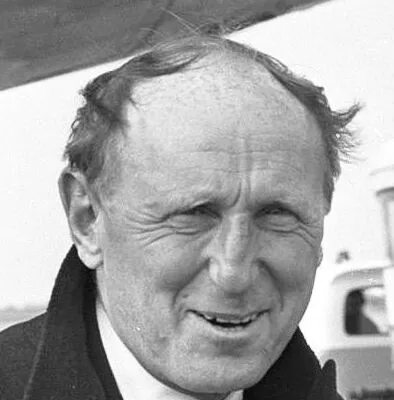
Jean-Marie Le Clézio
Human Design Chart
Biography
He has been married since 10 December 1975 to Jean Jémia, a Moroccan, and has three daughters (one by his first marriage). Since the 1990s they have divided their residence between Albuquerque, Mauritius, and Nice.
The Human Design of Jean-Marie Le Clézio: Projector 3/5
Projector 3/5 — Design at a Glance
Jean-Marie Le Clézio's Human Design configuration tends towards a focused and penetrating perception. As a Projector, his aura acted like a bright light beam directed straight at weaknesses or uncertainties in his environment. This setup allowed him to spot errors in other people’s systems or structures immediately – similar to shining a flashlight into the dark.
The challenge of this mechanism lay in the nature of interaction: Directly addressing these deficiencies was often perceived as unpleasant or accusatory by those around him, akin to shining light directly into someone's face. The optimal strategy for his design therefore did not lie in active intervention but rather in waiting for a genuinely respectful invitation from others. Only through such invitations could he effectively contribute his insights without provoking resistance.
Since Projectors do not have a defined Sacral Center, Jean-Marie Le Clézio lacked a constant source of life energy. Instead, he experienced phases of high activity and rapid work speed that had to be followed by rest periods to prevent burnout. Traditional school systems or rigid work structures often ignored this need. Living according to the strategy of invitation and rhythm rewarded him with success; deviating from it brought out his theme of bitterness.
Splenic Authority
Jean-Marie Le Clézio's Human Design configuration tends towards intuitive, momentary orientation. His inner authority resides in the defined Spleen Center – a configuration that is only possible if the Emotional and Sacral Centers remain open, as they do for Projectors or Manifestors. The Spleen acts as a fine health and alarm system with life-critical intelligence: It sends spontaneous impulses indicating whether a situation, environment, or person is beneficial or harmful. This initial impulse is crucial for his physical well-being; it allows him to set rigorous boundaries and protect himself from negative influences. However, this Spleen voice is very subtle and only appears once in the moment, requiring high awareness to perceive correctly. It can easily be drowned out by external advice or internal deliberations. A brief retreat to clarify the first feeling impulse supports correct decision-making. Because knowledge of what is right is always available only in the present moment, long-term plans remain flexible; they can change at short notice. This makes rigid commitments difficult and inappropriate. Instead, Jean-Marie Le Clézio needs a lot of space and the ability to act spontaneously without pre-committing himself extensively. This structure promotes a lifestyle that relies on immediate resonance rather than abstract future planning.
The 3/5 Profile — Martyr / Heretic
Jean-Marie Le Clézio's Human Design configuration tends towards acquiring knowledge not through abstraction but by personal experimentation. As someone with Profile 3/5 – the Experimenter and Hero – he initially believed nothing given to him. Instead, he learned from direct experiences and even failures. This process of trial and error formed the basis for his later role.
The third line in his profile represents this accepting attitude towards errors as a natural growth process. Assertiveness helped him turn these setbacks into advantages. Excessive caution would have hindered this learning potential; instead, he evolved through practical experimentation.
This self-acquired knowledge he then presented to others. The fifth line acts here as the Hero Line: It projects wisdom and influence, particularly on strangers or in larger contexts. Others saw him as someone with more knowledge than he might consciously possess – a projection that made him attractive. This role of rescuer or storyteller flattered his design but could also be painful if experiments failed before an audience. His influence thus showed itself not in close circles but globally, by offering solutions derived from his own hard practice.
Triple Split Definition — Defined & Open Centers
Jean-Marie Le Clézio's Human Design profile revealed a tendency towards consistent, self-determined assertiveness. His defined Heart Center endowed him with persistent willpower and the drive to control his life and resources independently; he tended to take promises seriously and actively prove his worth. This inner driving force flowed into his defined Throat Center, making communication and action always spring from this stable source of determination – clear, direct, and without hesitation.
At the same time, his defined G Center shaped a firm self-identity and a clear sense of personal direction. He knew where he belonged and could convey this inner security to others if they invited him to lead them. His defined Ajna Center ensured that his conceptual thinking was consistently active; concepts emerged in him reliably, independent of external influences. This was supported by the defined Spleen Center, which gave him an intuitive, momentary perception for health and well-being, as well as the defined Root Center, providing the necessary pressure to advance and survive in the material world.
In contrast, Jean-Marie Le Clézio's open centers made him susceptible to certain conditioning. His open Head Center meant that he did not have consistent access to inspiration; instead, he tended to be overwhelmed by doubts or questions from others when he did not trust his inner authority. The open Sacral Center made him receptive to the generative energy of his environment, posing a risk of overexertion through "borrowed" energy and experiencing exhaustion since he lacked a consistent internal energy reserve. Additionally, his open Solar Plexus absorbed the emotions of others, putting him at risk of personalizing foreign moods and getting caught up in emotional waves rather than merely perceiving them as indicators of the environment.
Channels for mental order, spiritual breakthrough and persistent ambition.
Jean-Marie Le Clézio's Human Design profile emphasizes a tendency towards precise, logical structuring. The Channel of Acceptance 17-62 connects the Ajna Center with the Throat Center through Gate 17 (Opinions) and Gate 62 (Details). Logic influences thought processes here and shapes how understanding is achieved: information is mentally organized based on substantial details. As an ongoing internal process, Gate 17 visualizes patterns while Gate 62 translates them into words—responsible for the creation of language. Everything that can be integrated into this inner image is understood; everything else remains incomprehensible. This creates a constant pressure to speak in order to communicate opinions precisely or explain what has been understood accurately.
At the same time, there was competitive energy aimed at individualization. The Initiation Channel 51-25 connects the Heart Center through Gate 51 (Shock) and Gate 25 (Self Spirit). The competing ego-energy of Gate 51, which always wants to be first, is connected with the universal love of Gate 25. Initiation becomes an art: recognizing the potential for individualization and, when invited, delivering the "shock" that initiates and strengthens. This channel challenges humanity to move forward and take the lead. Each breakthrough brings high spirits and a new consciousness for the depth of the mind. However, initiation must be found; it cannot be sought or forced.
A third aspect is ambition through persistent effort. The Transformation Channel 54-32 connects the Root Center with the Spleen Center through Gate 54 (Ambition) and Gate 32 (Continuity). Driven by the desire to be seen and improve one's position in life, this channel carries the potential to move out of the social stratum through talent. Gate 32 seeks talents, driven by the fear that the clan cannot keep up with the best. Transformation is defined here within a tribal context: rooted and grounded in dedication and self-sacrifice. Reward comes through recognition and advancement when talents are acknowledged.
Additionally, individual Gates play roles: Gate 61 represents inner truth and the struggle for silence; Gate 42 emphasizes experience as the key to development; Gate 57 brings intuitive clarity; Gate 45 sums up tribal energy; Gate 16 enables mastery through experimentation; Gate 23 translates internal sound into language; Gate 2 defines directions through receptivity; and Gate 56 allows for the abstraction of mental processes in storytelling.
Individual Circuitry — Circuit Signature
Jean-Marie Le Clézio's Human Design profile indicates a tendency towards solidified individuality that manifests in three separate energetic blocks. His Defined Circuit connects the Identity Center and Heart Center, creating inner stability and strong self-worth; however, without the Throat Center, these convictions often remain unspoken. Parallel to this, his Understanding Circuit links Ajna Center with Throat Center, enabling clear articulation of logical strategies free from emotional coloring. As a third independent block, his Ego Circuit operates through the connection between Spleen and Root Centers, promoting intuitive transformation and resource preservation but requiring regular pauses for regeneration due to the lack of constant life energy. This tripartite definition does not imply a continuous flow but rather three coexisting forces: inner affirmation, rational communication, and instinctive transformation. Jean-Marie Le Clézio thus emerges as someone who nourishes his identity from internal conviction, formulates thoughts precisely, and protects resources through intuitive adaptation—each in separate steps without automatic overlap between these areas. The mechanics describe a person drawing strength from within, thinking clearly, and acting intuitively, with each dimension possessing its own dynamics.
Right Angle Cross of Maya 1
Jean-Marie Le Clézio's Human Design indicates a tendency towards profound wisdom that is often unsaid. This configuration is known as the 'right cross of the Maya' and signals in Human Design a specific way of perception: it is not primarily aimed at actively seeking answers but rather grasping the essential in its silence. It is less about intellectual analysis or loud teaching, but more about an inner anchoring in mysteries that only reveal themselves to those who are willing to listen and be present instead of constantly doing.
For Jean-Marie Le Clézio, this means his strength lay in processing complex connections not by imposing solutions but by holding a space for deep insights. The mechanics of this cross show that true authority often stems from the ability to make the invisible visible without needing to put it into words immediately. It is an energy of contemplation and trust in one's inner compass, requiring less external validation than other configurations. Jean-Marie Le Clézio thus appeared as someone whose impact was marked by a calm, almost shamanic presence that invited others to touch their own depth rather than imposing pre-fabricated truths on them. This attitude protects from being overwhelmed by the outer noise and allows for a clear view of the essence of situations and people.
Saturn Return · Uranus Opposition · Chiron Return · 2nd Saturn Return — Life Cycles
Jean-Marie Le Clézio's Human Design points towards structural consolidation and public recognition, which crystallized during his first Saturn Return in 1971 at age 31 with Ingrid Schwamborn's portrayal of him in Kröners Taschenausgabe – a career-defining event that concretely illustrates this mechanical dynamic. The Saturn Return acts here as a catalyst for establishing a stable position in the public sphere. It is not about spontaneous inspiration but rather the maturation of substance into recognized form. Jean-Marie Le Clézio was seen during this phase as someone whose inner focus on clarity and constancy met with the outer opportunity to hear his voice institutionally anchored. The mechanics of the Saturn Return demand patience and discipline; they reward those who consistently channel their energy over years. In this case, this alignment led not only to a fleeting perception of his presence but to its being recorded in a respected publication series. This underscores how his design is geared towards gaining recognition through persistence and structural integrity rather than ephemeral attention-seeking. The connection between inner maturity and external validation was made visible here.
Projector · Splenic Authority — Synthesis
A central red thread runs through the design: the ability to recognize patterns and communicate them precisely (Channel Accepting, Ajna Center). This manifests in a deep internal logic that organizes information and gives meaning. Line 3/5 of the Profile reinforces this process through continuous experimentation and the accumulation of practical experiences, which are then passed on as knowledge – bringing 'light into darkness' (Projector Type). This tendency towards recognizing details and communicating them appears to be a constant force in life.
A central paradox lies in the combination of the Projector type with the inner authority of the Spleen Center and the defined Ajna Center. While the Projector waits to be invited and projects their perception onto others, they simultaneously possess a strong, consistent mental center (Ajna) and an intuitive health intelligence (Spleen Center). This leads to a tension between the need for recognition of one's own perspective and the ability to recognize what is right spontaneously and instinctively – an inner compass that does not necessarily rely on external validation.
3 Defined Channels
Incarnation Cross - Right Angle Cross of Maya 1
Solar Return
The Solar Return shows the moment when the sun returns to its exact birth position - your personal solar year.
Life Cycles
Discover the life cycles with a detailed triple view (birth chart, cycle chart, composite).
Human Design Profile
- Type
- Projector
- Strategy
- Wait for the respectful invitation
- Authority
- Splenic Authority
- Profile
- 3/5 - Martyr / Heretic
- Definition
- Triple Split
- Incarnation Cross
- Right Angle Cross of Maya 1
- Date of Birth
- 13.04.1940 03:00
- Place of Birth
- Nice, France
Frequently Asked Questions
What is Jean-Marie Le Clézio's Human Design type?
What Profiles does Jean-Marie Le Clézio have?
What Authority determines Jean-Marie Le Clézio's decisions?
What is Jean-Marie Le Clézios incarnation cross?
When was Jean-Marie Le Clézio born?
Discover your own Human Design
Are you also a Projector? Find out in a personal reading how to unfold your leadership qualities and recognize the right invitations.
More Personalities
Back to overviewSissy Spacek

Alain-Fournier

Anémone

Angeli

Ann-Margret

Bourvil