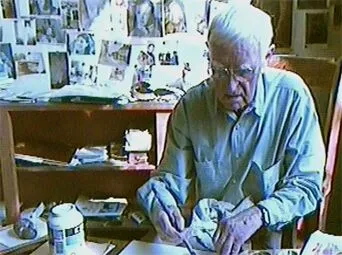
Jean René Bazaine
Human Design Chart
Biography
The Human Design of Jean René Bazaine: Generator 1/3
Generator 1/3 — Design at a Glance
Jean René Bazaines design points to a tendency towards great endurance, comparable to a workhorse that generates power only if it is fueled by its task. This energy source came from his sacral center and was not released through independent initiatives but solely as a reaction to external impulses. His life strategy involved waiting and then acting when his inner self gave a clear “yes” signal - an intuition that could propel him forward.
However, this mechanism carried two specific risks for his energy balance. First, he tended to exhaust himself while performing tasks that did not require internal approval; this energy wastage often led to burnout states. Second, he suffered from frustration and a noticeable lack of energy when prevented from pursuing his heart project, despite still being full of drive.
By reacting to signals from his environment rather than initiating independently, Jean René Bazaine could effectively utilize his manifestation power. Living in harmony with this reactive strategy and acting only upon inner confirmation rewarded him with a deep sense of fulfillment. If he initiated against his gut impulse, however, he faced persistent frustration. His success thus depended on learning to focus his immense strength rather than scattering it across unwanted paths or exhausting himself in resistance to his own creation.
Sacral Authority
Jean René Bazaines design points towards joy in decision-making through direct physical resonance. As a Generator, his strategy of waiting for the reaction was identical with his inner authority, simplifying his decision process. He showed himself as someone who did not plan in his head but waited for the body's impulse.
This sacral authority manifested in a “gut feeling” or a physical surge of energy in response to external stimuli. Bazaine had to learn to pay attention to internal signals: sounds like grunts, a low hum, or an affirming “mhm.” When this physical confirmation occurred, he felt sudden vitality and inexhaustible energy. This resonance gave him enthusiasm for the activity itself, independent of its external purpose. He could immerse himself in the task driven by inner satisfaction rather than compulsion.
The patience until this physical confirmation was crucial. Without it, he risked misalignment and exhaustion; with it, he lived in harmony with his energy source. The design allowed him to move through life joyfully as long as he waited for this sacral response instead of acting preemptively. This mechanism formed the foundation of his ability to act and his well-being.
The 1/3 Profile — Investigator / Martyr
Jean René Bazaines design established a basic attitude that saw learning not as an abstract occupation but as a necessary process combining theory with practical testing. His Profile 1/3, that of the researcher and experimenter, marked him as someone who only considered knowledge valid when it was both intellectually justified and confirmed through personal experience. Line 1 promoted humility and adaptability; it required him to accept his place within existing structures and showed sensitivity towards external attempts to change his essence. Simultaneously, the energy of Line 3 drove him to explore boundaries. This line turned life into a laboratory: only through active experimentation and learning from what did not work emerged reliable insights for Jean René Bazaine. There was an inner tension between the desire of Line 1 to be sufficiently prepared - which sometimes led to hesitation - and the urge of Line 3 to simply act, accepting errors as a necessary part of the process. When he made a decision or rendered judgment, it was based on this dual testing. His design showed that authenticity for him arose only through the integration of theoretical understanding with practical validation. Errors were not failures but indispensable steps towards finding truth and clearly defining his position in the world.
Split Definition — Defined & Open Centers
Jean René Bazaine was characterized by a fully defined design with six out of nine centers. This gave him a constant, independent presence in thinking, identity, and vitality, regardless of the environment. His defined Head Center and Ajna Center generated a permanent mental pressure towards inspiration. The challenge lay in not resolving this pressure through hasty actions but using it as a source for others. At the same time, his defined G Center secured a firm identity and direction, while the Heart Center provided willpower. The Sacral Center supplied an energy source activated by reaction rather than initiation. Defined Spleen and Root Centers ensured intuitive security in the present moment along with a set way of dealing with stress.
In contrast, his open centers revealed specific vulnerabilities. His open Throat Center tended to feel pressure, demanding attention through speaking or acting instead of waiting for natural invitations. This could lead to unpredictable expression when he tried to control his communication. Additionally, his open Solar Plexus absorbed the emotions of those around him. He was prone to personalizing foreign feelings and losing himself in emotional waves of others, often leading to confusion about whether these states belonged to him or were just reflected. This openness made him sensitive to the emotional climate but required distance to regain clarity.
The combination of strong inner structure and open fields created a dynamic where defined centers served as stabilizing forces while open areas allowed conditioning by external influences. His mechanics challenged him to accept mental pressure without acting it out and protect himself from identifying with foreign emotions or the compulsion for constant verbal manifestation. Through trust in his defined energy sources and authorities, he could integrate these tensions and develop an authentic presence that was both inspiring and grounded.
Channels for intuitive bearing, pioneering spirit, endurance, ambition and abstraction.
Jean René Bazaine moved existentially and unburdened, guided by deep intuitive impulses rather than future anxieties. This rare clarity came from Channel 57-10 of Perfect Form, connecting the Spleen Center with the G Center. Through Gate 57 of intuitive insight and Gate 10 of self-behavior, he responded spontaneously and appropriately to his environment. This design fostered authentic self-love serving as a foundation for health and beauty. Recognition was not a motivation; his worth lay in being true to himself.
Parallel to this, a competitive spirit emerged that drove individualization forward. Channel 51-25 of Initiation connected the Heart Center through Gate 51 of shock and Gate 25 of self-spirit. Here, ego energy wanting always to be first merged with universal love. Bazaine had the ability to give others the necessary impulse for development when invited. This process was mystical and uncontrollable; it served collective mutation through personal triumphs.
His life force followed a path of discovery. Channel 29-46 of Discovery connected the Sacral Center with the G Center via Gate 29 of saying yes and Gate 46 of determination. Bazaine had to let go of expectations to immerse himself in experiences. Through persistent affirmation, he reached the right place at the right time. His discoveries only revealed themselves retrospectively; control was impossible, only patience with the process led to satisfaction and new insights for the collective.
Additionally, Channel 54-32 of Transformation between Root and Spleen Centers influenced him. Gate 54 of ambition and Gate 32 of continuity drove him upward through talent motivated by a desire to be seen. This ambition served tribal survival; he worked hard to prove his worth and gain support. The transformation was always anchored in the social context, dependent on recognition from allies.
Mentally, he filtered every experience through Channel 64-47 between Head and Ajna Centers. Gate 64 of confusion and Gate 47 of understanding generated an active mind seeking stories. Although this process often led to mental unrest, it resulted in long-term inspiring perspectives that he could share. His mind served not as internal authority but as a tool for retrospective sense-making.
Individual Circuitry — Circuit Signature
Jean René Bazaine was characterized by strong, introverted inner strength. His design directly connected Identity and Heart Centers with the Sacral Center (Centering Circuit). This gave him robust self-worth and bold convictions. Since his Throat Center was missing here, he expressed this strength less rhetorically; his presence worked through mere existence. He encouraged others in their individuality without needing to instruct them.
Parallel existed the Sense-making Circuit as a separate energy group. Here Channel 64-47 connected Head and Ajna Centers, promoting abstract thinking processes. A second part of this circuit (Channels 46-29) linked identity with Sacral Center, reflecting emotional waves from the past. These experiences served to find meaning behind events and share insights with the collective.
The Ego Circuit contributed only Channel 32-54 (Transformation) in Jean René Bazaine. This connected Spleen and Root Centers within a separate group. Without direct Sacral connection in this circuit, creating resources required rest periods to regenerate energy.
Finally, the Integration Circuit worked through Channel 10-57 (Perfect Form). It linked Identity with Spleen Center. This allowed combining intuitive wisdom with inner strength for self-assured action in the present moment. Overall, these separate but powerful blocks shaped a personality that rested within itself, deeply reflected, and acted through quiet authority.
Right Angle Cross of the Vessel of Love 4
Jean René Bazaines design carried the signature of the right cross of the Love Vessel. This configuration shaped a profound, often passionate or sacrificial dimension in his relationships and emotional bonds. The term “Vessel” described his specific ability to not only experience emotions and interpersonal connections but also actively hold them, nurture them, or transform them internally.
The designation “right” lent this dynamic a particular hue: it was less driven by rational analysis than by intuition, the weight of the past, or the perception of inner truth. For Jean René Bazaine, this meant that his love and connectedness were strongly guided by these subtler, intuitive levels. He demonstrated an ability to create emotional spaces where feelings could be processed and transformed rather than merely expressed superficially. This mechanism underscored a stance of devotion and internal holding, with the quality of connection taking precedence. It was a life task aimed at fostering something enduring and nurturing through this deep emotional resonance and intuitive understanding of relationships.
Saturn Return · Uranus Opposition · Chiron Return · 2nd Saturn Return — Life Cycles
Jean René Bazaines design featured three marked phases of life that correlated with professional or artistic milestones. This structure resulted from cycles of Saturn and Chiron returns in his chart. The first Saturn return, a period of consolidation and serious success, occurred in 1932. At age 28, he held his first group exhibition in Paris — a moment when years of groundwork coalesced into a tangible result.
The Chiron return marked the phase of bloom and fulfillment of incarnation purpose. Here, if lived according to strategy and authority, the deeper meaning of the design was revealed. In 1955, at age 51, Jean René Bazaine participated in documenta 1. This was no mere coincidence but a concrete manifestation of this fulfillment cycle, where his potential became visible and recognized.
The second Saturn return brought further stability and institutional anchoring. This cycle promoted the integration of earlier experiences into a firm structure. In 1963, at age 59, he became an associate member of the Royal Academy of Sciences and Fine Arts of Belgium. This career affirmation demonstrated how Saturn energy created long-term recognition and solid footing. The three events did not form a loose timeline but a coherent expression of his inner mechanics: building up, blooming, and anchoring.
Generator · Sacral Authority — Synthesis
Jean René Bazaine lived deeply rooted in his Sacral Center, whose energy propelled him to react to life impulses. This reaction was not mere action but a process of continuous discovery and refinement — a search for the correct expression of himself in harmony with the demands of the moment. His defined Root Center provided constant pressure to move forward, while his defined Head and Ajna Centers endowed him with the ability to process inspirations and derive clear concepts from them. This led to a work style marked by deep concentration, always seeking the perfect expression of his vision.
A central paradox in Bazaines design lay in the interplay between his defined G Center, which imparted a strong sense of identity and direction, and open centers for emotions and intuition. While he had a clear conception of himself, he was also receptive to the energies of his environment, making him a resonant mirror of collective experience. This tension between inner certainty and outer openness created a creative space where he could both express his own truth and reflect the world around him.
5 Defined Channels
Incarnation Cross - Right Angle Cross of the Vessel of Love 4
Solar Return
The Solar Return shows the moment when the sun returns to its exact birth position - your personal solar year.
Life Cycles
Discover the life cycles with a detailed triple view (birth chart, cycle chart, composite).
Human Design Profile
- Type
- Generator
- Strategy
- To respond - wait for something to respond to
- Authority
- Sacral Authority
- Profile
- 1/3 - Investigator / Martyr
- Definition
- Split Definition
- Incarnation Cross
- Right Angle Cross of the Vessel of Love 4
- Date of Birth
- 21.12.1904 01:00
- Place of Birth
- Paris, France
Frequently Asked Questions
What Human Design type was Jean René Bazaine?
What Profiles did Jean René Bazaine have?
What Authority did Jean René Bazaine have?
What incarnation cross did Jean René Bazaine have?
When was Jean René Bazaine born?
Discover your own Human Design
Are you also a Generator? Find out in a personal reading how to use your sacral energy correctly and discover deep satisfaction.
More Personalities
Back to overviewAaliyah

Alexia

Angèle

Anne-Marie

Arcángel

Arno