
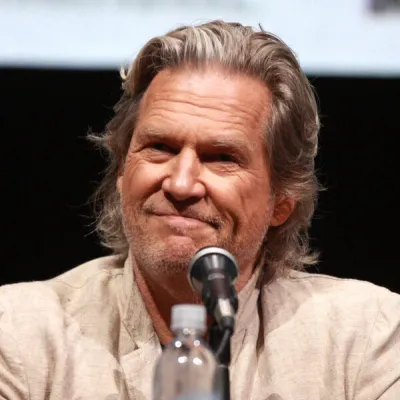
Jeff Bridges
Human Design Chart
Biography
He built over 20 films credits by 1990 and worked his way up to top starring roles. Bridges was praised for stories portraying troubled youths and was nominated for an Oscar for "The Last Picture Show," 1984. Other films include his debut film, "Halls of Anger," 1970, "King King," 1976 and "Tucker, The Man and His Dream," 1988.
With quarterback good looks, he has played an amazing variety of roles, from a high school hero to an extraterrestrial to a homicidal psychopath to a cynical jazz pianist. He has earned three Oscar nominations while working with much of Hollywood's top talent. He sees acting as a profession, from the viewpoint of a second generation actor who has grown up in Hollywood. Never star-struck or ambitious for the bigger-and-better role, he spends weeks at a time at his ranch in Montana, letting his hair and beard grow and holed up with his books, music and painting. He enjoys his hiatus-time with his family. While in Hollywood, he is part of a tightly-knit clan with his brother and sister, wives and kids and over ten grandkids for the patriarch, Lloyd and his wife Dorothy. The family is tightly bonded with love and respect for each other and steadily supportive.
When Jeff was born, his dad was a struggling actor, a former chairman of the UCLA drama department. He was their third son, born two years after a prior child had died of S.I.D.S. Beau, eight years older, became Jeff's champion and mentor. Though both boys played parts on their dad's TV series "Sea Hunt," as kids Beau wanted to go into sports and Jeff into music. As Beau became more committed to acting, it was he who encouraged Jeff to follow in the family footsteps.
Jeff Bridges as a Generator 2/4 in Human Design
Generator 2/4 — Design at a Glance
Jeff Bridges revealed himself as someone who unleashed his power not through constant pushing of plans but by responding to inner signals. His design tended towards generating energy – comparable to an enduring workhorse – yet this immense capacity only became effective when it responded to impulses from the environment. The motto was clear: initiate nothing, react instead.
When Jeff Bridges encountered a life signal and his sacral center, or inner gut feeling, gave a clear 'yes', he could act with great endurance. In these moments, deep satisfaction set in as a reward for aligning with his design. Conversely, ignoring this internal resonance led to two specific pitfalls: either spending energy on things without inner desire, leading to exhaustion, or being hindered from working further on heart projects despite the power still being present.
His path involved waiting until life posed a question and then answering from the gut. If he did not follow this principle of reacting but tried to initiate rigidly, he encountered frustration and energy deficiency. The mechanics of his design show: His strength lay in listening to the inner compass and consequent action upon resonance.
Sacral Authority
Jeff Bridges showed a decision-making stance deeply rooted in his body. His design indicated that he did not act through intellectual analysis but responded directly to immediate physical signals. This is typical for the Generator type with defined Sacral Authority. For him, the decision-making process was simplified: Strategy and inner authority aligned. He waited for an external stimulus before responding.
His open Emotional Center played a crucial role here. It prevented impulsive action and created space for clarity. His responses came as gut feelings or bursts of energy – often audible through grunts, hums, or affirming 'Mhm'. When his Sacral Motor kicked in, he felt vital and energized. This energy was inexhaustible and allowed him to engage enthusiastically in activities without an external purpose.
Furthermore, his activated Spleen Center acted as supportive authority. It enabled quick, spontaneous reactions and direct access to instinctive perception. Jeff Bridges could thus reliably orient himself by his physical well-being. This combination of Sacral power and spleen-supported intuition shaped his way of living with joy and contentment in the flow of natural energy.
The 2/4 Profile — Hermit / Opportunist
Jeff Bridges showed a clear tendency to structure his life rhythmically between intense withdrawal phases and conscious engagement within his personal network. His design indicated that he could not or would not stand permanently in public but periodically felt the need to withdraw to gain inner clarity. This phase of hermitage (Line 2) was essential for him to conserve energy and maintain composure; it served self-control and preservation of a steady internal rhythm.
Only when this need for solitude was satisfied did he return to his familiar community (Line 4). There, he sought exchange with his favorite people not out of mere social desire but to share experiences and be re-inspired. In isolation, he reflected on what had been learned; in the network, he found validation. Crucial here was clear communication of needs: He signaled externally when he needed company and when he needed solitude. This balance allowed him to process confusion or uncertainties from social exchange during the quiet phase until inner certainty arose. Thus, he transformed the tension between isolation and connection into a source for brilliant ideas by evaluating network knowledge in his 'cave' and only sharing it once it was ripe.
Triple Split Definition — Defined & Open Centers
Jeff Bridges revealed himself as someone who was under constant mental pressure to ask questions and understand connections. His defined Head and Ajna Centers created a trustworthy but unceasing mental activity; he was constantly in the process of thinking, which often made meditation difficult because this stream could not simply be stopped. However, this inspiration did not serve for direct implementation by the mind alone, but rather as a catalyst for others.
His design connected this mental energy with his defined Throat Center, which served as a pivot point to translate thoughts into communication and action. At the same time, he had a firm identity and direction through his defined G Center, allowing him to love himself securely and show others new paths without being dependent on their approval. His actions were also driven by an enormous vital force: The defined Sacral Center generated daily energy, which was only correctly available through reaction – not initiation. This was complemented by the defined Spleen Center, which gave him spontaneous, intuitive intelligence in "the now" to make health-promoting decisions.
Challenges arose from his open centers. His open Heart Center made him vulnerable to the pressure of proving his worth through promises and willpower, often ending in a cycle of self-doubt when these could not be kept. His open Solar Plexus absorbed the emotions of the environment; he tended to personalize foreign moods as his own and avoid confrontations to avoid creating waves. Additionally, his open Root Center took on external stress, which could lead to a feeling of restlessness if he tried to escape this non-self pressure through overactivity. His strategy was to use these open fields as informative sensors rather than identifying with them.
Channels for rhythm, intuitive mastery and mental abstraction.
Jeff Bridges revealed himself as someone whose life stream was determined by a deep biological rhythm that propelled him forward. The Rhythm Channel 5-15 connected his Sacral Center with the G Center and ensured he was magnetically embedded in the universal life flow through firm habits (Gate 5) and love for extreme experiences (Gate 15). This mechanism gave him natural timing; when he listened to this inner pulse, everything flowed effortlessly and drew others into his energy stream.
Parallel to this, he possessed the ability to transform intuitive depth into masterful skill. The Wavelength Channel 48-16 connected the Spleen Center with the Throat Center. Here Gate 48 constantly sought vital information while Gate 16 built a talent through repeated experimentation and perfection. This required dedication and recognition to achieve technical mastery of a pattern.
Mentally, Jeff Bridges was under pressure to translate experiences into stories. The Abstraction Channel 47-64 connected the Head Center with the Ajna Center. Gate 64 brought mental confusion and constant questioning while Gate 47 sought understanding. This process did not serve personal problem-solving but rather formed an inspiring perspective or story from the chaos of impressions, which he could then share.
Additionally, gates like the Change Gate 35, which progressed through interaction, and the Doubt Gate 63, which propelled mental processes, were at work. The Continuity Gate 32 provided stability in the material realm while Gate 56 translated mental processes into pictorial narratives. The inner truth of Gate 61 and the intuitive clarity of Gate 57 rounded out his profile, connected with the leadership potential of Gate 7, which projected patterns for the future.
Collective Circuitry — Circuit Signature
Jeff Bridges is characterized by three separate, parallel energy fields. One field connects his Throat Center with the Spleen Center and his Identity to the Sacral Center. This creates a direct line between the ability to speak and intuitive perception of usefulness, as well as between personal essence and cyclical life force. This configuration promotes sharing logical, rational insights—free from emotional coloring—with the aim of improving structures and guiding society towards a better future.
A second, completely separate field connects Head Center with Ajna Center. Here it is not about cool reason but reflecting on the past. This energy works in wave-like patterns: Emotional cycles have a clear beginning, middle, and end. The insights gained from these often inexplicable experiences serve to learn collectively from past experiences.
As Jeff Bridges has a Triple Definition, these three groups—Identity-Sacral, Throat-Spleen, and Head-Ajna—exist as independent, non-interconnected streams. They operate alongside each other: on one hand, the future-oriented logical improvement through sharing; on the other, emotional meaning-making from the past. None of these energies flow directly into another; they shape his design as distinct, parallel forces, each with their own tasks and expressions without interfering or mixing with one another.
Right Angle Cross of Consciousness 4
Jeff Bridges revealed himself as someone who moved through life with a profound, almost fateful confidence. His design indicated a tendency towards unshakable optimism – not as superficial positivity but as an inner certainty that everything will turn out well in the end. This attitude stemmed from the right cross of Consciousness 4, a configuration naturally carrying trust in the flow of life.
For Jeff Bridges, this was not a conscious decision or learned technique but an automatic response to challenges. While others became uncertain or recoiled from the future, his inner compass remained calm. He trusted that paths would open up, even if they were initially hidden. This energy helped him navigate difficult phases with composure and prevented panic or despair.
It was a quiet strength that stabilized him. Rather than fighting against adversities, he let them pass by, convinced of the underlying order of events. His inner security had a calming effect on his surroundings and allowed him to maintain an overview even in turbulent times. His design provided him with a foundation of steady trust that carried him through all phases of life.
Saturn Return · Uranus Opposition · Chiron Return · 2nd Saturn Return — Life Cycles
Jeff Bridges’ design indicated a tendency towards internal stability that often only fully unfolded under external pressure or public recognition. This dynamic was evident in 1992 when he was 43 years old: Janet Maslin from the New York Times described him as “the most underappreciated great actor of his generation.” This moment marked the Uranus opposition, a time when long-term developments unexpectedly become visible and redefine one’s position within societal structures. It wasn’t a sudden break but rather confirmation of what had been latent – now recognized and named from outside.
Later, in 1998 at age 49, he took on the role of Jeffrey Lebowski, called “the Dude,” in *The Big Lebowski*. This coincided with his Chiron Return, a cycle of fulfillment where one’s incarnation cross – if followed by strategy and authority – increasingly unfolds in life. The Chiron Return is not a process of wound healing but rather a period when meaning and purpose become experiential. Bridges’ portrayal of “the Dude” was more than mere comedy; it embodied composure and authenticity, reflecting precisely this fulfillment process. His character did not live by external expectations but from deep inner calm – mirroring what his design enabled in this phase of life: the unfolding of one’s essence without coercion or adaptation.
Generator · Sacral Authority — Synthesis
A central thread runs through the design: a profound connection to life energy and flow. Sacral authority determines decision-making through physical reactions, while the defined Head Center creates a persistent drive for understanding and questioning. This combination of instinctive reaction and mental clarity is reinforced by the Channel of Rhythm (Channels/Gates), establishing natural harmony with the life flow. The Profile as Natural Talent/Networker points to an interaction between internal processes and the need for social connection – a constant pendulum swing that both nourishes and challenges the energy of the Generator (Design View).
A central paradox lies in the tension between the deeply rooted rhythm and mental pressure. While the Sacral Center provides an immediate, physical response to the world, the defined Head Center generates a continuous stream of questions and inspiration. This leads to an inner dynamic where a strong drive to act collides with an unceasing need for understanding. The documented events – recognition as an underappreciated actor (Cycles) and his iconic role as “the Dude” (Cycles) – could be expressions of this internal tension, demonstrating both effortless integration into the flow of life and a profound sense of irony and observation.
3 Defined Channels
Incarnation Cross - Right Angle Cross of Consciousness 4
Solar Return
The Solar Return shows the moment when the sun returns to its exact birth position - your personal solar year.
Life Cycles
Discover the life cycles with a detailed triple view (birth chart, cycle chart, composite).
Human Design Profile
- Type
- Generator
- Strategy
- To respond - wait for something to respond to
- Authority
- Sacral Authority
- Profile
- 2/4 - Hermit / Opportunist
- Definition
- Triple Split
- Incarnation Cross
- Right Angle Cross of Consciousness 4
- Date of Birth
- 04.12.1949 23:58
- Place of Birth
- Los Angeles, CA, United States
Frequently Asked Questions
What is Jeff Bridges' Human Design type?
What profile does Jeff Bridges have?
What authority does Jeff Bridges possess?
Which incarnation cross is active for Jeff Bridges?
When was Jeff Bridges born?
Discover your own Human Design
Are you also a Generator? Find out in a personal reading how to use your sacral energy correctly and discover deep satisfaction.
More Personalities
Back to overviewSissy Spacek

Aaliyah

Alexia

Anémone

Angèle

Ann-Margret
