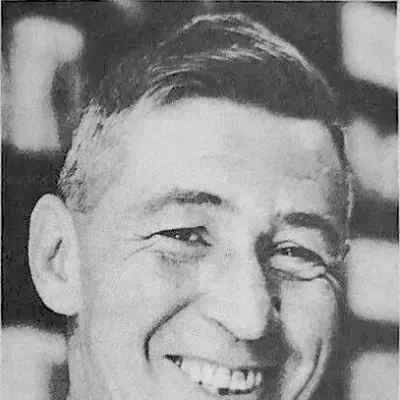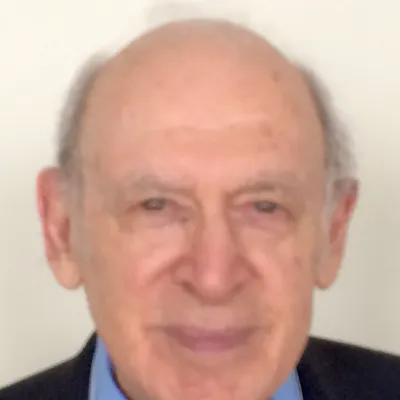
Jerome Isaac Friedman
Human Design Chart
Biography
What does Projector 4/6 mean for Jerome Isaac Friedman?
Projector 4/6 — Design at a Glance
Jerome Isaac Friedman appeared as someone with a dense, focused aura that directly addressed his surroundings. His design marked him as a Projector, a type that does not continuously generate energy but instead directs it like a bright flashlight to specific areas. This configuration allowed him to immediately recognize where other systems had flaws or processes were left in the dark.
However, this ability required sensitivity. Directly addressing the weaknesses of others could be perceived as unpleasant, similar to a bright light shining directly into someone's face. More effective for Jerome Isaac Friedman was to shine by embodying harmonious behavior himself. When he embodied stable structures, others were automatically drawn to him and would then seek his insights.
His strategy involved waiting for appreciative and honest invitations before offering his advice. Since Projectors do not have an undefined Sacral Center, they lack a constant, intrinsic energy source. Instead, Jerome Isaac Friedman experienced phases of high activity followed by necessary rest periods to avoid burnout. If he could live by this rhythm and wait for recognition from others, he was rewarded with success. Ignoring this dynamic risked feelings of bitterness as an expression of his non-self.
Splenic Authority
Jerome Isaac Friedman demonstrated a highly sensitive, spontaneous decision-making process based on immediate physical well-being. His design placed authority in the Spleen Center, a center that functions as a health and alarm system. This configuration is only possible if the Emotional and Sacral Centers are open, which is typical for Projectors or Manifestors. The Spleen Center grants excellent survival intelligence that manifests as intuitive knowledge about whether a situation or environment is right.
For Jerome Isaac Friedman, the first, spontaneous impulse was the reliable indicator of the right action. This impulse served his immediate health and allowed him to rigorously shield himself from harmful influences. However, since this Spleen voice is a very fine, singular impulse, its use required high vigilance to avoid being overshadowed by external influences. A brief retreat could be helpful during decision-making.
Since knowledge of the right action was always only available in the moment, plans could change quickly. This made long-term commitments difficult. Jerome Isaac Friedman therefore needed a lot of space and flexibility rather than binding himself strongly. Spontaneous agreements suited his nature better than rigid structures, as they aligned with his inner dynamics, which were oriented towards immediate resonance and protection of his system.
The 4/6 Profile — Opportunist / Role Model
Jerome Isaac Friedman appeared as someone who, in the first three decades of his life, sought his path through intense experimentation, particularly in interpersonal relationships. The Profile 4/6 acts similarly to a 3/3 in this early phase, driven by the necessity to learn through trial and error. With maturity, an internal conflict emerged: the desire for belonging and cooperation (Line 4) was in tension with the urge to withdraw to contemplate the meaning of life (Line 6). This contradiction between heart and head shaped his inner landscape.
Later, he developed a role as a role model. The fourth line of Gate 17 endowed him with the ability to recognize the deep motivations of others and place them in a meaningful order. This gift of assigning people their place could be perceived as manipulative, as it was strong and one-sided. Simultaneously, the sixth line of Gate 58 shaped his actions through practical experiments. He only gave energy if these attempts showed social benefit. This required time over three life phases, accompanied by almost a self-sacrificing identification with the process, up to the point of self-sacrifice for the goal. The expectation to appear wise and succeed through cooperation stood in a constant tension with caution, not to open up to the wrong people and thus become vulnerable.
Split Definition — Defined & Open Centers
Jerome Isaac Friedman's design was characterized by inner stability and clear self-worth. His defined G-, Heart, and Spleen Centers gave him a reliable identity, a firm will, and an intuitive existential perception. He had the ability to recognize his own direction and keep promises without relying on external validation. His defined Root Center provided the necessary pressure to move forward, allowing him to channel this stress in a way that nourished his survival consciousness.
This inner structure contrasted with his open centers, which made him receptive to external influences. His open Head Center tended to absorb mental confusion or questions from others, sometimes pulling him into a whirlpool of doubt if he did not trust his inner authority. Similarly, his open Ajna Center reflected the concepts and opinions of his environment rather than possessing a firm intellectual truth of his own.
His open Throat Center meant he could not communicate consistently; he relied on invitations rather than forcing attention. His open Sacral Center made him vulnerable to the transfer of energy from the environment, leading him to overextend himself by using borrowed energy instead of listening to his own, fluctuating energy flow. Finally, his open Solar Plexus absorbed the emotions of others, causing him to amplify and personalize emotional waves rather than recognizing them as foreign and letting them go. This openness required a conscious distancing from conditioning external fields to maintain his inner clarity.
Channels for breakthrough, critical judgment and meaningful struggle.
Jerome Isaac Friedman's fundamental approach was based on the search for hidden truth, coupled with the need to convey insights in a way that others could receive them. This configuration described a life task of uncovering and passing on hidden connections.
His design was marked by the Judgment Channel 58-18. This channel connected the Root Center to the Spleen Center and fueled an insatiable drive to question and perfect patterns. It acted as a sentry, evaluating whether the perceived reality made life joyful for the collective. His logic had to prove that it had the best answers by linking the Corrective (Gate 18) with the Vitality (Gate 58).
Simultaneously, the Initiation Channel 51-25 was at work. It connected the Heart Center through the Shock (Gate 51) to the Spirit of Self (Gate 25). Here, initiation became an art: the ability to recognize the potential for individuation and, if invited, to deliver the necessary shock that strengthened others. This energy promoted a natural competitiveness that urged humanity to move forward and be first, with mastering oneself and the world going hand in hand.
Another defining aspect was the Life Struggle Channel 38-28. It connected the Root Center to the Spleen Center and dealt with the ability to find meaning and purpose in life, especially in struggles. Gate 38, the Fighter, urged defending individual integrity against external distractions, while Gate 28, the Player, recognized what had value and made the struggle worthwhile. This combination gave him the stubborn determination to follow his own path and discover a deeper life meaning in the struggles that came his way.
The prioritized gates added further nuances: Gate 52 required strong focus on pattern correction and a self-imposed pause for reflection. Gate 17 stood for logical teaching and organizing the future, with doubt being a healthy part of the process. Gate 21 directed the material life and required respect in service to the community. Gate 44 represented vigilance and transformation through proper interaction. Gate 60 accepted limitations as a prerequisite for transcendence, while Gate 10, as a complex gate in the G Center, fed the integration process. Gate 53 allowed him to pioneer new paths and leave old ones behind, symbolizing freedom for new experiences.
Individual Circuitry — Circuit Signature
Jerome Isaac Friedman was marked by separate, parallel functioning energy blocks. His Split Definition created two isolated energy fields: one in the Spleen and Root Centers, the other in the Identity and Heart Centers. These groups were energetically unconnected, so experiences appeared as parallel streams that did not merge.
In the Knowledge Circuit, the Life Struggle Channel connected the Spleen and Root Centers. This generated a pulsing, acoustic energy aimed at the unique path and new insights. Parallel to this, the Understanding Circuit worked through the Judgment Channel, also between Spleen and Root Centers. Here, focused, visual reasoning and strategic thinking dominated, free from emotional coloring, to develop logical structures for the future. Both circuits used the same centers but produced different qualities: intuitive transformation versus rational analysis.
The second energy field was formed by the Centering Circuit. The Initiation Channel directly connected the Identity and Heart Centers. This connection promoted solid, courageous personality structures with strong inner convictions. Since there was no connection to the Throat Center, these firm stances often remained unspoken. The energy was individualistic and served to affirm self-worth and identity without external communication. Jerome Isaac Friedman thus carried separate spheres: on one hand, the dynamic search for knowledge and strategy, on the other hand, a quiet, inner strength of personality.
Right Angle Cross of Service 1
Jerome Isaac Friedman demonstrated a fundamental orientation based on service to others. His Human Design profile indicated a tendency to establish relationships through support and care. This alignment corresponds to the pattern of the right service cross, describing an energy that does not remain trapped in self-interest but finds fulfillment in helping others and taking responsibility. Jerome Isaac Friedman thus acted as someone who, through his actions, created a framework for others and found stability in doing so. The mechanics of this cross emphasize that true strength often lies in the unseen, in the quiet work that forms the foundation for larger structures. It was characteristic of him that he did not seek recognition but rather the opportunity to contribute meaningfully. This shaped his interactions: he was the pillar of support, building trust through reliability and empathy. His energy flowed where it was needed, without losing his own essence. On the contrary, through service, he defined himself and found his inner balance. This configuration shows that his path was that of a guide who, through his presence and support, enabled positive change. Jerome Isaac Friedman lived this dynamic by placing himself in the service of others and thereby strengthening his own identity.
Saturn Return · Uranus Opposition · Chiron Return · 2nd Saturn Return — Life Cycles
Jerome Isaac Friedman's professional development was marked by clear, cyclical milestones that point to internal maturation processes. His design indicated a tendency towards structured success phases, which were realized in the Saturn Returns and the Chiron Return.
In 1956, at the age of 26, he earned his doctorate at the University of Chicago. This marks the first Saturn Return, a phase in which years of groundwork often condense into a solid result and lay the foundation for further career development.
A decade later, in 1980, he became the director of the Laboratory for Nuclear Physics at MIT. At 50 years old, he was in the Chiron Return, a fulfillment cycle. Here, the individual's incarnation cross increasingly unfolds in life, provided one has lived according to strategy and authority. Purpose and meaning become tangible, reflected in this leadership position.
In 1989, at 59 years old, he received the Panofsky Prize. This falls in the second Saturn Return, often bringing validation of the developed structure and recognition of the work done. This sequence shows how the mechanical cycles in Jerome Isaac Friedman's life were effective: from academic foundation to professional peak to external validation.
Projector · Splenic Authority — Synthesis
A central red thread in this design is the ability to recognize patterns and make corrections (Channel 58-18), coupled with a deep, magnetic self-identity (defined G Center). This combination points to a person who not only understands the functioning of systems but also possesses an inner compass to set directions and guide others. The Projector type amplifies this by having the talent to recognize the potential and weaknesses of others and bring
3 Defined Channels
Incarnation Cross - Right Angle Cross of Service 1
Solar Return
The Solar Return shows the moment when the sun returns to its exact birth position - your personal solar year.
Life Cycles
Discover the life cycles with a detailed triple view (birth chart, cycle chart, composite).
Human Design Profile
- Type
- Projector
- Strategy
- Wait for the respectful invitation
- Authority
- Splenic Authority
- Profile
- 4/6 - Opportunist / Role Model
- Definition
- Split Definition
- Incarnation Cross
- Right Angle Cross of Service 1
- Date of Birth
- 28.03.1930 06:14
- Place of Birth
- Chicago, IL, United States
Frequently Asked Questions
What is Jerome Isaac Friedman's Human Design type?
What profile does Jerome Isaac Friedman have?
What authority guides Jerome Isaac Friedman?
What incarnation cross determines Jerome Isaac Friedman?
When was Jerome Isaac Friedman born?
Discover your own Human Design
Are you also a Projector? Find out in a personal reading how to unfold your leadership qualities and recognize the right invitations.
More Personalities
Back to overviewSissy Spacek

Alain-Fournier

Anémone

Ann-Margret

Bourvil
Hergé