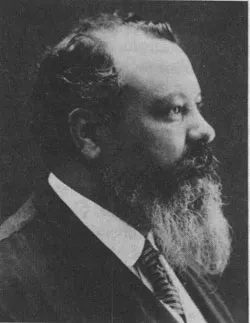
Jim Backus
Human Design Chart
Biography
The son of a successful business executive, he had an affluent upbringing. As an aspiring actor, he made a film debut in "The Great Lover," 1949. He actually began to be known for his voice during his radio days, active in radio plays during the '30s and '40s plus making 13,000 radio commercials. After he signed a contract with RKO, he had a small role in the 1952 film, "Androcles and the Lion," along with his boyhood chum, Victor Mature. One day he and Mature left the set, still in Roman costume, to make a deadline for Mature to sign some papers. They then stopped at a Hollywood bar to have a drink. The bartender stopped dead at seeing their costumes, and Mature thundered in his resonant voice, "What's the matter, don't you serve Servicemen here?"
Backus had a greater range than light comedy, playing James Dean's father in "Rebel Without a Cause," 1955. He once described his film career as a series of "buddy roles" in which he drives the hero to the church but never wins the girl himself. He made about 80 pictures in his 50-year acting career, with comedy always his forte and meal-ticket.
He met his artist-actress wife in 1941 when she brought chicken soup to a sick neighbor. He was visiting that day, and he and Henny, (Henriette Kay,) were never apart from that day on. They didn't have kids.
Retired for most of the '80s with illness, he was all but incapacitated, becoming more reclusive and paranoid. Trying to come to grips with his debility, he wrote several humor books dealing with his Parkinson's Disease, "Backus Strikes Back," and "Forgive Us Our Digressions.
Jim Backus as a Manifestor 1/3 in Human Design
Manifestor 1/3 — Design at a Glance
Jim Backus revealed himself as someone with clear, forward-moving energy aimed at initiating processes and pointing out new directions. His design marked him as a pioneer and visionary whose task was to lead the world into a new future. This dynamism could be well illustrated by the image of a Roman emperor: Jim Backus possessed the great vision for an empire or project but did not personally fight the necessary wars and battles in detail himself. Instead, he initiated the process and sent others out to take over the implementation.
However, this kind of leadership often led to polarization and misunderstanding from his environment. Since his visions frequently reached further than the understanding of those around him, he was loved and followed by some but rejected or even hated by others. This conflict was a central pain point in his design. To find the right followership and minimize resistance, it was essential for Jim Backus to apply his strategy: informing other people timely and accurately about his intentions and visions.
If he followed this strategy, he was rewarded with a deep sense of inner peace. If he lived against his design and did not inform others, it resulted in persistent, deep anger. His Human-Design pattern thus described a path from the initiating power over necessary communication to inner balance, where misunderstanding by others always stood as a potential challenge.
Emotional Authority
Jim Backus showed a decision-making stance that required patience and time. His design carried emotional authority, meaning that his defined Solar Plexus Center determined his internal guidance. This configuration was subject to a permanent emotional wave with constant ups and downs of feelings. The world appeared to him colored by his current mood; in one moment he could be enthusiastic about something, the next moment view the same thing negatively.
However, this feeling was only a snapshot, not the final truth. Spontaneous decisions based on temporary emotions often had negative consequences. Instead, Jim Backus needed time for decisions to mature. The longer he waited, the deeper and more comprehensive could he perceive situations. This required consciously sleeping over decisions and allowing oneself to be asked multiple times.
Over time, intense feelings subsided. Jim Backus gained emotional distance, leading to clarity and calmness. Only then was the process complete. This mechanism was particularly relevant for long-term decisions that significantly influenced his life course. Emotional authority took precedence over all other defined centers in his chart, regardless of what else was activated. It dictated the necessary rhythm of delay to reach true inner truth.
The 1/3 Profile — Investigator / Martyr
Jim Backus revealed himself as a person whose life was shaped by the tension field between theoretical knowledge and practical experience. His design defined him as both a researcher and experimenter, a configuration often compared to that of a scientifically-minded adventurer. For Jim Backus, the central life task consisted in reaching validated understanding through trial and error.
This process was significantly driven by the energy in Gate 37, representing the drive for development, guideline formation, and harmonious integration of new insights. This sensitive foundation served as the starting point for his intellectual work. At the same time, he faced the challenge of Line 3: the necessary experimentation and learning from mistakes. Often this led to internal conflicts, as the need for perfect planning (Line 1) clashed with the impulsive urge to implement. The fear of not knowing enough could prevent him from going into practice, yet only through these practical steps could his theoretical approaches be tested.
Through this process, Jim Backus gained a judgment based on both pillars: deep theoretical understanding and hard-earned practical experience. When he made a decision or deemed something correct, he had previously thoroughly understood it intellectually as well as stress-tested it in reality. This combination of sensitive harmony-seeking and learning-oriented experimentation made his assessments particularly trustworthy, as they were not only speculative but based on self-acquired validation.
Split Definition — Defined & Open Centers
Jim Backus revealed himself as someone with persistent willpower and emotional depth, whose expression was marked by a defined throat. This configuration endowed him with the ability to reliably translate his inner states into communication and action. His defined heart center provided clear access to his own energy and the need for control over resources and time. He tended to take promises seriously and prove his worth through active deeds.
At the same time, Jim Backus was exposed to an emotional wave due to his defined solar plexus center. This meant that he could not make decisions in the moment but needed patience to gain emotional clarity. His intuition, guided by the defined spleen center, provided him with spontaneous warning signals and a sense of well-being in the present. The also defined root center supplied the necessary pressure to move forward and deal with stress.
In contrast, head, ajna, G-center, and sacral were open. Thus, Jim Backus was prone to mental confusion and did not seek constant answers or a fixed identity. He tended to question who he actually was or which direction was correct rather than determining this himself. His open G-center made him flexible but also vulnerable by adopting identities from the environment. The open sacral center meant that he lacked a consistent generative life force and risked overextending himself with borrowed energy from others instead of listening to his own pace. These opennesses required him not to react impulsively to mental or energetic stimuli but to use his defined authority from heart, solar plexus, and spleen to gain clarity.
Channels for life purpose, community and intuitive mastery.
Jim Backus was characterized by a combination of intuitive depth and technical refinement. His Design Channel The Wavelength 48-16 connected the inner intelligence of Gate of Depth (48) with Gate of Skillfulness (16). This required years of repetition to transform skills into talent, where external recognition and resources were necessary for flourishing.
Parallel to this, his Personality Channel Life Struggle 38-28 shaped a stubborn determination. Through the Tor of the Fighter (38) and the Tor of the Player (28), he sought meaning in individual struggles to maintain integrity. This adrenaline-fueled energy drove endurance in the talent process by motivating him to resist external forces and follow his own path.
The social framework was formed by the Personality Channel Community 37-40, connecting Gate of Friendship (37) with Gate of Solitude (40), defining an emotional search for belonging and fair agreements. Jim Backus oriented himself on the principle “I do this for you if you do that for me” to anchor his talents and struggles in community structures.
Additionally, other gates were at work: Gate 9 promoted detail work and perfection through focus, while Gate 41 supported evolutionary change and emotional clarity. Gate 12 brought creative restraint and mutative quality. In the material realm, Gates 21 (Control) and 54 (worldly success as a path to spirituality) were helpful. Gate 26 enabled innovation by convincing the conservative tribe, and Gate 60 processed pressure through acceptance of limitations. Finally, Gate 8 promoted individual contributions for group goals, while Gate 62 provided logical pattern recognition and patience in fact-finding. This configuration created a profile that combined inner dedication with external struggle and social anchoring.
Individual Circuitry — Circuit Signature
Jim Backus was marked by two separate, parallel energy systems. One system connected the spleen to the root center (Knowledge Circuit), the other heart and solar plexus centers (Ego Circuit). This separation did not mean a continuous experience but rather coexisting forces.
The Knowledge Circuit propelled his innate path forward, supported by Channel 28-38 “Life Struggle”. This fostered pulsating creativity and emotional transformation based on individual identity finding. Parallel to this, the Understanding Circuit worked through Channel 16-48 “The Wavelength”, connecting throat with spleen center. Here it was about sharing logical insights, focused and visually, free from emotional coloring of solar plexus in this specific context.
The second system, the Ego Circuit, concentrated on cooperation and resource management within the tribe via Channel 37-40 “Community”. This channel connected heart and solar plexus centers and regulated the balance of giving and taking. Without a connection to sacral center, this willpower required conscious rest periods for regeneration. The tension lay between individual transformation in the knowledge domain and collective resource creation in the ego realm. Jim Backus navigated between these poles: once through inner innovation and emotional waves, another time through strategic cooperation and negotiating support without constant life force input.
Right Angle Cross of Planning 1
Jim Backus’ design inclined towards strategic alignment and long-term vision. His chart included the planning right-angle, a configuration that suggested profound foresight and structured approach. This energy enabled him to look beyond the immediate moment and place actions within a larger temporal context.
In Human Design, this cross describes the ability to recognize complex interconnections and derive clear, long-term plans from them. It was not about spontaneous impulses but rather a carefully thought-out architecture of action. Jim Backus utilized this internal structuring to set goals that required persistence. The energy of this cross supported him in maintaining an overview and making decisions based on future perspectives instead of merely reacting to current circumstances.
This configuration shaped his approach to life: methodically, foresightedly, and with a clear eye on the end result. It gave him a sense of timing and the necessary sequence of steps. Through this inner roadmap, he could anticipate obstacles and pave paths leading to sustainable outcomes. It was an energy of organization and strategic thinking that helped him bring order to complex situations and turn visions into tangible realities.
Saturn Return · Uranus Opposition · Chiron Return · 2nd Saturn Return — Life Cycles
Jim Backus’s design revealed itself through recurring planetary cycles that marked structural turning points and career boosts. These astrological phases acted as catalysts for professional reorientations and affirmations of his path.
The first Saturn return around the age of 29 condensed years of groundwork into solid results. In 1942, at the age of 29, Jim Backus appeared in films such as "Bright Victory," "Pat and Mike," and "Crazy Mama" – a clear testament to this stabilizing effect of the cycle.
Ten years later came the Uranus opposition around the age of 39, a phase of dissolution of old structures and sudden change. This was evident in 1952 with his role in "Androcles and the Lion" alongside Victor Mature, marking a moment of professional realignment within an established framework.
The Chiron return around the age of 51 marked the bloom period when one’s incarnation cross unfolds and meaning becomes experiential. In 1964, Jim Backus portrayed the millionaire "Thurston Howell III" in the series "Gilligan's Island." This role represented the completion of his purpose and the visible emanation of his inner configuration after a life lived according to his strategy.
The second Saturn return around the age of 59 reinforced these achievements once more. In 1972, he starred in the film "It’s a Mad, Mad, Mad, Mad World," underscoring the enduring stability and continuity of his work in this later phase. Each cycle not only marked the timing but also the nature of his professional manifestation.
Manifestor · Emotional Authority — Synthesis
Jim Backus lived a life characterized by a profound internal tension between the need for expression and the ability to control resources. The defined Heart Center, connected with a defined Throat Center, points to someone who asserted their own direction and will – an Initiator whose voice was reliable as long as it spoke from inner conviction. This strength was amplified by the connection to the Root Center, signaling a constant readiness to face life's challenges and stand up for what mattered to him. At the same time, the open Sacral, Ajna, and G centers indicate that he was strongly influenced by his environment, constantly taking in new impulses and defining his identity through interaction with others.
This tension field manifested in a dynamic interplay between the drive for self-realization and adaptation to external expectations. The ability to set direction through clear communication (Channel 48-16) was tempered by the necessity to respond to the environment and adapt its energy. This process led to an ongoing search for authenticity within the bounds of outer action – a life in which both control and flexibility were crucial.
3 Defined Channels
Incarnation Cross - Right Angle Cross of Planning 1
Solar Return
The Solar Return shows the moment when the sun returns to its exact birth position - your personal solar year.
Life Cycles
Discover the life cycles with a detailed triple view (birth chart, cycle chart, composite).
Human Design Profile
- Type
- Manifestor
- Strategy
- To inform others before acting
- Authority
- Emotional Authority
- Profile
- 1/3 - Investigator / Martyr
- Definition
- Split Definition
- Incarnation Cross
- Right Angle Cross of Planning 1
- Date of Birth
- 25.02.1913 07:30
- Place of Birth
- Cleveland, OH, United States
Frequently Asked Questions
What was Jim Backus' Human Design type?
What Profile did Jim Backus have in Human Design?
What Authority did Jim Backus have?
What incarnation cross did Jim Backus have?
When was Jim Backus born?
Discover your own Human Design
Are you also a Manifestor? Find out in a personal reading how to use your initiation power peacefully and dissolve resistance.
More Personalities
Back to overviewChristian-Jaque

Kesha

Lucebert

Marilyn

Masaccio

Papus