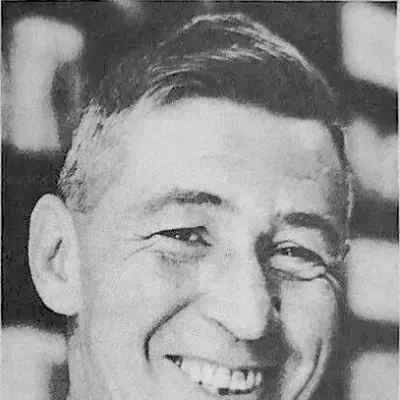
Jimmy Carter
Human Design Chart
Biography
After serving in the U.S. Navy from 1946 to 1953, he took over the family peanut business and became a community leader. Entering politics, he was elected Governor of Georgia, 1971-1975. Carter was virtually unknown outside of his home state when he began his meteoric rise to become the Head of State.
Son of Earl Carter and Lillian Gordy Carter, Jimmy Carter grew up the eldest of four children. Gloria was born in 1926, Ruth in 1929 and Billy on 29 March 1937. His father instilled the hard-work ethic and desire to excel while Lillian was said to have "gentled" Jimmy by encouraging schoolwork, church and social conscience. Carter knew he wanted to go to Annapolis since childhood. He encountered a difficult "plebe" year in 1943, and graduated from the U.S. Naval Academy finishing 59th of a class of 820 in 1946. Unhappy with sea duty on the Wyoming and Mississippi, he went to submarine school, finishing 3rd in a class of 52.
After four happy years in undersea service serving under Admiral Hyman Rickover, he reluctantly returned home to run the family peanut and farming interests when his father died of pancreatic cancer in 1953. He utilized his technical engineering skills, developing the farm into a modernized agribusiness, increasing his father's volume 25 times.
After a "deeply profound religious experience" when he turned 40, he devoted himself to the service of helping others by joining missions to Eastern barrios. He served two terms in the state senate and took on an unsuccessful run for Governor against segregationist, Lester Maddox. Learning from his mistakes, he ran an aggressive and successful moderate-conservative campaign in 1970. Measuring himself against visiting Presidents, he concluded he had what it took to run for President.
What does Projector 5/1 mean for Jimmy Carter?
Projector 5/1 — Design at a Glance
Jimmy Carter's Projector design created a focusing aura that made inconsistencies in other systems immediately apparent. His energy acted like a bright light beam, targeting areas where others were still in the dark or not functioning properly. This gave him the ability to identify errors and weaknesses in his environment instantly.
However, this type's mechanics warn against direct confrontation. If Carter had pointed out these flaws right away, it would often have been perceived as unpleasant or aggressive by those around him, similar to a light beam being shone directly into someone's face. Such direct addressing creates resistance and blocks the effectiveness of his insights. Instead, his optimal strategy was passive attraction: By setting an example of harmonious action through his own behavior, he became attractive to others. People sought him out for advice rather than him correcting them.
Central to this approach was waiting for a genuine invitation. Only through such respectful encouragement could Carter effectively use his energy without overextending or burning himself out. Since Projectors do not have a defined Sacral Center and therefore lack constant intrinsic life force, rest periods were essential to avoid exhaustion. Living by the strategy of invitation and waiting rewarded him with success in his work. Ignoring this dynamic and acting on impulse without being invited led sooner or later to bitterness as an expression of his non-self.
Emotional Authority
Jimmy Carter did not make decisions impulsively. His design carried emotional authority, meaning that his defined Emotional Center served as a compass for all significant decision-making processes – regardless of which other centers were also active. This mechanism subjected him to constant emotional waves: Feelings fluctuated strongly between enthusiasm and disappointment. The current mood colored his perception of the world but was only a snapshot, not absolute truth.
Quick, spontaneous decisions based on this fleeting emotion proved risky and often wrong. Instead, his inner compass required patience. Jimmy Carter needed time to ride these waves through. He let decisions mature, slept on them multiple times, and consciously sought distance. Only when the initial emotional frenzy faded and an emotional distance emerged did clarity set in. This calm signaled that he had gone through the process and was now hearing his true inner voice. This mechanism was especially crucial for long-term steps that would shape his life path significantly. By deliberately delaying and waiting for emotional tranquility, he secured access to deeper insights hidden from him in the heat of the moment.
The 5/1 Profile — Heretic / Investigator
Jimmy Carter's design inclined him towards deep, isolated analysis paired with a nearly magnetic presence that made others seek him out for solutions to their problems. As a Hero/Researcher (Profile 5/1), he accumulated knowledge along the Researcher's line of retreat to then provide it as an expert to the collective. This configuration created an inherent tension: While Line 1 required security and study to filter negative reactions and enable positive mental mutations by provoking the mind, others constantly projected their need for answers onto him due to Line 5. Without clear boundaries, this dynamic threatened exhaustion, as he was used like a scientist at endless conferences until his inbox overflowed and he burned out. The central challenge lay in saying no to protect himself from being drained by the constant offer of solutions. Only through setting these limits could Jimmy Carter maintain balance between the necessary withdrawal for his own psychological stability and the collective benefit of his insights. Line 1 helped him selectively review relationships and exclude those not contributing to growth, while Line 5 ensured that his knowledge reached where it was truly needed – provided he protected his energy from collective pressure.
Single Definition — Defined & Open Centers
Jimmy Carter's Human Design profile indicated a tendency towards emotional depth and persistent internal pressure. His defined Solar Plexus acted as an inner authority, meaning he didn't make decisions on the spot but waited for the emotional wave to pass before making choices. Truth revealed itself over time; impulsiveness led to chaos while patience created clarity. Simultaneously, his defined Root Center provided a driven force that propelled him forward and helped manage stress. This combination shaped a nature constantly in motion yet dependent on emotional maturity to channel this drive constructively.
In contrast, the Head, Ajna, Throat, G-Center, Heart, Sacral, and Spleen Centers were open. These areas reflected their environment rather than following a fixed internal structure. Jimmy Carter tended to be influenced by external mental pressures or seeking identity through others due to lacking a consistent personal source. His open Heart Center made him vulnerable to trying to prove his worth through promises, often ending in disappointment cycles. Similarly, the open Sacral Center could lead him to absorb other people's energy and overextend himself without clear boundaries. The open Spleen Center caused him to distrust spontaneous decisions as these were often driven by fear or false conditioning. His strength lay in using the stability of his defined centers as an anchor while learning not to interpret fluctuations in his open areas as personal truth but rather as a mirror of the world around him.
Channels for the expression of free emotions.
Jimmy Carter exhibited a fundamental approach characterized by authentic emotional volatility. His design suggested that he did not rationalize moods but lived within the alchemy of a pulsing wave between melancholy and joy. This occurred through Channel Emotions Release 39-55, which connects the Root Center with the Solar Plexus. This mechanism used Provocation (Gate 39) to sharpen the mind (Gate 55) and test the correctness of relationships. Carter could use this emotional authenticity to uncover the true character of others to determine their suitability for himself.
Additional energies were at work: Gate 18 distinguished between necessary corrections in collective processes, emphasizing political aspects and human rights. Gate 17 organized the future through logical teaching and served emancipation, with doubt considered a healthy part of the process. Gate 38 set boundaries to defend individual integrity against harmful forces. In personality traits, Gate 30 represented feeling recognition and longing for positive experiences, while Gate 52 in his design allowed self-imposed pauses for concentration and pattern correction. Gate 49 responded sensitively to family and tribal-level principles through sacrifice, and Gate 22 promoted social mutation through calm listening and openness without intrusion. This combination shaped a way of being that connected emotional depth with political structure.
Individual Circuitry — Circuit Signature
Jimmy Carter's design showed a tendency to initiate change through the expression of unique identity. This did not happen through intellectual planning but via pulsing acoustic energy driven by emotional waves. The Knowledge Circuit defined this original path: it was about gaining new knowledge and bringing transformation into the world.
In Jimmy Carter, this circuit was specifically active through the channel 'Emotions Release' (Gates 55-39). This channel connected the Solar Plexus Center with the Root Center. This meant that emotional impulses were directly translated into pressure and action. The mechanism described a connection between the emotional wave of the Solar Plexus and the driving force of the Root. Thus, Jimmy Carter could initiate transformation by expressing his feelings through the Throat Center – even though the Throat Center was not directly in this channel, it served as an expression organ for released emotions.
The energy was pulsing and focused on the 'now' moment. Jimmy Carter's unique individuality was reinforced by this emotional dynamic. It involved a simple definition with a clear group of Root and Solar Plexus Centers. These two centers formed a direct, continuous flow. Other defined areas remained energetically separate from this specific connection. The mechanism underscored that change occurred through the release of emotions which then translated into concrete steps.
Left Angle Cross of Upheaval 2
Jimmy Carter's Human Design shows the imprint of the left cross of the second revolution. This configuration sets a deeper, structural life task: dealing with fundamental changes and breaking through old structures. It was not about superficial adjustments but rather fateful transformations that touched the foundation of his being.
In Human Design, this cross marks a specific dynamic of change. The focus lies on questioning established patterns and forging new paths when the old loses its validity. This energy worked as an underlying driving force pushing Jimmy Carter to engage with profound upheavals. It defined an attitude of renewal that was not arbitrary but sprang from an inner logic of development.
The structure of this cross emphasizes the importance of transformation as a central life motif. It is about breaking old forms to make space for new ones. This dynamic shaped his inner orientation and significantly determined how he responded to changes. It was a firm part of his design, giving him a specific perspective on change and renewal. Jimmy Carter lived this energy of revolution as an integral part of his existence without external circumstances forcing it upon him. The power for transformation was anchored in his design.
Saturn Return · Uranus Opposition · Chiron Return · 2nd Saturn Return — Life Cycles
Jimmy Carter's life was strongly marked by structure and discipline. This attitude formed the foundation of his development, which proceeded in clear phases. His first Saturn return marked a turning point: In 1952, at age 28, he was promoted to lieutenant commander. This success condensed years of groundwork into a solid result and consolidated his position.
Later followed a phase of expansion. The Uranus opposition around the 40th year brought new dynamics. In 1964, without serious competition, he was confirmed as senator in Georgia and prepared for the congressional elections of 1966. This signaled a desire for greater reach and change driven by inner unrest seeking new perspectives.
The Chiron return around age 47 to 51 opened an achievement cycle where his purpose increasingly unfolded. In 1971, he declared solidarity with Lieutenant Calley in connection with the Mỹ Lai massacre. This action reflected grappling with deep questions and searching for authenticity, typical of this bloom period of personal mission.
Finally, the second Saturn return closed the cycle. In 1981, his presidency ended at age 57. This event marked the conclusion of a long phase of responsibility and structuring. It showed the completion of a chapter defined by consistent action and clear boundaries before new life stages began.
Projector · Emotional Authority — Synthesis
He was a projector whose character was shaped by the connection between emotional authority and the Hero/Explorer profile (5/1). This led to a deeply rooted ability to recognize patterns in complex systems (through his projecting design), combined with an inner need to make this knowledge accessible to others. However, the emotional wave (Solar Plexus Center) required time for insights to mature while line 5 in the profile generated magnetic attraction towards questions and problem-solving of others – a constant drive that linked the desire for depth of knowledge with the pressure of external expectations. Thus, he lived a process of recognizing, processing, and passing on insights that ran through his life cycles.
A central paradox in his design lay in the interplay between the ability to recognize mistakes and offer solutions (projector) and emotional ups and downs that prevented quick reactions. He was destined to see the truth over time, yet simultaneously he was repeatedly drawn into situations by his profile line where swift action was expected. This led to an inner tension between the need for patience and external demands for answers – a dynamic also evident in documented events of his career.
1 Defined Channel
Incarnation Cross - Left Angle Cross of Upheaval 2
Solar Return
The Solar Return shows the moment when the sun returns to its exact birth position - your personal solar year.
Life Cycles
Discover the life cycles with a detailed triple view (birth chart, cycle chart, composite).
Human Design Profile
- Type
- Projector
- Strategy
- Wait for the respectful invitation
- Authority
- Emotional Authority
- Profile
- 5/1 - Heretic / Investigator
- Definition
- Single Definition
- Incarnation Cross
- Left Angle Cross of Upheaval 2
- Date of Birth
- 01.10.1924 07:00
- Place of Birth
- Plains, GA, United States
Frequently Asked Questions
What was Jimmy Carter's Human Design type?
What Profile did Jimmy Carter have in Human Design?
What Authority did Jimmy Carter possess?
What incarnation cross did Jimmy Carter have?
When was Jimmy Carter born?
Discover your own Human Design
Are you also a Projector? Find out in a personal reading how to unfold your leadership qualities and recognize the right invitations.
More Personalities
Back to overviewSissy Spacek

Alain-Fournier

Anémone

Ann-Margret

Bourvil
Hergé