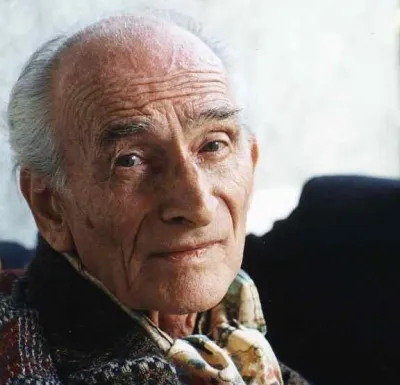
John Amaechi
Human Design Chart
Biography
An excellent high school player, John was able to attract the attention of many top U.S. colleges, ultimately ending up at Vanderbilt University. Amaechi found the transition to college basketball challenging and ended up transferring to Penn State, a setting that he thrived in. Throughout his college career, Amaechi was recognized as one of the best players in the Big Ten league, both in basketball and academically. Leading his team in scoring, rebounding, blocks, and steals, he was selected as first-team academic All-American. While at Penn State Amaechi also became widely known and appreciated in the community for his tireless charity work, most notably with the Big Brother's movement. In addition, John received a degree in psychology and is currently working on a PhD in child clinical psychology.
Human Design Analysis: John Amaechi as Manifesting Generator 4/6
Manifesting Generator 4/6 — Design at a Glance
John Amaechi's design inclines towards rapid, parallel action based on a hybrid structure: He has the constant energy of a Generator through his defined Sacral Center, yet he also possesses the ability to skip steps and produce results quickly. This configuration required precise alignment between impulse and execution. The strategy involved not initiating himself but reacting to external stimuli. Only when the Sacral Center gave a clear "yes" at each step could John Amaechi use his creative power without frustration.
Without this inner approval, the speed became a trap: Rushing ahead too quickly led to skipping important steps that had to be revisited later, which cost energy. Additionally, his design tended to pursue multiple projects simultaneously. This was sustainable only when he fell into a "play mode" – seeking variety and experiencing work as playful. Without this factor and without constant checks of inner approval, motivation quickly turned to frustration. Thus, his design did not show itself through linear, slow progression but rather through dynamic, reactive power that allowed satisfaction only with full resonance with his own rhythm.
Emotional Authority
John Amaechi demonstrated a decision-making process that did not rely on immediate intuition but required time as an essential filter. His design indicated that spontaneous reactions were unreliable; what initially appeared as an urgent impulse often turned out to be just a temporary emotional coloring. This structure stems from his emotional authority, which is linked to the defined Solar Plexus Center. In Human Design mechanics, this authority always takes precedence over all other defined centers, regardless of additional configurations in the chart.
This means for John Amaechi that his inner truth did not lie in the first wave of emotions but became visible only after these had subsided. His feelings fluctuated naturally, making the world appear positive or negative depending on his current mood state. Therefore, a decision made in the heat of the moment risked being based solely on a fleeting snapshot. The mechanics of his design called for patience: decisions needed to mature overnight to allow emotional waves to subside. Only when intense feelings had subsided and calmness set in did clarity emerge. This process of multiple nights' reflection was not an obstacle but the essential path to reach his true inner truth and make well-founded long-term life choices.
The 4/6 Profile — Opportunist / Role Model
John Amaechi's design set a tendency towards experimental exploration in the first three decades of his life. In this phase, his Profile Line 6 still acted like a Line 3, which prompted him to intensely try out relationships and friendships and orient himself through networks. This early period served for gathering experiences before the true nature of his second Profile half awakened.
With entering his late thirties, his focus fundamentally shifted. The Profile 4/6 brings an inner conflict between Heart and Head with it: On one hand, there was a deep need for belonging and intimacy, typical for Line 4; on the other hand, the urge grew towards transpersonal distance and ethical reflection, characteristic of Line 6. While Line 4 promoted intuitive power and trust in the here and now – assuming this force wasn't misused –, Line 6 called for openness and understanding of long-term consequences of commitments.
In his later years, John Amaechi emerged as someone who stood out through cooperation and took on the role of a wise role model. His big heart remained cautious all along; it only opened up to people where he could avoid suspicion. The development led from an experimenting seeker to a stance that not only kept its own needs in mind but also the responsibility for community and long-term engagement.
Split Definition — Defined & Open Centers
John Amaechi's Human Design profile indicates a tendency towards constant mental activity paired with clear inner direction and immense vitality. His defined Ajna Center ensures continuous independent concepts; he thinks constantly and is hard to influence from the outside. These thoughts flow directly into his defined Throat Center, meaning that what he thinks manifests reliably.
His defined G Center gives him a firm self-identity and the ability to give others orientation, while the defined Heart Center provides permanent access to willpower. Here lies the importance of keeping promises and controlling resources for oneself. The immense energy source of his defined Sacral Center, however, requires strategy: not initiating but responding to questions to avoid frustration.
As inner authority, his defined Solar Plexus showed him that he had to wait for an emotional wave before clarity entered; decisions made in the emotional high or low were risky. His defined Spleen Center provided spontaneous intuitive warnings for health and survival that needed immediate attention.
Against this structural density stood two open centers. The open Head Center made him vulnerable to mental pressure and doubt not originating from himself; he tended to long for inspiration or answers to foreign questions. The open Root Center absorbed external stress from the environment, which could lead to a feeling of adrenalized pressure that needed to be released. The tension between his constant mental production and the need for emotional calm as well as reactive energy channeling shaped his dynamics.
Channels for powerful intimacy, spontaneous insight and persistent discovery.
John Amaechi's design sets a tendency towards vital activity, but it is marked by the necessity of finding direction through inner reaction. This tension between the urge to act immediately and the search for a mutative life direction forms the core of his energetic dynamics.
The Channel Charisma 34-20 functions as the primary driver for this vital force. It connects the purely physiological energy of Gate 34 in the Sacral Center with Gate 20 in the Throat Center, which stands for expression 'in the now'. This configuration allowed a quick transformation of generative power into visible actions. Without conscious connection to inner guidance, however, this energy could appear chaotic or lead to obsession; used correctly, it offered the ability to maintain self-energizing activity over longer periods and inspire others through mere presence.
Simultaneously, the Channel Beat 14-2 acts as a source for innovative direction changes. It links Gate 14 (power competence and materialization) in the Sacral Center with Gate 2 (higher knowledge) in the G Center. As one of the tantric channels, it promotes mutation, uniqueness, and the unusual. John Amaechi had the resources to bring new perspectives into his environment by trusting reactions from his Sacral Center – even without prior certainty about the outcome. This supported him in encouraging both himself and others in their creative and material development.
Additionally, the Channel Pairing 59-6 shaped his interpersonal interaction. Through the connection of sexuality (Gate 59) and emotional wave (Gate 6), he sought intimacy and merging. His drive to establish relationships was intense and could quickly foster trust but required patience as the emotional timing was determined by the Solar Plexus.
Individual Gates like Gate 55 (emotional awakening) and Gate 30 (feeling recognition) underscored the importance of emotional cycles for his genetic mutation and understanding of destiny. Further influences came from Gates to pattern recognition (Gate 48), reflection (Gate 33), correction (Gate 18), immediate risk assessment (Gate 28), as well as continuity (Gate 32). This combination created a profile based on authentic reaction, transforming chaotic impulses into structured mutative life energy.
Individual Circuitry — Circuit Signature
John Amaechi's design sets a tendency towards individual knowledge transmission marked by emotional waves and structural clarity. With shared definition, two separate energetic systems exist: a large field of Ajna, Throat, Sacral, and Solar Plexus Centers as well as a separate Heart-Spleen-G area.
In the Knowledge Circuit, Channel 43-23 connects the Thinking with the Expression Center, enabling the ability to structure ideas into language. Parallel to this, Channel 2-14 between Identity and Sacral Center creates a pulsing rhythm for individuality. This combination promotes the expression of new insights supported by emotional impulses from the Solar Plexus.
The Meaning Circuit activates through Channel 46-29 also the Identity and Sacral Centers, fostering cyclical reflection on past experiences. Emotional waves here serve to share insights and learn from the past.
In the Ego Circuit, Channel 26-44 connects Heart and Spleen. This promotes cooperative resource building through dedication and communication within a group without direct connection to the life force of the Sacral Center.
The Archer Circuit uses Channel 59-6 between Sacral and Solar Plexus Centers. This primordial energy serves to protect genetics and family through instinctive care and emotional bonding.
Finally, Integration connects through Channel 20-34 Throat with Sacral Center. This allows expressing power from reacting to life in the now, supported by charisma and intuitive adaptability.
Right Angle Cross of the Sleeping Phoenix 4
John Amaechi's design carried the signature of the Right Sleeping Phoenix Cross 4. This configuration points to a specific, deep inner structure that is not defined by superficial descriptions or general energetic qualities. Instead, it marks a precise architectural element within his Human Design chart.
Without further descriptive details about the energetic expressions of this cross, interpretation remains limited to its mere existence as a fixed mechanical fact in his system. No derived behavioral patterns or psychological tendencies can be described from it. The design exhibits this aspect without linking it to concrete impulses for action or emotional coloring.
John Amaechi carried this designation as part of his individual constellation. It stands alone, a clear point in the complex geometry of his design that neither outwardly acts nor generates internal conflicts based on the available data. It is static information within the system, completing his unique signature without filling it with content or explanation. The mechanics here remain silent and reduce to the name of the configuration itself.
Saturn Return · Uranus Opposition · Chiron Return — Life Cycles
John Amaechi's design shows a structuring of life phases through planetary cycles that significantly shaped his development. In 1995, at age 25, he played for the Cleveland Cavaliers. This fell during his first Saturn Return, a time when years of groundwork often condenses into a solid result and fundamental structures in life are consolidated.
Later, in 2011 at age 41, Amaechi was appointed Officer of the Order of the British Empire. This occurred during the Uranus Opposition, a cycle that frequently coincides with sudden changes or breaking old patterns and opening new perspectives on personal success. This recognition marked a turning point where established roles were redefined.
The sequence of these events underscores the dynamics of his design: First consolidation through Saturn, later transformation and realignment through Uranus. Each cycle contributed to unfolding his life's purpose step by step and producing visible achievements that transcend mere career advancement.
Manifesting Generator · Emotional Authority — Synthesis
A central red thread runs through the design: the dynamic balance between inner strength and outer expression. The defined sacral energy coupled with the Throat Center grants a quick reactive ability and manifestation power (Channel 34-20). However, this is modulated by emotional authority that calls for weighing and timing – a synergy of spontaneous energy and reflective clarity. The connection to the G Center emphasizes a deep self-identity capable of inspiring others as long as it is lived authentically. The defined Heart Center underscores the ability to realize personal values and use resources autonomously.
The central paradox lies in the tension field between the drive for quick manifestation and the necessity of emotional maturity. Sacral energy wants immediate action, while the emotional center needs time to gain clarity (Channel 59-6). This tension carries the risk of frustration if initiatives are rushed but also the potential for deep satisfaction once strategy and authority align. The connection of the Knowledge Circuit with the Ego Circuit points to a capacity to develop innovative ideas and implement them successfully through cooperation with others.
6 Defined Channels
Incarnation Cross - Right Angle Cross of the Sleeping Phoenix 4
Solar Return
The Solar Return shows the moment when the sun returns to its exact birth position - your personal solar year.
Life Cycles
Discover the life cycles with a detailed triple view (birth chart, cycle chart, composite).
Human Design Profile
- Strategy
- To respond - wait for something to respond to
- Authority
- Emotional Authority
- Profile
- 4/6 - Opportunist / Role Model
- Definition
- Split Definition
- Incarnation Cross
- Right Angle Cross of the Sleeping Phoenix 4
- Date of Birth
- 26.11.1970 01:31
- Place of Birth
- Boston, MA, United States
Frequently Asked Questions
What is John Amaechi's Human Design type?
What Profile does John Amaechi have in Human Design?
Which Authority guides John Amaechi?
What incarnation cross does John Amaechi have?
When was John Amaechi born?
Discover your own Human Design
Are you also a Manifesting Generator? Find out in a personal reading how to unfold your multi-talents and direct your energy wisely.
More Personalities
Back to overviewAldair

Alizée

Angeli

Arletty

Artus

Balthus