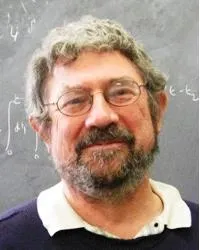
John Michael Kosterlitz
Human Design Chart
Biography
John Michael Kosterlitz — Manifesting Generator with Profile 2/4
Manifesting Generator 2/4 — Design at a Glance
John Michael Kosterlitz's design points to a tendency towards hybrid energy: he had the constant power of a Generator, but also the ability to skip steps and quickly draw results into his life. This configuration described him as someone who had to react to inner impulses as well as the potential to push things forward at a speed that pure Generators couldn't achieve.
As a Manifesting Generator, his strategy was to respond to life before acting. His defined Sacral Center provided the necessary energy, but it only worked satisfactorily when he reacted to real impulses and felt his inner 'yes'. The danger lay in his speed: if he acted too quickly, he skipped important intermediate steps, which could force him to backtrack and fill in gaps – a potential source of frustration. Additionally, he tended to pursue multiple projects simultaneously rather than focusing on one thing.
This parallel work was not a mistake, but part of his nature, as long as he remained in the 'play mode' and sought variety. As long as his inner authority agreed and he regularly checked the projects for their ongoing resonance, he could draw deep satisfaction from this versatility. His design thus promoted a dynamic, fast creative force, which, however, required discipline in reacting to impulses to avoid overloading or having to catch up on missed steps.
Sacral Authority
John Michael Kosterlitz's design points to a tendency towards direct, physical resonance in decision-making. As a Generator, he had the sacral authority, which also served as his strategy. This configuration greatly simplified his decision-making process, as strategy and inner guidance were identical. A prerequisite for this clear orientation was an open Emotional Center, meaning that he did not react to short-term emotional waves but to the immediate physical response.
His inner voice manifested as gut feeling or surge of power, triggered by external stimuli. He learned to pay attention to physical signals such as grunting, humming, or simple utterances like 'Mhm'. When his sacral motor engaged with a topic, he felt vital and energized. This reaction gave him seemingly inexhaustible power and enabled him to tackle tasks with great enthusiasm. His design predisposed him to live with joy and satisfaction, fully immersed in his activities without needing external purpose.
Additionally, an activated Spleen Center acted as a supportive authority. This allowed him to react quickly and spontaneously, with a reliable instinctive perception. He had immediate access to his physical well-being, which he could use as a compass-like orientation. This mechanism described a way of life based on listening to his body to use energy efficiently and satisfactorily.
The 2/4 Profile — Hermit / Opportunist
John Michael Kosterlitz's design points to a dynamic tension between the need for withdrawal and the desire for community. He was someone who swung between two poles: Line 2, the Hermit, who needs time in his own 'cave' to reflect on internal processes and gain clarity, and Line 4, which focuses on the community and the network.
This configuration of Profile 2/4 requires clear communication to manage these rhythms. When the need for alone time is fulfilled, the knowledge of the network enters the evaluation phase. In this quiet phase, brilliant ideas can be developed before turning to the 'favorite people'. Line 2 brings a certain susceptibility and vulnerability, but in its rhythms it often appears extreme or even bizarre from the outside. These extremes, however, create a valuable range.
At the same time, Line 4 addresses the survival of innocence in a fixed perspective. It represents a transpersonal development that recognizes the ego as a challenge and perceives beauty even in difficult environments – like the 'rose on the garbage dump'. As 'spiritual warriors', this line preserves innocence and exerts a strong influence on societies and communities through its contagious nature. For John Michael Kosterlitz, it was therefore central to create a safe environment where he could clearly signal when he sought company and when he wanted to remain undisturbed to reconcile these two needs.
Single Definition — Defined & Open Centers
John Michael Kosterlitz's Human Design profile inclined him towards clear, resolute communication that was nourished by a deep inner direction and a vital source of energy. His defined G Center provided him with a reliable sense of self-identity and a feeling for his life's purpose, while his defined Heart Center gave him the willpower to keep promises and control his own resources. This combination allowed him to act from a position of inner security and self-worth.
His voice, guided by his defined Throat Center, served as a focal point to bring this inner truth into the world. Since his Sacral Center was also defined, he had a constant source of generative energy. This meant that his actions and expressions were based on a genuine, available power, provided he responded to life rather than initiating. His defined Spleen Center added a spontaneous, intuitive component that allowed him to act in the moment and trust his body awareness.
At the same time, his design was marked by several open centers, making him susceptible to certain external influences. His open Head Center made him vulnerable to mental pressure and the temptation to identify with questions or inspirations from others that were not his own. His open Ajna Center amplified this by giving him the ability to absorb concepts and opinions from the environment without claiming them as his personal truth. Additionally, his open Solar Plexus absorbed the emotions of his surroundings, which could lead him to feel foreign moods or tensions as his own if he did not consciously distance himself from them. Finally, his open Root Center took on the stress and adrenalized pressure from the environment, which made him tend to move in cycles of frenzy to escape this foreign pressure rather than trusting his inner authority. This configuration described a person who had to use his own stable energy and direction to avoid being drawn into the mental, emotional, or stress-induced currents of the outside world.
Channels for leadership, intuition, love and endurance.
John Michael Kosterlitz's Human Design profile indicates a tendency towards collective, logical leadership that relies on gaining trust and recognition from the community. This is evident through Channel 7-31, which connects the G Center with the Throat Center. Gate 7 provides the logical role to lead societies, while Gate 31 acts as a collective leader whose voice carries influence. Successful leadership here does not stem from authority but from being invited by the majority to understand existing patterns and guide trends into the future.
Parallel to this, the design reveals a deep intuition for survival in the present moment. Channel 10-20, connecting the G Center with the Throat Center, expresses the essence of being: "I am". Gate 10 (Presence) and Gate 20 (Now) transform individual knowledge into correct action, supported by self-love and self-confidence. This configuration promotes authentic behavior that inspires others without the need for intention.
This intuitive clarity is reinforced by Channel 10-57, which connects the Spleen Center with the G Center. Gate 57 (intuitive insight) brings in acoustic sensitivity and spontaneous wisdom, merging with the behavior of Gate 10. This allows for the release of unfounded future fears and existential movement through the world. Additionally, Channel 57-20 connects the Spleen Center directly with the Throat Center, enabling intuitive insight to be communicated as truth in the moment.
In the realm of motivation, Channel 51-25, running through the Heart Center via Gate 51 (Shock) and Gate 25 (Self Spirit), introduces a natural competitiveness aimed at recognizing the potential for individuation and initiating through "shocks". This serves to expand and test creative boundaries.
Lastly, Channel 29-46, connecting the Sacral Center with the G Center, shapes the approach to processes. Gate 29 (Saying Yes) offers the endurance of the Sacral, while Gate 46 (Self Determination) ensures being in the right place at the right time. Success here arises from letting go of expectations and fully immersing in the experience until its significance is revealed at the end.
Additionally, Gates 15 (collective behavior, magnetic monopoly), 13 (collective memory), 56 (mental abstraction), 45 (tribal level, hierarchy), 3 (mutation, order), and 16 (mutative experimenting) contribute to the overall structure, with Gates 15 and 13 emphasizing the connection between logical flow and historical continuity.
Individual Circuitry — Circuit Signature
John Michael Kosterlitz's Human Design profile indicates a tendency towards inner strength and intuitive presence. As a Simple Defined individual, he had a continuous, direct flow of energy through all his defined centers – G, Throat, Spleen, Heart, and Sacral centers – creating a clear, unified life force energy without internal conflicts between different subsystems.
His Knowledge Circuit connected the Throat and Spleen centers, enabling the expression of innovative flashes of insight, where intuitive perception was directly translated into words or actions. Simultaneously, his Centering Circuit linked the Identity with the Heart center, giving him a solid, courageous personality with strong convictions, though due to the lack of a direct connection to the Throat center in this specific circuit, these were primarily expressed as an inner stance rather than through this channel.
The Understanding Circuit connected the Throat and Identity centers, promoting the sharing of logical, rational insights without emotional coloring. In contrast, the Meaning Circuit linked the Identity with the Sacral center, reflecting and sharing emotional waves and experiences from the past to learn from them.
Finally, the Integration Circuit connected the Throat, Identity, and Spleen centers. Here, power was derived from the reaction to life through proper behavior and intuitive knowledge to act effectively in the present. This combination marked him as someone who unified intuitive perception, logical structure, and emotional depth in a single, continuous energy.
Right Angle Cross of the Vessel of Love 2
John Michael Kosterlitz's Human Design shows a tendency towards deep, often painful emotional processing. The right cross of the Love Vessel 2 describes a life task defined by intense relationship experiences where vulnerability and the need for connection are central. This configuration points to an inner dynamic where the heart functions as a place of truth and suffering equally. It is not about superficial affection, but about a transformative power that works through experiencing loss, separation, or deep connection.
The mechanics of this cross indicate that John Michael Kosterlitz was called to penetrate the complexity of human bonds. The right cross emphasizes the active, often challenging side of this experience: it requires testing and expanding one's emotional boundaries to find a more authentic form of love. This means that relationships were not only experienced as comfort zones but as battlefields for personal growth. The energy of this design drives to break through the illusions of unconditional acceptance and instead embrace the harsh reality of interpersonal dynamics.
Through this configuration, an attitude was shaped that understands pain and joy as inseparable aspects of love. In this context, John Michael Kosterlitz showed himself willing to enter the deepest levels of emotional experience to gain a clear, though painful, insight. The right cross of the Love Vessel 2 thus acts as a catalyst for a maturation that is only possible through the full experience of human vulnerability. It is a path of integration where the heart is not protected but challenged to recognize a deeper truth about connection and isolation.
Saturn Return · Uranus Opposition · Chiron Return · 2nd Saturn Return — Life Cycles
John Michael Kosterlitz's Human Design shows a tendency towards structural clarity and the ability to translate complex systems into stable orders. This configuration appears as someone who gains inner stability through recognizing patterns that initially seem chaotic. The mechanics behind this attitude is the first Saturn Return, a cycle that typically occurs around the age of 29 to 30. In this phase, years of groundwork and intuitive insights often solidify into a concrete, measurable result that serves as a foundation for further development. It is a moment of maturation, in which the individual learns to align their inner authority with external structures.
In 1973, at the age of 30, John Michael Kosterlitz, together with David J. Thouless, published the first example of topological phase transitions. This event marks exactly the time of his first Saturn Return. The success of this work is no coincidence but a direct result of the energy condensation that this cycle favors. The ability to pour abstract physical concepts into a provable theory corresponds to the task of the Saturn Return: to make the invisible visible and to create a solid basis for future achievements. This moment confirmed the effectiveness of his inner structure and paved the way for his later scientific imprint.
Manifesting Generator · Sacral Authority — Synthesis
A central red thread in this design is the dynamic connection between inner clarity and external drive. The sacral authority (Sacral Center) provides a constant energy source that is transformed into quick, initiating power through the manifesting component (Design View). This interplay of reactive impulse and leaping steps (Design View) shapes a personality that is deeply rooted in the present experience while also possessing the ability to rapidly trigger change. The profile as a natural talent and networker (Profile Role) reinforces this trait by establishing a pendulum between introspective depth and the need for exchange and connection – a search for authentic resonance that is facilitated by the defined communication center (Centers).
The central paradox lies in the tension between the need for isolation and community. The line 2 of the profile (Profile Role) calls for withdrawal and inner clarification, while line 4 emphasizes the desire for connection and exchange. This is further strengthened by the logical leadership of the Alpha (Channels/Gates), which can recognize and advance collective patterns but also requires a clear, individual positioning. The success that arises from the recognition of topological phase transitions (Cycles) thus seems to emerge from the interplay of these opposing forces – from the ability to rest deeply within oneself as well as actively shape the world.
6 Defined Channels
Incarnation Cross - Right Angle Cross of the Vessel of Love 2
Solar Return
The Solar Return shows the moment when the sun returns to its exact birth position - your personal solar year.
Life Cycles
Discover the life cycles with a detailed triple view (birth chart, cycle chart, composite).
Human Design Profile
- Strategy
- To respond - wait for something to respond to
- Authority
- Sacral Authority
- Profile
- 2/4 - Hermit / Opportunist
- Definition
- Single Definition
- Incarnation Cross
- Right Angle Cross of the Vessel of Love 2
- Date of Birth
- 22.06.1943 05:40
- Place of Birth
- Aberdeen, United Kingdom
Frequently Asked Questions
What is the Human Design type of John Michael Kosterlitz?
What is John Michael Kosterlitz's Human Design Profile?
What authority guides John Michael Kosterlitz?
Which incarnation cross is active for John Michael Kosterlitz?
When was John Michael Kosterlitz born?
Discover your own Human Design
Are you also a Manifesting Generator? Find out in a personal reading how to unfold your multi-talents and direct your energy wisely.
More Personalities
Back to overviewAldair

Alizée

Angeli

Arletty

Artus

Balthus