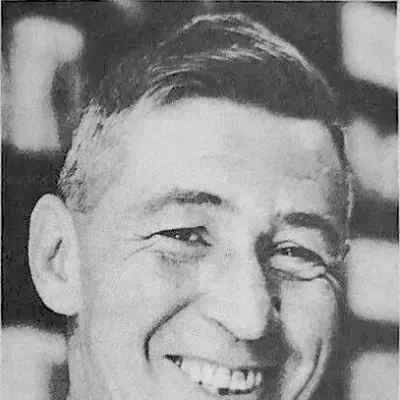
Juan Antonio Llorente
Human Design Chart
Biography
The Human Design of Juan Antonio Llorente: Projector 1/3
Projector 1/3 — Design at a Glance
Juan Antonio Llorente stood out with an intense, focused presence that he used like a targeted light to highlight weaknesses in his surroundings. As a Projector, he didn't have a constant, intrinsic energy source but operated in phases of high intensity followed by necessary rest periods to avoid burnout. His strength lay in immediately recognizing what wasn't working in systems or relationships.
However, this ability required sensitivity. Directly addressing the flaws would often be perceived as aggressive, like shining a bright light directly into someone's face. Instead, Juan Antonio Llorente was most effective when he lived in harmony and competence himself. This authentic presence drew others to him, who then naturally sought his advice. His strategy was to wait for an honest, appreciative invitation before sharing his insights.
Living by this principle brought him success and recognition. Ignoring the need to wait for the invitation and conserve his energy led to his non-self theme: bitterness. His design challenged him to act not through constant action but through targeted, recognized leadership, carefully managing his limited energy to remain effective sustainably.
Emotional Authority
Juan Antonio Llorente was someone who never made decisions based on the first emotional wave. His design featured a tendency towards deep, delayed clarity that only set in after initial mood feelings had subsided. This resulted from his emotional authority, carried by the defined Solar Plexus Center. In Human Design mechanics, this authority always takes precedence over all other defined centers, regardless of further configurations in the chart. Juan Antonio Llorente was subject to a permanent emotional wave that colored his perception of the world. What appeared inspiring in one moment could be perceived negatively in the next. His immediate feeling was thus only a snapshot, not yet his truth. Quick, spontaneous judgments from this position often had negative consequences. Instead, his system required patience and the conscious overnighting of decisions. Only with time did the intense feelings subside, he gained emotional distance, and calmness set in. This process was crucial for long-term, life-defining steps. Juan Antonio Llorente hesitated properly, asked himself multiple times, and waited until the emotional turbulence subsided. Only then did he recognize the overarching truth of a situation. His inner authority thus dictated not quick action but the strategic pause to gain clarity.
The 1/3 Profile — Investigator / Martyr
Juan Antonio Llorente was someone who didn't just collect knowledge theoretically but validated it through active experimentation and learning from mistakes. His design as a Researcher and Experimenter (Profile 1/3) leaned towards initially intensive planning and learning before moving into implementation. Often, the energy of Line 1 led him to fear action because he felt he didn't know enough. But Line 3 pushed him to experiment. Self-earned insights were his highest good; if he deemed something good, he had thoroughly tested it both theoretically and practically.
This process of trial and error (Gate 38) shaped his approach. He sought alliances to resolve conflicts, but these were often short-lived and dissolved after the 'battle'. His vitality depended on working with compatible forces rather than staying in ego-driven dependencies. At the same time, he carried the energy of control and direction (Gate 21). For him, it was crucial to maintain independent control over certain areas to earn respect. Violence or hard enforcement only served as a last resort when other means failed. Without this willpower, tensions loomed. His judgment was trustworthy because it was based on this double test – from the depth of learning and the breadth of experience.
Single Definition — Defined & Open Centers
Juan Antonio Llorente revealed himself through a defined Heart Center as someone who controlled his own willpower and resources. He enjoyed working independently, followed his inner rhythm, and expected recognition for his contribution. His energy was competitive, yet he knew when to step back to maintain balance. Parallel to this, a defined Solar Plexus Center shaped his emotional depth. His inner authority lay in patience: he waited for the emotional wave to subside before making decisions. This ability to use feelings as an indicator of correctness gave him a seductive aura and the power to gain advantages in negotiations by waiting.
In contrast, his design revealed several sensitive areas. An open Head Center made him vulnerable to mental pressure and the temptation to identify with others' questions. Instead of steady inspiration, he often sought external sources to find clarity, which could easily pull him into a whirlpool of confusion. Similarly, his open Ajna Center allowed him to flexibly adopt various concepts but tended to interpret others' answers as his own truth or compensate for uncertainty with imposed security.
His open Throat Center led to inconsistent communication. He tended to demand attention through talking when he felt unnoticed, rather than waiting for an invitation to speak from the outside. An open G Center meant he lacked a fixed identity or direction. He adapted to his environment and often sought love and orientation from others rather than creating it from within himself. This made him vulnerable in relationships, where he easily adopted his partner's identity.
Furthermore, his open Sacral Center made him susceptible to being overwhelmed by the energy of his surroundings. He had no natural limits for his vitality and tended to overwork until he broke down. An open Spleen Center amplified fears of survival and led him to cling to unhealthy situations just to feel a sense of security. Finally, his open Root Center absorbed environmental stress, which could drive him into an endless cycle of adrenalized pressure and exhaustion if he did not learn to recognize and let go of this external influence.
Channels for community, friendship and being.
Juan Antonio Llorente emerged as someone who prioritized the establishment of stable communities and fair agreements. His design indicated a tendency to solidify connections not spontaneously, but through careful examination and emotional clarity. This stemmed from Channel 37-40, which links the Solar Plexus Center with the Heart Center. Gate 37 sought recognition and a place within the whole, while Gate 40 was ready to serve loved ones but required breaks and rewards. This combination ensured, through sheer willpower, that agreements were beneficial for both sides and that mutual loyalty, rather than hierarchy, was the focus.
Additionally, further influences impacted his material and social actions. Gate 21 demanded control over material things and respect in service to the community, overcoming obstacles through power. Gate 48 enabled the recognition of deeper patterns and connections, which could lead to frustration if these insights were not translated into solutions. Gate 38 set boundaries and defended individual integrity through necessary resistance against harmful forces. Gate 39 served as fuel for mutations through provocation and analysis, releasing adrenaline. Finally, Gate 26 contributed to anchoring innovations within a conservative group, requiring pauses to focus the ego. This configuration shaped a person navigating between the need for belonging and the necessity of individual demarcation.
Tribal Circuitry — Circuit Signature
Juan Antonio Llorente emerged as someone who oriented his actions strongly towards mutual support within a community. His design indicated a tendency towards cooperation and the joint creation of resources, while being mindful of a balanced relationship between giving and taking. This attitude stemmed from the Community Ego Circuit, which was activated in him through the Community Channel (37-40). This channel directly connected the Heart Center with the Solar Plexus Center. The Heart Center guided the question of commitment and "Can I do it?", while the Solar Plexus provided the emotional waves and the associated judgment capability. Since these two centers were directly connected in Juan Antonio Llorente, his emotional intuition flowed directly into his decisions about commitments. He did not act on impulse but allowed his feelings to mature before supporting with clear conviction. Crucial was the fact that this circuit did not connect to the Sacral Center. Without the constant life force of the Sacral Center, he lacked an infinite energy source for continuous action. Instead, he needed sufficient rest periods to regenerate the necessary resources for his tribe. His focus was on traditional, timeless support, where the sense of touch and smell played a role. He sought no quick fix energy but built stable, long-term relationships of exchange. This structure shaped his life as someone rooted in the community, whose strength lay in the ability to enter into emotionally mature commitments and fulfill them with patience and tradition.
Right Angle Cross of Tension 1
Juan Antonio Llorente's Human Design indicated a tendency towards intense internal tension, arising from the configuration of the right tension cross. This setup described a life dynamic where external demands and internal impulses often clashed. It was not a calm equilibrium but a constant friction between what was expected from the outside and what was internally required.
In Human Design, this cross marks a specific kind of pressure that arises from the interaction of certain energy centers. For Juan Antonio Llorente, this meant that his path was characterized by a constant adaptation to these tensions. He lived in a situation where compromises and enduring opposites were part of daily reality. The mechanics of this design showed that he had to learn to accept these tensions not as errors but as driving forces.
This internal dynamic shaped his way of dealing with challenges. Instead of striving for immediate harmony, resilience developed based on the ability to endure pressure and transform it into movement. Juan Antonio Llorente was shown to be someone who found his true strength in these moments of friction. The configuration challenged him not to swim against the current but to use the energy of tension to move forward. It was a path of learning through experiencing resistance, which profoundly shaped his personality and helped him to succeed in complex situations.
Saturn Return · Uranus Opposition · Chiron Return · 2nd Saturn Return — Life Cycles
Juan Antonio Llorente was someone whose professional path was marked by clear structuring and the handling of institutional responsibilities. His design indicated a tendency to prove himself in phases of consolidation. In 1785, at the age of 29, he went to the court in Madrid as an executor of a will. This marked his first Saturn return, a cycle in which years of groundwork often condenses into a solid result and fundamental professional structures are established.
Later, in 1793 at the age of 37, he was tasked with preparing a report on the procedure of the Santo Oficio. This moment fell on the Uranus opposition, a phase often associated with sudden turns or questioning existing systems and bringing new, often unexpected tasks.
The Chiron return, a fulfillment cycle in which one's incarnation cross unfolds and meaning becomes tangible, occurred in 1808. At the age of 52, Juan Antonio Llorente was appointed as a state councilor for church affairs. This appointment reflects the peak period when inner alignment becomes outwardly effective.
However, the second Saturn return brought a severe crisis. In 1813, at the age of 57, he had to flee to France. This cycle often demands a profound reorientation and the dismantling of old structures, which in his case led to the necessity of fleeing. His life illustrated the tension-charged transitions between stabilizing order and disruptive changes.
Projector · Emotional Authority — Synthesis
Juan Antonio Llorente lived as a projector who always recognized patterns and inefficiencies in his surroundings (Gate 11). This ability to 'shed light on the dark' was, however, inseparable from an emotional depth (Emotional Authority) that required decisions to mature and careful consideration. His profile as a researcher and experimenter (1/3) reinforced this process, as he had to gain insights through personal experience and verification before sharing them. The connection between Heart and Solar Plexus centers in the Community Channel pointed to a natural aptitude for cooperation and building relationships based on mutual giving and taking.
A central paradox shaped his life: the tension between the urge to project his insights and correct them and the necessity to wait for the emotional wave to ensure that the timing for his interventions was right. The cycles showed that professional successes often went hand in hand with phases of crisis, indicating an internal dynamic where the drive for knowledge and the need to adapt competed with each other. He was an observer who recognized the potential in others, but also a thinker who needed time to validate his own conclusions.
1 Defined Channel
Incarnation Cross - Right Angle Cross of Tension 1
Solar Return
The Solar Return shows the moment when the sun returns to its exact birth position - your personal solar year.
Life Cycles
Discover the life cycles with a detailed triple view (birth chart, cycle chart, composite).
Human Design Profile
- Type
- Projector
- Strategy
- Wait for the respectful invitation
- Authority
- Emotional Authority
- Profile
- 1/3 - Investigator / Martyr
- Definition
- Single Definition
- Incarnation Cross
- Right Angle Cross of Tension 1
- Date of Birth
- 30.03.1756 09:30
- Place of Birth
- Rincón de Soto, Spain
Frequently Asked Questions
What was Juan Antonio Llorente's Human Design type?
What profile did Juan Antonio Llorente have?
What authority did Juan Antonio Llorente have?
What incarnation cross did Juan Antonio Llorente have?
When was Juan Antonio Llorente born?
Discover your own Human Design
Are you also a Projector? Find out in a personal reading how to unfold your leadership qualities and recognize the right invitations.
More Personalities
Back to overviewSissy Spacek

Alain-Fournier

Anémone

Ann-Margret

Bourvil
Hergé