
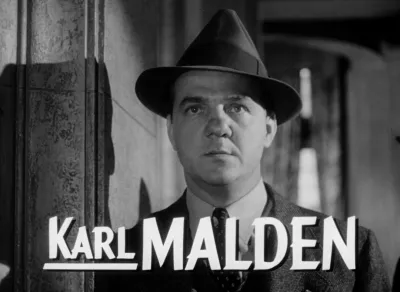
Karl Malden
Human Design Chart
Biography
Malden's father, Petar Sekulovich, emigrated to America stopping at Ellis Island on 18 April 1906. The Serbian immigrant wanted to live in San Francisco but ended up in the Serbian community of Chicago. Malden was born in Chicago but his father moved the family to Gary, Indiana when he was five-years-old. His father supported the family for 38 years driving the milk wagon in town. Raised speaking no English, Malden found school in Gary frustrating and difficult. He could not understand what English words meant nor how to spell words. Malden's love for the theater stemmed from his father's dedication to staging Serbian productions in Gary, Indiana. As a teen, Malden appeared as a pasha in many of his father's stage plays.
In high school, he excelled at basketball, winning the championship game. He played the lead in his senior class play, Shaw's "Arms and the Man.
Karl Malden — Generator with Profile 4/1
Generator 4/1 — Design at a Glance
Karl Malden revealed himself as someone with remarkable inner endurance and strength. His design identified him as a Generator, a type that possesses abundant sacral energy – comparable to a strong workhorse capable of delivering immense performance as long as it has the right motivation. This energy was not released through self-initiative but responded to impulses from his environment. Therefore, his motto for action was: not to initiate but to respond.
When a signal came from life and his inner self reacted with a clear 'yes', he could effectively utilize this energy. Living in harmony with this strategy – that is, by responding rather than constantly pushing forward – led to a deep sense of fulfillment. Conversely, frustration and energy depletion threatened when he acted against this principle or did things without genuine resonance within him. Two main risks shaped his potential: either he exhausted his strength on tasks without real enthusiasm, which could lead to burnout, or he was held back from his true heart project despite still having plenty of energy left. His path to satisfaction thus lay in listening to life impulses from the gut and then acting upon them.
Sacral Authority
Karl Malden revealed himself as someone who did not make decisions in his head but rather based on an immediate physical reaction. His design established sacral authority – an inner guidance unique only to Generator types, whose strategy was identical to this authority. This fundamentally simplified his decision-making process: he needed no lengthy analysis but reacted to external stimuli with a clear 'gut feeling'. This manifested as a surge of energy or through loud signals like grunting or nodding in agreement. Once this inner voice responded, he felt vital and had inexhaustible energy that plunged him into his activities with great enthusiasm – entirely without compulsion or purposefulness.
Additionally, his activated spleen center acted as supporting authority. As it might have been directly connected to the sacral center, this gave him a special speed and spontaneity in reacting. He had immediate access to his instinctive well-being and could reliably guide himself from this deep physical perception. Furthermore, for his inner clarity, it was crucial that his emotional center remained open; this prevented him from making decisions based on emotional waves and thus ensured the purity of the sacral response. So he lived in a state where joy and contentment flowed naturally as the result of a correct reaction to what engaged him.
The 4/1 Profile — Opportunist / Investigator
Karl Malden revealed himself as someone whose fundamental nature was unshakably fixed. As a carrier of the rare 4/1 profile – the only fixed profile in Human Design – he was barely deviated from his individual path. This structure marked the transition from 'I' to 'You', anchored in a profound, transpersonal development.
His Line 4 (Gate 25) drove him to preserve innocence from a fixed perspective. He acted like a spiritual warrior who maintained the highest principles even during decline and exerted societal influence through his contagious nature. Simultaneously, his Line 1 (Gate 58) ensured cyclical zest for life and a need for correction. Without mindfulness, this energy could have led to frustration; with it, it served to secure a stable future through love of order and experimentation.
The combination of these lines created an inner conflict: the great heart of the 4/1 wanted to connect, yet the fixity of the profile allowed no external change. Well-meaning advice from others to change him was often perceived as an attack on his innocence and rejected. This led to him quickly excluding people who did not fully accept him from his heart. Externally, this might have appeared stubborn or incapable of criticism, but it was a necessary protective mechanism for his deeply rooted nature. Only when he felt stable in this character did he become the rock in the storm – a steady presence that served others through stability and sharing hidden truths.
Split Definition — Defined & Open Centers
Karl Malden's Human Design profile indicated a tendency towards consequent, strong-willed self-assertion. His defined Heart Center provided him with a constant source of inner willpower and ego strength; he had the energy to fulfill promises and assert his own direction. This power flowed into his also defined Throat Center, which served as a pivot point to clearly communicate these intentions and make them effective in the world. Thus, his voice spoke not from momentary mood but from a reliable internal structure.
Parallel to this, his defined G Center shaped a firm self-identity and a clear sense of life direction. He knew where he belonged and could convey this magnetic security to others without being dependent on their expectations. His defined Sacral Center generated continuous vital energy, which was activated by responding to life's impulses – not through initiated effort. Only when he responded to impulses did the necessary strength for endurance become available.
In contrast, his open Solar Plexus Center revealed a vulnerability to mirror and amplify foreign emotions. He tended to lose himself in emotional waves of his environment or avoid conflicts out of fear of rejection rather than living his own emotional truth. His open Spleen Center brought deep existential uncertainty; he was prone to clinging to people or situations that radiated a false sense of security and well-being, instead of trusting his own intuitive sense of health. Additionally, his open Head Center could plunge him into mental confusion when trying to find answers to questions that were not his own, rather than letting go of the mental pressure and following his inner authority.
Channels for pioneering spirit, change, self-acceptance and clear insight.
Karl Malden's Human Design profile indicated a tendency towards sudden, deep transformation processes paired with a strong orientation toward individual integrity. The Channel of Mutation 60-3 connected the Root Center to the Sacral Center through the Gates of Limitation and Order. This configuration generated pulsating energy that promoted evolutionary change but was often accompanied by melancholy when the inner rhythm stalled. Malden had to learn to accept this limitation and wait patiently for the right moment, rather than rationalizing the moods.
Parallel to this, the Channel of Exploration 34-10 shaped his attitude. Through the Gate of Power in the Sacral Center and the Gate of Behavior in the G Center, he was encouraged to love himself and trust his inner convictions, even if they seemed unusual. This energy supported an authentic self-expression that did not impose but lived through correct reactions from the Sacral Center. It fostered independence and helped him detach from external expectations.
In the realm of communication, the Channel of Structuring 23-43 was at work. It connected the Ajna Center to the Throat Center via Gate of Insight and Gate of Assimilation. This allowed spontaneous breakthroughs that needed time to be processed and clearly expressed. Malden showed himself in developing innovative perspectives that promoted efficiency, but only when communicated at the right time were they accepted.
Additionally, the Channel of Initiation 25-51 in the Heart Center carried competitive energy aimed at initiating individualization through shock moments. This connected the drive to want to be first with a deeper universal love. The prioritized Gates like Gate 46 (Devotion) and Gate 58 (Experimentation) further emphasized the importance of physical presence and perfecting patterns through pressure and experience.
Individual Circuitry — Circuit Signature
Karl Malden's Human Design profile indicated a tendency towards inner stability and structured communication. As a Split Definition, his system consisted of two separate energetic blocks that did not directly flow into each other but existed parallel. The first block connected the Sacral-, Root-, Identity-, and Heart Centers. This created deep, pulsating life energy that went hand in hand with strong self-esteem and bold convictions. However, this inner strength was directed inward; without connection to the Throat Center, this part often remained unspoken yet influential for his self-image.
The second block connected the Ajna- and Throat Centers separately as well as the Sacral- with the Root Center in the Knowledge Circuit. Here, the ability to organize new insights through structuring (Channel 43-23) and deviate from established patterns through mutations (Channel 3-60) was evident. This allowed him to go individual paths and initiate change by not only receiving knowledge but actively transforming and articulating it. The combination of inner stability in the first block and innovative expression capability in the second created a personality that both rested within itself and could verbally formulate new perspectives, without these two aspects energetically merging directly.
Juxtaposition Cross of Innocence
Karl Malden's Human Design featured the specific signature of the Innocence Cross. This configuration shaped a fundamental attitude characterized by profound and often quiet integrity. It was not an active search for moral principles but rather an internal structure that automatically distinguished between pure essence and external influences. Karl Malden lived this distinction without always needing to verbalize it.
The Innocence Cross connects various energetic centers in a way that creates protective mechanisms for the emotional and intuitive center. This allowed him to find an inner anchor in complex or chaotic situations. The mechanism acted like a filter: it let only what was authentic through, blocking unnecessary entanglements. For Karl Malden, this meant natural boundaries against manipulation or superficiality. He did not react impulsively to external pressure but withdrew to maintain his own clarity.
This energy fostered deep trust in one's process. Even if the environment was turbulent, his inner compass remained stable. The Innocence Cross grants the ability to see errors or mistakes not as personal failure but as a necessary part of learning. Karl Malden used this trait to feel comfortable in his own skin regardless of external validation. His presence was marked by quiet confidence that gave others security without him needing to actively lead. It was a silent power that worked through consistency and authenticity.
Saturn Return · Uranus Opposition · Chiron Return · 2nd Saturn Return — Life Cycles
Karl Malden's Human Design featured a tendency towards cyclical turning points where inner structure met outer recognition. This configuration described life phases in which long-term stances condensed into visible results – not as spontaneous impulses but as cumulative effects of consistent alignment with his own strategy and authority.
In 1952, at the age of 40, he received an Oscar for Best Supporting Actor for “A Streetcar Named Desire”. For his chart, this was a typical Uranus Opposition moment: a phase of sudden opening after years of internal preparation. The success did not come out of nowhere but marked the point where earlier investments in authenticity and presence were suddenly validated in public – a sign that the design was ready to integrate new levels of visibility.
Twenty years later, in 1972 at age 60, he began his leading role in the TV series “The Streets of San Francisco”. This fell into his second Saturn Return, a phase often seen in Human Design as one of consolidation and redefinition. Here, there was no longer the explosive opening of Uranus but rather calm confirmation of a mature path: The role offered him the opportunity to continue his established presence in a stable, long-term form – an expression of how his design increasingly focused on continuity and reliable impact later in life.
Generator · Sacral Authority — Synthesis
Karl Malden was a Generator whose life was marked by deeply rooted sacral energy. This power source, combined with the fixed profile of Networker/Researcher, points to someone who tirelessly worked on heart projects and showed remarkable endurance (Sacral Center). His essence was steady and little influenced by external opinions (defined Ajna Center), manifesting in clear, conceptual thinking. The connection through the Mutation Channel (3-60) indicates that he welcomed changes and was ready to explore new paths, even if this came with melancholy. Successes like his Oscar win (1952) and the start of a leading role on TV (1972) testify to his ability to transform energy into concrete results.
A central paradox lay in the combination of his deeply rooted nature – he could hardly deviate from his individual path – and the constant drive for change through the Mutation Channel. He seemed to spend a lifetime balancing between holding onto established principles and the desire to explore new territory and transform the world around him. This tension may have led him to accept limitations (Gate 60) while simultaneously seeking ways to transcend existing conditions (Gate 3).
4 Defined Channels
Incarnation Cross - Juxtaposition Cross of Innocence
Solar Return
The Solar Return shows the moment when the sun returns to its exact birth position - your personal solar year.
Life Cycles
Discover the life cycles with a detailed triple view (birth chart, cycle chart, composite).
Human Design Profile
- Type
- Generator
- Strategy
- To respond - wait for something to respond to
- Authority
- Sacral Authority
- Profile
- 4/1 - Opportunist / Investigator
- Definition
- Split Definition
- Incarnation Cross
- Juxtaposition Cross of Innocence
- Date of Birth
- 22.03.1912 17:00
- Place of Birth
- Chicago, IL, United States
Frequently Asked Questions
What is Karl Malden's Human Design type?
Which Profile did Karl Malden have?
What Authority did Karl Malden have?
What incarnation cross did Karl Malden have?
When was Karl Malden born?
Discover your own Human Design
Are you also a Generator? Find out in a personal reading how to use your sacral energy correctly and discover deep satisfaction.
More Personalities
Back to overviewAaliyah

Alexia

Angèle

Anne-Marie

Arcángel

Arno
