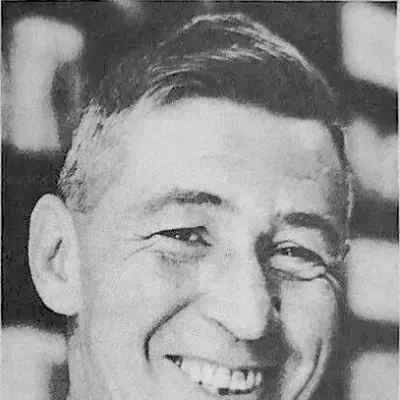
Karl Marx
Human Design Chart
Biography
Karl Marx — Projector with Profile 1/3
Projector 1/3 — Design at a Glance
Karl Marx was a Projector. His design marked him with a dense, focusing aura that acted like a bright flashlight, immediately revealing system errors. This mechanism meant he could instantly recognize weaknesses in his environment. However, direct confrontation with these insights often led to resistance; the counterpart felt attacked as if light were shone directly into their face.
His strategy required patience: waiting for a respectful invitation rather than actively pushing forward. By harmoniously shining, he attracted others who then sought his insights, creating space for effective leadership without friction. With an undefined Sacral Center, Marx did not have constant intrinsic life energy. He experienced phases of high activity followed by mandatory rest periods to avoid burnout. Ignoring this rhythm endangered his vitality.
Living according to this structure rewarded him with success. Deviating from the design led to bitterness as a non-self theme. His ability to light the way for others thus relied less on constant effort and more on precise perception and waiting for invitations to collaborate. This dynamic largely determined his interaction with the environment.
Splenic Authority
Karl Marx showed a decision-making structure based on immediate physical intuition. His design dictated that he could not be guided by long-term planning or intellectual analysis but had to accept the first, spontaneous impulse as truth. This mechanism stemmed from his inner authority in the Spleen Center, which functions as a health and alarm system. Since both his Emotional and Sacral Centers were open, this spleen-based intuition was his sole source for correct decisions; it thus took precedence over all other defined areas of his design.
This voice from the spleen signaled him instantly whether a situation or person served his well-being or harm. The impulse, however, was extremely fine and occurred only once. Karl Marx therefore needed high vigilance to not miss this brief signal flash or distort it through subsequent deliberation. Since he could only know what was right for him in each moment, his priorities often changed short-term, making long-term commitments difficult and unnatural for his system. Instead, he benefited from maximum flexibility and freedom to rigorously distance himself from harmful influences as soon as his body indicated this. His survival and health depended on utilizing this spontaneous intelligence here and now rather than investing in rigid future plans.
The 1/3 Profile — Investigator / Martyr
Karl Marx revealed a dynamic tension between the deep need for theoretical preparation and an impulsive urge to practical experimentation. His design tended towards not only accumulating knowledge but also testing it through direct experience. This configuration describes the 'Researcher and Experimenter' who understands life as a process of learning through trial and error.
Line 1 of his profile often conveyed a feeling of not knowing enough before implementation began, which could lead to fear of action due to high internal standards for completeness. At the same time, however, Line 3 demanded active experimentation and learning from mistakes. These two forces were in constant interaction: The theoretical depth of Line 1 had to engage with the practical immediacy of Line 3.
The result of this dual testing process was a judgment of particular authenticity. When Karl Marx evaluated something as correct or good, he had previously both intellectually grounded and practically tested it thoroughly. His conclusions were not based on abstract belief but on concrete evidence validated through experience. Line 3 taught him to overcome pessimism through satire or humorous distance while seeking tangible proof. Thus emerged a wisdom that relied on the synthesis of deep study and lively practice. His trust in his insights was the result of this rigorous, double verification.
Triple Split Definition — Defined & Open Centers
Karl Marx revealed himself as someone whose inner world was marked by an insatiable intellectual and volitional fire. His design indicated a tendency towards constant mental pressure: He felt compelled to ask questions, develop concepts, and structure these through conceptual thinking (defined Head and Ajna centers). This mental activity flowed directly into his communication via the defined Throat Center, allowing him to articulate his thoughts reliably and clearly. Additionally, he had a firm identity and direction (defined G Center), which gave him a clear sense of mission, as well as strong willpower (defined Heart Center), enabling him to keep promises and actively shape reality. His decisions were also guided by spontaneous intuition and body awareness (defined Spleen Center) in the here and now.
However, this massive internal structure was in stark tension with his open centers. His Sacral Center was open, meaning he did not generate constant vital energy internally. Instead, he absorbed life force from his environment and amplified it, making him vulnerable to exhaustion if he did not pause. Similarly, his Solar Plexus Center was open; he absorbed and reflected the emotions of others without having an emotional wave of his own. This could lead him to question whether the strong feelings in his surroundings were truly his or not. Furthermore, his Root Center was open, causing him to take on stress and adrenal impact from the world rather than generating it himself. The challenge lay in not misinterpreting this external pressure as personal drive. Instead of alleviating mental pressure through overactivity, he had to learn to use his open centers as a barometer for the environment while relying on his defined authorities – intuition, will, and direction – to maintain actionability.
Channels for inspiring presence, clarity, instinct.
Karl Marx revealed himself as someone whose impact primarily arose from a profound inner receptivity to new directions. This fundamental stance was reinforced by Channel of Inspiration 1-8, which creatively and publicly expressed this transformative perspective – not just through words but through exemplary life and presence. The focus here was on individual leadership through authenticity; he was designed to attract attention and inspire others to unfold their unique qualities.
This dynamic was supported by the Channel of Awakening 10-20, sharpening awareness for the present moment. This involved recognizing principles in the now and transforming personal knowledge into appropriate action, grounded in self-love and trust as pillars of an awakened life. Parallel to this, the Channel of Awareness 61-24 shaped his mental field: sudden insights (Satori) broke through old thought patterns, with knowledge emerging at its own pace rather than being forced. This fostered a mystical connection to inner truth that shattered abstract cycles.
Additionally, the Channel of Devotion 26-44 contributed by linking instinctive vigilance with ego strength. This mechanism allowed for selective use of historical memories and convincingly offering improvements to the tribe – often as an entrepreneur or promoter who intuitively recognized needs before others did. The prioritized gates complemented this picture: Gate 2 laid the groundwork for receptivity as the foundation of every reaction, while Gate 13 took into account collective memory and continuity of humanity. Gate 7 projected future patterns and hierarchies tested through experiments.
In the background, other aspects were at work: Gate 62 provided logical detail work and pattern recognition, while Gate 63 advanced mental processes through doubt to improve uncertain patterns. Gate 16 represented the mutative process in the collective through experimentation, and Gate 11 offered a harmonious state for assessing situations before acting, supported by visual memories and collective ideas. Together, these elements formed a design geared towards inspiring new perspectives through authentic presence and intuitive leadership, awakening others' awareness of their unique selves.
Individual Circuitry — Circuit Signature
Karl Marx was marked by a Triple Definition, meaning his internal energies did not flow as constant, stable sources. Instead, there were three separate energetic blocks that only activated situationally and did not create continuous presence. This created a design without an overarching inner flow; the forces worked parallel to each other but were not connected.
In the Knowledge Circuit, he linked two distinct segments: Head with Ajna Center as well as Throat with Identity Center. Here it was about expressing unique individuality and transforming new knowledge. This energy was pulsing and acoustic yet lacked a constant inner driving force.
His Ego Circuit linked Heart and Spleen through the Channel of Devotion, concerning cooperation and creating resources within a group. Since there was no connection to the Sacral Center, this energy was timeless and traditional but required pauses for regeneration as it was not sustained by constant life force.
Finally, his Integration Circuit also connected Throat and Identity Center via the Channel of Awakening. This served to secure survival through appropriate reactions to life in the now. Even this power was situational rather than a permanent trait. Together, these three isolated groups painted a picture of someone whose specific energies – whether creative transformation, group-oriented cooperation or survival-assuring intuition – only came into effect when external environments triggered corresponding resonance. There was no single dominant inner voice but a sequence of different, disconnected energetic states.
Right Angle Cross of the Sphinx 2
Karl Marx showed himself through the presence of the Right Cross of the Sphinx 2 in his design. This specific configuration shaped his inner orientation and significantly determined how he dealt with the challenges of his life. The Right Cross of the Sphinx 2 represents a deep connection to archetypal forces and a particular way of coping with fate or existential questions. It points to a structure that not only processes individual experiences but also integrates them into a larger, often mythic or symbolic context. For Karl Marx, this meant that his perception and actions were influenced by this underlying geometric order. The mechanics of this cross work as a strong background factor that shapes the way energy flows and decisions are made. It is not a superficial characteristic, but a deeply rooted element of Human Design that structures fundamental attitudes and reactions to life events. Through this configuration, Karl Marx was able to view complex situations through a specific lens guided by the principles of this cross. This created a unique perspective that profoundly influenced his interaction with the world and himself.
Saturn Return · Uranus Opposition · Chiron Return · 2nd Saturn Return — Life Cycles
Karl Marx went through his life phases closely connected with the four classical planetary cycles, marking structural turning points and maturation processes. His first Saturn return in 1845 coincided with a major crisis: his expulsion from Paris by the Prussian state. This cycle often condensed years of preparatory work into solid but painful results.
The Uranus opposition around 1859 brought clear success: the publication of "A Contribution to the Critique of Political Economy," his first systematic work. Here, the typical dynamics of this cycle were evident—challenging existing structures and embarking on new, independent paths.
The Chiron return in 1867 was a fulfillment cycle, during which one's incarnation cross unfolds and meaning becomes tangible. Marx published Volume I of "Capital." This was not a moment of healing old wounds but rather a flowering period when his life purpose became concrete.
Finally, the second Saturn return around 1875 followed with the writing of "Critique of the Gotha Program." This cycle deepened the foundations laid during the first Saturn return and led to a final clarification of one's position. Marx’s life illustrated how these cycles not only structure biological aging but also intellectual and social maturation stages. Each cycle brought specific challenges or opportunities that significantly shaped his work.
Projector · Splenic Authority — Synthesis
He was a Projector who, through the connection of Head and Ajna Centers (defined), felt a constant mental pressure to grasp and understand things. This continuous questioning and probing formed the core of his work approach – an unceasing search for the "error in the system" (Gate 1). His Profile as Researcher/Experimentator (Line 1/3) amplified this impulse, as he did not only conduct theoretical research but also gained insights through experimentation and mistakes. This combination of inspired thinking and practical verification led him to constantly develop new perspectives and share them publicly (Channel 1-8), in order to move others and initiate changes.
A central paradox lay in the way he enacted his inspiration. As a Projector, he needed the right environment and recognition for his knowledge, yet directly addressing faults could elicit rejection. Instead, he lived with the tension between the urge to express his mutative insights (Gate 1) and the need to convey these in a manner that did not repel others. The cycles showed that crises (Exile) often preceded professional successes – a pattern that underscored his ability to emerge strengthened from challenges and further develop his knowledge.
4 Defined Channels
Incarnation Cross - Right Angle Cross of the Sphinx 2
Solar Return
The Solar Return shows the moment when the sun returns to its exact birth position - your personal solar year.
Life Cycles
Discover the life cycles with a detailed triple view (birth chart, cycle chart, composite).
Human Design Profile
- Type
- Projector
- Strategy
- Wait for the respectful invitation
- Authority
- Splenic Authority
- Profile
- 1/3 - Investigator / Martyr
- Definition
- Triple Split
- Incarnation Cross
- Right Angle Cross of the Sphinx 2
- Date of Birth
- 05.05.1818 02:00
- Place of Birth
- Trier, Germany
Frequently Asked Questions
What was Karl Marx's Human Design type?
Which Profile did Karl Marx have in his Human Design?
What Authority guided Karl Marx's decisions?
What incarnation cross characterized Karl Marx?
When was Karl Marx born?
Discover your own Human Design
Are you also a Projector? Find out in a personal reading how to unfold your leadership qualities and recognize the right invitations.
More Personalities
Back to overviewSissy Spacek

Alain-Fournier

Anémone

Ann-Margret

Bourvil
Hergé