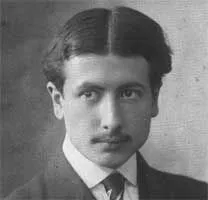
Photo: Wikimedia Commons
Kurt Tucholsky
Human Design Chart
Biography
Tucholsky was one of the most important journalists of the Weimar Republic. Tucholsky’s output includes aphorisms, book and drama reviews, light verse, short stories, and witty satirical essays in which he criticized German militarism and nationalism and the dehumanizing forces of the modern age. His poetry was set to music and performed widely in German cabarets.
After studying law and serving in World War I, Tucholsky left Germany in 1924 and lived first in Paris and after 1929 in Sweden. In 1933 Tucholsky’s works were denounced by the Nazi government and banned, and he was stripped of his German citizenship.
He committed suicide on 21 December 1935 in Hindas, Sweden. Tucholsky's biographer Michael Hepp has called into doubt the verdict of suicide, saying that he considers it possible that the death was accidental.
What does Generator 5/1 mean for Kurt Tucholsky?
Generator 5/1 — Design at a Glance
Kurt Tucholskys design points to a tendency towards great endurance and inner strength, provided he responded to authentic impulses. As a Generator, he possessed much sacral energy that could drive him like a strong workhorse – but only if he engaged in things that truly mattered to him. His strategy did not lie in initiating himself but rather in waiting for signals from life and then responding with action. When his inner self said “yes,” nothing could stop him; he would act with full power and find deep satisfaction.
However, it became dangerous when he worked against his internal resistance or tackled tasks that didn’t spark interest. Then he wasted energy and tended towards frustration or burnout. Equally frustrating was being held back from his heart project despite still feeling full of drive. The motto for his well-being thus read: “Do not initiate but react – from the gut.” Only in this harmony between inner signal and outer action could he sustainably utilize his immense creative power without depleting himself or experiencing prolonged energy loss.
Sacral Authority
Kurt Tucholskys design points to a tendency towards spontaneous, physically grounded reactions to external stimuli. As a Generator, he possessed sacral authority – an internal decision-making instance unique to this type and aligned with inner guidance. This greatly simplified his process of action: he didn’t need long rational deliberation but reacted immediately to what spoke to him.
A prerequisite for this clear sacral voice was his open emotional center. His authority did not manifest as mental planning, but rather physical resonance: a surge of power, an internal confirmation or a loud “Mhm.” When his sacral motor engaged with something, he felt vital and energized; the activity itself became its own reward, free from compulsive purposefulness.
Additionally, his activated spleen center acted as a supportive instance. Linked to the sacral center, this lent additional speed and intuition to his reactions. He had direct access to his physical well-being and could reliably orient himself by this instinctive perception. This configuration allowed him to make quick and spontaneous decisions guided by a deep inner compass that prioritized joy and vitality.
The 5/1 Profile — Heretic / Investigator
Kurt Tucholskys design points towards a dual role: he was both the profound researcher and the public problem solver. As someone with Profile 5/1 – Hero/Researcher – he utilized his intense, private knowledge base (Line 1) to provide solutions and insights for others (Line 5). This configuration gave him almost magnetic appeal; people actively sought out his solutions and insights.
The Line 1 emphasized preservation, continuity, and an instinctive attention to detail. Tucholsky approached changes cautiously as he knew omitting essential aspects could disrupt continuity and lead to false decisions. Simultaneously, the generosity of Line 5 (Gate 54) shaped him; it allowed him to offer practical solutions in crises without fearing negative consequences for himself. Recognition for this work was crucial.
However, this mechanism brought a specific danger: as others constantly sought his knowledge reservoirs, there lay a real threat that he could quickly become drained without clear boundaries. His design showed that optimal use of these gifts depended on how well he learned to say no. Only then could he maintain the beneficial balance between self-driven research and solving problems for others.
Triple Split Definition — Defined & Open Centers
Kurt Tucholsky's Design established a tendency towards constant mental pressure and clear inner direction. The definition between Head Center and Ajna Center created a permanent impulse to question and understand connections – not as solutions, but as ongoing inspiration. This mental process was always active; the Ajna Center processed data constantly, while the connection to Throat allowed him to express these concepts directly. His voice was not an impulse, but rather the result of this conceptual thinking.
At the same time, Tucholsky possessed a reliable self-identity through his defined G Center. He knew his direction and could show others new perspectives without being dependent on their approval. This inner security contrasted with the energy of his open centers. His open Heart Center lacked consistent willpower; it tended to want to prove itself through promises or feel the pressure to keep up. Instead of true determination, he often sought external validation of his worth, which led to self-doubt when faced with failure.
His open Solar Plexus Center absorbed the emotions of his surroundings like a barometer. It was vulnerable to amplifying and personalizing foreign moods, which could lead to emotional confusion. Confrontations were often avoided out of fear of rejection, even though they were necessary. The challenge lay in not identifying with these absorbed feelings but using them as information to free himself from the emotional conditioning of others and return to his own peace.
Channels for life purpose, presence, ambition, maturation and abstraction.
Kurt Tucholskys Design laid a tendency towards authentic self-expression strength and combative individualism. The Awakening Channel 10-20 connected his G Center with the Throat Center, allowing him to be awake in the here and now and affirm his own existence through clear speech. This was not an intellectual achievement but a direct expression of self-love and trust that inspired others to be themselves as well.
Parallel to this, Channel 38-28 drove him forward. Through the Root Center (Gate 38), he felt the pressure to defend his integrity against external distractions, while the Spleen (Gate 28) intuitively recognized which struggles had value and were worth it. This configuration created a stubborn determination to follow his own path and find deeper meaning in the difficulties of daily life rather than conforming to the status quo.
His ambition was shaped by Channel 54-32. Here, the Root Center (Gate 54) connected with the Spleen (Gate 32), linking the drive for upward mobility and recognition with the ability to recognize talent. It involved constant effort to move out of his own level through competence and be supported by the “tribe” – his community or readers. This ambition was driven by a fear of failure but transformed into loyalty and service to others.
Channel 42-53 ensured that he went through experiences fully. From the Root Center (Gate 53) over the Sacral Center (Gate 42), he learned not to prematurely end cycles but to reflect on them, gaining wisdom for the future.
Mentally, Channel 64-47 operated in his design. The Head and Ajna Centers filtered every experience through a kaleidoscope of images. This often created confusion until suddenly clear, inspiring stories formed that he could communicate – unsuitable for solving his own problems but powerful as a collective storyteller.
Additionally, Gates like 15 (collective rhythm), 29 (persistence in saying yes), and 41 (evolutionary feeling) influenced him. Gate 50 preserved traditional values while Gate 52 invited concentrated pauses. Gate 58 brought experimental pressure into the Root Center, Gate 12 promoted poetic restraint in the Throat Center, and Gate 16 sought collective improvement through experiments. In the Sacral Center, Gate 59 focused on genetic binding without emotional filters.
Individual Circuitry — Circuit Signature
Kurt Tucholskys Design points to a tendency towards acoustic expression and emotional reflection, flanked by a strong orientation towards survival. This configuration showed someone who sought new paths but always within the context of collective resources.
The Knowledge Circuit connected his Spleen and Root Centers (Channel "Life Struggle"). This created pulsating energy for transformation through personal identity, driven by intuitive knowledge and a desire for change. Parallel to this, the Ego Circuit also worked through Spleen and Root Centers (Channel "Transformation"), emphasizing the necessity of creating resources within the family while taking pauses for regeneration – without direct connection to the Sacral Center, there was no constant life force.
A third, separate area formed the Meaning-Making Circuit. It consisted of two independent pieces: Head and Ajna Centers (Channels "Abstraction" and "Maturation") as well as Sacral and Root Centers. This combined cool logic with cyclical emotions from the past to share insights. The groups were not energetically connected; they existed as parallel forces.
Additionally, Integration Channels shaped his design: Channel "Awakening" linked Throat and Identity Centers. This allowed drawing power from reacting to life through proper behavior and intuitive knowledge and expressing it in the present moment. Overall, this resulted in a Triple Definition with three isolated groups: Expression (Throat/Identity), Survival/Meaning (Spleen/Root/Sacral) and Thinking (Ajna/Head). None of these groups flowed directly into each other but worked alongside as independent experiences.
Left Angle Cross of Cycles 2
Kurt Tucholsky's Human Design profile indicated a tendency towards cyclical patterns that repeat themselves. The 'left cross of cycles 2' does not describe linear progression but rather a spiral of phases of building up and breaking down. It was an internal rhythm where impulses would form, then dissolve only to return in new forms later on. This configuration fostered a constant re-evaluation stance: what once seemed stable often proved temporary. The energy of this structure did not manifest through continuous progress but through rhythmic fluctuations between activity and withdrawal. It demanded the ability to view losses or standstills not as failure, but as necessary parts of a larger cycle. In this pattern, there was a deep connection with change itself – not as disturbance, but as driving force. The mechanics of this cross emphasized that true insight often emerges through fracture and repetition. Kurt Tucholsky lived in a world requiring such cycles: oscillating between hope and disappointment, engagement and detachment. His design carried this tension not as conflict, but as structural reality. It was an internal logic demanding patience with oneself – for each cycle only closed when fully traversed.
Saturn Return · Uranus Opposition — Life Cycles
Kurt Tucholsky's Human Design profile indicated a tendency towards inner structural fractures that condensed into external life turning points. In 1918, at the age of 28, his first Saturn Return occurred – a cycle testing old identities and often forcing realignment. During this crisis, he was stationed as a vice-sergeant in Romania, left the Jewish community, and converted to Protestantism. These steps marked an attempt to find a new stable base where previous affiliations no longer sufficed.
Ten years later, in 1928 at age 38, Uranus Opposition took effect. This aspect often brings sudden liberation or public visibility through breaking with the norm. His anthology 'With 5 PS' and book 'The Mona Lisa's Smile' were published then. The success of these works demonstrated how his design utilized new impulses to express itself. Rather than merely reacting, he shaped his experiences into clear, public statements. Thus, the mechanics of his chart revealed a path: through crises towards sharper definition of one’s voice.
Generator · Sacral Authority — Synthesis
Kurt Tucholsky lived as a Generator with sacral authority, deeply marked by the necessity to remain active. Energy flowed through him especially when following an inner impulse – a 'grunting, humming' (Sacral Center) – and engaging in tasks that truly attracted him. The Profile of Hero/Researcher amplified this drive to gather knowledge and make it accessible; however, constant questioning and expectations from others could put pressure on this tendency. A defined mental circuit ensured a continuous stream of questions and the need for understanding, which continually drew him into new thought processes.
A central paradox lay in Tucholsky's exposure despite his sheer energy and endurance (Generator) to an internal tension between the urge to solve problems and the risk of burnout. The left cross of cycles 2 points towards a cyclical experience of challenges that repeatedly forced him to reorient himself. While he recognized principles through awakening (Channel 10-20) and generated transformative knowledge, periods of crisis (Saturn Return at age 28) and success (Uranus Opposition at age 38) always carried the risk of diverting him from his essential work or losing him in unproductive perfectionism.
5 Defined Channels
Incarnation Cross - Left Angle Cross of Cycles 2
Solar Return
The Solar Return shows the moment when the sun returns to its exact birth position - your personal solar year.
Life Cycles
Discover the life cycles with a detailed triple view (birth chart, cycle chart, composite).
Human Design Profile
- Type
- Generator
- Strategy
- To respond - wait for something to respond to
- Authority
- Sacral Authority
- Profile
- 5/1 - Heretic / Investigator
- Definition
- Triple Split
- Incarnation Cross
- Left Angle Cross of Cycles 2
- Date of Birth
- 09.01.1890 18:45
- Place of Birth
- Berlin, GER
Frequently Asked Questions
What was Kurt Tucholsky's Human Design type?
What Profile did Kurt Tucholsky have?
What Authority did Kurt Tucholsky have?
What incarnation cross did Kurt Tucholsky have?
When was Kurt Tucholsky born?
Discover your own Human Design
Are you also a Generator? Find out in a personal reading how to use your sacral energy correctly and discover deep satisfaction.
More Personalities
Back to overviewAaliyah

Alain-Fournier
Alexia

Angèle

Angeli
Anne-Marie