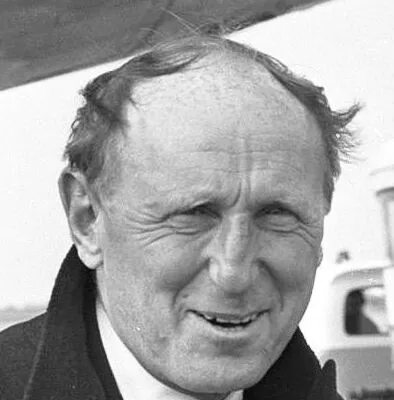
Laurent Jalabert
Human Design Chart
Biography
UCI world standings: 126th in 1989; 57th in 1990; 16th in 1991; 8th in 1992; 14th in 1993; 16th in 1994; 1st in 1995; 1st in 1996; 1st in 1997 and 1st until 20 September 1998.
He married on 9 December 1989.
Laurent Jalabert as a Projector 3/5 in Human Design
Projector 3/5 — Design at a Glance
Laurent Jalabert's design tends towards a focused perception that quickly identifies systemic errors. His aura acts like a flashlight, casting light into dark corners and revealing inefficient structures. However, this ability to see the essence directly requires a specific approach: unsolicited intervention or direct confrontation of faults often triggers resistance in others, similar to shining a bright light in someone's face.
The mechanics of his Projector type dictate that he should wait for an honest invitation before offering advice. Only when others value him and seek his counsel can he effectively communicate his insights without being perceived as threatening. His undefined Sacral Center also means Laurent Jalabert does not have constant life energy. Instead, he must alternate between phases of high efficiency and necessary rest periods to prevent burnout.
Living by this pattern rewards success. Ignoring the need for invitation and recovery leads to bitterness. Thus, his design clearly shows that his strength lies in precise, sought-after leadership and respecting his own energy resources.
Emotional Authority
Laurent Jalabert's design tends towards deep, time-conditioned decision-making. He appears as someone who does not accept spontaneous judgments as ultimate truth but rather views them as mere snapshots of the moment. This attitude stems from his emotional authority, carried by the defined Emotional Center. In Human Design mechanics, this authority always takes precedence over all other defined centers regardless of further configurations in the chart.
This center is subject to natural waves of ups and downs in emotions. Perception of the world is thus always colored by current mood: what appears inspiring at one moment can seem negative the next. Acting immediately based on such transient emotion often risks negative consequences, as it does not yet reflect deep truth.
Laurent Jalabert's strategy involved practicing patience and consciously allowing time for decisions to mature. By repeatedly sleeping over important questions, he gained emotional distance from initial intense feelings. Over time, these waves subsided, bringing clarity and calmness. This process was essential for long-term, life-defining decisions to ensure the choice is based on stable inner insight rather than fleeting mood.
The 3/5 Profile — Martyr / Heretic
Laurent Jalabert's design is characterized by a fundamental skepticism towards pre-packaged truths; he had to test everything himself to arrive at practical beliefs. The attitude of Line 3 in Profile 3/5 means learning primarily happens through mistakes and experimentation. A tiny detail could lead to an overflow, requiring high concentration to secure future safety.
The knowledge thus acquired was not only used privately but also served the role of Line 5: Laurent Jalabert presented his experiences to others as a competent hero or savior. This role made him attractive in his environment, where people wanted to share in his practical treasure. However, this process came with specific tension. Failure during experimentation often occurred in public, which could be painful due to the line's carrying of external expectations and certain ego inflexibility. Nevertheless, this public failure was essential for later authority. By rejecting negative forces and recognizing necessary rest periods, he fulfilled others' hopes without becoming dependent on their praise. His journey led from an uncertain experimenter to a trustworthy storyteller addressing problems with self-tested solutions.
Triple Split Definition — Defined & Open Centers
Laurent Jalabert's Human Design profile indicated a tendency towards constant internal activity paired with situational flexibility in endurance. His six defined centers – Head, Ajna, Throat, Heart, Solar Plexus, and Spleen – created a massive presence in thinking, willpower, and feeling. The consistent mental pressure between the Head and Ajna Centers drove him to question and form concepts but did not directly translate this energy into action; patience was required until clarity emerged. His defined Heart Center gave him firm willpower and the need to keep promises while the Solar Plexus acted as an emotional authority: decisions matured only after experiencing the full emotional wave. The Spleen provided spontaneous intuition for health and well-being in the moment.
At the same time, three open centers – G, Sacral, and Root Centers – revealed his receptivity to external influences. His open G Center meant no fixed identity or life direction; Laurent Jalabert tended to question whether he was at the right place to find love and direction rather than determining them himself. His open Sacral Center lacked constant vital energy, fluctuating with the environment, making him vulnerable to exhaustion when amplifying others' energy. The open Root Center absorbed external stress, causing him to reactively respond to environmental adrenaline surges. This configuration required a delicate balance: leveraging the strength of defined areas without ignoring the boundaries of open centers to avoid energy depletion.
Channels for intuition, community and abstract comprehension.
Laurent Jalabert's Human Design profile indicated a tendency towards developing dexterity into talent over years of dedication. This configuration shows someone who combines intuitive depth with technical perfection, requiring identification with an activity that ignites passion to achieve mastery through continuous practice and unique expression.
The Channel 48-16 forms the core of this mechanism. It links Gate 48, which seeks vital information for survival, with Gate 16, which perfects skills through experimentation. This connection transforms raw dexterity into talent but requires enthusiasm and repetition. On a cellular level, it takes seven years for the body to master a technique; delving deeply can take a lifetime. This design carries an internal need for external recognition and resources to continue the process of perfection. Money functions here as a form of energetic reward that allows the talent to flourish.
Additionally, Channel 37-40 connects the Solar Plexus Center with the Heart Center, emphasizing that good deals or connections do not arise spontaneously but must be carefully considered and formulated over time for mutual benefit. This creates a foundation for loyal relationships within a group where everyone has a respected place.
Channel 64-47 adds a mental dimension: The mind constantly plays with possibilities and sifts experiences through kaleidoscopic mental images, which can lead to temporary confusion until clarity emerges over time and an inspiring story is shared.
Individual Gates like Gate 9 (detail work), Gate 17 (logical teaching), or Gate 51 (willpower and adaptation to shocks) support these structures. They emphasize the focus on concrete perfection, understanding future organization, and adapting despite emotional waves. Laurent Jalabert thus developed his unique skills through dedication, recognition, and patient waiting for mental clarity.
Collective Circuitry — Circuit Signature
Laurent Jalabert's Human Design profile showed a tendency towards three parallel but energetically separate experience fields. This triple definition meant that his strengths did not operate as a continuous flow but existed as isolated modules alongside each other.
In the Understanding Circuit, Channel 16-48 connected the Throat Center with the Spleen Center, creating an ability for rational, future-oriented strategy development. Laurent Jalabert could share logical insights visually and focusedly without emotional influence to improve structures.
Parallel to this, the Meaning Circuit worked through Channel 64-47 between the Head and Ajna Centers. This was not about cool logic but emotional reflection on past experiences. The energy followed wave-like cycles: Laurent Jalabert sought meaning behind events and shared these felt insights with others to learn collectively from the past.
The third field formed by the Ego Circuit via Channel 37-40 between Heart and Solar Plexus Centers represented cooperative resource building in social interaction based on a give-and-take principle. As this circuit lacked a connection to the Sacral Center, there was no constant life force. The energy thus operated in wave-like patterns; Laurent Jalabert needed necessary rest periods to regenerate strength for these supportive exchange mechanisms.
In summary, cool, future-oriented logic and emotional meaning-making of the past shaped his design, complemented by a pause-needed social exchange. These three areas remained energetically separate, leading to a clear split between rational planning, emotional reflection, and cooperative action.
Right Angle Cross of Planning 4
Laurent Jalabert's Human Design profile indicated a tendency towards strategic orientation and long-term goal planning. He was someone who possessed the ability to see through complex situations and plan a clear path to success. This attitude stems from his Planning 4 right cross in his Human Design chart.
This constellation describes not spontaneous action but a deeper cognitive structure designed for defining goals ahead of time and precisely mapping out the necessary steps towards them. It is an architecture of the mind that creates order from chaos by focusing on what is essential and filtering distractions. For Laurent Jalabert, this meant his inner compass was always directed at long-term outcomes rather than following short-term impulses.
The mechanics of this cross support a kind of intelligence that considers not just the 'what' but also the 'how'. It enables early recognition of obstacles and development of circumvention strategies before they become problems. This shapes a person who is at peace within because he knows he has the plan. It is not a rigid doctrine, but a flexible blueprint that allows for adjustments as long as the end goal remains clear. Laurent Jalabert used this inner map to navigate through complex life phases, always with an awareness of the next logical step.
Saturn Return · Uranus Opposition · Chiron Return · 2nd Saturn Return — Life Cycles
Laurent Jalabert's Human Design indicated a tendency towards structural maturation, particularly in his late twenties. This phase marked not only biological aging but also the anchoring of identity in the material world and the assumption of concrete responsibility for one's creation. The energy shifted from experimental potential to solid substance.
This process became visible in 1995 when he was 27 years old: Laurent Jalabert won the overall classification at Vuelta a España and triumphed on the Côte de la Croix-Neuve during the Tour de France. These successes were not coincidences but expressions of his first Saturn Return. In this cycle, years of groundwork condenses into a stable result. External circumstances reflect inner development: The foundation is laid, the structure stands.
For his design, this meant he was no longer just searching for possibilities but asserting and solidifying his position. A Saturn Return demands setting one's own limits and drawing strength from them. Laurent Jalabert showed how this mechanical necessity could be translated into concrete achievement. His victories confirmed the effectiveness of his inner order in external events. It was the moment when potential became reality, anchored in discipline and structure.
Projector · Emotional Authority — Synthesis
A central red thread in this design is the dynamic connection between deep observational ability and the drive to make this understanding accessible to others. The projection of energy (Projector type) takes form in a defined Head Center that continuously inspires and raises questions – an inner drive to recognize connections (Wave Length Channel). This capacity to 'shed light into darkness' is reinforced by the profile of the experimenter/hero: Experiences are gathered and then offered as solutions for others. However, emotional authority requires time for the maturation of insights, creating a tension between immediate recognition of mistakes and the necessity of emotional clarity.
The central paradox lies in the combination of deep, instinctive perception (Spleen Center in Understanding Circuit) with a defined Head Center that urges to share this knowledge. On one hand, there is the ability to recognize hidden patterns and offer precise solutions; on the other hand, the emotional process requires time and patience, which can slow down the direct, focused expression of the projector. A documented event illustrates this cycle: Success followed maturation (Saturn Return) when knowledge was fortified through experience.
3 Defined Channels
Incarnation Cross - Right Angle Cross of Planning 4
Solar Return
The Solar Return shows the moment when the sun returns to its exact birth position - your personal solar year.
Life Cycles
Discover the life cycles with a detailed triple view (birth chart, cycle chart, composite).
Human Design Profile
- Type
- Projector
- Strategy
- Wait for the respectful invitation
- Authority
- Emotional Authority
- Profile
- 3/5 - Martyr / Heretic
- Definition
- Triple Split
- Incarnation Cross
- Right Angle Cross of Planning 4
- Date of Birth
- 30.11.1968 09:30
- Place of Birth
- Mazamet, France
Frequently Asked Questions
What is Laurent Jalabert's Human Design type?
Which profile does Laurent Jalabert have?
What authority guides Laurent Jalabert?
What is Laurent Jalabert's Incarnation Cross?
When was Laurent Jalabert born?
Discover your own Human Design
Are you also a Projector? Find out in a personal reading how to unfold your leadership qualities and recognize the right invitations.
More Personalities
Back to overviewSissy Spacek

Alain-Fournier

Aldair

Anémone

Ann-Margret

Bourvil