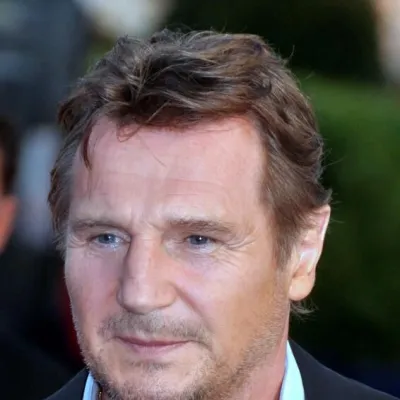
Liam Neeson
Human Design Chart
Biography
Neeson made his film debut in 1978 with Pilgrim's Progress followed by early roles in Excalibur (1981), The Bounty (1984), The Mission (1986), The Dead Pool (1988), and Husbands and Wives (1992). He rose to prominence portraying Oskar Schindler in Steven Spielberg's Holocaust drama Schindler's List (1993) for which he earned an Academy Award for Best Actor nomination. He played leading man roles in drama films such as Nell (1994), Rob Roy (1995), Michael Collins (1996), and Les Misérables (1998). He took blockbuster roles portraying Qui-Gon Jinn in Star Wars: Episode I – The Phantom Menace (1999), Ra's al Ghul in Batman Begins (2005), and Aslan in The Chronicles of Narnia trilogy (2005–2010).
The Human Design of Liam Neeson: Projector 1/3
Projector 1/3 — Design at a Glance
Liam Neeson revealed himself as someone with a dense, focused aura that immediately engaged his surroundings. His Human Design type is the Projector, whose energy does not diffuse like light but rather acts like a bright flashlight: it casts a precise beam directly onto those areas in others that are still dark or not functioning optimally. This configuration gives him the ability to instantly recognize systemic errors and dysfunctions in other people.
However, this direct perception carries a risk: If he addresses these deficiencies abruptly, his environment may perceive it as unpleasant or even aggressive – comparable to shining a light directly into someone's face while pointing out their problems at the same time. The more effective expression of this design lies in simply glowing pleasantly by embodying harmony himself. Through this radiant presence, he naturally attracts others; people come to him on their own initiative to seek advice or insider tips.
Therefore, Liam Neeson's central strategy is to wait for a respectful and sincerely meant invitation from his environment before taking up his leadership role. Additionally, as a Projector, he lacks the defined Sacral Center, meaning that he does not have a constant internal source of life energy. Instead, he experiences phases of high activity followed by necessary rest periods for regeneration to prevent burnout. If he lives according to this principle of invitation and rhythm, he will be rewarded with success; if he ignores it, the non-self theme of bitterness looms.
Emotional Authority
Liam Neeson's design revealed a tendency towards emotional depth and wave-like decision-making. He appeared as someone whose inner compass needle was strongly influenced by his current mood state. This structure is determined by the emotional authority located in the defined Emotional Center. In Human Design mechanics, if the Emotional Center is activated, it always takes on the role of internal authority – regardless of which other centers are also defined. This mechanism means that Liam Neeson was under constant emotional waves, manifesting as a continuous up and down of his feelings. The world appeared to him colored by his current mood; an event could seem inspiring at one moment and deeply negative in another.
His immediate feeling was only a snapshot, not a final judgment. Quick, spontaneous decisions made directly from this emotional heat carried the risk of developing unfavorably. His authority mechanics required patience: the more time he took to let a decision mature, the clearer his inner picture became. This often meant letting decisions go overnight and asking himself multiple times. Only when intense feelings subsided and an emotional distance was gained did true clarity set in. This process of delay was not a sign of weakness but rather the necessary strategy for recognizing his deeper truth and making long-term life decisions securely.
The 1/3 Profile — Investigator / Martyr
Liam Neeson revealed himself as someone who does not just accumulate knowledge, but tests it through direct action. His design links the curiosity of the Investigator with the urge to experiment. As a 1/3 profile, he first learns theoretically – Line 1 ensures that fundamentals are understood and similar forces are attracted. But true understanding only emerges in practical application, often through mistakes. Line 3 brings emotional energy into play; it demands charm and grace but achieves these qualities only through a long process of trial and error. What Liam Neeson judges as 'right' has been thoroughly tested both mentally and practically. This double approach makes his assessments reliable: they are based not on theory alone, but on proven experience. If the planning energy of Line 1 becomes too strong, fear of action can arise because there is a feeling that one does not know enough yet. But the design challenges him to overcome this security barrier and step into experimentation. Only then do insights mature into graceful perfection. His strength lies in making complex connections tangible through personal testing and bringing others along – a combination of instruction and vivid demonstration.
Split Definition — Defined & Open Centers
Liam Neeson revealed through his defined G Center as someone with a fixed, reliable self-identity and a clear sense of direction. This inner security allowed him to love others without becoming dependent on them, and gave him the ability to comfort people by placing them in the larger evolutionary context of humanity. His defined Heart Center endowed him with permanent willpower; he determined his own life, controlled his resources, and kept promises with natural stability that created trust. He preferred following his own inner rhythm rather than being guided by external expectations, which could lead to unrealistic demands on others if he did not heed his inner guidance.
This structural firmness contrasted with his emotional nature: The defined Solar Plexus Center was his inner authority. Liam Neeson had to wait out the time of the emotional wave to gain clarity. Impulsive decisions at the highs or lows of this wave often led to chaos; only through patience and going through the entire emotional cycle did he reach a deep, true insight. His defined Root Center provided constant pressure to move forward and master existential challenges, keeping him grounded even when ventures were arduous.
At the same time, his design was marked by several open centers that made him vulnerable to conditioning. The open Head Center tended to engage with mental questions and doubts that were not his own, which could distract him from his correct decision-making process. Similarly, the open Ajna Center made him receptive to foreign concepts and opinions; he had to learn not to interpret these as personal truths but rather as playful intellectual stimuli. His open Throat Center drew attention when he spoke, but attempting to control his communication often led to unpredictable results; the invitation to speak came only after waiting. Additionally, his Sacral Center was open, meaning that he did not possess a consistent generative energy and could easily become exhausted if working on "borrowed" energy from others rather than respecting his own limits. The open Spleen Center made him sensitive to well-being and dangers in the environment; spontaneous decisions here were risky as they often stemmed from conditioned fears or false feelings of safety, rather than deep intuitive wisdom.
Channels for pioneering spirit and the flow of emotions.
Liam Neeson's design inclined towards a deep, often melancholic emotionalism that manifested in wave-like fluctuations between ecstatic joy and uncertain sadness. This mechanism was set by the Emotions Channel 39-55, connecting the Root Center to the Solar Plexus Center and initiating a pulsating on/off wave. Here, the provocation of Gate 39 worked together with the spirit of Gate 55, allowing him to tease out the "spirit" in others through his own emotional interplay. His impact depended heavily on whether he was in the right mood; only then could he appear authentic and inspire others with spiritual passion rather than seeming manipulative.
Simultaneously, Liam Neeson exhibited a natural competitiveness that was not merely ego-driven but based on universal love. The Initiation Channel 51-25 connected his Heart Center through the shock of Gate 51 to the spirit of self in Gate 25, giving him the ability to recognize the potential for individuation in others and, if invited, provide the necessary "shock" to initiate them. This channel propelled him to transcend boundaries and set a bold example through personal triumphs. The combination of this deep emotional wave and powerful initiation shaped his way of moving within social fields: he sought the right timing and proper invitation to express his uniqueness without trying to control the mystical nature of the process.
Individual Circuitry — Circuit Signature
Liam Neeson's design establishes a tendency towards inner strength and emotional pulsation. These two forces exist in parallel, as his Split Definition does not create a direct connection between them. Instead, they operate as separate, side-by-side systems.
His Knowledge Circuit connects the Solar Plexus Center with the Root Center. This creates a direct flow of emotional waves to acoustic energy and drive. It's about releasing feelings and transforming them into a pulsing, present power. This configuration promotes an individual identity supported by emotional intuition.
Parallel to this, his Projected Authority circuit operates. It directly connects the Identity Center with the Heart Center. This strengthens self-worth and inner convictions. The energy is individualistic and inwardly focused, leading to strong, courageous personality traits. However, without a connection to the Throat Center, these firm beliefs often remain unspoken or difficult to verbalize.
Together, this forms a Profile: A strong internal identity supported by the Heart and one's essence, flanked by an emotional dynamism that pushes for acoustic expression and transformation. Both aspects color his entire design without energetically overlapping each other.
Right Angle Cross of Rulership 2
Liam Neeson's Human Design shows a tendency towards strategic patience and internal stability. He was characterized not by external hustle or impulsive action, but rather by the ability to stay within himself until the right moment arrived. This stance arose from the mechanics of the right cross of Governing 2: A process where inner clarity and endurance are prioritized. Rather than reacting immediately or exerting control over external circumstances, his energy worked through consistent waiting for the right opportunity. It was not a form of passivity in terms of inaction but rather a conscious restraint that only became effective when all internal and external conditions were met. This configuration describes a path where success is not forced but emerges as a result of long-term alignment. Liam Neeson followed this pattern by focusing on his inner truth and trusting that opportunities would open up naturally once the time was ripe. His strength lay in not swimming against the current, but moving with it – patiently yet resolutely. This significantly shaped his actions: he acted only when it seemed meaningful and timely, which gave him a unique stability.
Saturn Return · Uranus Opposition · Chiron Return · 2nd Saturn Return — Life Cycles
Liam Neeson's Human Design shows a structure marked by periods of inner condensation followed by sudden expansive breakthroughs. In 1980, at the age of 28, his first Saturn Return was a turning point: John Boorman cast him in 'Excalibur'. This cycle condensed years of groundwork into a solid result that stabilized his professional direction.
Later, in 1993 at the age of 41, the Uranus Opposition came into play. During this phase, Neeson portrayed Oskar Schindler in 'Schindler's List'. This configuration often triggers deep structural shifts where old frameworks must be abandoned to make way for new, authentic expressions. The success of this project reflects how his design under the pressure of astrological tension releases innovative power and breaks established patterns.
The sequence of these cycles illustrates a life dynamic: first consolidation of identity through Saturn's influence, followed by radical reorientation through Uranus. Liam Neeson did not move randomly but followed the inner logic of his constellations. The first cycle offered stability and recognition; the second demanded courage to change and led to a peak in his artistic development. Both events are expressions of the same underlying mechanics: the ability to connect external demands with inner truth when planetary influences support this integration.
Projector · Emotional Authority — Synthesis
A central red thread runs through the design: the ability to recognize patterns and bring light into darkness (Projector Type, defined G Center). However, this projection does not occur unreflectively; it is deeply intertwined with a process of emotional weighing (Emotional Authority) and an investigative engagement with the world (Profile 1/3). The energy seems oriented towards discovering new paths through observation and experimentation – both for oneself and others. Confirmed experiences from the knowledge circuit flow into this ability, which is strengthened by the right cross of Governing 2. Critical steps in professional development (documented events) seem to be connected with this inner necessity to uncover and present something new.
The design harbors a central paradox between the drive for individuation and emotional depth. The channel 51-25 points towards competitiveness that lies in inspiring and initiating others, while simultaneously the emotional center requires time for weighing before decisions can be made. It seems there is an internal conflict between the desire for a pioneering role and the necessity to fully grasp one's own feelings – a tension field that can both release creative energy as well as lead to inner struggles.
2 Defined Channels
Incarnation Cross - Right Angle Cross of Rulership 2
Solar Return
The Solar Return shows the moment when the sun returns to its exact birth position - your personal solar year.
Life Cycles
Discover the life cycles with a detailed triple view (birth chart, cycle chart, composite).
Human Design Profile
- Type
- Projector
- Strategy
- Wait for the respectful invitation
- Authority
- Emotional Authority
- Profile
- 1/3 - Investigator / Martyr
- Definition
- Split Definition
- Incarnation Cross
- Right Angle Cross of Rulership 2
- Date of Birth
- 07.06.1952 21:55
- Place of Birth
- Ballymena, Ireland
Frequently Asked Questions
What is Liam Neeson's Human Design type?
What Profile does Liam Neeson have in Human Design?
What Authority does Liam Neeson have?
What is Liam Neeson's incarnation cross?
When was Liam Neeson born?
Discover your own Human Design
Are you also a Projector? Find out in a personal reading how to unfold your leadership qualities and recognize the right invitations.
More Personalities
Back to overviewSissy Spacek

Alain-Fournier

Anémone

Ann-Margret

Arletty
Arno