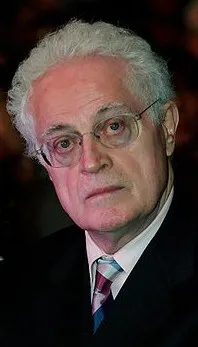
Lionel Jospin
Human Design Chart
Biography
The youngest of four kids in a Protestant family, he was involved in church and family from youth. His parents were devoted and gave the kids a good moral education. Jospin was attracted to socialism as his dad was a member of the Party. His studies in political-science were brilliant and he became a Professor of Economics.
He moved into politics in 1981 in the Socialist Party where he became a deputy, but later left the party because of its link to communism.
Jospin married Elisabeth Dannenmuller on 29 March 1973; they divorced on 15 September 1993 and he married Sylviane Agacinsky on 30 June 1994. When Mitterand became president in 1988, Jospin backed his election campaign. He served as Minister of National Education during two ministers, Rochard and Cresson. Known as a superb analyst, he was, however, not good at uniting people.
In a startling upset, Jospin finished first in the opening round of France's presidential elections on 23 April 1995 with the favorite, conservative Paris mayor Jacques Chirac second. The election was the first step in choosing a new president in 14 years, one to succeed Francois Mitterand. Conservative Premier Edouard Balladur conceded and urged his supporters to back Chirac on the final vote, on 7 May 1994.
France's president is among the most powerful leaders in Europe; he controls foreign and defense policy, appoints the prime minister, presides over Cabinet meetings, influences judicial appointments and can dissolve parliament. On 20 February 2002, Socialist P.M. Jospin announced his candidacy in the spring presidential elections, making his second bid for the post.
Human Design Analysis: Lionel Jospin as Manifesting Generator 6/2
Manifesting Generator 6/2 — Design at a Glance
Lionel Jospin's Human Design profile indicates a tendency towards fast, hybrid energy application. As an Manifestor Generator, he had a constant sacral energy source that allowed him to quickly pull things into his life and skip steps in the process. However, this acceleration came with risks: Often, his actions were too quick, causing him to miss important stages and have to return later to fill in the gaps. This could lead to frustration, as his non-self theme lay precisely in this delay. Additionally, he tended to pursue multiple projects simultaneously rather than focusing on one thing at a time. This multitasking ability worked smoothly only when he did not initiate actions but instead responded to external impulses. Crucial was the confirmation from his sacral center: Only when this center said "yes" could he effectively use his creative power. With the correct application of this strategy – waiting for impulses and constantly checking for inner consent – he found deep satisfaction. He then enjoyed working in a "play mode" with variety rather than proceeding linearly. The ability to work on different tasks simultaneously was not a distraction for him but a source of satisfaction, as long as his inner authority and the strategy of responding were maintained. Without this alignment, his creative joy could quickly turn to frustration, as the speed without direction led to fragmentation.
Sacral Authority
Lionel Jospin's Human Design suggests a tendency towards physically grounded, immediate decision-making. As a Generator, his strategy was also his inner authority: Sacral Authority. This simplified his process, as he did not have to choose between different inner voices but could trust a single source. A prerequisite for this was his open Emotional Center, which ensured that he was not driven by passing moods but responded to clear physical signals.
This authority manifested as a "gut feeling" or a surge of energy in response to external stimuli. Jospin learned to pay attention to these bodily cues – such as grunts, hums, or a confirming "mm-hmm." When his sacral motor engaged with something, he felt vital and alive. He had an inexhaustible supply of energy and approached his work with great enthusiasm. His design predisposed him to move through life with joy and satisfaction, fully immersed in activities without seeking an external purpose.
Additionally, his activated Spleen Center acted as a supportive authority. Likely directly connected to his Sacral Center, it allowed for particularly quick and spontaneous reactions. He had an immediate access to his physical well-being and instinctive perception. This combination enabled him to reliably guide himself from these deep physical impulses, making his actions authentic and energetic.
The 6/2 Profile — Role Model / Hermit
Lionel Jospin's Human Design profile suggests a two-phase life development, characterized by the 6/2 line. In his early years, he acted like an Explorer, learning through trial and error. This phase, before his Saturn return, was marked by practical experiences and a withdrawal after mistakes. He sought new paths, pushed himself to master processes, and reflected intensely on his experiences.
After around thirty years, his focus shifted towards distance and self-awareness. The activation of the 6-line led him into a metaphorical "cave," where he observed his past experiments from a great distance. This period served for healing and deep introspection. The 2-line promoted independence and selectivity, while outwardly it often projected an image of completion, despite lingering inner uncertainty.
Eventually, he emerged as a wise advisor. Others sought his counsel to partake in his life wisdom and learn the ability for deep self-reflection. His journey demonstrated how pressure and repetition of successful processes could lead to a stance of clear distance and targeted sharing of insights.
Single Definition — Defined & Open Centers
Lionel Jospin's Human Design configuration indicated a tendency towards constant mental pressure and conceptual work. With defined Head and Ajna Centers, he was constantly exposed to inspiration that formed questions without immediately solving them. This configuration generated a trustworthy, specific mental function, but lacked direct energy for implementation. Attempting to force these thoughts through willpower would have led to frustration; instead, he acted as a catalyst, inspiring others to think. His defined Throat Center allowed him to clearly communicate these conceptual processes and bring them into the world, with his voice serving as a focal point for these messages.
As a Generator with a defined Sacral Center, Jospin had an enormous vital energy source that manifested as a constant hum or restlessness. His strategy was not to initiate but to respond to questions or situations to correctly deploy his sacral power. Only through an affirmative sacral response could he sustainably use his energy for work and activities that brought him satisfaction. This was complemented by his defined Spleen Center, which gave him spontaneous, intuitive intelligence. He could make trustworthy judgments in the moment and listen to existential warning signals, helping him stay healthy and protected. His defined Root Center provided the necessary adrenalized pressure to move forward in the world and process stress in a set manner.
In contrast, his open centers shaped his vulnerabilities. His open G Center meant he lacked a fixed identity or direction. He relied on his environment to initiate him to find the right place and direction. The constant search for identity or feeling lost was part of his non-self trap. Similarly, his open Heart Center made him vulnerable to the pressure to prove his worth through promises or competition. He tended to underestimate himself and spiral into self-disapproval when trying to simulate willpower he did not possess. His open Solar Plexus absorbed and amplified the emotions of his environment. He could feel emotionally out of control when personalizing foreign emotions and often avoided confrontation out of fear of rejection. This openness required him to use emotions not as identifiers but as barometers for the emotional climate around him.
Channels for clarity, charisma, insight, ambition, growth and vision.
Lionel Jospin's Human Design configuration indicated a tendency towards analytical structuring and impulsive action capability. He was someone who mentally organized complex information before speaking, combined with a strong drive that waited for external stimuli to become effective.
This stance arose from the interplay of several channels. The Acceptance Channel 17-62 connected the Ajna Center with the Throat Center. Gate 17 visualized patterns, while Gate 62 translated these into language. This created an internal process where information was logically organized and broken down into details to gain understanding. Jospin spoke only after he could integrate the details into his mental picture; this ensured clarity but required patience until invited to speak.
Simultaneously, the Charisma Channel 34-20, connecting the Sacral Center with the Throat Center, came into play. Here, the generative life energy of Gate 34 met the expression of Gate 20. This gave him the ability to act charismatically and effectively through sacral reaction – that is, by waiting for the right impulse. Without this inner guidance, the energy would have chaotically erupted; with it, it became a powerful, self-reinforcing manifestation.
The mental depth stemmed from the Awareness Channel 61-24 and the Abstraction Channel 64-47. The first connected the Head and Ajna Centers to transform spontaneous inspiration (Gate 61) through rational processing (Gate 24) into individual knowledge. The second filtered experiences through a kaleidoscope of mental images to understand stories and connections. Both channels showed that his mind served not for control but for receiving and passing on insights.
Additionally, the Transformation Channel 54-32 drove his ambition. By connecting the Root and Spleen Centers, he sought ways to move up through competence and talent, driven by the fear of failure and the desire for recognition from the 'tribe'. The Ripe Channel 53-42 complemented this by requiring him to fully experience situations to gain wisdom.
Individual Gates like Gate 43 (Breakthrough) and Gate 3 (Mutation) underscored the ability to create new orders from confusion and to communicate these insights, with the fear of rejection always present.
Collective Circuitry — Circuit Signature
Lionel Jospin's Human Design configuration showed a continuous, integrated structure, as all defined centers were directly connected through channels without isolated areas. The Knowledge Circuit connected his Head and Ajna Centers through the Awareness Channel, fostering the ability to generate and transform new insights. Parallel to this, the Understanding Circuit linked Ajna and Throat Centers through the Acceptance Channel; this allowed him to articulate logical strategies clearly and free from conditioning. In the Meaning Circuit, there existed two separate connections: Head and Ajna, as well as Sacral and Root Centers. The Abstraction Channel (Head-Ajna) and the Ripe Channel (Sacral-Root) helped him reflect on past experiences and draw emotional lessons from them to share. The Ego Circuit connected Spleen and Root Centers through the Transformation Channel, signaling an intuitive ability for resource management and mutual support within a community. Finally, the Integration Circuit linked Throat and Sacral Centers through the Charisma Channel, translating inner life energy directly into expression. Overall, these interwoven circuits shaped a person capable of uniting new knowledge, rational analysis, emotional depth, and practical resource management into a coherent whole and carrying it outward.
Left Angle Cross of Cycles 1
Lionel Jospin's Human Design shows a tendency towards cyclical action, characterized by the left cross of cycles 1. This configuration described a life task that manifested in recurring patterns: an impulse towards change or a new beginning often followed a phase of stagnation or closure. It was not about linear progress but a rhythmic process where old structures had to be dissolved to create space for new development. This cycle acted as an internal metronome, alternating between phases of building up and breaking down. The energy of this cross demanded patience and acceptance of these fluctuations, as every downturn or pause was necessary to enable the next phase of creation or engagement. Lionel Jospin lived this rhythm by adapting to changing circumstances and recognizing that change often only became possible through the completion of the previous phase. The left cross of cycles 1 emphasized the importance of timing and trusting the natural flow of events, rather than fighting against resistance. It was a pattern that fostered resilience by showing that endings and beginnings are inseparably connected.
Saturn Return · Uranus Opposition · Chiron Return · 2nd Saturn Return — Life Cycles
Lionel Jospin's Human Design points towards a structural anchoring in later life phases. This was concretely evident in 1994, at the age of 57, when he married Sylviane Agacinsky. For his Human Design, this was a typical moment of the second Saturn return. This cycle often marks the transition from the experimental phase of the first return to a stable, long-term order. While the first Saturn return frequently coincides with the establishment of a foundation, the second condenses these basics into a lasting structure. In Jospin's case, this mechanism manifested through marriage, an act of binding commitment and partnership. The design supports the creation of stability and continuity after earlier life phases may have been more about negotiating one's position. The marriage was thus not an isolated event but an expression of a deeply rooted necessity to lead both the private and public spheres in a clear, binding form. This phase of life served to merge previously worked identity fragments into a coherent whole, with the relationship functioning as a supporting pillar of this new stability.
Manifesting Generator · Sacral Authority — Synthesis
Lionel Jospin was a Manifesting Generator whose life was marked by a constant interplay between swift action and profound reflection. The sacral authority, fueled by constant sacral energy, led him to respond to inner impulses and approach things with enthusiasm. At the same time, the connection between the sacral center and the throat center enabled him to skip steps and rapidly initiate changes – a pattern that was particularly evident in the early phases of his life, when experimentation and experience gathering were paramount.
This dynamic interplay culminated in a central paradox: Jospin lived both the urgency of the moment and the necessity of distance. The defined mental pressure (Head-Ajna center) challenged him to constantly question and understand, while the role model profile (Line 6) pushed him into a retreat for reflection and wisdom seeking after the age of 30. This ability to learn from experience and then act as a wise advisor characterized his path.
6 Defined Channels
Incarnation Cross - Left Angle Cross of Cycles 1
Solar Return
The Solar Return shows the moment when the sun returns to its exact birth position - your personal solar year.
Life Cycles
Discover the life cycles with a detailed triple view (birth chart, cycle chart, composite).
Human Design Profile
- Strategy
- To respond - wait for something to respond to
- Authority
- Sacral Authority
- Profile
- 6/2 - Role Model / Hermit
- Definition
- Single Definition
- Incarnation Cross
- Left Angle Cross of Cycles 1
- Date of Birth
- 12.07.1937 23:10
- Place of Birth
- Meudon, France
Frequently Asked Questions
What was Lionel Jospin's Human Design type?
What Profile did Lionel Jospin have in Human Design?
Which Authority guided Lionel Jospin in his decisions?
What incarnation cross did Lionel Jospin have?
When was Lionel Jospin born?
Discover your own Human Design
Are you also a Manifesting Generator? Find out in a personal reading how to unfold your multi-talents and direct your energy wisely.
More Personalities
Back to overviewAldair

Alizée

Angeli

Arletty

Artus
Balthus