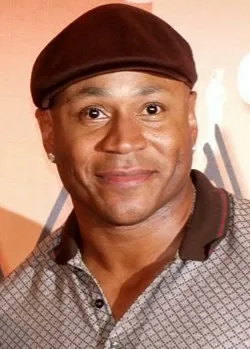
LL Cool J
Human Design Chart
Biography
By 1997 he had six platinum rap albums out, including "Mama Said Knock You Out," and starred in the UPN sitcom "In The House." The Grammy-winning rapper hit it big in 1986 with "I Can't Live Without my Radio."
A troubled teen in Queens, James saw his dad shoot his mom and granddad. He credits his grandmother with setting him on the right track. He married Simone; four kids.
In 1990, he played a cop in the film, "The Hard Way." Still doing rap, he had a collection of more than 3,000 caps by 2001. Sex and violence continued to plague his life with live appearances in particular beset by many problems. Three people were shot at a date in Baltimore in December 1985, followed by an accusation of "public lewdness" after a 1987 show in Columbus, Ohio.
While playing rap's first concert in Cote d'Ivoire, Africa, fights broke out and the stage was stormed. Most serious, however, was an incident in 1989 when singer David Parker, bodyguard Christopher Tsipouras and technician Gary Saunders were accused of raping a 15-year-old girl who attended a backstage party after winning a radio competition in Minneapolis.
Though LL Cool J's personal involvement in all these cases was incidental, they undoubtedly tarnished his reputation. He has done much to make amends, including appearances at benefits including Farm Aid, recording with the Peace Choir, and launching his Cool School Video Program, in an attempt to encourage children to stay at school. Even Nancy Reagan invited him to headline a "Just Say No" concert at Radio City Music Hall.
LL Cool J — Generator with Profile 4/6
Generator 4/6 — Design at a Glance
LL Cool J possessed immense and enduring strength that made him seem like a workhorse – strong and steady as long as he had energy for his tasks. As a Generator, he had plenty of sacral energy, but it only flowed effectively when he responded to impulses from his environment rather than initiating things himself. His strategy was to wait until life sent a signal and his inner self answered with a clear “yes” before taking action.
This design carried two specific risks: burnout through activities without internal motivation or frustration if prevented from pursuing his heart project, even when he still had plenty of power. If LL Cool J ignored this dynamic and compulsively initiated things himself, it inevitably led to ongoing frustration and a lack of energy. In harmony with his nature, however, by acting reactively from the gut, he was rewarded with deep satisfaction. No one could stop him when he followed this resonance-seeking path; his ability to materialize things was closely tied to this specific way of reacting to external stimuli.
Emotional Authority
LL Cool J's design tended towards emotional wave motion, where his inner truth only revealed itself through alternating periods of enthusiasm and skepticism. He appeared as someone whose perception was always colored by the current mood: at one moment he could be totally enthused, in the next view the same situation negatively. These fluctuations were not a flaw but the essence of his emotional authority.
With LL Cool J's emotional center defined, it automatically functioned as an inner authority – independent of all other defined centers in his chart. This mechanism subjected him to a constant emotional wave of highs and lows. Since a feeling at any moment is just a snapshot and not a final judgment, quick, spontaneous decisions from this heat could have negative consequences.
The strategy of his design required patience: LL Cool J had to take time for decisions to mature. Only through multiple nights' reflection and the hesitation to act immediately did intense feelings subside. With this emotional distance, clarity would then set in. This process was particularly crucial for long-term, life-defining decisions as it allowed distinguishing deeper truth from temporary mood swings.
The 4/6 Profile — Opportunist / Role Model
LL Cool J's profile showed a strong phase of experimentation during his first three decades of life. As a 4/6er, Line 6 initially seemed like Line 3: curiosity and trying things out, especially in relationships and friendships, were front and center. This period of open exploration laid the groundwork for later development.
With the activation of Line 6, an inner conflict emerged: the desire to belong to a community (Line 4) clashed with the need to withdraw and contemplate life's meaning (Line 6). This tension between heart and head shaped his internal dynamics. Simultaneously, Gate 61 brought the ability for deep research into universal principles. The focus on this area was strong but did not guarantee automatic success. Through collaboration, knowledge could expand, though it could also be painful when others took that knowledge in unexpected directions.
Line 6 from Gate 32 added a stance of equanimity towards impermanence. There was inner peace with changes, yet also fear of material failure. During times of great upheaval came the question of whether to act or not. If impermanence was experienced as unstable, depression and self-destruction loomed. LL Cool J had to learn to accept these transformations to find preservation. Later, he was expected to meet high standards as a wise role model. His big heart remained cautious about opening up to the wrong people and getting hurt. Cooperation with others was key to highlighting his individual strength.
Split Definition — Defined & Open Centers
LL Cool J's Human Design profile suggests a tendency towards constant, structured thinking paired with clear inner direction and profound emotional intelligence. His defined Ajna Center ensured consistent mental preferences; he processed data and creativity in a trustworthy manner without being easily swayed by external influences. This mental stability directly flowed into his communication through the defined Throat Center, allowing him to express what he thought with a steady yet limited form of self-expression.
At the same time, LL Cool J had a fixed identity and sense of higher self through the defined G Center. He knew who he was and which direction he was heading without having to rely on others. However, his decisions were significantly guided by his emotional authority in the Solar Plexus Center. Here lay the necessity to give emotional waves time before clarity emerged; impulsive reactions to the highs or lows of this wave would have created chaos, while patient waiting allowed for deep insights.
His energy source came from the defined Sacral Center, generating immense vital force. LL Cool J relied on reacting rather than initiating to effectively use this energy and avoid frustration. The constant pressure of his defined Root Center propelled him forward, especially in dealing with emotional stress and social relationships.
In contrast, his open Head Center revealed a vulnerability to mental pressure and confusion when he did not trust his inner authority. He tended to get entangled in questions that were not his own or sought inspiration to silence the internal monologue. His open Heart Center made him susceptible to the need to prove his worth through promises and competition, often ending in cycles of self-doubt if he failed. Additionally, his open Spleen Center was sensitive to fears and well-being; he could cling to people with defined Spleens for a sense of security but risked unhealthy dependencies or spontaneous decisions that did not align with his true nature. This configuration required strict discipline in dealing with fears and refraining from impulsive actions out of insecurity.
Channels for intimacy, persistence, logic and cyclical growth.
LL Cool J exhibited a fundamental attitude of persistent discovery: He immersed himself in experiences without exercising control, trusting that the meaning would become clear at the end of the process. This occurred through Channel Discovery 29-46, which connects saying yes with the determination of self. His life force served to open up new directions rather than predict them.
This transformative energy also flowed into his creative orientation. The Beat Channel 14-2 linked competence in handling power and resources with higher knowledge. LL Cool J was a key custodian of material means to drive innovation. He brought the collective a new direction simply by reacting to life, inspiring others seeking their own identity without needing active intervention.
In interpersonal dynamics, the Pairing Channel 59-6 shaped his intensity. He sought fusion and intimacy driven by sexual energy and emotional waves of pleasure and pain. LL Cool J easily penetrated the aura of others, fostering confidentiality but also potentially causing misunderstandings if his intensity was misinterpreted. His emotional wave determined the timing for genuine connections; patience was needed to gain clarity.
To structure his inner world, he utilized the Accepting Channel 17-62. His mind permanently organized details and visual patterns into logical systems. He spoke to articulate understanding or highlight gaps. This ability helped him sort complex information and make it understandable to others, provided he waited for an invitation to speak to avoid resistance.
The Maturity Channel 53-42 emphasized his need to complete cycles fully. LL Cool J began experiences with intention, delivered them through to the end, and then reflected to gain wisdom. He learned from his empirical history not to repeat the same mistakes.
Additionally, Gates like 61 (inner truth through silence), 32 (continuity and material success) as well as 41 (evolutionary development through crisis) influenced him. These elements promoted his pursuit of individual insight and adaptability in a changing environment.
Collective Circuitry — Circuit Signature
LL Cool J expressed his identity through rhythmic impulses and emotional waves, resulting from the Knowledge Circuit: The Beat Channel connected his Identity with his Sacral Center. This connection created pulsating energy that allowed him to explore new paths and initiate change through the expression of his unique individuality.
Parallel to this was a clear rational structure. The Understanding Circuit linked via the Accepting Channel his Ajna Center (the mind) with the Throat Center. This enabled him to formulate logical insights and strategic visions for the future free from conditioning, clearly articulating an emotionless ratio aimed at improving things.
A third aspect involved learning from the past. The Meaning Circuit connected Identity, Sacral, and Root Centers through Discovery and Maturity Channels. Here it was about cyclical emotional waves: Experiences from the past were reflected upon to find their meaning and share these felt insights with the collective.
Lastly, a primal protective energy emerged. The Protector Circuit linked via the Pairing Channel the Sacral with the Solar Plexus Center. This concerned instinctive care for family preservation and nurturing – energies of mother and father aimed at protecting survival and genetics.
As LL Cool J had a Shared Definition, these forces existed in two separate groups: The first group included Identity, Sacral, Solar Plexus, and Root (connected through Knowledge, Meaning, and Protector). The second isolated group consisted of Ajna and Throat (Understanding Circuit connection). These two areas were not directly energetically connected but operated as parallel independent systems.
Right Angle Cross of Maya 4
LL Cool J is marked by the right cross of Maya 4, a configuration often associated with a deep connection to spiritual or esoteric traditions. This design element points towards an inner orientation that goes beyond the purely material and seeks hidden connections. LL Cool J tended to integrate knowledge from ancient wisdoms or mystical sources not as mere decoration but as a living guide for his actions.
The right cross of Maya 4 symbolically represents the bridge between the visible and the invisible. It often endows the bearer with an intuitive ability to translate spiritual principles into everyday life. LL Cool J could make complex ideas accessible by connecting them with a personal, authentic voice. This trait helped him tackle themes that might otherwise seem abstract or distant from reality.
Without external events for illustration, the analysis remains limited to this fundamental tendency: LL Cool J was someone who sought a strong connection to higher truths within and let these flow into his expression forms. His design promoted a sense of curiosity towards the mysterious without losing touch with reality.
Saturn Return · Uranus Opposition · Chiron Return · 2nd Saturn Return — Life Cycles
LL Cool J's life span is marked by structural consolidation followed by radical reorientation later on. His design suggests that he goes through phases of intense work where long-term goals condense into tangible results. This was reflected in 1995: At age 27, he released his album 'Mr. Smith', which went double platinum. This success marked his first Saturn Return – a cycle in Human Design symbolizing the consolidation of earlier efforts and often leading to a solid milestone where years of groundwork pays off.
Later, the focus of the design shifts towards dissolving old structures in favor of new paths. The Uranus Opposition around age 41 often brings unexpected turns or a drive for freedom from previous bindings. For LL Cool J, this dynamic became evident in 2009 when he took on the lead role in the TV series 'Navy CIS: L.A.'. This entry into a new long-term project illustrates how this cycle breaks established patterns and opens up new, often surprising life areas rather than focusing solely on the previous path of success.
Generator · Emotional Authority — Synthesis
A central red thread runs through the design: the dynamic connection between energy and perception. As a Generator with defined Sacral Basis (Sacral Center), this person possesses immense endurance and the ability to set things in motion (Channel of Beats). At the same time, the Mental Center is defined, indicating a steady thought process and the capacity for concept formation. This combination of sacral energy and mental processing points towards someone who can not only actively shape but also has the power to drive innovations and explore new paths – especially when inner authority (emotional) gets enough time for maturation. The focus on creating something new is further strengthened by the Knowledge Circuit.
The design reveals a central paradox between the desire for community and the longing for individuality. The Profile as Networker/Role Model (Line 4/6) points to a deep connection with other people, a need to be part of a whole and stand out through cooperation. At the same time, Line 6 in the profile demands distancing, withdrawal for reflection on existential questions. This leads to an inner tension field between wanting to adapt and the necessity to walk one's unique path – a conflict that becomes particularly evident in later life phases, as evidenced by events during Saturn Return (1995) and Uranus Opposition (2009).
5 Defined Channels
Incarnation Cross - Right Angle Cross of Maya 4
Solar Return
The Solar Return shows the moment when the sun returns to its exact birth position - your personal solar year.
Life Cycles
Discover the life cycles with a detailed triple view (birth chart, cycle chart, composite).
Human Design Profile
- Type
- Generator
- Strategy
- To respond - wait for something to respond to
- Authority
- Emotional Authority
- Profile
- 4/6 - Opportunist / Role Model
- Definition
- Split Definition
- Incarnation Cross
- Right Angle Cross of Maya 4
- Date of Birth
- 14.01.1968 20:46
- Place of Birth
- Bay Shore, NY, United States
Frequently Asked Questions
What is LL Cool J's Human Design type?
What Profile does LL Cool J have in Human Design?
Which Authority guides LL Cool J?
What is LL Cool J's incarnation cross?
When was LL Cool J born?
Discover your own Human Design
Are you also a Generator? Find out in a personal reading how to use your sacral energy correctly and discover deep satisfaction.
More Personalities
Back to overviewSissy Spacek
Aaliyah

Alexia

Anémone

Angèle

Ann-Margret