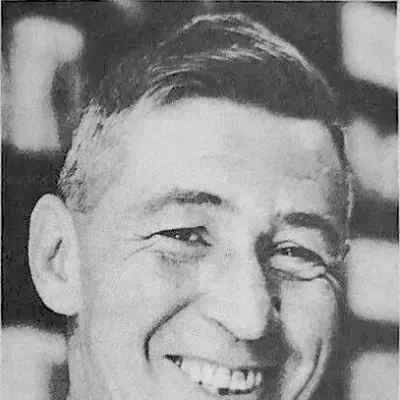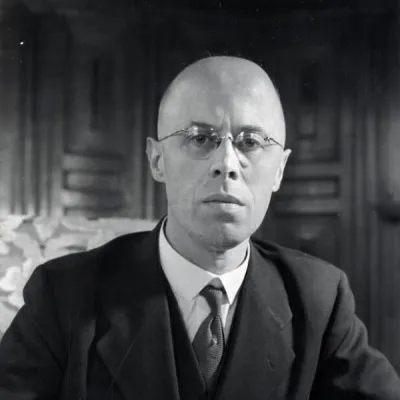
Louis Beel
Human Design Chart
Biography
Married once, four children.
He died in Utrecht, Netherlands on 11 February 1977.
Human Design Analysis: Louis Beel as Projector 1/4
Projector 1/4 — Design at a Glance
Louis Beel's design showed a tendency towards precise system analysis. As a Projector, his aura acted like a focused beam of light that immediately revealed weaknesses and errors in structures. However, this direct confrontation with the wrong often provoked resistance as it was perceived as unpleasant – comparable to shining directly into someone's face.
Louis Beel's effective strategy therefore did not lie in active correction but rather in passive attractiveness. By radiating harmony and competence himself, he attracted others who then sought his solutions. The key mechanism was waiting for an honest invitation. Only through this respectful request could he bring his knowledge without causing bitterness or rejection.
This approach also protected him from exhaustion. Since Projectors do not have a constant internal energy source but experience their power in waves, restraint was essential. Without these pauses and the waiting for an invitation, there was a risk of burning out. Louis Beel's design thus showed that success and recognition followed only when he waited for the right invitation structure and did not act prematurely. This prevented the typical feeling of non-self caused by bitterness, which arises when one imposes their leadership without permission. His influence was greatest when he served as a shining example rather than appearing as a critical observer.
Splenic Authority
Louis Beel's decision-making relied on an immediate, physical intuition. His design indicated that the Spleen Center functioned as inner authority – a configuration found only in Projectors or Manifestors with open Emotional and Sacral centers. This endowed him with pronounced survival intelligence: A spontaneous inner knowledge signaled immediately whether a situation, environment, or society was healthy and right. His instinct and physical well-being served as reliable indicators of his own safety.
The first impulse was considered the only true path to health. Since this Spleen voice was subtle and appeared only once in the moment, it required high vigilance not to be drowned out by external influences. Retreat could help hear these fine signals clearly. Decisions had to be made consistently in the moment; long-term commitments contradicted this mechanism as the right choice could change momentarily. Louis Beel thus preserved maximum freedom and flexibility. He rigorously distanced himself from harmful influences, effectively taking care of himself by trusting his spontaneous intuition rather than planned strategies.
The 1/4 Profile — Investigator / Opportunist
Louis Beel's design was characterized by a tension between the urge for isolated, thorough research and the need to share this acquired knowledge in trusted circles. As a person with Profile 1/4, the Researcher-Networker, he combined the deep knowledge acquisition of Line 1 with the community-oriented dynamics of Line 4. This configuration created a specific sensitivity: The deep knowledge often served as a shield against the fear of exposure. The fear of not being competent enough in front of loved ones or within the inner circle and thus causing heartache was a significant aspect of his internal stance.
Line 1 brought with it the necessity to individually and fundamentally explore things to gain security. At the same time, Line 4 demanded that these insights be integrated into a network of trusted individuals to exert influence. For Louis Beel, an environment with high emotional safety and deep trust was crucial. Only under this condition could his potential for authority in heart matters fully unfold. Without this protective space, the concern over lacking expertise dominated. His design suggested that his true strength only became effective when he felt secure enough to share his deep understanding with others without risking emotional injury or being exposed as inadequate.
Split Definition — Defined & Open Centers
Louis Beel revealed himself through a dense structure of defined Head, Ajna, and Throat centers combined with Heart, Spleen, and Root. This created a constant inner pressure to question and understand, driven by consistent willpower and existential instinct. He possessed the ability for direct communication and manifestation of his concepts. His mental function was constantly active; he processed data and creativity in a trustworthy manner without being easily influenced. Simultaneously, his intuition served as a reliable compass for health and values in the moment of now.
This firm internal architecture stood in tension with his open G, Sacral, and Solar Plexus centers. Louis Beel was not a constant carrier of identity, energy, or emotional clarity but rather a mirror of his environment. His open G Center meant that his direction and love were situation-dependent; he sought the right place to unfold himself instead of maintaining a fixed identity. The open Sacral Center led to fluctuating energy availability. He was prone to absorbing 'borrowed' energy and overworking, rather than listening to his own rhythm. Additionally, his open Solar Plexus absorbed the emotions of others like a barometer. He tended to personalize foreign feelings as his own and needed time alone for deconditioning to regain clarity.
The challenge lay in not prematurely translating mental pressure into action before the environment was ready or identifying with foreign energies. Louis Beel lived in the tension field between his strong inner drive and the necessity of waiting on external conditions for identity and energy balance. His strength lay in applying his defined willpower and intuition while using the openness of his other centers as a tool to perceive the environment rather than experiencing it as a lack.
Channels for clarity, intuition, instinct and persistent ambition.
Louis Beel's design was characterized by constant mental work: transforming spontaneous inspiration into rational answers, as well as logically organizing details for understandable communication. This structuring served to translate complex patterns so that they became comprehensible to others.
Central was the Channel of Awareness 61-24. It connected Gate of Secrets (61) with Gate of Rationalizing (24). Thus, sudden inspiration from the Head Center in Ajna was processed. This was not linear discovery but a process where the mind repeatedly thought through thought patterns until a moment of inner truth or 'Satori' occurred. Louis Beel could not control his thinking; knowledge emerged when it was ready. His task was to distinguish what was worth knowing and making these mutative insights accessible to others.
Parallel, the Channel of Acceptance 17-62 worked. It connected Gate of Opinions (17) with Gate of Details (62). This enabled mental organization of information based on substantial facts. Louis Beel had the ability to recognize visual patterns and name, evaluate, and communicate them through words. Everything he could integrate into his mental system he understood; everything else remained unclear. This channel created a constant pressure in Throat Center to share structured opinions and explanations if timing was right and listeners were receptive.
Additionally, the Channel of Devotion 44-26 linked instinctive vigilance (Gate 44) with willpower for conviction (Gate 26). Louis Beel could intuitively recognize what his 'tribe' or target group needed—often before they knew it themselves—and used his ego strength to present fitting solutions convincingly. This promoted entrepreneurial thinking and the ability to win others over for improvements.
Finally, the Channel of Transformation 54-32 drove his ambition. Through Gate of Ambition (54) and Gate of Continuity (32), he aimed for social recognition and advancement. His drive was to prove his worth through competence and hard work and move out of his starting position. Awareness of the fragility of existence motivated him to initiate transformations that were only successful when supported by the community.
Tribal Circuitry — Circuit Signature
Louis Beel's design presented two separate, parallel energy fields. One field drove the urge for individual identity and new knowledge; the other focused on tribal logic and resource maintenance. These systems were not directly connected but existed as separate forces alongside each other.
The Knowledge Circuit in Louis Beel linked Head Center with Ajna Center through Channel of Awareness (Gates 24-61). This promoted innovative flashes of insight and the search for one's own path independent of collective structures. Parallel to this, the Understanding Circuit worked via Channel of Acceptance (Gates 17-62), connecting Ajna with Throat Center. This enabled sharing logical insights and strategic visions into the outside world, separate from emotional impulsivity.
The second major field was formed by the Ego Circuit, which linked Heart, Spleen, and Root Centers. Here, the Channel of Devotion (Gates 26-44) for communication and cooperation as well as the Channel of Transformation (Gates 32-54), connecting material resources and instinct, created a basis for mutual support within the tribe based on giving and taking, yet without the constant life force of Sacral Center, requiring rest periods for regeneration.
The tension lay between the individual drive for transformation through knowledge and the necessity of collective cooperation for resource accumulation. Louis Beel navigated these separate demands: on one hand, innovation and identity search in Head-Ajna area; on the other, pragmatic, tribe-oriented logistics in Heart-Spleen-Root system. Both areas functioned independently without forcing direct energy exchange between them.
Right Angle Cross of Maya 1
Louis Beels design carried the imprint of the Right Cross of the Maya. This configuration acted as a fundamental, archetypal background factor in his structure. It defined a deep identity level that profoundly shaped his essence, even though its specific mechanical expressions are not detailed in this material. The presence of this cross signaled a unique energetic signature that went beyond standard typology and served as an identity-forming element. This was a rare constellation that endowed Louis Beel with a particular inner orientation. This imprint formed the foundation upon which his other design elements operated. It conveyed a sense of belonging to a larger pattern or destiny, without deriving concrete action instructions from it. The mechanics of this cross remained in the context of this analysis as an overarching influence factor that affected Louis Beels internal compass. It was a strong marker in his chart pointing towards a special spiritual or existential dimension. This imprint distinguished his design from others and gave him unique depth that could not be captured by simple categories. It stood for a hidden structure that accompanied Louis Beel and subtly influenced the course of his life, without necessarily being recognized by external observers.
Saturn Return · Uranus Opposition · Chiron Return · 2nd Saturn Return — Life Cycles
Louis Beels life was structured through clear astrological cycles marking his career phases. In 1948, at age 46, he ended his first term as Prime Minister. This point fell during his Chiron Return cycle. Within Human Design mechanics, this period marks a phase of fulfillment and bloom where one's incarnation cross unfolds if the person has followed their strategy and authority. Here it was a moment when meaning and purpose were experienced, not healing old wounds.
Later in 1959, at age 57, Louis Beel was appointed Vice President of the Raad van State. This occurred during his second Saturn Return. The second Saturn Return often acts as a phase of consolidation and reorientation after a long period of building up. It marks a transition where earlier achievements are questioned or embedded into new structures. This appointment reflects the typical dynamics of this cycle: solidifying position at higher levels, coupled with deeper reflection on one's path and responsibility domain. Both events underscore how cyclical energies shaped his professional turning points.
Projector · Splenic Authority — Synthesis
Louis Beel was a Projector whose life was marked by a profound ability to recognize patterns and bring light into darkness for others (Gate 61, Channel 1-8). This gift manifested in a constant mental pressure to understand and question things (defined Head and Ajna Centers), coupled with an instinctive perception of what is right or wrong (Spleen Center as Authority). His Profile as Researcher/Networker (1/4) points to a deep thirst for knowledge, yet always accompanied by the fear of not knowing enough and being exposed before others. This tendency towards thoroughness and the need for a trustworthy environment shaped his path.
A central paradox in Louis Beels design lies in the interplay between his Projector nature – waiting for invitations and the ability to lead others – and his defined Heart Center, signaling strong willpower and desire for self-determination (Channel 45). He was destined to use other people's energy while also being an independent actor with his own goals. This tension between attraction and demarcation, between giving and taking energy, seems to have run as a red thread through his life, evident in his commitment to the welfare of the 'tribe' (Ego Circuit) and his ability for strategic influence.
4 Defined Channels
Incarnation Cross - Right Angle Cross of Maya 1
Solar Return
The Solar Return shows the moment when the sun returns to its exact birth position - your personal solar year.
Life Cycles
Discover the life cycles with a detailed triple view (birth chart, cycle chart, composite).
Human Design Profile
- Type
- Projector
- Strategy
- Wait for the respectful invitation
- Authority
- Splenic Authority
- Profile
- 1/4 - Investigator / Opportunist
- Definition
- Split Definition
- Incarnation Cross
- Right Angle Cross of Maya 1
- Date of Birth
- 12.04.1902 13:00
- Place of Birth
- Roermond, Netherlands
Frequently Asked Questions
What was Louis Beel's Human Design type?
Which Profile did Louis Beel have?
What was Louis Beel's Authority?
What incarnation cross did Louis Beel have?
When was Louis Beel born?
Discover your own Human Design
Are you also a Projector? Find out in a personal reading how to unfold your leadership qualities and recognize the right invitations.
More Personalities
Back to overviewSissy Spacek

Alain-Fournier

Anémone

Ann-Margret

Bourvil
Hergé