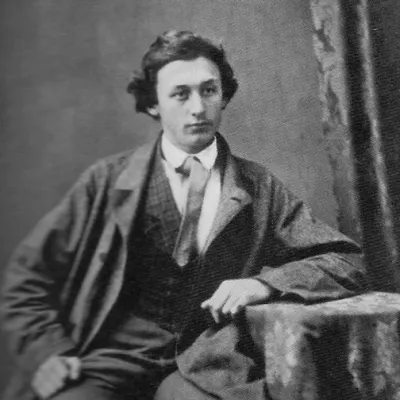
Paul Mendelssohn Bartholdy
Human Design Chart
Biography
Paul Mendelssohn Bartholdy as a Generator 5/1 in Human Design
Generator 5/1 — Design at a Glance
Paul Mendelssohn Bartholdy was a Generator. His design established a foundational stance based on endurance and the ability to generate energy. He had considerable sacral energy, which made him comparable to a workhorse, extremely strong and steadfast, provided he had energy for his tasks.
His life strategy involved not initiating but responding to signals from life. When his sacral center gave an inner "yes", he responded with action. This gut reaction was the key to his effectiveness.
Two stumbling blocks shaped his dynamics. First, he was prone to burnout if he continuously did things that did not bring him joy and only wasted his energy. Second, he suffered when he was prevented from working on his heart project, even though he was full of power and wanted to continue.
Living in harmony with this design rewarded him with deep satisfaction and a sense of fulfillment. If he tried to go against his nature and constantly initiate, he would eventually encounter persistent frustration and a lack of energy. His success therefore depended on whether he responded to impulses or worked against his inner rhythm.
Emotional Authority
Paul Mendelssohn Bartholdy showed himself to be someone who did not make decisions in the heat of the moment but gave himself time until the emotional wave had subsided. His design carried emotional authority, meaning that his defined emotional center held inner leadership – independent of other defined areas in his chart. This configuration subjected him to a constant emotional wave, a permanent up and down of feelings. The world appeared to him always colored by his current mood; enthusiasm could turn into negative evaluation in the same moment. Since this immediate feeling was merely a snapshot and not necessarily the deeper truth, he risked negative consequences by making quick, spontaneous judgments. His strategy was to let decisions ripen. This required patience and the conscious overnighting of important questions until clarity and calmness set in. Only when the intense feelings had subsided and he had gained emotional distance could he recognize the true essence of a situation. This process of delay was essential for him, especially for long-term decisions that significantly influenced his life course. By hesitating and questioning himself multiple times, he secured himself against the deception of temporary moods and acted from a position of deeper insight.
The 5/1 Profile — Heretic / Investigator
Paul Mendelssohn Bartholdy showed himself to be someone who gathered deep, detailed knowledge to offer practical solutions to others in times of crisis. His design as a 5/1 profile combined the inner research work of Line 1 with the outer role of the expert of Line 5. He often worked in the background until all details were absolutely clear and thought through before sharing his insights. This attitude of "excellence" meant that he did not present anything unfinished.
Others frequently sought him out, as they perceived his competence as magnetic and expected answers to their problems. This trust could, however, quickly lead to overload if he did not set clear boundaries. Like a scientist exhausted after long conferences because he was constantly available, Paul Mendelssohn Bartholdy risked exhausting his own energy. The challenge lay in aligning the need for help from others with his own protection of the research phase.
Gate 62 in his design underscored his readiness for radical changes and the demand for clear communication in difficult times. Simultaneously, Gate 3 with its property of mutation and synthesis came into play. Here it was about creating new order from confusion and difficulties. Paul Mendelssohn Bartholdy learned that he could only become effective once he had analyzed and understood the complexity. His strength lay in forming a structured, helpful response from the chaos of details without sacrificing himself.
Split Definition — Defined & Open Centers
Paul Mendelssohn Bartholdy was someone who operated under a constant mental pressure to ask questions and understand connections. This definition between the Head Center and Ajna Center created a trustworthy, specific form of conceptual thinking. He was not easily distracted by other mental influences but processed data and creativity in his own rhythm. This intellectual structure often served as an external authority for his environment, as he could influence others to think along with him through his aura.
His energy source lay in the defined Sacral Center. As a Generator, he possessed enormous vital energy, which was only activated through reaction. Paul Mendelssohn Bartholdy tended to question whether he was meeting others' expectations when he initiated rather than waited. His strategy was to wait for questions or offers before responding with a clear yes or no from the gut. This ensured him the necessary endurance for long-term commitments and prevented frustration from false initiatives.
Emotionally, he was marked by a defined Solar Plexus Center. His inner authority lay in the emotional wave. Paul Mendelssohn Bartholdy learned not to make decisions in the highs or lows of his emotional valleys but to wait for emotional clarity to emerge. This process of emotional maturation gave his judgments depth and sensitivity, while impulsive actions often led to later regret.
At the same time, his design revealed specific vulnerabilities. His open G Center meant he lacked a fixed identity or direction. He tended to mirror his environment and the people around him to find a sense of belonging or direction. This made him susceptible to the pressure of adopting a 'borrowed' identity when he found himself in the wrong places or inappropriate relationships. His open Heart Center lacked consistent willpower. He was not designed to give promises or prove his worth through competition. Instead, he risked falling into a cycle of self-doubt when he tried to meet expectations that did not align with his inner authority. His open Spleen Center also made him sensitive to health and well-being. He tended to project fears or cling to people with defined Spleens to gain a sense of security, rather than trusting his own intuition. This configuration challenged him to avoid spontaneous decisions and rely on the wisdom of his defined centers.
Channels for change, logic, acceptance, clarity and emotion.
Paul Mendelssohn Bartholdy lived deeply in the tension between evolutionary change and rational analysis. His design inclined towards sudden, mutative impulses, which were filtered through a skeptical, questioning mind.
This transformation was driven by the Mutation Channel 60-3. It connected the Root Center with the Sacral Center and generated a pulsating, often melancholic energy, waiting for limitation (Gate 60) and the order of new beginnings (Gate 3). This channel brought about evolutionary change, but it required patience, as it could not be controlled but only experienced.
Parallel to this, the Logic Channel 63-4 was at work. It connected the Head Center with the Ajna Center and created a doubting mind. Gate 63 sought patterns, while Gate 4 formulated them. This mechanism required Paul Mendelssohn Bartholdy to test information for consistency and logical verifiability rather than accepting it blindly. Doubt here was not a flaw but essential for truth.
The way he conveyed these insights was shaped by the Acceptance Channel 17-62. It connected the Ajna Center with the Throat Center and enabled the translation of visual patterns (Gate 17) into detailed language (Gate 62). This created the ability to logically organize and communicate complex connections, provided the details fit his inner worldview.
Additionally, the Awareness Channel 61-24 contributed to his mental landscape. It connected the Head and Ajna Centers and promoted spontaneous insights (Satori), which arose through inspiration rather than logical deduction. Here, it was about knowing the unknown without being able to control it.
Emotionally, he was influenced by the Release of Feelings Channel 39-55. It connected the Root and Solar Plexus Centers and generated a wave of moods, provocation (Gate 39) and emotional mind (Gate 55). This energy swung between joy and melancholy and demanded the authenticity of one's mood to touch others.
Individual Gates complemented this picture: Gate 50 brought a conservative protective reflex and values, Gate 56 enabled abstract storytelling, Gate 49 demanded obedience to principles, Gate 59 pursued a genetic strategy of attachment, and Gate 8 urged for individual contribution and leadership.
Individual Circuitry — Circuit Signature
Paul Mendelssohn Bartholdy's design inclined towards separate, parallel functioning energetic blocks. Through the Split Definition, two independent streams existed that did not flow directly into each other. One block connected the Sacral, Root, and Solar Plexus Centers. Here, the Knowledge Circuit operated: The Mutation Channel (3-60) promoted deviations from the known, while the Awareness Channel (24-61) delivered innovative flashes of insight. The Release of Feelings Channel (55-39) connected these impulses with the emotional pulse of the Solar Plexus to initiate change through authentic expression.
The second block encompassed the Head, Ajna, and Throat Centers. Here, the Understanding Circuit linked rational structures. The Logic Channel (63-4) enabled strategic thinking, while the Acceptance Channel (17-62) helped share insights without conditioning. This stream focused on visual, future-oriented clarity. As the groups were separate, emotional impulses and rational strategies existed as parallel forces, not as a continuous flow. Thus, Paul Mendelssohn Bartholdy was marked by this dual structure, where each area maintained its own integrity and functionality without the energies of one group directly influencing the other.
Left Angle Cross of Obscuration 1
Paul Mendelssohn Bartholdy's Human Design profile featured the left cross of Manifestation 1. This described a fundamental tendency to define oneself through the concealment or masking of one's true intentions and identity. It was not about malicious deception but rather a deep, instinctive mechanism of self-protection and strategic positioning.
In Human Design mechanics, this cross represents the art of disguise. The energy pushes one to hide their true motives from the outside world to maintain control over their situation. Paul Mendelssohn Bartholdy was shown through this configuration as someone who carefully hid his true nature behind a facade. This concealment served to ward off unwanted influences and pursue his own goals undisturbed. The strategy involved not being direct but gaining power through indirectness and an aura of mystery.
For Paul Mendelssohn Bartholdy, the ability to conceal himself was a central aspect of his life approach. It allowed him to act flexibly in complex social or business situations without revealing his true cards. The energy of this cross shaped his actions through a constant balancing act between visibility and invisibility. He used concealment as a tool to influence his environment without being fully exposed. This created a dynamic tension between what was shown and what was actually intended.
Saturn Return · Uranus Opposition · Chiron Return · 2nd Saturn Return — Life Cycles
Paul Mendelssohn Bartholdy's Human Design profile indicated a tendency towards structural anchoring and later crisis resolution. His first Saturn return marked the completion of long-term educational investments. In 1907, at 28 years old, he completed his doctorate in chemistry. This cycle condensed years of groundwork into a solid professional foundation that confirmed his expertise.
The Chiron return, a fulfillment cycle between the ages of 49 and 51, where the individual life purpose unfolds, was already evident in him. In 1926, at 47 years old, he acquired the property Rauchstraße 17 in Berlin-Tiergarten and had the Villa Mendelssohn Bartholdy built. This step represented the material and spatial realization of his life task, creating a stable center before the actual bloom period arrived.
The second Saturn return, often bringing a deep test or reorientation at 54 years old, led to a drastic break. In 1933, he was pushed out of I.G. Farben and went into exile. This cycle broke the previous structure and forced him to break away from the established position, revealing the fragility of external achievements in the face of historical upheavals.
Generator · Emotional Authority — Synthesis
He was a Generator, whose life was marked by a deep, sacral energy. This energy, combined with emotional authority, led him through a wave of emotions that ripened decisions and gave him the endurance to dedicate himself to his heart projects (Generator type, emotional authority). His defined connection between Head and Ajna Centers created a constant mental pressure to question and understand, making him a seeker of knowledge who inspired others (defined Head Center). This was evident in his ability to solve complex problems and disseminate knowledge, especially through his Profile Line 5/1, which made him a sought-after expert.
A central paradox in his design lay in the combination of the mutative energy of Channel 3-60 and the need for emotional clarity. The channel challenged him to accept limitations and embrace new paths, while his emotional authority required patience and the overnighting of decisions (Channel 3-60, emotional authority). The associated melancholy, a hallmark of the Knowledge Circuit, seemed a constant companion, especially during times of upheaval and crisis, such as during his exile, and shaped his path as a knower and shaper.
5 Defined Channels
Incarnation Cross - Left Angle Cross of Obscuration 1
Solar Return
The Solar Return shows the moment when the sun returns to its exact birth position - your personal solar year.
Life Cycles
Discover the life cycles with a detailed triple view (birth chart, cycle chart, composite).
Human Design Profile
- Type
- Generator
- Strategy
- To respond - wait for something to respond to
- Authority
- Emotional Authority
- Profile
- 5/1 - Heretic / Investigator
- Definition
- Split Definition
- Incarnation Cross
- Left Angle Cross of Obscuration 1
- Date of Birth
- 18.07.1879 08:15
- Place of Birth
- Berlin-Charlottenb., Germany
Frequently Asked Questions
What was Paul Mendelssohn Bartholdy's Human Design type?
What Profile did Paul Mendelssohn Bartholdy have in Human Design?
What Authority did Paul Mendelssohn Bartholdy have?
What incarnation cross did Paul Mendelssohn Bartholdy have?
When was Paul Mendelssohn Bartholdy born?
Discover your own Human Design
Are you also a Generator? Find out in a personal reading how to use your sacral energy correctly and discover deep satisfaction.
More Personalities
Back to overviewAaliyah

Alexia

Angèle

Anne-Marie

Arcángel

Arno