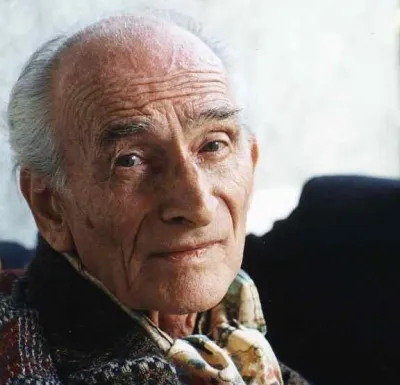
Paul Verhoeven
Human Design Chart
Biography
Died of a heart attack on stage at the at the Munich Kammerspiele, while delivering a eulogy for the late actress Therese Giehse on 22 March 1975.
Paul Verhoeven — Manifesting Generator with Profile 4/6
Manifesting Generator 4/6 — Design at a Glance
Paul Verhoeven revealed himself as someone who quickly brought things to life and often skipped steps in the process. As an Manifesting Generator, he had a constant sacral energy source that endowed him with immense creative power. His design combined the responsiveness of a Generator with the initiative of a Manifestor, allowing him to push multiple projects forward simultaneously and enter an intense play mode when seeking variety.
The challenge lay in his speed: Sometimes he acted too quickly, leading to missed steps and potential frustration – a theme related to not being himself. Additionally, he tended to react to many impulses at once and start several undertakings without confirmation from his inner authority and sacral center, which could lead to overburdening.
His strategy was to wait for life impulses rather than initiate on his own, proceeding only when his internal system gave a clear “yes.” Regular checks to ensure that projects were still enjoyable were crucial. When he felt this resonance, Paul Verhoeven derived deep satisfaction from his work. The demand to focus on one thing at a time went against his nature; instead, he needed the dynamics of parallelism to use his energy effectively and satisfyingly.
Emotional Authority
Paul Verhoeven showed a fundamental attitude of emotional delay: He did not act on first impulses but waited until his feelings had clarified themselves. His design carried emotional authority in his defined Solar Plexus Center. This mechanism means that he was constantly subjected to waves of ups and downs; his perception of the world was always colored by his current mood. What appeared inspiring at one moment could turn negative in another. However, his immediate feeling was only a provisional snapshot, not the final truth. Quick decisions made from this emotional heat often proved wrong.
The strategy of his inner authority required patience and conscious delay. Paul Verhoeven used time to let decisions mature, often by sleeping on them multiple times. This process served to even out intense initial feelings and gain emotional distance. Only when these waves subsided did clarity and calmness set in for him. Then the internal maturation process was complete, and he could act with a deeper, more comprehensive understanding. This approach was particularly crucial for long-term life decisions as it ensured that not just the first impression but the lasting emotional truth guided the way.
The 4/6 Profile — Opportunist / Role Model
Paul Verhoeven showed himself to be someone who acted experimentally in his early decades, driven by a strong need for connection and testing various roles. This early behavior aligned with the dynamics of Profile Line 4, which endowed him with a protective modesty as a “wallflower” to shield himself from perceived inadequacies. He often felt like an outsider needing to assert himself in social webs.
With the entry into his second half of life, marked by the Saturn Return, his focus shifted fundamentally. Profile Line 6 became active and brought an inner conflict between the desire for community (Line 4) and the urge towards detached wisdom (Line 6). Paul Verhoeven began observing and judging others' actions, influenced by themes of ignorance and inappropriate behavior. His design suggested that through this critical distance, he developed a spiritual stance enabling him to recognize mutations in the here and now. He carried an expectation for himself to serve as a role model while remaining cautious about opening his heart only to chosen individuals to avoid injuries from false connections.
Single Definition — Defined & Open Centers
Paul Verhoeven revealed himself as someone whose inner compass needle was firmly set: His defined G Center gave him a reliable sense of self-identity and a clear direction for his personal path. He knew where he belonged without having to validate this truth from the outside. This inner security was fueled by his defined Sacral Center, providing a constant source of vitality. As a Generator, he was designed to react to life rather than force it; his energy ignited in response, giving him persistent endurance in his endeavors.
His way of shaping the world followed a specific logical structure. The defined Ajna Center ensured a steady mental process that generated concepts and theories, while the defined Throat Center translated these thoughts directly into communication and action. What he thought, he spoke; his voice was a reliable channel for his intellectual processing. Yet this clarity did not arise in moments of impulsivity. His defined Solar Plexus functioned as an emotional authority: He needed time to navigate through waves of emotion before decisions were made. Only in emotional calm did he find the truth, not by jumping out on the first impulse.
At the same time, his design was vulnerable to external interference fields. The open Head Center tended to fill with foreign questions and mental pressure, which could confuse him if he didn't trust his inner authority. His open Heart Center suffered from the conditioned need to prove its worth through willpower or promises – a game that he couldn't win mechanically. Additionally, his open Root Center absorbed environmental stress, making him prone to hyperactivity when he interpreted this foreign pressure as his own. His open Spleen Center lacked the spontaneous security of survival instinct; instead of following impulsive decisions, he had to learn to observe fears and condition himself from healthy environments to protect his well-being.
Channels for rhythm, insight, expression and emotional transformation.
Paul Verhoeven revealed himself as someone who knew the flow of life through firm habits but also integrated the extremes of human society into this rhythm. This dynamic came from the Rhythm Channel 5-15, connecting the Sacral Center with the G Center. Gate 5 held fast to rituals while Gate 15, through his love for the diversity of humanity, created a magnetic field that drew others into this universal life flow. This channel ensured that his timing was determined by an inner biological pulse unaffected by either intellect or emotional waves.
In addition to this rhythmic base tone, he possessed the ability to formulate and clearly express innovative perspectives. The Structuring Channel 23-43 connected his Ajna Center with the Throat Center. Here, Gate 43 received spontaneous insights which were then processed through assimilating Gate 23. This allowed him to communicate complex or mutating ideas in a way that others understood as efficient new paths rather than outlandish ones. His thinking often felt ahead of its time, but only clear articulation made this knowledge accessible to the collective.
Furthermore, an emotional drive towards new experiences propelled him forward. The Transience Channel 35-36 connected his Solar Plexus Center with the Throat Center. Gate 36 perceived inexperience as a crisis, combined with the change need of Gate 35 leading him actively into adventures to gain emotional depth and wisdom. This energy constantly sought out the next right experience, knowing that feelings are transient.
Individual Gates rounded this picture: Gate 25 brought mystical innocence and self-love while Gate 46 stood for full immersion in the present moment. On the personality side, Gate 62 with its logical precision and Gate 47, which sought to extract collective sense from past confusions, had an impact. Gate 45 expressed tribal willpower supported by the friendly community structure of Gate 37. Finally, Gate 4 provided logical formulas for future security while Gate 12 fostered a restrained, poetic creativity in expression.
Individual Circuitry — Circuit Signature
Paul Verhoeven's design was characterized by a simple, coherent energetic structure. His centers – Sacral, Identity, Throat, Ajna, and Solar Plexus – formed one single flow. This allowed him to translate impulses directly into structured expression.
The Knowledge Circuit connected his Ajna with the Throat Center (Channel 43-23). This promoted the ability to clearly structure and express thoughts. The Understanding Circuit linked Identity and Sacral Centers (Channel 15-5), combining logical strategies with rhythmic life energy. In the Meaning-Making Circuit, Solar Plexus and Throat Centers flowed together (Channel 35-36). Here, emotional waves from the past were processed and shared. Finally, the Integration Channel connected Identity and Throat Center (Channel 20-10), allowing intuitive insights to be directly articulated in the present.
This configuration revealed someone who combined rational planning with emotional depth. He used his structuring power to reflect on past experiences and bring them into the present through clear communication. The connection of all five centers created a coherent expression: Emotions were not only felt but logically ordered, strategically planned, and finally precisely formulated. This marked his way of making complex connections understandable by linking inner intuition with outer structure.
Right Angle Cross of the Vessel of Love 2
Paul Verhoeven's Human Design indicated a profound and often passionate connection to interpersonal relationships. This configuration, the right cross of the Love Vessel, suggested that he experienced relationships not just as social interactions but as deeply emotional experiences. In this aspect of his character, there was a tendency towards devotion and empathy, which shaped his way of loving. It was an inner mechanism driving him to try to understand others and become vulnerable in doing so. This energy propelled him to seek closeness, often with intensity beyond the everyday. For his system, the ability to feel and bond was central; it significantly determined how he sought and perceived connection. Through this channel flowed a power that helped him recognize and utilize the emotional depth of his relationships. Paul Verhoeven used this inner resonance to forge authentic connections, willing to open emotionally. This trait formed a core aspect of his personality, profoundly influencing his interactions with others and enabling him to generate deep emotional resonance.
Saturn Return · Uranus Opposition · Chiron Return · 2nd Saturn Return — Life Cycles
Paul Verhoeven founded his own film production company in 1949 at the age of 48. This marked the beginning of his Chiron Return, a fulfillment cycle between the ages of 49 and 51. During this phase, the Incarnation Cross increasingly unfolds in life; if the person has lived according to their strategy and authority up until then, the inner sense becomes experiential and personal flourishing occurs. It is not about healing old wounds but about the concrete realization of one's life purpose. The founding of the company was not an isolated step but an expression of this profound inner orientation manifesting outwardly. The Chiron Return acts as a catalyst for this unfolding, translating abstract potentials into tangible reality. Paul Verhoeven's design showed a tendency to reach a new level of self-determination in middle age by taking control of his creative processes. This moment condensed years of development into a sustainable outcome that shaped his further path. The mechanics of the Chiron Return underscore that such turning points often coincide with a clear identification of one's purpose, which is then structurally anchored in life.
Manifesting Generator · Emotional Authority — Synthesis
Paul Verhoeven was a Manifesting Generator whose life was characterized by a constant dynamic between swift action and emotional maturity. The connection of sacral energy (defined Sacral Center) with the ability to skip steps (Manifestor traits) led him to seize opportunities quickly and initiate changes – a pattern evident in founding his own company. This impulsive approach, however, was always embedded within a deep emotional processing (emotional authority), requiring time to gain clarity and mature decisions.
A central paradox lay in the tension between the desire for community (Line 4 in Profile) and the need for independent reflection (Line 6). Verhoeven lived this conflict by seeking connections and showing cooperation on one hand, while also needing space for individual thought and developing a unique perspective – an expression of the Knowing Circuit driving him to create new things and initiate transformation.
4 Defined Channels
Incarnation Cross - Right Angle Cross of the Vessel of Love 2
Solar Return
The Solar Return shows the moment when the sun returns to its exact birth position - your personal solar year.
Life Cycles
Discover the life cycles with a detailed triple view (birth chart, cycle chart, composite).
Human Design Profile
- Strategy
- To respond - wait for something to respond to
- Authority
- Emotional Authority
- Profile
- 4/6 - Opportunist / Role Model
- Definition
- Single Definition
- Incarnation Cross
- Right Angle Cross of the Vessel of Love 2
- Date of Birth
- 23.06.1901 21:45
- Place of Birth
- Unna, GER
Frequently Asked Questions
What was Paul Verhoeven's Human Design type?
Which Profile did Paul Verhoeven have?
What Authority did Paul Verhoeven have?
What was Paul Verhoeven's incarnation cross?
When was Paul Verhoeven born?
Discover your own Human Design
Are you also a Manifesting Generator? Find out in a personal reading how to unfold your multi-talents and direct your energy wisely.
More Personalities
Back to overviewAldair

Alizée

Angeli

Arletty

Artus

Balthus