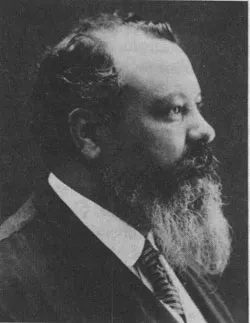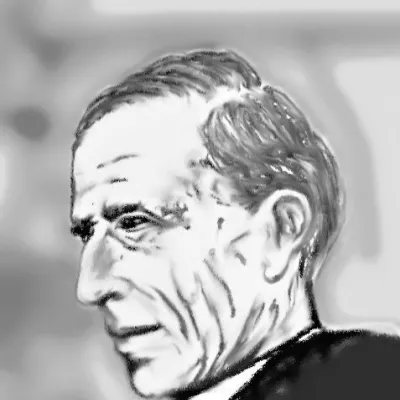
Pierre Teilhard De Chardin
Human Design Chart
Biography
Teilhard was the fourth of eleven children and a distant descendant of Voltaire. His father was a country gentleman of means with a scholarly interest in history, and he instilled in his son a passion for animals and plants, and the volcanoes and rocks of the region in which he grew up. In 1892, he started his formal education at a Jesuit college, and won many prizes for his hard work and high intelligence. Interestingly, he always fared poorly in religious instruction because he was at odds with the format of the teaching.
At age 17, he dedicated his life to religion and began his novitiate as a Jesuit at Aix-en-Provence in 1899. Within two years, the anticlerical movement in France evacuated the seminary to Jersey. At age 24, he was sent to Cairo to teach physics and chemistry in a Jesuit school. His "Lettres d"Egypte 1905-1908" written at this time revealed his interest in searching the local hills and deserts for fossils.
Human Design Analysis: Pierre Teilhard De Chardin as Manifestor 4/6
Manifestor 4/6 — Design at a Glance
Pierre Teilhard de Chardin revealed himself as a visionary meant to lead the world into a new future. His design placed him as a pioneer and leader, akin to an emperor in ancient Rome: He possessed the grand vision of an empire but did not wage the necessary wars himself; instead, he sent others out to conquer foreign lands on his behalf. This role came with a specific pain point: Misunderstanding by his peers. Because he often thought ahead of his environment, he polarized strongly. Some loved him for his immense dreams and followed him, while others rejected or even hated him because of these visions. To find the right followers, it was crucial for him to inform others in good time about his plans accurately. This formed his ideal strategy. If he adhered to this principle and held onto his authority, he was rewarded with a sense of inner peace. Living against his design, however, he felt instead a persistent, deep-seated anger within himself. This dynamic shaped his life path: The conflict between the necessity for information and the risk of rejection was central to his experience of harmony or inner unrest.
Emotional Authority
Pierre Teilhard de Chardin exhibited a fundamental stance where emotional waves significantly influenced his perception and decision-making. His design carried Emotional Authority, meaning that the defined Solar Plexus Center always took precedence over all other defined centers – a central mechanism independent of further configurations. He was subject to constant ups and downs of his feelings; the world appeared colored by his current mood. In one moment he could be totally enthusiastic about something, in the next view it negatively. These immediate impulses were merely snapshots, first impressions that did not necessarily reflect his deeper truth yet. Quick, spontaneous decisions from such an emotional state often proved problematic. Instead, Pierre Teilhard de Chardin gained clarity by allowing time to pass. The longer a decision could mature, the more deeply and comprehensively he could perceive the situation. This process required patience and multiple nights of reflection on important questions. Over time, intense feelings subsided, emotional distance emerged, and calmness set in. Only then was the inner process complete and a well-founded answer available. This was especially true for long-term decisions that significantly influenced his life course. Through this waiting for emotional tranquility, he secured access to his true inner truth rather than being guided by transient moods.
The 4/6 Profile — Opportunist / Role Model
Pierre Teilhard de Chardin revealed himself as someone oscillating between the deep need for connection and the urge towards spiritual solitude. His 4/6 Profile shaped this dynamic: In the first three decades of life, he intensely experimented in relationships, driven by Line 3 energy within the profile. With maturity, Line 6 set in, intensifying the internal conflict between heart and head – the desire for community versus the necessity to withdraw to reflect on meaning.
This tension was made concrete through specific Gate Lines. The fourth line of Gate 24 required absolute solitude to preserve his integrity and expand his knowledge. He shared insights only slowly with a close circle of trusted individuals, where a tendency towards fantasy worlds fostered both creative visions and self-deception. Simultaneously, Gate 19 Line 6 determined his path through phases of dedication, trial, error, and retreat. As an 'hermit', he weighed whether to commit to the community or follow spiritual heights. This design indicated that his life was oriented towards acting as a wise role model through cooperation while being cautious about whom he opened his heart to in order to avoid hurt.
Single Definition — Defined & Open Centers
Pierre Teilhard De Chardin revealed a design characterized by inner stability and clear direction. His defined G Center gave him a firm sense of self-identity and purpose; he knew who he was and where he stood, without needing external validation. This internal security was reinforced by his defined Heart Center, which provided the willpower to keep promises and take responsibility for his resources. He acted from a strong 'I', capable of setting personal boundaries and steering his work independently.
His expression occurred through his defined Throat Center, serving as a pivot point to translate energy from his heart and identity into clear communication and action. His words were not mere thoughts but reliable manifestations of his inner state and will. This structure was complemented by his defined Solar Plexus Center, which functioned as an emotional authority. Pierre Teilhard De Chardin learned to trust the waves of his emotions and make decisions only when the emotional wave had subsided and clarity emerged. This allowed him a deep, timeless perception of connections rather than impulsive reactions.
Simultaneously, his design was marked by open centers that made him receptive to external influences. His open Head Center meant he did not carry constant mental pressure; instead, he could absorb inspiration without identifying with passing questions or doubts. He tended to let go of mental topics once they lost their justification, rather than getting stuck in endless rumination. His open Ajna Center allowed for a flexible mind that absorbed concepts and theories from the environment without holding them as absolute personal truth. He could collect and reflect on ideas without becoming entangled in dogmatic certainty.
His open Sacral Center indicated he did not have constant generative energy; instead, he took life force from his surroundings, making him vulnerable to exhaustion if he didn't pause. He learned to use his energy in bursts and rest before fatigue set in. Finally, his open Root Center absorbed stress from the environment. Pierre Teilhard De Chardin was exposed to pressure from others but could distinguish this as external rather than self-generated, helping him avoid hyperactivity and find calm.
Channels for devotion, emotional depth, reflection and pioneering spirit.
Pierre Teilhard de Chardin's design was marked by a complex emotional dynamic that oscillated between the urge for individual expression strength and the need for social restraint. The Openness Channel 22-12 connected his Solar Plexus Center to his Throat Center, making his communicative impact heavily dependent on his emotional wave. He had the ability to deeply touch and even transform others through the quality of his voice and timing of his words, but this only worked when he felt internally prepared. Coercion or impulsiveness led to misunderstandings and withdrawal.
Parallel to this, the Lost Son Channel 13-33 connected his G Center with his Throat Center. Here, his strength lay in patiently collecting experiences and secrets (Gate 13), followed by a phase of retreat for reflection (Gate 33). He was not an impulsive speaker but a guardian of memory who spoke only when the truth of an experience had fully ripened and been integrated. This process endowed his later expressions with profound wisdom and historical continuity, as he learned to trust life from the perspective of the 'Lost Son', observing consciously rather than forcing outcomes.
Another defining aspect was the Initiation Channel 51-25 in his Heart Center, connecting ego shock (Gate 51) with the spirit of self and universal love (Gate 25). This created a mystical tension: Pierre Teilhard de Chardin was initiated through challenges and 'shocks' that forced individualization. He could use this energy to guide others into deeper states of consciousness only if he lived authentically without actively seeking initiation. The Channel of Devotion 44-26 (Spleen to Heart) complemented this with an instinctive sense for the needs of his 'tribe'. Intuitively, he knew which ideas or products served people at that moment and could communicate these through entrepreneurial creativity, provided he received recognition and resources in return.
The prioritized Gates underscored these patterns: Gate 19 emphasized the need for a secure territory for his spiritual work, while Gate 24 pointed to the rhythm of mental mutations – a process of renewal requiring patience as new knowledge needed time to mature. Gates like 45 (Tribe level), 35 (Change through interaction), and 8 (Contribution to group) showed his potential to bundle collective energies and act as an example for group goals, always dependent on the right resonance and maintenance of inner balance.
Individual Circuitry — Circuit Signature
Pierre Teilhard De Chardin was someone who connected his inner conviction with a clear voice. His design united Identity, Heart, and Throat Centers in a continuous flow. The Centering Circuit anchored firm values in the heart and identity while the Purpose Circuit carried these internal insights outward through the Throat Center. This allowed him to emotionally process past experiences and share them as shared knowledge. Parallel to this, the Knowledge Circuit operated: here, emotional waves from the Solar Plexus directly flowed into his voice. This connection promoted an open, authentic expression based on current feelings. Additionally, the Ego Circuit supported the social dimension. Through the channel between Heart and Spleen, a dynamic of giving and taking emerged. Pierre Teilhard De Chardin used his devotion to mobilize resources in the collective and foster mutual support. His Simple Definition ensured that these energies – from inner centering through emotional expression to cooperative resource creation – acted as one coherent force. He did not live in separate layers but from an integrated source linking personal integrity with communal benefit.
Right Angle Cross of the Four Ways 1
Pierre Teilhard de Chardin's design indicated a tendency towards deep and often unspoken dedication to a higher meaning or spiritual order. This orientation was not expressed through loud declarations but rather as a quiet, inner loyalty to a path that pointed beyond the purely material.
This attitude stems from the configuration of the 'Right Cross of Four Paths'. In Human Design mechanics, this cross marks a specific life task: seeking out the divine or transcendent aspect in everyday existence. It is an energy that drives the carrier to see the visible not as an endpoint but as a door to deeper understanding of truth and unity.
For Pierre Teilhard de Chardin, this meant his inner compass was always directed towards recognizing and living the connection between the earthly and divine. This was more than just intellectual exercise; it was an existential imprinting. The right cross here acts as a quiet authority that focuses on the essence of things beyond superficial interpretations. This structure fostered an attitude of humility and listening to life itself, since the true path often lies in silence and hiddenness, not in the noise of the outside world. Pierre Teilhard de Chardin lived this tension between earthly anchoring and spiritual striving as an integral part of his nature.
Saturn Return · Uranus Opposition · Chiron Return · 2nd Saturn Return — Life Cycles
Pierre Teilhard De Chardin's design indicated a tendency towards profound structural transformations that crystallized into clear life phases. In 1911, at age 30, he was ordained as a priest. For his design, this marked the first Saturn Return, a cycle in which long-term commitments and inner maturity often lead to a firm institutional or spiritual bond. The ordination was not merely a formal act but the solidification of a life direction prepared over years.
Ten years later, in 1920 at age 39, he passed his natural science diploma examination at the Sorbonne. This fell during the Uranus Opposition, often seen in Human Design as a break with old structures and breakthrough to new autonomy. Here, his ability to establish scientific competence after resolving internal tensions between different life areas was evident. The exam proved this new self-determined positioning in his career.
The peak of this development occurred in 1929 when he discovered the fossil Peking Man at age 48 and took over the oversight of the National Geological Survey of China. This corresponded to the Chiron Return, a fulfillment cycle between ages 49 and 51 (here slightly shifted or seen as the beginning of blooming). In this phase, his incarnation cross unfolds increasingly; meaning and purpose become experiential. Teilhard's discovery was no random wound but the visible fruit of living according to his strategy: the connection of spiritual depth and scientific knowledge became concrete reality.
Manifestor · Emotional Authority — Synthesis
He was a Manifestor whose life was marked by a profound drive towards transformation. The defined connection between communication and manifestation (Throat Center) as well as openness for emotional impulses (Channel 22-12) pointed to a personality that not only developed visions but also articulated them and made them effective through others – often under the influence of changing emotions. His profile as a networker and role model (Profile 4/6) reinforced this aspect by combining the desire for community with the necessity to act from a distant, reflective position. Repeated events in the Saturn cycle, marking both spiritual ordination and scientific success, underscored his ability to translate inner insights into outer reality.
A central paradox lay in the tension between the need for emotional clarity (emotional authority) and the impulsive nature of the Manifestor type. While he needed time to let decisions mature and navigate through emotional waves, he was also destined to initiate and drive changes. This discrepancy between inner maturity and external action led to a constant interplay of restraint and expression, which made his personality complex and multifaceted.
4 Defined Channels
Incarnation Cross - Right Angle Cross of the Four Ways 1
Solar Return
The Solar Return shows the moment when the sun returns to its exact birth position - your personal solar year.
Life Cycles
Discover the life cycles with a detailed triple view (birth chart, cycle chart, composite).
Human Design Profile
- Type
- Manifestor
- Strategy
- To inform others before acting
- Authority
- Emotional Authority
- Profile
- 4/6 - Opportunist / Role Model
- Definition
- Single Definition
- Incarnation Cross
- Right Angle Cross of the Four Ways 1
- Date of Birth
- 01.05.1881 07:00
- Place of Birth
- Orcières, France
Frequently Asked Questions
What was Pierre Teilhard de Chardin's Human Design type?
What profile did Pierre Teilhard De Chardin have?
What authority did Pierre Teilhard De Chardin have?
What incarnation cross was assigned to Pierre Teilhard de Chardin?
When was Pierre Teilhard De Chardin born?
Discover your own Human Design
Are you also a Manifestor? Find out in a personal reading how to use your initiation power peacefully and dissolve resistance.
More Personalities
Back to overviewChristian-Jaque
Kesha

Lucebert
Masaccio
Nadar
Papus